
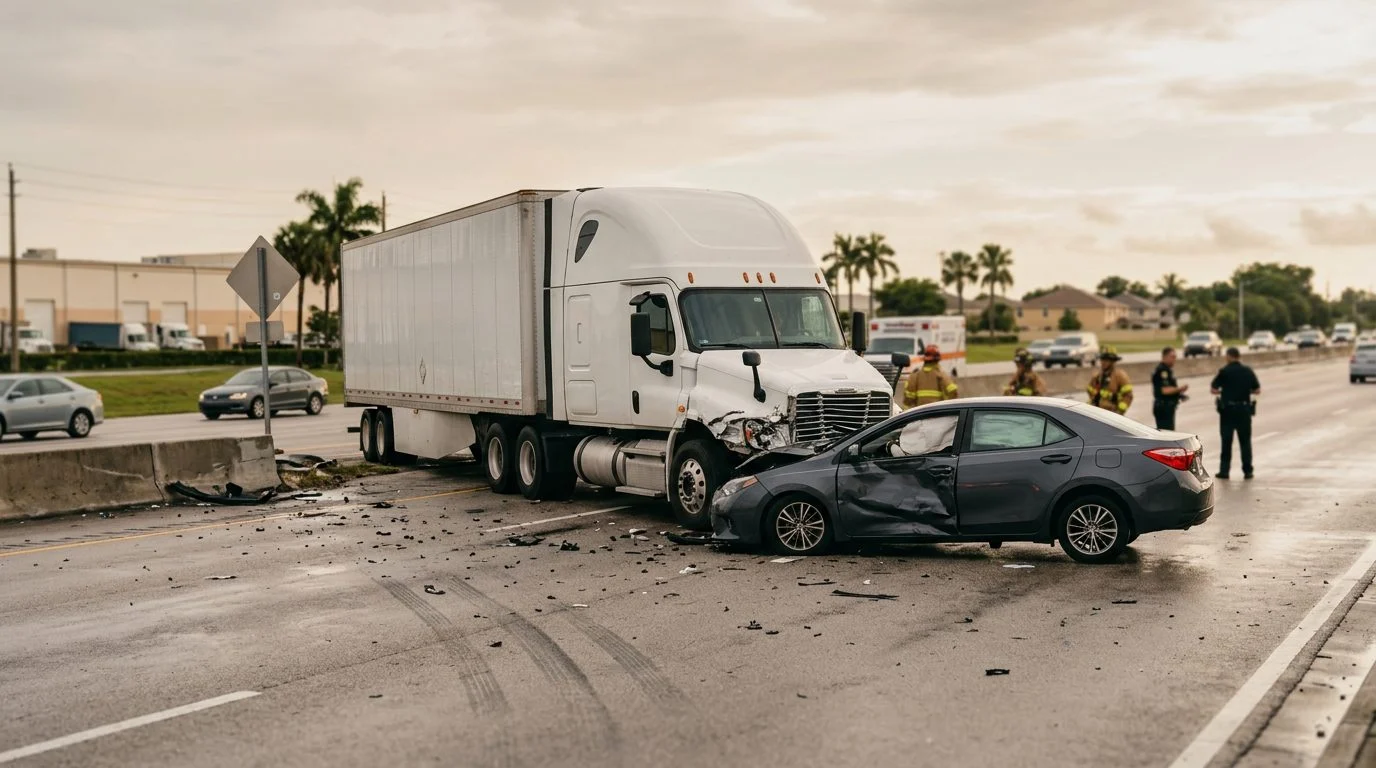
FedEx Truck Accidents | Serving Florida
Hurt in a FedEx Truck Crash? Start With These Steps
A plain-language checklist for protecting your health, your evidence, and your family while you focus on recovery.
By CHG Lawyers · Published November 27, 2026
A crash with a FedEx truck or delivery van can leave you hurt, shaken, and unsure who to call first. This checklist helps you sort out what matters now.
Each step is a yes-or-no question, with a short explanation and a next move. Work through them in order. Your answers show where you stand and what to bring to a conversation with a lawyer.
Start Here: What This Checklist Covers
This checklist is general information for people hurt in a FedEx truck or delivery van crash in Florida, and for their families. It is not advice about your own case.
Cases like this often depend on who was driving, who employed or directed that driver, and how quickly the claim is started. The seven steps below follow that order. For a broader look at these crashes, read our FedEx truck accidents overview.
Igor Hernandez is the lawyer responsible for this page. Our lawyers and team serve injured people and families throughout Florida.
If a FedEx truck or delivery van hurt you or someone you love, you don't have to sort out the deadlines and evidence alone. Talk with us about what your answers mean. Talk it through with our team — the first consultation is free, confidential, and carries no obligation.

Step 1: Was the Vehicle a FedEx Truck or a Delivery Van?
You need to know whose vehicle it was, because that answer shapes who may be responsible.
Yes or no: Did the vehicle carry FedEx logos, decals, or a tracking label, or was the driver wearing a FedEx uniform?
A FedEx mark on a van or a company uniform is a strong clue. Photos taken at the scene capture these details best, before the vehicles are moved.
If yes, write down what you saw and move to Step 2. If you are not sure, note the details you remember and keep them with your records for a lawyer to review.
Step 2: Did You Get Medical Care, Even If You Feel Okay?
Get checked by a doctor or emergency staff as soon as you can, even if you feel fine right now.
Yes or no: Have you been seen by a doctor or emergency staff since the crash?
Some injuries, including neck, back, and head injuries, may not show their full effects for days or weeks. A medical record made soon after the crash links your symptoms to the collision. Follow your doctors’ care plans and keep every appointment.
If no, arrange care now. Bills can raise questions about who pays first. Federal guidance explains that when other insurance doesn’t pay promptly, Medicare may pay first and may later need to be repaid from a settlement. See CMS Medicare Secondary Payer guidance for how this works.
Step 3: Have You Saved the Crash Evidence?
Save what you can now, because photos, video, and crash records can be lost or harder to find over time.
Yes or no: Do you have photos of the scene, the vehicles, your injuries, and the road, plus the names and phone numbers of any witnesses?
Florida requires the investigating officer’s long-form crash report to be submitted to the department within 10 days after the investigation is completed for a motor vehicle crash that resulted in death of, personal injury to, or any indication of complaints of pain or discomfort by any of the parties or passengers involved in the crash. Parties to the crash and their legal representatives may get access to it. The rule is set out in Fla. Stat. § 316.066. Ask for the report and keep its number.
If yes, store copies in two places, such as your phone and a secure cloud folder. If no, write down what you remember today, while it is fresh.
Step 4: Has an Insurance Company Asked for a Statement or a Signature?
Pause before you give a recorded statement or sign a form, until you understand what it means.
Yes or no: Has an insurance adjuster, or a representative of FedEx or the driver’s employer, asked you for a recorded statement or a signature?
Words and forms given early can be used later in a claim. You can ask who is calling, which company they work for, and what they need before you answer.
The statement covers the insurer’s name, each insured, the coverage limits, any policy or coverage defense the insurer reasonably believes is available, and a copy of the policy. The insurer must provide it, under oath, within 30 days of your written request. See Fla. Stat. § 627.4137.
If yes, write down who called, when, and what was said or signed. Then speak with a lawyer before giving more statements.
Step 5: Who Else Could Be Responsible?
Responsibility can reach beyond the driver, depending on who employed or directed the driver and what the vehicle was doing.
Yes or unsure: Do you know, or can you find out, whether the driver worked for FedEx directly or for a contractor or other company?
Florida recognizes negligent entrustment in car accident cases. Under that theory, a vehicle owner may be liable for letting an unfit driver use the vehicle. See Clooney v. Geeting.
Florida also divides fault by each party’s share. For suits filed after March 24, 2023, a person more than 50% at fault for their own harm recovers nothing. See ch. 2023-15, Laws of Florida.
If the vehicle was a commercial motor vehicle, federal rules require the employer to test the driver for alcohol and drugs after certain crashes. Alcohol tests must be given as soon as practicable after the accident; if one is not given within two hours, the employer must keep a record of the reasons, and must stop trying after eight hours. Drug tests must stop after 32 hours. See 49 C.F.R. § 382.303.
If yes or unsure, list every company and person you know was involved, and bring that list to your consultation.
Not sure what your next step is?
Talk it through with our team — the first consultation is free, confidential, and carries no obligation.
Step 6: Are You Within Florida’s Filing Deadlines?
Florida sets time limits for filing a lawsuit. Waiting too long can end a claim, even when the facts are strong.
Do you know how much time you have to act after a crash?
Florida’s limitations statute sets the time limits for many personal injury claims. See Fla. Stat. § 95.11. The exact deadline depends on the facts of your case, so don’t assume you have time.
If yes, contact a lawyer promptly so there is time to prepare. If you are close to the limit, reach out right away.
Step 7: Is Your Family Facing a Death or a Permanent Injury?
Families of someone who died, or who was left with a lasting injury, may have their own rights under Florida law.
Yes or no: Did the crash cause a death, or a permanent injury such as paralysis, amputation, a spinal cord injury, or a traumatic brain injury?
Florida’s Wrongful Death Act says the decedent’s personal representative brings the action for the survivors and the estate. See Fla. Stat. § 768.20. The personal representative recovers, for the benefit of the decedent’s survivors and estate, all damages specified in the Act. See Fla. Stat. § 768.21.
If yes, keep medical bills, receipts, and records of lost work or care you have provided. Then contact a lawyer to discuss your family’s options.

Your Next Step: Talk With CHG Personal Injury Lawyers
If a FedEx truck or delivery van hurt you or someone you love, a short conversation can show what your yes answers mean for you. Your loved one’s injury, your lost work, and your family’s deadlines all deserve a clear answer.
Contact CHG Personal Injury Lawyers for a free, confidential first consultation. It comes with no obligation to continue. CHG charges no attorney’s fees and no case costs unless there is a recovery.
Common Questions
Can a surviving spouse recover damages?
The Florida Supreme Court held in Ripple v. CBS Corp. that the marriage-before-injury rule does not bar a surviving spouse’s wrongful-death damages under § 768.21(2).
Can I get the crash report?
Florida requires the long-form crash report within 10 days after the investigation, and parties and their legal representatives may access it.
How long do I have to file?
Florida generally allows two years for a negligence lawsuit, so act early.
The First Steps After a FedEx Truck Crash
Get Medical Care Right Away
Even if you feel you are only shaken up, see a doctor promptly. Follow your doctors' care plan and keep every visit, test result, and prescription record.
Document the Scene
If you are able, photograph vehicles, road conditions, skid marks, traffic signals, and your injuries. Ask for the names and contact details of anyone who saw the crash.
Record What You Remember
Write down the time, weather, direction of travel, and what happened while the details are fresh. Notes made soon after a crash are often easier to rely on later.
Track Your Losses
Keep receipts for medical bills, prescriptions, transportation, and home help. Note the days you missed from work and how your injuries affect daily life.
How CHG Personal Injury Lawyers Can Help
Licensed Attorneys
Our lawyers are licensed attorneys admitted to practice law in Florida, and our Florida-based firm handles personal injury cases for people across the state.
Focused on Serious Injuries and Families
We handle everything from everyday accidents to catastrophic injuries and wrongful death claims, with care for the people who have been affected.
Free, Confidential Consultation
Your first consultation is free, confidential, and comes with no obligation to continue.
No Fees Unless There Is a Recovery
We charge no attorney's fees and no case costs unless there is a recovery. Igor Hernandez is the responsible attorney for this page.
Be Careful With Insurers and Social Media
Insurance representatives may contact you soon after a crash. Before giving a recorded statement or signing any document, speak with a lawyer. Think carefully before posting about the crash, your injuries, or your activities online.