
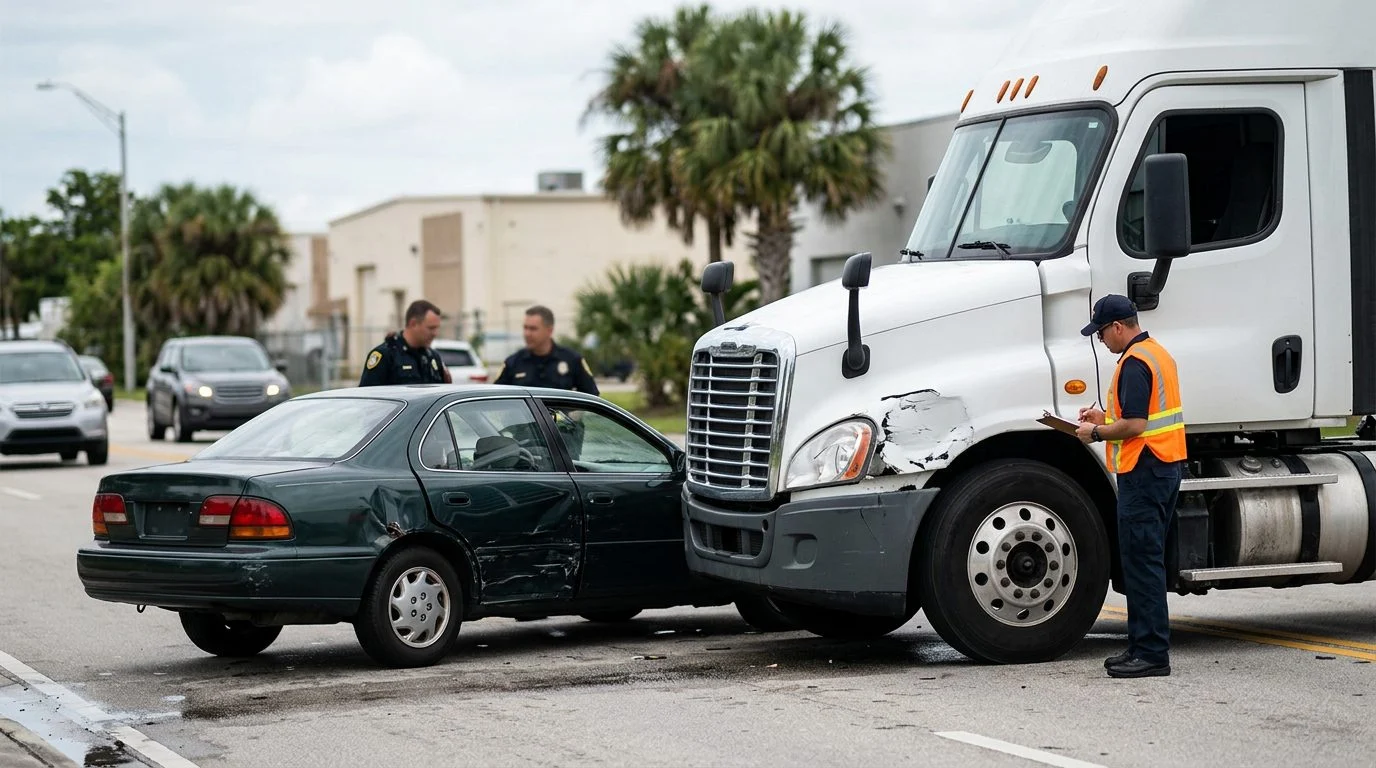
FedEx Truck Accidents | Serving Florida
What Is a FedEx Truck Accident Claim Worth?
Every collision leaves a different mix of medical bills, lost income, and changed daily life. Here is how Florida families can start thinking through their options.
By CHG Lawyers · Published November 20, 2026
A FedEx truck hit you or someone you love. You likely want an answer fast. How much is a FedEx truck accident claim worth?
The honest answer is that no single number fits. A claim’s value depends on four things:
- The injuries
- The losses the injuries cause
- Who was at fault
- The insurance available to pay
Online settlement examples are usually averages or single cases. Your crash has its own facts, injuries, and insurance. This guide explains each piece. It shows what matters in your situation.
Why There Is No Single Number for a FedEx Truck Claim
A FedEx truck claim does not have a fixed price. Its value depends on the facts of each crash. Insurers and lawyers look at the same core pieces: the harm, the losses, the fault, and the coverage.
A settlement reported in the news involved different injuries, different fault, and different insurance. Using it as a yardstick can mislead you.
If you are reading this after a crash you did not choose, you may face several problems at once. These can include hospital bills, missed work, and calls from an insurance adjuster. An adjuster works for the insurance company and reviews your claim. It helps to understand what a claim covers before you agree to anything.
A claim can belong to different people. After a fatal crash, Florida law sets out who may pursue a claim for the family.

The Losses That Make Up a Claim’s Value
A claim’s value is the total of the losses the crash caused. These include past and future lost income, medical and funeral expenses, and other economic losses caused by the injury.
Economic losses come with a bill or a paycheck attached. They include:
- Past and future medical care, including surgery, therapy, and medications
- Lost wages now, and lost ability to earn later
- Medical equipment and home changes needed after the injury
Non-economic damages cover harm that has no price tag. These include pain and suffering, loss of enjoyment of life, scarring, and emotional distress.
Catastrophic injuries raise value because the losses last longer. Spinal cord injuries, paralysis, traumatic brain injuries, amputations, and severe burns often need long-term medical planning. Future costs must be part of the claim.
How Fault Reduces a Florida Claim
Fault decides who pays. It also changes how much you can recover.
Under Florida’s comparative fault statute, fault that belongs to the injured person lowers the amount awarded for economic and noneconomic damages. This applies to the injury caused by that fault.
The statute says that, in a negligence action, fault “does not bar recovery,” but that is subject to a limit: in a negligence action the section covers, a person found more than 50 percent at fault for their own harm may not recover any damages (this limit does not apply to personal injury or wrongful death claims for medical negligence under chapter 766). Those limits should be reviewed against the facts of your crash.
Fault may be shared among the driver, the trucking company, and other parties. Evidence that often shows who was at fault includes:
- The police crash report
- Photos and video of the scene and the vehicles
- Witness statements
- Truck data, driver logs, and maintenance records
- Medical records that connect your injuries to the crash
Federal trucking rules also create evidence to examine. Under 49 CFR 395.3, a driver may not drive after 14 consecutive hours on duty. This applies after 10 consecutive hours off duty. A driver may drive a total of 11 hours in that period.
Records can show whether those limits were followed.
Insurers often take an early position on blame. That position is not the final word. Be careful with early recorded statements.
Who Pays: Insurance, Coverage Limits, and FedEx Contractors
Insurance usually pays a claim. Coverage must be checked in every case.
Federal rules set minimum liability insurance for certain interstate trucking. A policy can carry more than the minimum. Actual limits must be confirmed.
Many FedEx routes are run by independent contractors. Federal rules require written leases between carriers and equipment owners. These leases spell out duties such as fuel, tolls, and loading, as set out in 49 CFR 376.12. These details can show which company or contractor is responsible.
Liability can also reach the companies that arranged the trip. Federal law does not block that claim. The opinion is the place to read the Court’s reasoning.
The Medical Bills Side: Letters of Protection, Collateral Sources, and Medicare
Medical bills shape a claim’s value. They also affect how much you take home. Many guides skip this part. Three issues matter most.
Letters of protection. Some injured people get treatment before any insurance pays. A letter of protection is a promise to pay the provider from any money won in the claim. Florida’s medical expense evidence statute defines this arrangement.
The statute also governs how the amount of those bills can be proven. If the claimant obtains medical treatment or services under a letter of protection and the health care provider transfers the right to payment to a third party, the statute makes admissible evidence of the amount the third party paid or agreed to pay for that right. Ask about any letter you signed before treatment.
Collateral sources. Under Florida’s collateral sources statute, the court reduces an award by amounts already paid to you, or otherwise available to you, from collateral sources, but there is no reduction for collateral sources that have a subrogation or reimbursement right.
The statute says there is no reduction for collateral sources that hold a subrogation or reimbursement right. Subrogation means the payer can seek to get its money back. Whether a payment is reduced or repaid depends on this distinction. Find out which benefits you received and what rights their providers claim.
Medicare. If Medicare paid for your care, different rules apply. CMS explains that when a person with Medicare is hurt in an accident, no-fault or liability insurance pays first for accident-related care.
Medicare beneficiaries must also report a claim. CMS states that they meet this duty by reporting the case in the MSP Recovery Portal or by contacting the Benefits Coordination & Recovery Center.
The amount Medicare claims is not the same as the first letter it sends. CMS notes that the conditional payment letter does not give a final amount. No formal recovery demand is issued until there is a settlement, judgment, award, or other payment.
CMS also clarifies its terms. Its proper term is a Medicare or MSP “recovery claim.” People sometimes call it a “lien.”
Why Two Similar Crashes Can Settle Far Apart
Two crashes that look alike can have very different values. The main reason is how serious and lasting the injuries are. The size of the truck matters less than the harm it caused.
Several factors shift value:
- Permanence: An injury that lasts a lifetime carries more future loss than one that fully heals.
- Documentation: Consistent treatment and clear records tie the injury to the crash.
- Gaps in care: Long gaps between visits give insurers a reason to question the injury.
- Prior conditions, age, and work history: These affect how losses are measured.
- Your own share of fault: Under Florida’s comparative fault statute, a party found more than 50 percent at fault for their own harm may not recover any damages, but this does not apply to an action for personal injury or wrongful death arising out of medical negligence under chapter 766 (Fla. Stat. § 768.81(6)).
Large jury verdicts in trucking cases are sometimes reported in the news. Each one turned on its own facts. None sets a value for another claim.
When a FedEx Truck Crash Is Fatal: Wrongful Death and Next Steps
When a crash takes a life, the family faces grief and hard questions at the same time. This section is for them.
A wrongful death claim is brought for the family and the estate. The person appointed to manage the deceased person’s estate is called the personal representative. That person files the action for the survivors and the estate.
Survivors may seek compensation for their own losses. These can include lost support and services, loss of companionship, and lost parental guidance. Each family’s situation is different.
Federal rules also shape the evidence. When an accident involves loss of human life, 49 CFR 382.303 requires the employer to test each surviving driver who was doing safety-sensitive work. The test must happen as soon as practicable. Records of why a test was not given on time must be kept.
Public crash-fatality data are often shown as a rate per 100 million vehicle-miles traveled. This lets people compare crash numbers while accounting for how much driving occurs.
Next steps can include:
- Keep the police report, photos, and any documents from the crash.
- Ask the trucking company and insurers to preserve records, including driver logs and vehicle data.
- Tell the firm about any Medicare or other health coverage that paid for care. This helps handle reporting and recovery questions early.
- Contact our firm promptly. Deadlines apply. No one can say how much time remains without reviewing the facts.
How the Claim Process Works and What Happens When
Most claims move through four steps: a review, evidence gathering, a demand to the insurer, and, if needed, a lawsuit. Timelines vary with the injuries and the insurer. No one can say in advance how long each step will take.
- Review. A lawyer reviews the crash facts, injuries, and insurance information at a free first consultation.
- Preserve evidence. Early steps protect the police report, photos, vehicle data, and medical records.
- Build the demand. Medical records, bills, and proof of lost wages go to the insurer. Any Medicare reporting and conditional payment information goes with them.
- Negotiate or sue. If the insurer does not resolve the claim fairly, a lawsuit may follow.
Deadlines apply. Florida’s limitations statute sets time limits for filing a lawsuit. Because deadlines apply, contact our firm promptly. Do not wait.
Common Questions About FedEx Truck Claim Value
Is the insurer’s first offer fair?
A first offer may not reflect the full value of your losses. Review it before you accept anything.
How much of a settlement would I keep?
Medical bills, repayment claims, and other costs can come out before you receive your share. CHG charges no attorney’s fees and no case costs unless there is a recovery.
Do steroid injections increase a settlement?
Treatment decisions belong to your doctors. A claim reflects documented injuries and care, not any single procedure.
What is the average settlement against a semi truck?
An average is not a prediction for your claim. Value depends on your injuries, fault, and coverage.
Can I recover if I was partly at fault?
Under Florida’s comparative fault statute, a party found more than 50 percent at fault for their own harm may not recover any damages (Fla. Stat. § 768.81(6)), except in actions for personal injury or wrongful death arising out of medical negligence under chapter 766. Each claim turns on its own facts.

Talk With CHG Personal Injury Lawyers About Your Claim
CHG Personal Injury Lawyers is a Florida-based personal injury firm. It handles car, truck, and other accident claims for people across Florida, including Miami, Orlando, Tampa, and Jacksonville. The firm’s licensed attorneys are admitted to The Florida Bar. Igor Hernandez is the responsible lawyer for this page.
The firm takes cases from everyday crashes to catastrophic injuries and wrongful death. Our team can review your crash facts, insurance information, and medical records.
If a FedEx truck crash has left you or someone you love facing medical bills and lost work, you may have a claim worth discussing. Contact CHG for a free, confidential review. The first consultation is free, confidential, and carries no obligation to continue.
How CHG Personal Injury Lawyers Helps
Florida-Based Representation
CHG Personal Injury Lawyers is a Florida firm that represents injured people and their families across Florida, including in Miami, Orlando, Tampa, and Jacksonville.
Careful Review of the Facts
Our attorneys look closely at the crash report, the driver's records, and the medical evidence so that your claim is built on a clear record.
Focused on Life After the Crash
We understand that a serious injury changes work, family, and daily routines. We focus on helping you understand your options at a pace that suits you.
No Fees Unless There Is a Recovery
CHG charges no attorney's fees and no case costs unless there is a recovery.
Think Before You Sign
An insurance company may make a quick offer soon after a crash. Do not accept any offer or sign a release until you have talked with a lawyer about your injuries and future medical needs.
Steps That Can Help Protect Your Claim
Get Medical Care
Seek prompt medical attention and follow your doctors' care plans, even if your injuries seem minor at first.
Keep Your Records
Save photos, police and crash reports, receipts, and notes about your pain and missed work.
Limit Statements
Be careful about what you say to insurers and social media before speaking with an attorney.
Call a Lawyer
Contact CHG Personal Injury Lawyers to discuss what happened and what your next steps could be.
Talk With CHG Personal Injury Lawyers About Your FedEx Truck Accident
Related practice areas
- Spinal Cord Injuries
- Amazon Truck Wrongful Death Claims in Florida