

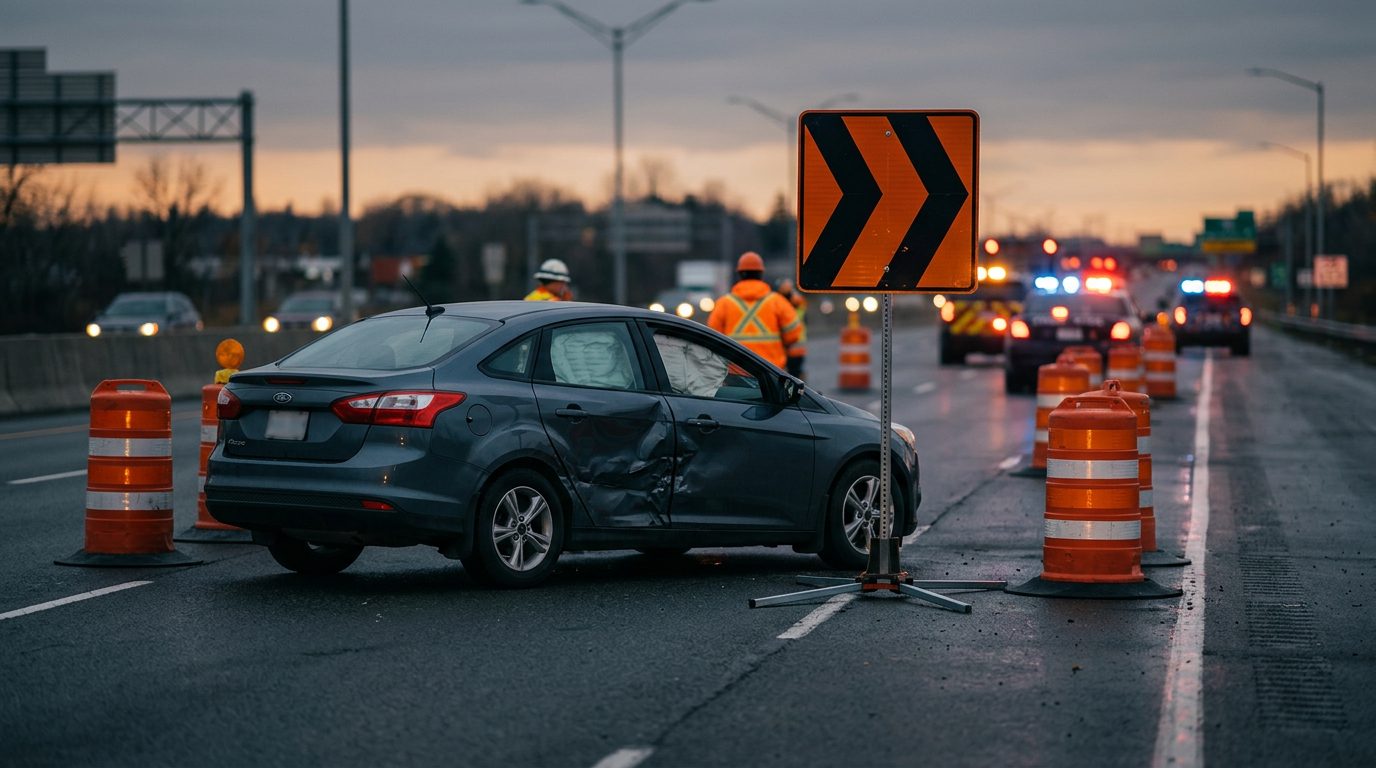
Construction Zone Accidents
Catastrophic Construction Zone Accident Injuries
When a construction site accident leaves you or a loved one permanently disabled, you need a firm that understands the stakes. We focus on catastrophic injuries—spinal cord damage, paralysis, traumatic brain injury, amputation, severe burns, and wrongful death—and the negligence or unsafe conditions that cause them.
By CHG Lawyers · Published August 24, 2026
Catastrophic Construction Zone Accident Injuries: What You Need to Know
A catastrophic construction zone accident injury is permanent, life-altering harm from a crash in or near active work. These injuries—spinal cord injury, paralysis, traumatic brain injury, amputation, severe burns, and wrongful death—are not minor bumps or broken bones. They change everything: your body, your ability to work, your independence, and your future. If you or someone you love suffered a catastrophic injury in a construction zone crash, you need to understand what happened, who bears responsibility, and what legal options exist.
If you or a loved one suffered a permanent, life-altering injury in a construction zone accident, reach out for a free case evaluation. Talk it through with our team — the first consultation is free, confidential, and carries no obligation.
What Is a Catastrophic Construction Zone Accident Injury?
A catastrophic construction zone accident injury causes permanent disability, loss of function, or death. These are not soft-tissue injuries, whiplash, or uncomplicated fractures. They require lifelong medical care, assistive devices, and often round-the-clock support.
Construction zones are inherently dangerous. Drivers face sudden lane closures, heavy equipment, reduced visibility, and congestion. When a crash occurs, the consequences are severe. High speeds, heavy vehicles, and confined work-zone spaces amplify the force of impact. A rear-end collision that might cause minor injuries on an open highway can cause paraplegia or death in a construction zone.
Types of Catastrophic Construction Zone Accident Injuries
Spinal Cord Injury and Paralysis
A spinal cord injury occurs when impact forces fracture, dislocate, or herniate vertebrae, damaging the cord itself. The result is permanent loss of function below the injury site. According to the Christopher & Dana Reeve Foundation, approximately 302,000 people in the United States live with spinal cord injury.
- Paraplegia: loss of function in the lower body and legs.
- Quadriplegia: loss of function in all four limbs and the torso.
Both require emergency surgery, hospitalization, and lifelong rehabilitation. Lifetime care costs often exceed $1 million. This includes assistive devices, home modifications, and lost income.
Traumatic Brain Injury (TBI)
A traumatic brain injury results from a sudden blow or jolt to the head. In a construction zone crash, the head strikes the vehicle interior, windshield, or an external object. Damage is often invisible at first. It causes permanent cognitive, physical, or behavioral changes: memory loss, balance problems, mood swings, difficulty concentrating, and loss of earning capacity.
Amputation and Limb Loss
Crushing injuries or severe lacerations can sever or irreparably damage a limb. Emergency amputation may be necessary to save the victim’s life. Long-term consequences include phantom pain (pain felt in the missing limb), loss of mobility, psychological trauma, and the need for expensive prosthetics and ongoing rehabilitation.
Severe Burns
Third-degree burns or extensive second-degree burns from fuel ignition, electrical contact, or exposure to hot surfaces require emergency airway management, fluid resuscitation, and skin grafts. Long-term rehabilitation is necessary. Scarring, contractures (permanent tightening of skin and tissue), and loss of function are common.
Catastrophic Back and Neck Injuries
Vertebral fractures, dislocations, or disc herniation can cause chronic pain, loss of mobility, and permanent disability—even without complete spinal cord damage.
Wrongful Death
Death is the most catastrophic outcome. Families lose a loved one, income, companionship, and emotional support. They can pursue wrongful death claims against at-fault drivers, contractors, and road authorities for funeral costs, lost income, and loss of companionship.
Why Construction Zone Crashes Cause Catastrophic Injuries
Several factors make construction zone crashes uniquely dangerous:
Sudden Stops and Lane Shifts
Drivers are unprepared for abrupt changes in traffic flow or lane position. A sudden stop can trigger a high-speed rear-end collision before the following driver has time to react.
Heavy Vehicles and Equipment
Trucks and construction equipment cause severe impact and crushing injuries. A collision involving a dump truck or concrete mixer is far more destructive than one between two passenger vehicles.
Reduced Visibility and Confusion
Poor signage, darkness, or unclear lane markings cause drivers to misjudge speed or position. Confusion about which lanes are open leads to lane-change crashes and collisions with stationary equipment.
Inadequate Warnings and Barriers
Missing or broken barriers, lack of lighting, or insufficient advance notice increase crash risk. A driver who doesn’t see a work zone until too late cannot slow down in time.
Multi-Vehicle Collisions
One crash triggers secondary impacts. A rear-end collision stops traffic. Vehicles behind then strike the pile-up, compounding injury severity and the likelihood of catastrophic harm.
Who Is Liable for a Construction Zone Crash?
Liability in a construction zone crash is often complex. Multiple parties may share responsibility:
The At-Fault Driver
Negligence, speeding, distraction, or reckless driving by the striking vehicle’s driver is the most obvious source of liability.
The Construction Company
Contractors have a duty to design and maintain safe work zones. Failure to do so—inadequate signage, missing barriers, poor lighting, unsafe equipment placement, or confusing lane closures—can make the contractor liable for injuries.
The Road Authority or Government Agency
The state or local authority responsible for the roadway has a duty to ensure safe conditions. Failure to maintain safe work zones can result in liability.
Equipment Operators
Negligent operation of heavy machinery or vehicles can cause crashes and injuries.
In many cases, your claim will involve multiple parties. An investigation must identify each liable party and determine the degree of fault each bears.
What to Do After a Construction Zone Crash
If you’ve been injured in a construction zone crash, take these steps:
Immediate Actions
Call 911 and move to safety if possible. Do not admit fault or discuss the crash with other parties except police.
At the Scene
Document the scene with photos of vehicle damage, work-zone conditions, signage, barriers, and lighting. Get contact information from witnesses. Note the date, time, location, and weather conditions.
Medical Care
Seek immediate medical attention, even if injuries seem minor. Some catastrophic injuries—internal bleeding, spinal cord damage, traumatic brain injury—develop over hours or days. Early medical evaluation creates a documented record of your injuries.
Police Report
File a police report and obtain the report number. This creates an official record of the crash.
Preserve Evidence
Keep all medical records, photos, vehicle damage photos, communications with insurers, and work-zone design documents. Do not discard damaged clothing or equipment.
Do Not Settle Quickly
Catastrophic injuries often have long-term costs not apparent immediately. Do not accept an early settlement offer without understanding the full scope of your injuries and future needs.
Contact an Attorney
An attorney can investigate the crash, identify all liable parties, gather evidence, negotiate with insurers, and pursue full compensation. This is not a step to delay.
If you were injured at a construction site, you may be entitled to workers' compensation benefits. Talk it through with our team — the first consultation is free, confidential, and carries no obligation.
Construction Zone Crash Statute of Limitations in Florida
Time limits apply to legal claims. Under Florida Statute §95.11, personal injury claims must be filed within two years from the date of injury. Wrongful death claims must be filed within two years from the date of death.
Do not delay: evidence degrades, witnesses move or forget details, and deadlines are strict.
Comparative Fault in Florida Construction Zone Cases
Under Florida Statute §768.81, a claimant who is more than 50% at fault for a crash generally recovers nothing. If you are 50% or less at fault, you can recover damages reduced by your percentage of fault.
This means that even if you bear some responsibility for the crash, you may still have a claim. Liability and damages depend on the degree of fault assigned to each party.
Truck Crashes in Construction Zones
Trucks and heavy equipment cause more severe injuries and fatalities than passenger vehicle crashes. Liability may involve the truck driver, the trucking company, the equipment operator, and the contractor.
Trucking companies must comply with federal hours-of-service rules, maintenance requirements, and safety regulations. Violations of these rules can result in liability. Companies may also be liable for negligent hiring or retention of unqualified or unsafe drivers.
Truck crashes in work zones frequently result in spinal cord injuries, traumatic brain injury, amputation, and wrongful death. These cases demand thorough investigation and expert analysis.
Getting Help After a Catastrophic Construction Zone Injury
Construction zone liability is complex. Multiple parties may be involved—the driver, the contractor, the road authority, equipment operators. Evidence must be gathered quickly. Deadlines are strict. The injuries are permanent and costly.
An attorney can investigate the crash, identify all liable parties, gather and preserve evidence, negotiate with insurers, and pursue full compensation for your medical costs, lost wages, pain and suffering, and future care needs.
If you or a loved one suffered a permanent, life-altering injury in a construction zone accident, reach out for a free case evaluation. Many people in your exact situation have contacted us to understand their legal options and move forward.
Not sure what your next step is?
Talk it through with our team — the first consultation is free, confidential, and carries no obligation.
Frequently Asked Questions
What qualifies as a catastrophic construction zone accident injury?
A catastrophic construction zone accident injury causes permanent disability, loss of function, or death. Examples include spinal cord injury, paralysis (paraplegia or quadriplegia), traumatic brain injury, amputation, severe burns, and wrongful death. These are not minor fractures, whiplash, or soft-tissue injuries.
Who can be held liable for a construction zone crash?
Liability may involve the at-fault driver, the construction company, the road authority or government agency, and equipment operators. Multiple parties often share responsibility. An investigation identifies each liable party and determines the degree of fault.
How long do I have to file a claim after a construction zone crash in Florida?
Under Florida Statute §95.11, personal injury claims must be filed within two years from the date of injury. Wrongful death claims must be filed within two years from the date of death. Do not delay—evidence degrades and deadlines are strict.
What should I do immediately after a construction zone crash?
Call 911, move to safety if possible, document the scene with photos, get witness contact information, seek medical attention immediately, file a police report, preserve all evidence, and contact an attorney. Do not admit fault or settle quickly.
Can I recover compensation if I was partially at fault for the crash?
Yes. Under Florida Statute §768.81, if you are 50% or less at fault, you can recover damages reduced by your percentage of fault. Even partial responsibility does not necessarily bar your claim.
Why Construction Zone Accident Claims Are Different
Multiple Parties May Be Responsible
Construction accidents often involve general contractors, subcontractors, equipment manufacturers, property owners, and safety supervisors. Identifying all responsible parties is critical—each may carry insurance and bear liability for the unsafe condition or negligent act that caused your injury.
Complex Regulatory & Safety Standards
Construction sites are governed by OSHA regulations, state safety codes, and industry standards. Violations of these rules can establish negligence and strengthen your claim. We investigate whether required safety measures—guardrails, hard hats, fall protection, equipment maintenance—were in place and properly enforced.
Significant Damages at Stake
Catastrophic construction injuries often result in lifetime medical care, lost earning capacity, home modification, assistive equipment, and ongoing rehabilitation. Damages can be substantial, and thorough investigation and expert testimony are essential to fairly value your claim.
Time-Sensitive Evidence
Construction sites change rapidly. Equipment is moved, debris is cleared, and witnesses disperse. Early investigation—photographing the scene, securing safety records, and interviewing workers—preserves critical evidence before it disappears.
Common Types of Catastrophic Construction Zone Accidents
Falls from Height
Falls from scaffolding, ladders, roofs, or elevated platforms can cause spinal cord injury, paralysis, traumatic brain injury, and death. Negligent fall protection, defective equipment, or failure to secure the work area may create liability.
Struck-By Accidents
Workers struck by falling objects, equipment, or vehicles may suffer catastrophic head trauma, spinal injury, or amputation. Failure to secure loads, inadequate warning systems, or unsafe equipment operation can be grounds for a claim.
Electrocution & Electrical Burns
Contact with live wires or faulty electrical systems can cause severe burns, cardiac injury, neurological damage, and death. Improper grounding, lack of protective equipment, or failure to de-energize circuits may establish negligence.
Machinery & Equipment Accidents
Entanglement in or crushing by machinery, excavators, or heavy equipment can result in amputation, severe trauma, or death. Defective guards, inadequate training, or failure to lock out/tag out equipment may create liability.
Trench & Excavation Collapse
Collapse of an unsupported trench or excavation can cause crushing injuries, spinal cord damage, asphyxiation, and death. Failure to properly shore or slope the excavation, or to follow OSHA standards, may be negligent.
Explosions & Chemical Exposure
Explosions or exposure to hazardous materials can cause severe burns, respiratory injury, neurological damage, and death. Improper handling, lack of ventilation, or failure to warn workers may support a claim.
Workers' Compensation vs. Third-Party Claims
If you were injured at a construction site, you may be entitled to workers' compensation benefits. However, workers' compensation typically does not cover pain and suffering or punitive damages. If a third party—a contractor, equipment manufacturer, property owner, or another entity—was negligent or reckless, you may also have a claim against them. These claims can address a broader range of damages and may provide additional recovery beyond workers' compensation.
What We Investigate in Construction Accident Cases
Site Safety Compliance
We obtain OSHA reports, safety inspection records, and incident logs. We determine whether required safety measures—fall protection, guardrails, hard hats, warning signs, and equipment guards—were in place and properly maintained.
Contractor & Subcontractor Conduct
We review contracts, safety plans, and training records. We identify whether contractors failed to enforce safety protocols, hired unqualified workers, or pressured workers to skip safety procedures.
Equipment & Product Defects
We examine whether equipment was defective, improperly maintained, or lacked required safety features. We work with engineers to determine whether design or manufacturing flaws contributed to the accident.
Witness Testimony & Scene Documentation
We interview coworkers, supervisors, and other witnesses. We photograph and document the accident scene, equipment, and conditions to preserve evidence and establish how the accident occurred.
Act Quickly—Evidence Disappears
Construction sites are dismantled and cleaned up. Equipment is repaired or removed. Witnesses move on to other jobs. The sooner we begin our investigation, the more evidence we can preserve. If you or a loved one has suffered a catastrophic injury at a construction site, contact us now.
How We Approach Your Case
Immediate Investigation
We move quickly to secure the accident scene, obtain safety records, and interview witnesses before evidence is lost or memories fade.
Expert Consultation
We retain engineers, safety specialists, medical experts, and economists to analyze the accident, establish negligence, and quantify the full scope of your damages.
Thorough Documentation
We build a detailed record of your injury, medical treatment, rehabilitation, lost income, and ongoing care needs. We document the impact on your life and your family.
Aggressive Representation
We negotiate with insurers and defendants. If a fair settlement cannot be reached, we are prepared to take your case to trial and advocate for your rights in court.