

Truck Accident Claims
Commercial Truck Insurance After a Serious Crash
Understanding your rights when a truck accident causes catastrophic injury. We focus exclusively on serious, life-altering cases.
By CHG Lawyers · Published August 28, 2026
Understanding Commercial Truck Insurance Coverage After a Serious Crash
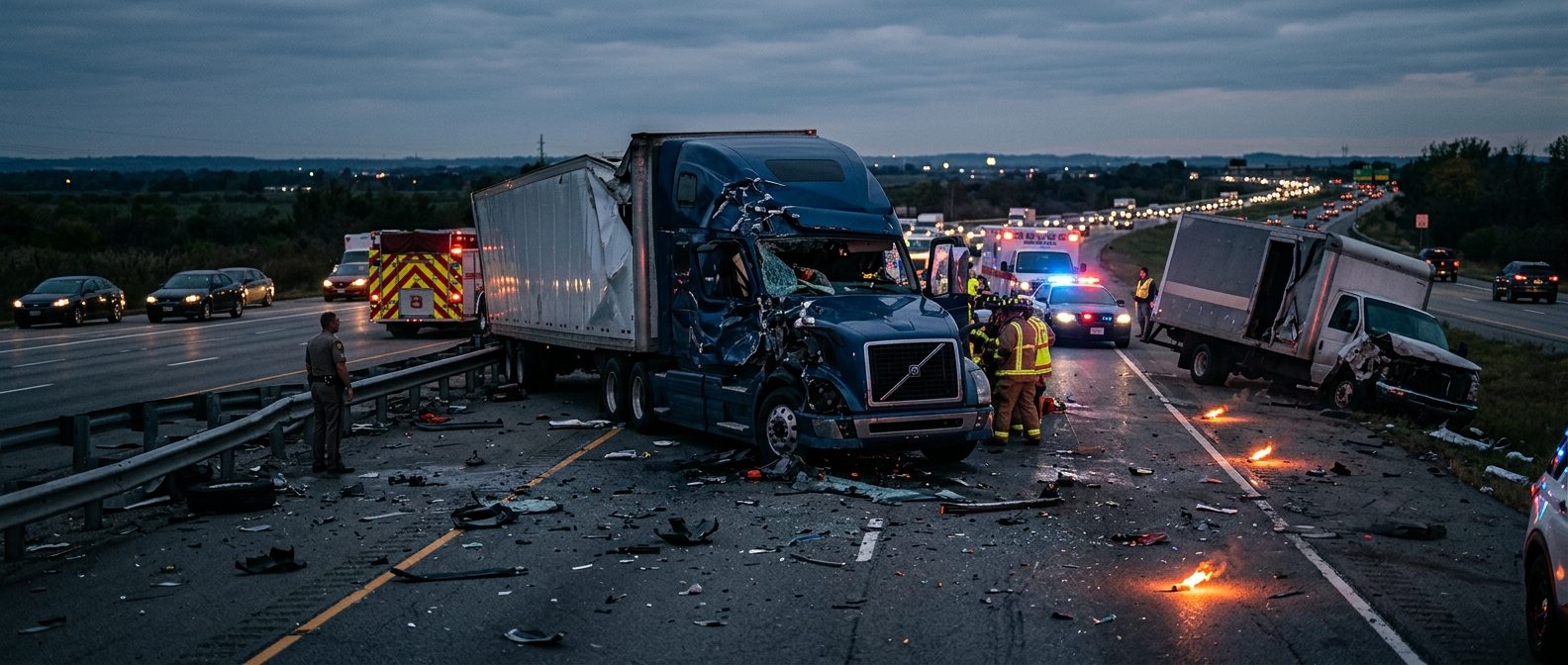
When a commercial truck crashes into you or a loved one, the injuries are often catastrophic. Spinal cord damage, paralysis, traumatic brain injury, amputation, severe burns, or death can result. A serious truck accident involves multiple insurance policies, high coverage limits, and intense disputes over who pays and how much. Understanding what commercial truck insurance covers—and what insurers often fight over—is critical when you’re facing medical bills, lost income, and permanent disability.
If you or a family member suffered a catastrophic injury in a truck crash, do not navigate the insurance claim alone. Talk it through with our team — the first consultation is free, confidential, and carries no obligation.
What Happens When a Commercial Truck Hits You
A catastrophic truck crash can result in life-altering injuries. You may need immediate hospitalization, surgery, and lifelong medical care and rehabilitation. The financial impact is enormous: medical expenses, lost wages, home modifications for paralysis or amputation, assistive devices, ongoing therapy, and pain and suffering.
Unlike minor injury claims, catastrophic-injury cases involve multiple insurance policies and high-stakes disputes over liability and coverage limits. Understanding the insurance landscape before you accept any settlement offer is essential to protecting your rights and your family’s future.
Types of Commercial Truck Insurance Coverage
Commercial trucking companies carry several types of insurance. Each one covers different aspects of an accident:
Liability Coverage is the foundation of commercial truck insurance. It covers injuries and property damage that the truck driver or company caused to others. Federal law requires commercial trucks to carry minimum liability coverage. The limits vary by truck type and cargo.
A truck carrying general freight typically must have at least $750,000 in liability coverage. Hazardous-materials carriers may be required to carry $5,000,000 or more.
Bodily Injury Liability covers medical expenses, lost wages, pain and suffering, and other damages for people injured in the crash. This is the coverage that pays your medical bills and compensation if you’re hurt.
Property Damage Liability covers damage to your vehicle, other vehicles, buildings, utility poles, and other property damaged in the crash.
Physical Damage Coverage pays to repair or replace the truck itself. This includes collision coverage (if the truck hits something or rolls over) and comprehensive coverage (for theft, fire, vandalism, or weather damage).
Uninsured or Underinsured Motorist Coverage protects you if the truck driver has no insurance or insufficient coverage. If you have this coverage on your own policy, it may bridge the gap between the truck’s liability limits and your actual damages.
Cargo Insurance covers loss or damage to the freight the truck was carrying. This is separate from liability and physical damage coverage.
Liability Coverage Limits and Why They Matter in Serious Crashes
Federal regulations require minimum liability coverage based on truck type and cargo. A truck carrying general freight must carry at least $750,000. Hazardous-materials carriers may need $5,000,000 or more. These limits sound substantial until you face a catastrophic injury.
A single spinal cord injury can cost $1 million to $5 million or more over a lifetime. Permanent paralysis (paraplegia or quadriplegia) requires lifelong nursing care, home modifications, specialized equipment, and medical treatment. A traumatic brain injury may result in cognitive impairment, behavioral changes, and the need for supervised living. An amputation requires prosthetics, physical therapy, and retraining for work. Severe burns require multiple surgeries, skin grafts, pain management, and psychological counseling.
When the true cost of a catastrophic injury exceeds the truck’s liability policy limit, you may recover only what the insurance covers. The gap—sometimes millions of dollars—may not be recoverable from the trucking company or driver if they lack assets to pay it. This is why understanding all available insurance policies is critical.
Trucking companies often carry multiple policies or excess (umbrella) coverage to protect against large catastrophic-injury claims. An attorney can identify all available coverage sources and maximize your recovery.
What Is Not Covered by Truck Accident Insurance
Commercial truck insurance policies contain exclusions. Insurance does not cover:
- Intentional acts or criminal conduct by the driver or company
- Safety violations or maintenance failures (though these may trigger a bad-faith claim against the insurer)
- Conduct outside the scope of employment (if the driver was using the truck for personal reasons)
- Negligent hiring, retention, or supervision by the trucking company (though you may have a separate claim against the company)
- Punitive damages in some states (by law, insurers cannot cover these)
- Losses exceeding the policy limit if all available insurance is exhausted
Not sure what your next step is?
Talk it through with our team — the first consultation is free, confidential, and carries no obligation.
Why Serious-Injury Claims Are Fought So Hard
Insurance companies have strong financial incentives to deny, delay, or minimize payouts on catastrophic-injury claims. In the catastrophic-injury cases our attorneys handle, we regularly see insurers and trucking companies:
- Dispute liability. They argue the injured person was partly at fault or that the crash was unavoidable.
- Challenge the severity of injuries. They claim medical treatment was unnecessary or that the disability is temporary.
- Offer early settlements far below the true value of the claim. They hope the injured person will accept quickly while still in shock.
- Delay investigation and payment. They pressure the injured person to accept a low offer out of financial desperation.
Early settlement offers from insurers are often inadequate. Accepting them typically requires you to release all claims against the truck driver and company, forever closing your case. Once signed, you cannot reopen the claim if your injuries worsen or long-term care costs exceed the settlement.
How Commercial Truck Insurance Claims Work After a Serious Accident
After a serious truck crash, follow these steps:
-
Report the crash to police and seek immediate medical attention. Document the scene, vehicle damage, road conditions, and witness contact information.
-
Notify both insurers. Do not give a recorded statement to the truck driver’s insurance company without legal counsel. Anything you say can be used against you.
-
Preserve all evidence: medical records, photographs, witness statements, the police report, and your own notes about the crash and your injuries.
-
Consult an attorney before accepting any settlement offer. An attorney can evaluate the full scope of your injuries, identify all available insurance coverage, and negotiate on your behalf.
-
If settlement negotiations fail, your attorney may file a lawsuit to recover full damages. The trucking company’s insurance policy limits, the driver’s personal coverage, and any umbrella policies will determine the total available recovery.
Understanding Policy Limits and Gaps in Coverage
A $1,000,000 liability policy may sound sufficient, but it is often inadequate for a catastrophic injury. Consider the lifetime costs:
- Spinal cord injury: $1 million to $5 million or more
- Traumatic brain injury with permanent cognitive impairment: $500,000 to $3 million or more
- Amputation with prosthetics and rehabilitation: $500,000 to $2 million or more
- Severe burns requiring multiple surgeries: $250,000 to $1 million or more
- Wrongful death: $500,000 to $5 million or more, depending on the deceased’s age and earning capacity
If your damages exceed all available insurance, you may pursue a direct claim against the trucking company’s assets. Underinsured motorist coverage on your own policy may bridge some gaps, but only if you have it and it applies to the crash.
Frequently Asked Questions
How long do I have to file a claim after a truck accident in Florida?
Under Fla. Stat. §95.11, a personal-injury claim must be filed within two years of the date the injury occurred. After two years, the claim is barred by the statute of limitations.
Can I recover damages if I was partly at fault for the crash?
Yes, under Fla. Stat. §768.81, Florida’s comparative-negligence rule allows recovery if you are 50% or less at fault. However, your recovery is reduced by your percentage of fault.
What if the truck driver’s insurance denies my claim?
If the insurer denies your claim without valid reason, you may have a bad-faith claim against the insurance company. An attorney can evaluate whether the denial was improper and pursue additional damages.
Should I accept the first settlement offer from the truck’s insurance company?
No. Early offers are typically far below the true value of a catastrophic injury. Consult an attorney before accepting any offer.
What is underinsured motorist coverage?
Underinsured motorist coverage on your own auto policy covers injuries if the at-fault driver’s liability insurance is insufficient to pay your damages. It bridges the gap between what the truck’s insurance covers and your actual damages.
Have questions about what happened?
Ask our team directly. The first conversation is free, confidential, and there is no obligation to continue.
Next Steps
If you or a family member suffered a catastrophic injury in a truck crash, do not navigate the insurance claim alone. Insurance companies have teams of adjusters and lawyers working to minimize payouts. You deserve an advocate on your side.
Reach out to discuss what happened, what injuries you or your family member sustained, and what insurance coverage may apply. People in your situation contact us regularly to understand their options and protect their rights.
Critical: The Two-Year Filing Window
Under Florida law, you have two years from the date of the crash to file a personal-injury claim. Once that deadline passes, your claim is barred and you lose the right to recover. If a loved one was killed, the same two-year limit applies to wrongful-death claims brought by the family.
What You Need to Know About Truck Insurance Claims
Commercial Truck Policies Are Different
Commercial trucking operations carry liability insurance, but the coverage limits, exclusions, and claims processes differ significantly from standard auto policies. Trucking companies and their insurers have teams of lawyers working to minimize payouts. You need representation that understands these dynamics.
Multiple Liable Parties
A serious truck crash may involve the truck driver, the trucking company, the vehicle manufacturer, a maintenance contractor, a shipper, or a third-party logistics provider. Each may carry separate insurance. Identifying all responsible parties and their coverage is essential to maximizing recovery.
Comparative Fault in Florida
Florida law allows recovery even if you were partly at fault for the crash. Your compensation is reduced by your percentage of fault, but you can still recover if you were less than 100% responsible. The insurance company will argue your fault was higher than it was.
No Fees Unless There Is a Recovery
We handle catastrophic truck-accident cases on a contingency basis—no fees unless there is a recovery. You pay nothing upfront, and we advance costs. This aligns our interests with yours: we succeed only when you do.
Why Representation Matters in Truck Crash Claims
Protection Against Insurer Tactics
Insurance adjusters will contact you quickly, often before you understand the full extent of your injuries. Anything you say can be used to reduce your claim. We handle all communication with insurers and protect your rights.
Thorough Evidence Preservation
Truck crash scenes generate critical evidence: electronic data recorders (black boxes), maintenance logs, driver records, dispatch communications, and scene photographs. This evidence must be preserved immediately or it disappears. We know what to collect and how to secure it.
Accurate Damage Valuation
Catastrophic injuries—spinal cord damage, paralysis, traumatic brain injury, amputation, severe burns—create lifetime costs: medical care, rehabilitation, home modification, lost income, and pain and suffering. We work with medical and economic experts to value your claim fairly.
Skilled Negotiation and Litigation
Most cases settle, but only after insurers understand you have strong representation. If settlement fails, we are prepared to take your case to trial. The insurance company knows this and negotiates accordingly.