

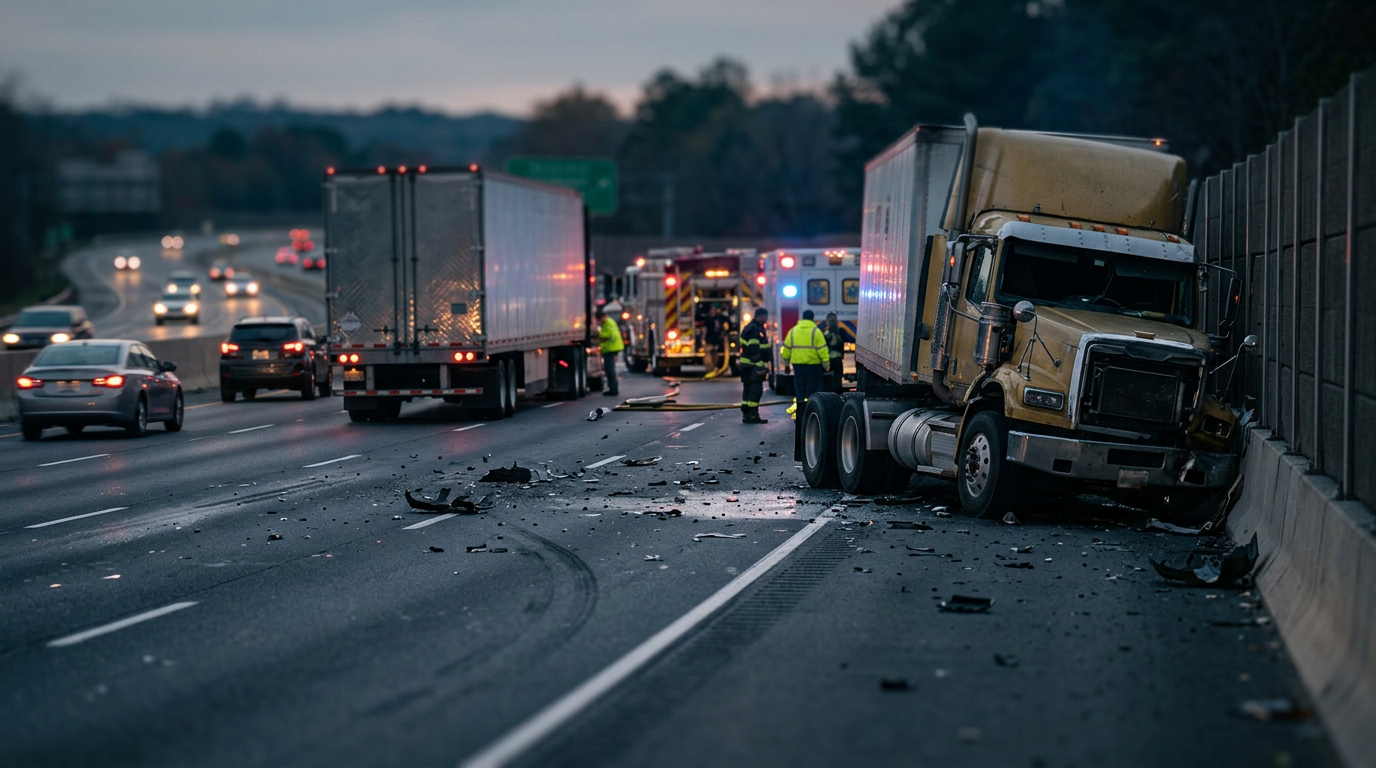
Truck Accidents
Large Truck Crash Fatality Statistics, Explained in Plain Language
Behind every number in the federal crash data is a family whose life changed in an instant. Here is what the statistics actually mean — and what your family can do next.
Understanding the Numbers
80,000 lbs
A fully loaded tractor-trailer can weigh this much — roughly 20 times a passenger car
FARS
NHTSA's Fatality Analysis Reporting System tracks every U.S. traffic death
FMCSA
Federal regulator that publishes annual large-truck crash data
By CHG Lawyers · Published August 12, 2026
Understanding U.S. Truck Crash Fatality Data and What It Means for Families
If you found this page while grieving someone you love — or while sitting beside a hospital bed — we’re sorry. No dataset can measure that. Before we get to any numbers, we want to say plainly: behind every figure in a federal crash report is a person who mattered, and a family whose life changed in an instant. This page exists to help that family understand what happened and what they can do next.
The statistics come from federal public datasets — chiefly NHTSA’s Fatality Analysis Reporting System (FARS) and FMCSA’s Large Truck and Bus Crash Facts. They show a consistent, sobering pattern: most people killed in large-truck crashes are not the truck driver. They are people in smaller passenger vehicles, along with pedestrians, bicyclists, and motorcyclists.
We treat a fatal outcome with the same care as any life-altering injury, because a death is the most catastrophic result there is. Nothing here is graphic or sensational. It is here to help you.
Not sure what your next step is?
Talk it through with our team — the first consultation is free, confidential, and carries no obligation.
Why families look up truck crash fatality statistics
Many people find these numbers after a crash has already changed everything. You may be caring for a spouse who will never walk again. You may be planning a funeral. What we hear most often from families in the catastrophic truck cases our attorneys handle is a single need: they want to know it wasn’t just bad luck — that something failed, and someone should have prevented it.
That instinct is usually right. Federal causation research (below) shows most large-truck crashes trace back to preventable human failures, not chance.
Where the data comes from — and how to read it correctly
Knowing the source lets you trust the number. The most reliable figures come from federal systems that count real crashes rather than estimate them.
- NHTSA’s Fatality Analysis Reporting System (FARS) is a census of every fatal traffic crash in the United States. Because it aims to capture all of them, it is the foundation for national fatality figures. See it directly at NHTSA.
- FMCSA’s Large Truck and Bus Crash Facts draws on the Motor Carrier Management Information System (MCMIS) and focuses specifically on commercial trucks and buses. Review it at FMCSA.
- Two respected private groups analyze that same federal data: the Insurance Institute for Highway Safety (IIHS) publishes “Fatality Facts,” and the National Safety Council publishes similar summaries. When you see a headline number, it almost always traces back to FARS.
One definition changes how you read every report: in federal data, a “large truck” means a vehicle with a gross vehicle weight rating over 10,000 pounds. That includes tractor-trailers and many box and delivery trucks — so a “large truck” crash is not always an 18-wheeler. We cite these authorities for the facts. For the most current confirmed year, read the figure at NHTSA or FMCSA rather than a secondhand summary.
Who is most often killed — and why survivors are so badly hurt
Year after year, the federal data shows the same result: in a fatal large-truck crash, the person killed is most often an occupant of the smaller passenger vehicle, not the truck driver. The IIHS large-truck page reports that a large majority of these deaths are people in cars and other passenger vehicles.
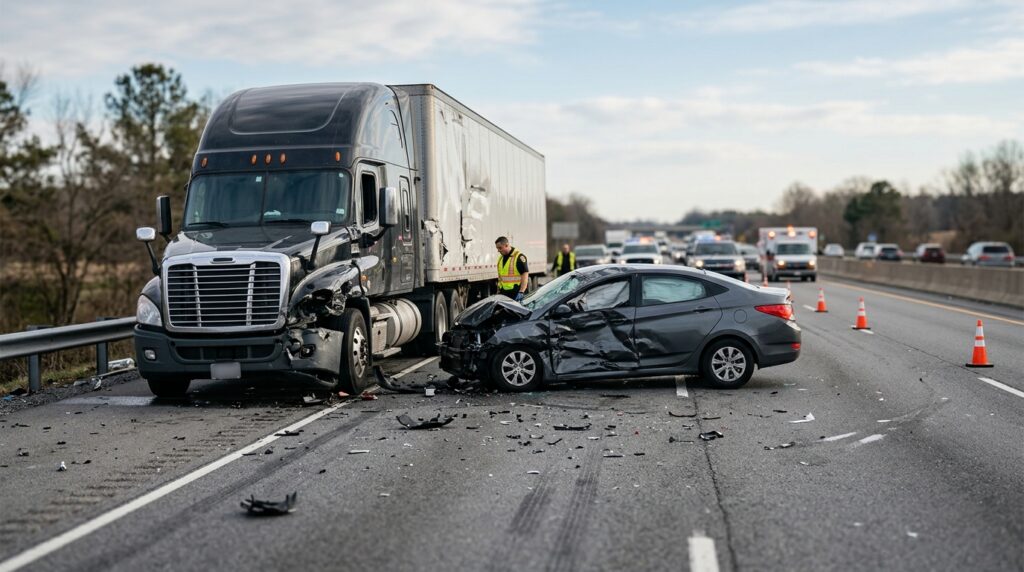
The reason is physics, not fault. A loaded tractor-trailer can weigh 20 to 30 times more than a car. When the two collide, the smaller vehicle absorbs most of the energy. Pedestrians, cyclists, and motorcyclists have no protection at all.
That same weight mismatch is why people who survive so often survive with permanent harm — spinal cord injuries and paralysis, traumatic brain injuries, amputations, and severe burns. These are life-altering catastrophic injuries, and they are exactly the cases we handle.
Have questions about what happened?
Ask our team directly. The first conversation is free, confidential, and there is no obligation to continue.
Reading trends without being misled
Truck-fatality figures are best read across five to ten years, not one point. NHTSA often releases preliminary numbers that are later revised once all data is confirmed, so a single year up or down rarely proves a trend.
Several forces move the numbers: more freight and more miles traveled generally mean more crashes, and economic activity, fuel prices, and shipping demand all play a role. A strong freight year can raise truck traffic — and risk — nationwide.
Two habits protect you from bad conclusions: look at the direction over several years, and always check whether a figure is preliminary or final. For confirmed year-by-year data, go straight to NHTSA or FMCSA — the source, not a copy of a copy.
What the causation research tells us
The Large Truck Crash Causation Study (LTCCS), a major NHTSA/FMCSA research project, examined what actually leads to serious truck crashes. Its findings echo broader traffic-safety research: human choices and preventable failures — not random misfortune — are the leading contributors. In truck cases specifically, the recurring factors include:
- Driver fatigue — too many hours behind the wheel without rest
- Speeding — too fast for conditions or for the load
- Distraction — phones, dispatch devices, or inattention
- Impairment — alcohol, drugs, or certain medications
- Brake and equipment failures — deferred maintenance or defects
- Improper loading — cargo that is overweight or poorly secured
Cargo and stability failures deserve special attention because they so often turn a crash into a fatal one. See our pages on overloaded and improper cargo truck accidents and jackknife and rollover truck accidents.
What the data means for a family after a fatal truck crash
Statistics describe patterns; they do not decide any single case. The specific facts and evidence do. When a large-truck crash causes a death, Florida law generally treats it as a wrongful-death matter brought by the family. When it causes permanent injury, it becomes a catastrophic-injury claim.
Truck cases are rarely simple, and that is often good news for families: more than one company can share responsibility. The driver, the motor carrier, a maintenance contractor, and the company that loaded the cargo can each bear a share. Sorting out who did what takes methodical investigation.
Two Florida rules matter from the very start:
- The deadline. For most negligence and wrongful-death causes of action arising on or after March 24, 2023, Florida sets a two-year limitations period under Fla. Stat. §95.11. Miss it, and a valid claim can be lost regardless of how strong it was.
- Shared fault. Florida follows modified comparative fault under Fla. Stat. §768.81. A recovery is reduced by the injured person’s share of fault, and a person found more than 50% at fault generally recovers nothing. This is exactly why trucking insurers work so hard to shift blame onto the victim.
We can’t promise any outcome, and no honest firm can. What we can do is help you understand your options. Learn more on our page about catastrophic injury claims.
How the data connects to evidence in a real case
The categories used in national data — crash type, vehicle weight, contributing factors — often point straight to the evidence that decides an individual case. That is where a statistic becomes personal.
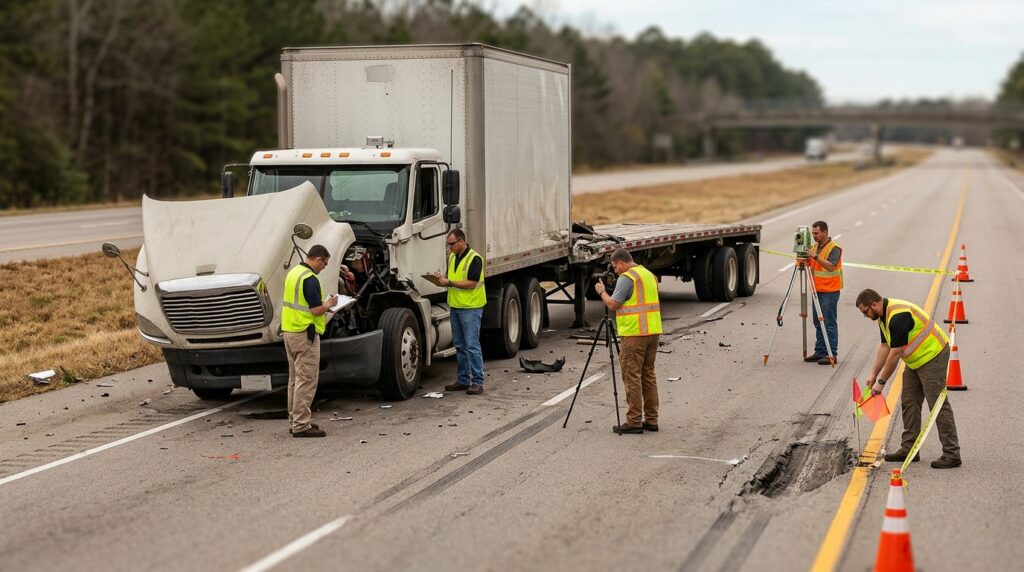
Much of that evidence can disappear fast, and some of it is electronic and can be overwritten:
- Electronic control module (ECM) “black box” data — speed, braking, and throttle in the seconds before impact
- Hours-of-service logs — whether the driver was over their federal driving limit
- Maintenance and inspection records — brake and tire condition
- Cargo and loading documents — total weight and how the load was secured
- Dashcam and telematics data — increasingly standard on commercial fleets
Motor carriers are only required to keep some of these records for a limited time, and routine business practices can erase others. Acting sooner is often what preserves a family’s ability to learn the full truth. This page is educational, not legal advice about your situation.
Want to know where you stand?
Tell us what happened and our team will walk you through the options available to you, at no cost.
Getting help and next steps
If your family has lost someone, or is facing a permanent injury from a truck crash, you deserve clear answers and real respect. Numbers can’t bring back what you’ve lost — but understanding your rights, and the Florida deadlines above, can help you take the next step before the clock runs out.
CHG Personal Injury Lawyers focuses on catastrophic and fatal injury cases. We are based in Florida and take cases nationwide, and our licensed attorneys handle spinal cord injuries, brain injuries, amputations, severe burns, and wrongful-death claims arising from serious truck crashes.
To understand the crashes behind these statistics, read our pillar guide on catastrophic truck accident injuries. When you’re ready, request a free case evaluation. There is no cost to talk with us.
Frequently asked questions
What percent of fatal crashes involve large trucks?
Large trucks are involved in a notable share of U.S. fatal crashes each year, and the exact percentage changes annually. Because these vehicles travel far more miles and weigh far more than cars, a small share of vehicles drives a larger share of deadly outcomes. Check the current figure at FMCSA or NHTSA for the latest confirmed year.
Who is most often killed in a large truck crash?
Occupants of the smaller passenger vehicle are killed far more often than truck occupants, because a loaded truck can weigh 20 to 30 times more than a car and the smaller vehicle absorbs most of the force.
How many people die in truck accidents per year?
Thousands of people die each year in U.S. large-truck crashes, according to NHTSA’s FARS data. The exact number varies by year, so verify it directly at NHTSA or FMCSA.
Where does U.S. truck crash fatality data come from?
The core data comes from NHTSA’s Fatality Analysis Reporting System (FARS) and FMCSA’s Large Truck and Bus Crash Facts (from MCMIS). Groups like IIHS and the National Safety Council analyze that same federal data.
What is the deadline to file a claim after a fatal truck crash in Florida?
For most causes of action arising on or after March 24, 2023, Florida sets a two-year deadline under Fla. Stat. §95.11. Because deadlines and their exceptions vary by case, contact a lawyer promptly to protect your rights.
Statistics Don't Decide Your Family's Claim
National data explains why truck crashes are so often catastrophic, but it can never tell you what happened in your specific crash. Only a careful investigation — the truck's black box, driver logs, maintenance records, and the carrier's hiring practices — can do that. Evidence disappears quickly after a serious crash, so acting early matters.
Why Truck Crashes Cause So Many Serious Injuries and Deaths
Extreme Weight Difference
A loaded semi can outweigh a car by tens of thousands of pounds. In a collision, that mismatch is why occupants of the smaller vehicle so often suffer spinal cord injuries, traumatic brain injuries, or fatal harm.
Longer Stopping Distances
Large trucks need far more room to stop than passenger vehicles. When a driver follows too closely or speeds, the result can be a high-force impact rather than a near miss.
Who Is Most Often Harmed
Federal data consistently shows that most people killed in large-truck crashes are occupants of the other vehicle — not the truck driver. The people the numbers describe are often families in ordinary cars.
Multiple Responsible Parties
A single crash can involve the driver, the trucking company, a maintenance provider, or a cargo loader. Understanding who was negligent is central to a catastrophic-injury or wrongful-death claim.
Reading Truck Crash Data Without Being Misled
The Percentage Changes Every Year
Large trucks are involved in a notable share of U.S. fatal crashes, but the exact figure shifts annually. Always check the most recent confirmed year at FMCSA or NHTSA rather than relying on an old headline.
A Small Share Drives Big Outcomes
Trucks make up a modest portion of vehicles on the road, yet their weight and mileage mean they appear in a disproportionate share of deadly crashes. That is a physics story, not a coincidence.
Numbers Describe People
Every fatality in the dataset is a person and a grieving family. We treat these statistics with dignity, never as a headline — and we use them to explain why these losses deserve serious legal attention.
Data Is Not Legal Advice
Statistics can show a pattern, but they cannot value a claim or prove fault. That requires an investigation into your specific crash and a review by a licensed attorney.