

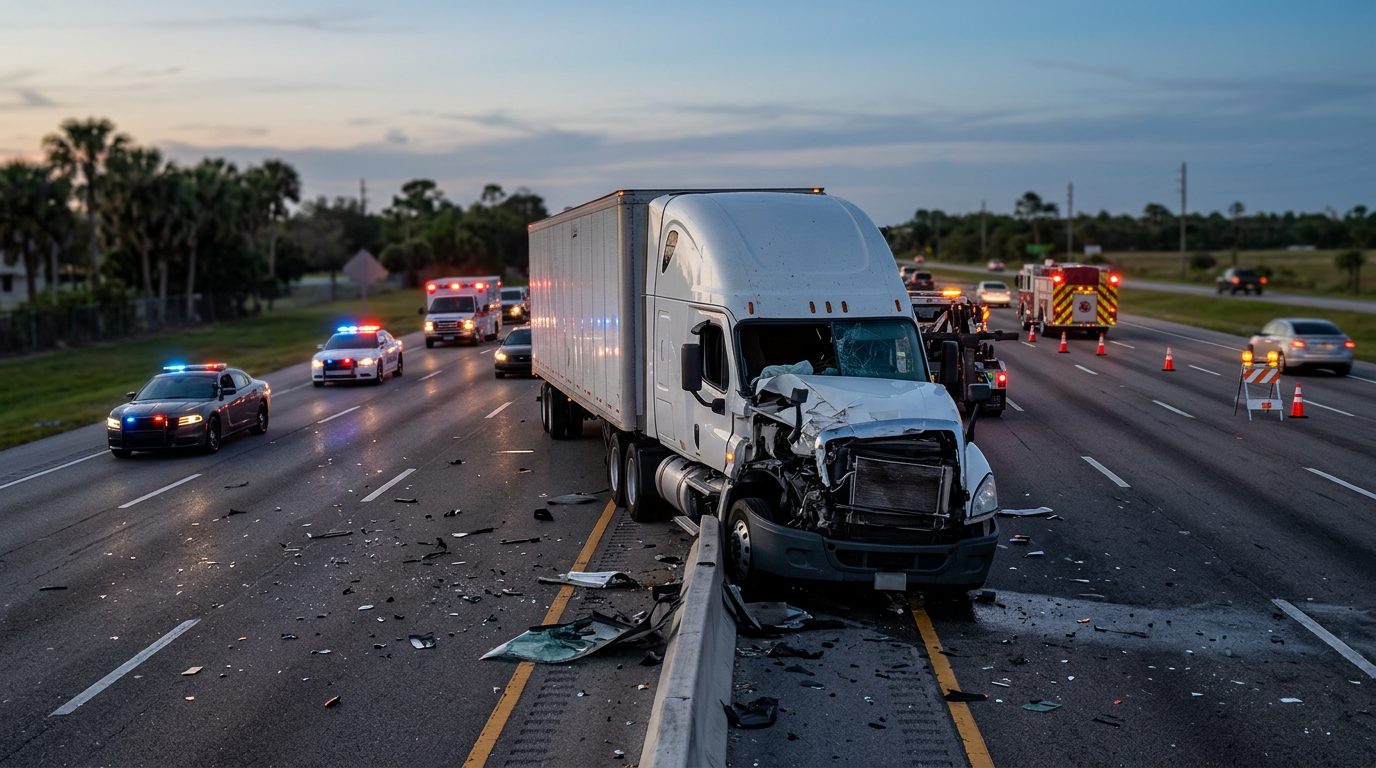
Truck Accidents · Florida
Understanding Truck Crash Fatality Data in Florida
A plain-language guide to NHTSA's FARS dataset—what it counts, where to find it, and what these numbers mean for families who have lost someone in a truck crash.
A National Record, Kept Since 1975
1975
First year of FARS records
30 days
Death window a crash must fall within to be counted
Free
Public access to every dataset
Nationwide
Every fatal crash on U.S. public roads
By CHG Lawyers · Published August 08, 2026
Understanding NHTSA FARS Data on Fatal Truck Crashes in Florida
Are you looking for truck crash fatality statistics in Florida? The main official source is a free federal database. It is called the Fatality Analysis Reporting System (FARS). It is run by the National Highway Traffic Safety Administration (NHTSA).
This page explains what that data is. It shows you how to read it without being misled. And it explains what those numbers mean for a family that has lost someone.
We keep this plain and respectful. Behind every number in a crash dataset is a person and a family. Our goal is clarity, not shock.
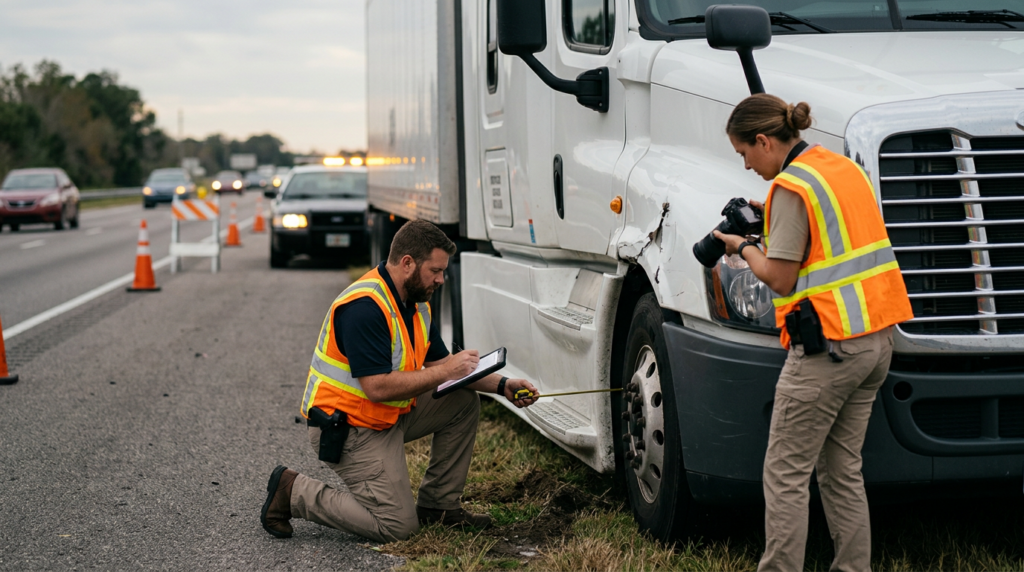
If your family has lost a loved one, acting early helps protect the proof a wrongful-death claim may depend on. Talk it through with our team — the first consultation is free, confidential, and carries no obligation.
Why families look for truck crash fatality statistics in Florida
Many people reach this page after losing a loved one in a large-truck crash. They want to understand how and why it happened. They also want to know if it fits a larger, preventable pattern.
That is a normal question. Official statistics can help a grieving family feel less alone. They show that fatal truck crashes are a known public-safety problem. Federal researchers track it closely.
Here is what this page will and won’t do. We explain where the data comes from. We show you how to read it fairly. And we show you how to pull current Florida figures yourself.
We will not paste a scary death count that has no context. It may already be out of date. And statistics can’t tell you who was at fault in your crash. Only a careful investigation can do that.
What is NHTSA FARS data?
FARS is a national census of fatal traffic crashes. It counts every fatal motor-vehicle crash on U.S. public roads. NHTSA has kept this data since 1975. A crash is only counted when at least one person dies within 30 days of it.
Trained FARS analysts in each state build the data. They use source documents such as:
- police crash reports;
- state vehicle registration and driver-licensing files;
- death certificates;
- coroner and medical-examiner reports; and
- highway-department records.
A census is not a sample. So FARS aims to capture every qualifying fatal crash in the country, including Florida.
What counts as a “large truck”?
In FARS, a large truck is a heavy vehicle. It has a gross vehicle weight rating over 10,000 pounds. That includes tractor-trailers (semis), large box trucks, and other heavy commercial vehicles. It does not include ordinary pickups or passenger vans.
This definition matters because of weight. A loaded semi can reach 80,000 pounds under federal limits. A passenger car is far lighter. That huge gap is a major reason truck crashes so often cause catastrophic or fatal injuries.
Crash counts, fatality counts, and rates
These three terms sound alike but mean different things:
- Crash counts — the number of fatal crashes.
- Fatality counts — the number of people who died. One crash can involve several deaths.
- Rates — deaths measured against exposure, such as miles driven or registered vehicles.
Mixing these up is the most common mistake people make. A rate tells you far more about danger than a raw count. That is because it accounts for how much driving actually happened.
FARS is public and free. NHTSA finalizes each data year over time. So always check the current data year at the official source. Don’t trust a single number you saw somewhere online.
How to read Florida truck crash fatality data without being misled
The most important rule is simple. A number by itself can mislead you. You need context.
First, understand the time lag. FARS finalizes a year’s data about a year or more after that year ends. The newest figures often come out as preliminary numbers or as an Annual Report File. These arrive before the final file. Comparing a preliminary year to a final year can lead you to the wrong conclusion.
Second, look at who dies. In large-truck crashes, most deaths are often people in other vehicles. That includes drivers, passengers, motorcyclists, and pedestrians. This happens because of the weight mismatch. The people most at risk usually aren’t inside the truck.
Third, don’t assume a rising count means the roads got more dangerous. A count can climb for many reasons. There may be more traffic, more residents, more freight, or a change in reporting. That is why exposure measures like miles driven matter.
Finally, remember what statistics can and can’t do. They describe patterns across thousands of crashes. They cannot prove the cause of, or legal blame for, any single crash — including yours.
Not sure what your next step is?
Talk it through with our team — the first consultation is free, confidential, and carries no obligation.
What the numbers suggest about fatal truck crashes in Florida
Florida has a large population and heavy freight traffic. National data reflects that. Heavy trucks run daily on I-95, I-75, I-4, and Florida’s Turnpike.
Researchers who study fatal truck crashes point to a few common factors:
- High speeds on interstates and rural highways.
- The size and weight mismatch between trucks and passenger vehicles.
- Long stopping distances — a fully loaded semi needs far more room to stop than a car.
Because of that mass difference, truck crashes are more likely to cause catastrophic or fatal injuries. These include spinal cord injuries, traumatic brain injuries (serious head injuries), and severe burns. Motor-vehicle crashes are a leading cause of traumatic spinal cord injury. Such an injury can cause permanent loss of movement and feeling (Mayo Clinic).
We are deliberately not quoting a specific year’s Florida death count here. Those figures change as NHTSA moves data from preliminary to final. A number that looks solid today may be revised tomorrow. To protect accuracy, we point you below to NHTSA’s live tools. There you can pull the current figure for the exact data year and vehicle type you need.
Behind each data point is a family. That is why the legal picture matters just as much as the numbers.
Beyond the statistics: what a fatal truck crash means for a family
Sometimes another party’s carelessness causes a fatal truck crash. Then surviving family members may have a wrongful-death claim. This is a court case brought after a death. It falls under Florida’s Wrongful Death Act, Fla. Stat. §§768.16–768.26. It lets the family seek accountability and compensation through the civil courts.
In Florida, one person files this case. It is the personal representative of the person who died. That is the person legally appointed to handle the estate. The representative acts for the surviving family — a spouse, children, or parents. They recover for both the estate and the survivors (Fla. Stat. §768.20). You don’t need to know these terms to begin. A lawyer can explain who qualifies.
Families often don’t realize one thing. More than the truck driver may share the blame. In serious truck cases, others may be liable too. This can include:
- the motor carrier (trucking company);
- a maintenance provider;
- a cargo loader; or
- a broker.
Federal rules often become central too. These are the Federal Motor Carrier Safety Regulations (49 C.F.R. Parts 350–399). They include limits on driving hours and duties to inspect trucks.
Florida uses a modified comparative-negligence rule. This rule reduces or blocks recovery based on your share of fault. A claimant found more than 50% at fault generally recovers nothing (Fla. Stat. §768.81). That is one more reason a thorough investigation of fault matters.
There is also a deadline. Most negligence cases that started on or after March 24, 2023 must be filed within two years (Fla. Stat. §95.11(5)(a)). But many families act fast for another reason. It’s not the courthouse deadline. It’s evidence that disappears:
- A truck’s electronic logging device (ELD) and event data recorder (“black box”) may record speed, braking, and hours driven. But data can be overwritten when the truck returns to service.
- Driver hours-of-service logs, inspection reports, and maintenance records are business records. A carrier may not keep them forever.
- The traffic crash report from police, physical evidence at the scene, and dashcam or nearby video footage can all fade or vanish over time.
A prompt written request can stop this loss. So can a preservation letter to the carrier. It can save that evidence while the family grieves.
We cannot promise any specific outcome, and every case is different. But you deserve to understand your options. These can include medical and funeral costs and the loss of the loved one’s support and companionship.
Where to find official Florida truck crash data yourself
Start with two NHTSA tools. Use the FARS Query tool and the FIRST/Encyclopedia interface. Both are available through NHTSA. They let you filter by state, year, and vehicle body type. So you can isolate large-truck deaths in Florida for a specific data year.
You can also review Florida’s own crash dashboards. They come from the Florida Department of Highway Safety and Motor Vehicles. And you can check carrier safety histories through the Federal Motor Carrier Safety Administration (FMCSA). Whenever you read a figure, note the data year. Also note whether it is preliminary or final.
Keep one limit in mind. Public data shows broad patterns. But it cannot tell you whether one crash was preventable or who is legally responsible. That takes a case-by-case investigation.
Talk to a lawyer about a fatal Florida truck crash
Did your family lose someone in a truck crash? A licensed attorney can explain your options in plain language, with no pressure.
CHG Personal Injury Lawyers is a Florida-based firm. We handle catastrophic and wrongful-death truck cases nationwide. We offer a free case evaluation and bilingual (English/Spanish) support. Our attorneys are admitted to The Florida Bar.
This page is general information, not legal advice. It is not a guarantee of any result. To talk through your situation, request a free case evaluation.
For more, see our main guide to catastrophic truck accident injuries.
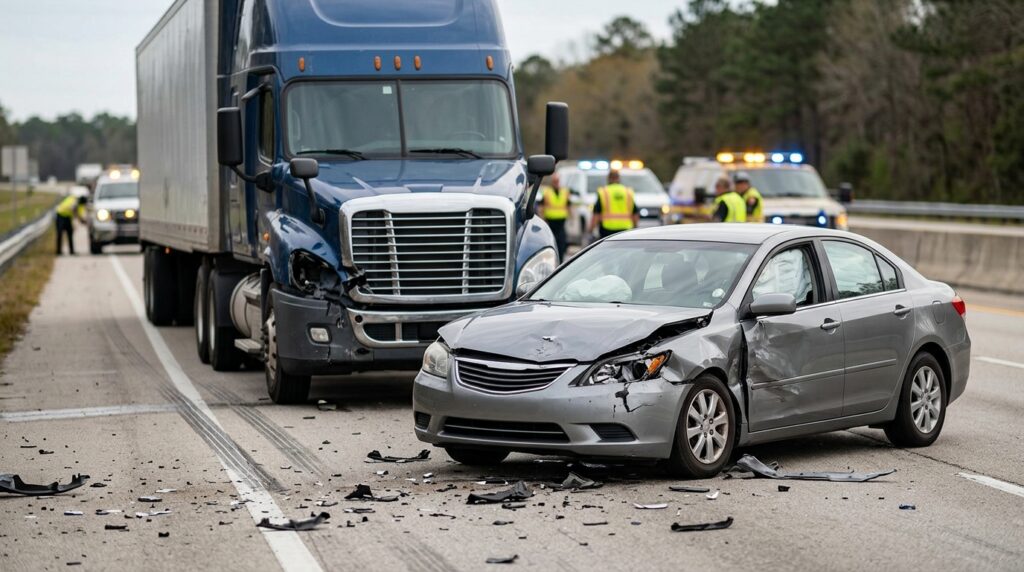
Have questions about what happened?
Ask our team directly. The first conversation is free, confidential, and there is no obligation to continue.
Frequently asked questions
What is NHTSA FARS data?
FARS is the Fatality Analysis Reporting System. It is a free national census of every fatal motor-vehicle crash on U.S. public roads. NHTSA has kept it since 1975. A crash is counted only when someone dies within 30 days.
Where can I find official Florida truck crash fatality statistics?
Use NHTSA’s FARS Query and FIRST/Encyclopedia tools at nhtsa.gov. Filter by state, data year, and vehicle body type. Then check whether each figure is preliminary or final.
Who usually dies in large-truck crashes?
People in other vehicles and vulnerable road users often make up most of the deaths. This is because of the size and weight gap between trucks and passenger vehicles.
Who can file a wrongful-death claim after a fatal truck crash in Florida?
The personal representative of the person who died files the claim. They act for surviving family members like a spouse, children, or parents, under Fla. Stat. §768.20.
How long do I have to file a claim in Florida?
Most negligence cases starting on or after March 24, 2023 must be filed within two years under Fla. Stat. §95.11. Acting sooner also helps preserve evidence like the truck’s black box and driver logs.
Can more than the truck driver be held responsible?
Yes. Trucking companies, maintenance providers, cargo loaders, and brokers may share the blame. It depends on what an investigation reveals under the Federal Motor Carrier Safety Regulations and state law.
Where the Official Numbers Come From
FARS Query Tool
NHTSA's Fatality Analysis Reporting System lets you filter fatal-crash records by state, year, and crash type—including crashes involving large trucks in Florida.
FIRST / Encyclopedia
The Fatality and Injury Reporting System Tool and the FARS Encyclopedia summarize trends over time so you can compare year-to-year totals without downloading raw files.
State-Level Detail
You can narrow results to Florida and, in many cases, to specific counties and roadways, which helps explain the conditions surrounding a fatal truck crash.
What FARS Data Does and Does Not Tell You
It counts fatalities, not fault
FARS records that a death occurred and describes crash conditions. It does not decide who was legally responsible—that requires a full investigation of the specific crash.
The 30-day rule matters
A crash is included only when a person dies within 30 days. This means the data reflects the most catastrophic outcomes, but is not a real-time count.
It is a starting point
Public statistics can show that large-truck crashes are a serious, ongoing danger—but your family's claim turns on the evidence in your own case.
Behind every number is a family
These datasets exist to make roads safer. For a grieving family, they are a reminder that a preventable loss deserves to be taken seriously.
Evidence Can Disappear Quickly After a Fatal Truck Crash
Trucking companies often preserve black-box data, driver logs, and maintenance records only for a limited time. If your family has lost a loved one, acting early helps protect the proof a wrongful-death claim may depend on. Speaking with a licensed attorney does not commit you to anything.