

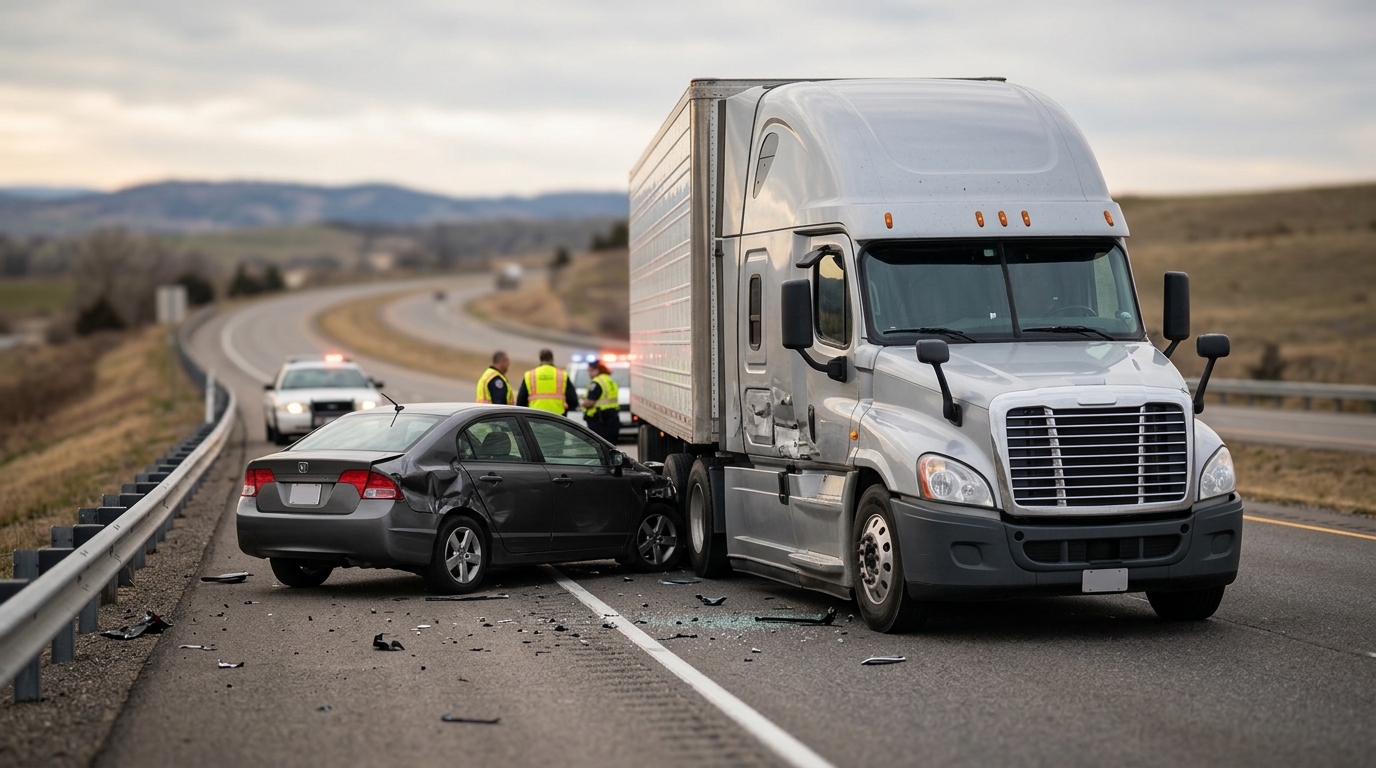
Truck Accidents · Fatality Data
What FARS Data Reveals About Truck Crash Fatalities
Large-truck crashes kill thousands of people every year in the United States. We break down the federal data in plain language — and explain what it means for families left behind after a catastrophic or fatal crash.
The Scale of the Problem, by the Numbers
~5,340
Deaths in large-truck crashes reported for 2024 (NSC/IIHS)
6 in 10
Truck-crash deaths that are occupants of other vehicles (IIHS)
FARS
The federal dataset tracking every U.S. traffic fatality
Nationwide
Catastrophic and fatal truck-crash cases accepted
By CHG Lawyers · Published July 29, 2026
Truck Accident Fatality Statistics: What FARS and Federal Data Show
Each year, roughly 5,000 to 5,500 people die in crashes involving large trucks on U.S. roads, according to federal datasets like NHTSA’s FARS and FMCSA’s Large Truck and Bus Crash Facts. Most of those killed are not the truck drivers. They’re people in passenger cars, plus pedestrians, cyclists, and motorcyclists. Below, we explain what these truck accident fatality statistics actually say, where the numbers come from, and what they mean for families left behind.
We handle catastrophic and fatal truck crash cases. So we read this data not as abstract counts, but as families whose lives changed in a moment. This page treats every number with that in mind.

Not sure what your next step is?
Talk it through with our team — the first consultation is free, confidential, and carries no obligation.
Why truck crash fatality statistics matter
Large trucks are far heavier than cars, so their crashes are far deadlier. A loaded tractor-trailer can weigh 20 to 30 times more than a passenger car. When those two collide, the people in the smaller vehicle absorb most of the force.
Understanding the data helps in two ways. It helps grieving families make sense of a loss. And it shows the public that many of these deaths are preventable.
A death is the most catastrophic outcome there is. We discuss it here with care, never sensationally. All figures below come from published government and safety-group datasets, named throughout. Because these datasets update each year, always check the newest release for current-year numbers.
Where these numbers come from: FARS and the key datasets
The main source is FARS, the Fatality Analysis Reporting System, run by NHTSA. FARS is a national census of every crash on a public road that causes a death within 30 days. It’s the most complete count of U.S. traffic deaths.
Several other datasets build on that federal data:
- FMCSA’s Large Truck and Bus Crash Facts compiles crash, injury, and fatality data specific to commercial trucks and buses.
- IIHS Fatality Facts, from the Insurance Institute for Highway Safety, summarizes and analyzes the federal numbers.
- NSC Injury Facts, from the National Safety Council, does the same and adds broader accidental-death context.
One term matters for reading these figures correctly. A “large truck” in federal data usually means a vehicle with a gross vehicle weight rating (its maximum loaded weight) over 10,000 pounds. That includes semis, big rigs, and many box trucks, not pickups or vans.
Also keep timing in mind. Federal crash datasets are finalized after the data year ends. So the “latest” published year is often one or two years behind today. When you cite a number, cite its data year too.
How many people die in truck accidents each year?
Recent federal data shows roughly 5,000 to 5,500 people killed each year in crashes involving large trucks in the United States. NSC Injury Facts and IIHS Fatality Facts both reported about 5,340 such deaths in 2024. FMCSA’s Large Truck and Bus Crash Facts reported figures in a similar range for the prior year.
Here’s a nuance most pages blur. There’s a difference between people killed in crashes involving large trucks and large-truck occupants specifically. The first, larger number counts everyone who died in those crashes. The second counts only people inside the truck.
That distinction reveals a hard truth in the data. The majority of people killed in large-truck crashes are not in the truck. IIHS has reported that roughly 6 in 10 deaths were occupants of cars and other passenger vehicles, while only about 1 in 6 were truck occupants.
Exact totals shift every year. Confirm the current number directly from FARS, FMCSA, IIHS, or NSC before relying on it.
Long-term trends in large-truck crash fatalities
Large-truck crash deaths have risen over roughly the past decade, according to FMCSA and IIHS data, though year-to-year numbers move up and down. NSC has reported that large-truck crash deaths climbed about 30% over the last ten years.
Raw counts tell only part of the story. Analysts also track fatalities per 100 million vehicle miles traveled (VMT). This rate-based view adjusts for how much trucks actually drive.
Why does that matter? Raw death counts can rise partly because there are simply more trucks and more miles driven, not only because roads got more dangerous. A rate view helps separate those effects. Either way, the trend underlines why prevention and accountability matter. To understand how broken safety rules connect to these crashes, see our page on federal trucking safety rules and violations.
Who is most often killed in large-truck crashes
Occupants of passenger vehicles make up the largest share of large-truck crash deaths, because of the size and weight mismatch. When a car meets a semi, physics is not on the car’s side.
Others outside the truck are vulnerable too. Pedestrians, bicyclists, and motorcyclists have little protection in any collision with a large truck. Even a low-speed impact can be fatal for them.
What about the truck drivers themselves? For the “leading cause of death for truck drivers” question, federal data shows truck occupant deaths most often happen in specific crash types, such as rollovers and multi-vehicle collisions. Truck occupants make up the smaller share of total deaths, but their losses are real and count fully in the data.
Behind each of these groups are people. A commuter. A parent picking up kids. A rider on a Sunday drive. The numbers exist to describe them, not replace them.
Have questions about what happened?
Ask our team directly. The first conversation is free, confidential, and there is no obligation to continue.
Where and when fatal truck crashes happen
Fatal large-truck crashes cluster on certain roads and at certain times, according to federal and IIHS data. A large share happen on rural roads and interstates, where speeds are higher. Many also occur during daytime weekday hours, when commercial trucking activity is highest.
State-by-state numbers vary widely, as IIHS state data shows. Big, high-traffic states with major freight corridors tend to report more truck-crash deaths. Florida, with heavy interstate traffic on routes like I-95, I-4, and I-75, sees serious truck crashes in and around Miami, Orlando, Tampa, and Jacksonville.
Knowing where and when these crashes concentrate helps drivers, planners, and safety officials focus prevention. It also helps families understand the conditions their loved one faced.
What the data says about causes
Most crashes trace back to human factors, but the popular “90% of accidents are human error” line oversimplifies the research. That figure comes from broad crash-causation studies that looked at all crashes, not truck crashes alone. It’s a useful headline, but a crude one.
Real crashes usually have more than one cause. Common contributing factors in truck crashes include:
- Driver fatigue and hours-of-service violations
- Speeding and driving too fast for conditions
- Distraction, including phone use
- Impairment from alcohol or drugs
- Brake and equipment failures
- Improper loading or unsecured cargo
Fault is not one-sided in the dataset. Both truck-driver and passenger-vehicle-driver behavior contribute across crashes. That’s exactly why careful, independent investigation matters after any single crash.
How truck crash deaths compare to other accidental deaths
Motor-vehicle crashes rank among the leading causes of accidental death in the United States, per NSC Injury Facts, alongside poisonings (largely drug overdoses) and falls. Large-truck fatalities are a subset of all traffic deaths, not a separate category.
For scale, IIHS reported 39,254 motor-vehicle crash deaths in the U.S. in 2024. The roughly 5,340 large-truck-involved deaths that year sit inside that larger total. So while truck crashes cause a minority of all road deaths, they’re deadly out of proportion to how many trucks are on the road.
What these statistics mean for families after a fatal truck crash
Behind every one of these numbers is a family. If you lost someone in a truck crash, the data can feel cold. But it also points to something important: many of these deaths were preventable, and someone may be responsible.
When a truck crash death is caused by negligence, Florida law may let the family bring a wrongful-death claim (a lawsuit for the losses a death causes the survivors). We can’t promise any specific outcome. But we can explain how the process works and what your family may be able to recover.
Two Florida rules matter early. First, deadlines are strict. For most negligence claims that arose on or after March 24, 2023, the deadline is generally two years under Fla. Stat. §95.11. Second, Florida uses modified comparative negligence (shared fault): a claimant found more than 50% at fault generally recovers nothing, under Fla. Stat. §768.81.
Practical next steps help protect your family’s rights:
- Preserve evidence. Trucking companies keep logs, black-box data, and maintenance records that can disappear fast.
- Understand the investigation. Police reports and FMCSA data help, but a full picture often takes more digging.
- Talk to a licensed attorney. The Florida Bar offers neutral guidance on choosing one at its consumer resources.
Some crash survivors face life-altering harm rather than death, such as a spinal cord injury or a traumatic brain injury. To learn more about truck cases generally, see our truck accidents pillar page.
If your family is ready to talk, you can request a free case evaluation. There’s no pressure and no obligation.
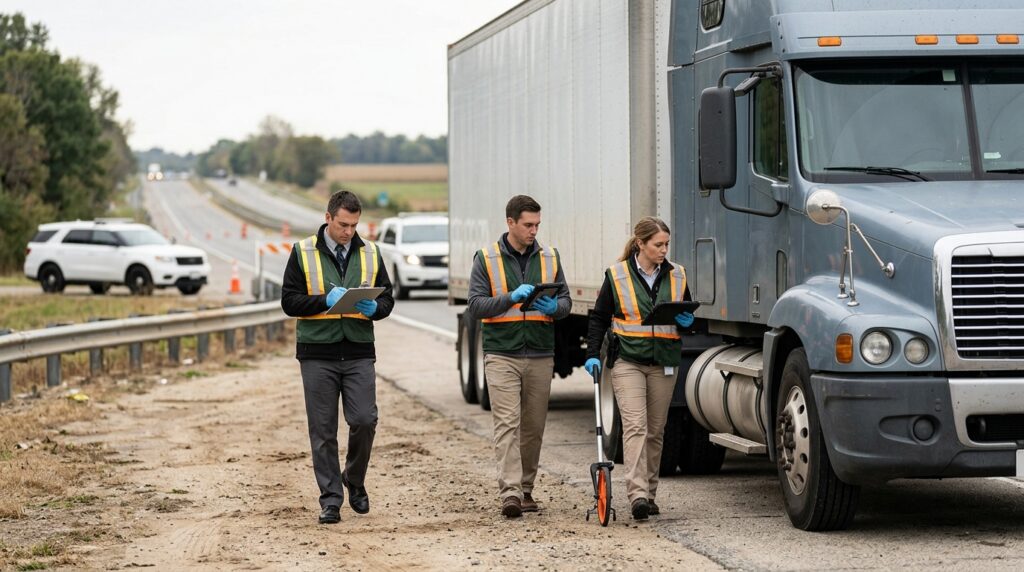
Want to know where you stand?
Tell us what happened and our team will walk you through the options available to you, at no cost.
Frequently asked questions
How many truck accident deaths happen per year?
Recent federal data shows roughly 5,000 to 5,500 people die each year in crashes involving large trucks in the U.S. NSC and IIHS reported about 5,340 such deaths in 2024. Confirm the latest figure from FARS or FMCSA.
What percentage of truck crash deaths are the other driver?
IIHS has reported that about 6 in 10 people killed in large-truck crashes were occupants of cars and other passenger vehicles. Only about 1 in 6 were truck occupants.
Are truck accident fatalities increasing or decreasing?
Large-truck crash deaths have generally risen over the past decade, per FMCSA and IIHS data, though year-to-year numbers vary. NSC reported roughly a 30% increase over ten years.
Where can I find official truck crash fatality data?
The main official sources are NHTSA’s FARS, FMCSA’s Large Truck and Bus Crash Facts, IIHS Fatality Facts, and NSC Injury Facts. Always check the newest published release for current-year numbers.
This article is general legal and safety information, not legal advice. CHG Personal Injury Lawyers is a Florida-based firm handling catastrophic-injury and wrongful-death cases nationwide. Reading this page does not create an attorney-client relationship.
A Note on the Numbers
Statistics change every year as new federal data is released. Figures cited here reflect recent reporting from NHTSA's FARS, FMCSA, IIHS, and the NSC. Always confirm the latest published figure before relying on it. No statistic can predict the outcome of any individual case.
How to Read Truck-Crash Fatality Data
Who Is Being Killed
FARS and IIHS data consistently show that the majority of people killed in large-truck crashes are not truck occupants — they are people in passenger vehicles, along with pedestrians, cyclists, and motorcyclists. A truck's size and weight put everyone else at far greater risk.
What Counts as a 'Large Truck'
Federal datasets generally define a large truck as a vehicle over 10,000 pounds — semi-trucks, tractor-trailers, tankers, and heavy commercial vehicles. That weight is central to why these crashes so often cause catastrophic or fatal injuries.
Where the Data Comes From
FARS (Fatality Analysis Reporting System) is maintained by NHTSA and records every fatal traffic crash on U.S. public roads. FMCSA tracks commercial-vehicle safety data. IIHS and the NSC publish analyses built on top of these federal sources.
Why the Cause Matters
Behind each number is often a preventable failure — driver fatigue, speeding, improper loading, poor maintenance, or a trucking company that pushed unsafe schedules. Identifying the cause is central to holding the responsible parties accountable.
What This Means for a Grieving Family
A Death Is the Most Catastrophic Outcome
When a truck crash takes a loved one's life, the surviving family may have a wrongful-death claim. Nothing undoes the loss, but the law provides a path toward accountability and financial security.
Evidence Disappears Fast
Truck data recorders, driver logs, and maintenance records can be lost or overwritten. Acting promptly helps preserve the proof that federal data alone cannot show about a specific crash.
Trucking Companies Have Teams Ready
Insurers and corporate defense lawyers often move within hours of a serious crash. Families deserve someone protecting their interests just as quickly.
You Do Not Have to Face It Alone
Our licensed attorneys, admitted to the Florida Bar and handling catastrophic cases nationwide, can review what happened and explain your options — at no cost to you.