

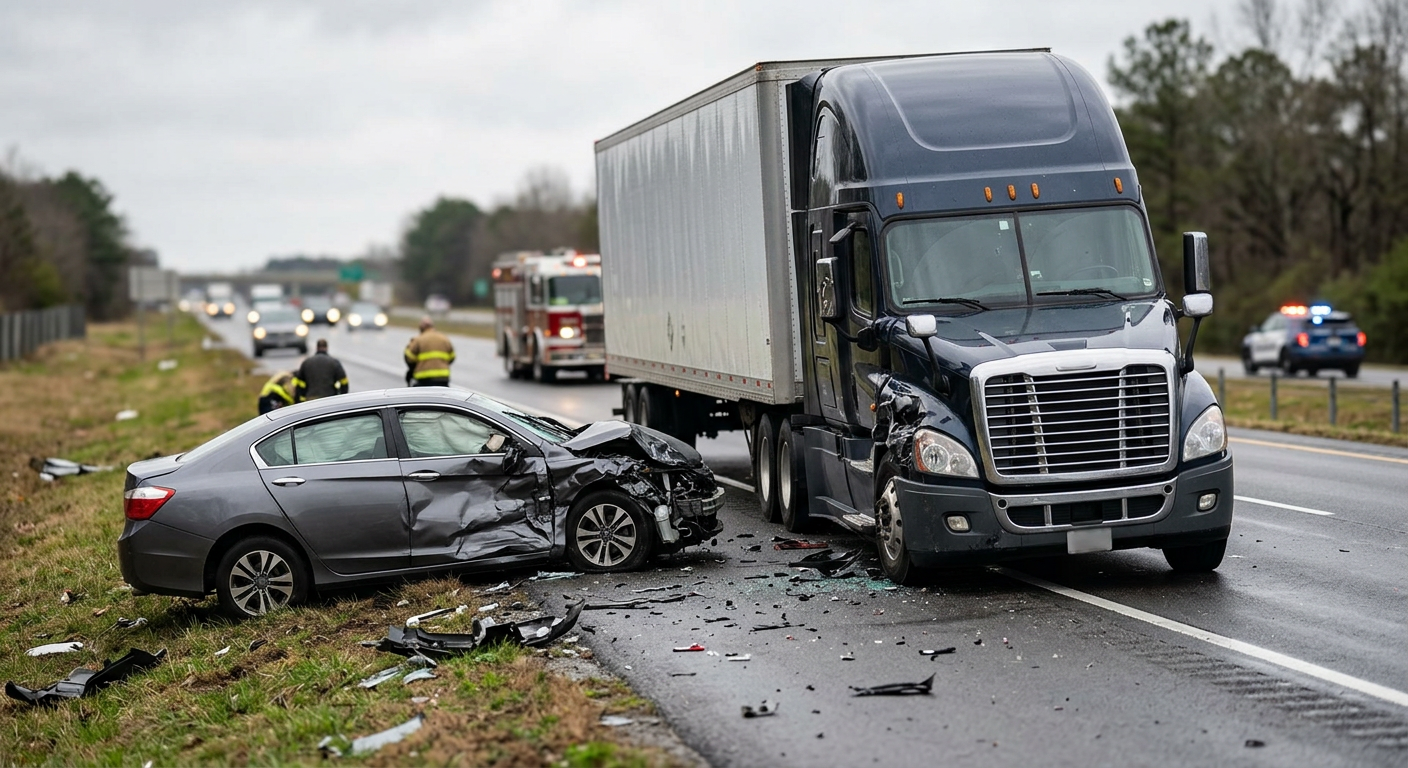
Truck Accident Claims
The Truck's Black Box May Hold the Truth About Your Crash
After a catastrophic truck accident, electronic data can reveal speed, braking, and how long the driver had been behind the wheel. But that evidence can disappear fast. Here's what it is, why it matters, and how to protect it.
Why Families Turn to CHG
Licensed
Florida Bar–admitted attorneys
Nationwide
Serious injury cases across the U.S.
Catastrophic
Focused on life-altering injury claims
Bilingual
English & Spanish resources
By CHG Lawyers · Published August 08, 2026
The Black Box in a Truck: How the ECM Can Prove Your Injury Claim
Maybe you’re reading this after a truck crash that changed your family’s life. A spinal cord injury. A brain injury. A lost limb. A serious burn. Or the loss of someone you love. You don’t need to become an expert in trucking technology tonight.
You need to know one thing first: the truck itself may hold a record of exactly what happened. And that record can start to disappear within days.
This page explains, in plain language, what people mean by a truck’s “black box.” We’ll cover what it records, and why moving quickly to protect it matters so much. Nothing here is a promise about your case. It’s information, so you can make a calm, informed choice about what to do next.
Not sure what your next step is?
Talk it through with our team — the first consultation is free, confidential, and carries no obligation.
What people mean by the “black box” in a truck
The “black box” is not one single device. It’s a nickname for the electronic systems inside a commercial truck. These systems record what the truck was doing before, during, and after a crash.
In serious truck-crash cases, this data often becomes key evidence. When injuries are permanent — a spinal cord injury, a brain injury, an amputation, or severe burns — proving what happened can change everything. The same is true when a loved one was killed. Memories fade. Skid marks wash away. But electronic data captures cold, hard numbers.
Large trucks cause a large share of the most severe crashes. According to the U.S. Federal Motor Carrier Safety Administration (FMCSA), large trucks and buses were involved in thousands of fatal crashes in a single year. A loaded semi can weigh up to 80,000 pounds. That leaves little margin for the people in a passenger car. When forces are that severe, objective crash data helps show how and why the injury happened.
ECM, EDR, ELD, GPS, and dash cameras are not all the same
A big rig holds several different data sources. Each one answers a different question. Here’s what they are in plain terms.
Electronic Control Module (ECM)
The ECM is the engine’s computer. It’s often the main “black box” in a semi. It tracks how the engine and truck were performing, including speed and braking.
Event Data Recorder (EDR)
The EDR captures a snapshot of data around a crash. It’s a short recording of the seconds surrounding a hard stop or collision.
Electronic Logging Device (ELD)
Under 49 CFR Part 395, most commercial drivers must use an ELD. It records their hours of service — how long they’d been driving and resting. Federal rules generally limit property-carrying drivers to 11 hours of driving after 10 hours off duty. This matters because a tired driver causes serious crashes.
GPS and telematics
GPS and telematics systems record location, route, and fleet-monitoring data. The trucking company usually keeps this on its own servers.
Dash cameras
Many trucks carry dash cameras. These face forward from the cab, and sometimes face the driver.
Alone, each source tells part of the story. Together, they can help show exactly what the truck did.
What the ECM and black box data can reveal
Depending on the truck and system, ECM and event data can show:
- Speed at and just before impact.
- Braking — whether the driver hit the brakes, and when.
- Throttle and acceleration, plus engine RPM.
- Cruise control — whether it was turned on.
- Sudden slowing and hard-braking events.
- Seatbelt and warning indicators, where the system records them.
ELD hours-of-service data adds another layer. Say the records show the driver had been at the wheel too long. That can point to fatigue and a violation of federal driving-hour limits. In these cases, speed data plus hours-of-service records often tell a clearer story together than either does alone.
Can a black box prove who is at fault?
Black box data can be powerful evidence of fault. But it’s rarely the whole story on its own. It works best combined with other proof.
Imagine data showing a truck going well over the speed limit with no braking at all. Or records showing a driver who had been on the road far past legal hour limits. That kind of evidence speaks loudly. But investigators pair it with the police report, witness accounts, and accident reconstruction. Together, these build a complete picture.
Fault may also involve more than the driver. The trucking company, a maintenance contractor, or a cargo loader can share the blame. Florida follows a modified comparative-negligence rule under Fla. Stat. §768.81. This means a person found more than 50% at fault generally recovers nothing. Objective crash data can help protect an injured victim from unfair blame.
No lawyer can promise how a case will turn out. But strong, preserved evidence gives a claim a solid foundation.
Do insurance companies check black boxes after an accident?
Yes. The trucking company and its insurer often move quickly to get and study this data after a serious crash.
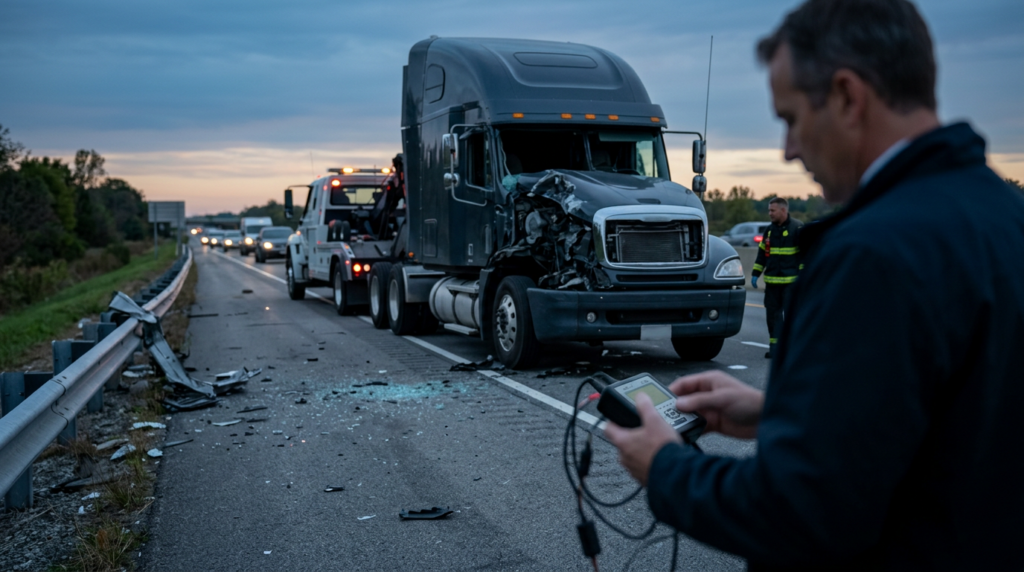
Large carriers often keep rapid-response teams on call. Investigators and adjusters may reach the scene within hours. They may download the truck’s data before the injured family has even spoken with a lawyer. That’s not illegal. But it can put an unrepresented victim at a real disadvantage.
Consider the imbalance. On one side is a grieving family focused on survival, surgery, and recovery. On the other is a company with lawyers and experts already gathering evidence. Leveling that field is one of the most important reasons to act early.
Have questions about what happened?
Ask our team directly. The first conversation is free, confidential, and there is no obligation to continue.
Why black box data can disappear — and why acting fast matters
Black box data can be overwritten, erased, or lost within days or weeks of a crash.
Here’s how it disappears:
- ECM and EDR memory can be overwritten as the truck keeps driving or gets repaired.
- Some data is kept for only a limited time. Routine business practices can erase it.
- The truck itself may be repaired, sold, or scrapped, taking its data with it.
To stop this, a lawyer can send a legal demand called a preservation letter — often called a spoliation letter. It formally orders the trucking company to keep the truck and its data intact. Destroying evidence after such a demand can carry serious legal consequences. See our guide on preserving evidence with a spoliation letter.
How the data gets preserved and downloaded
Preserving black box data takes two things: a legal demand and the right technical process. Doing it correctly is what makes the evidence usable in court.
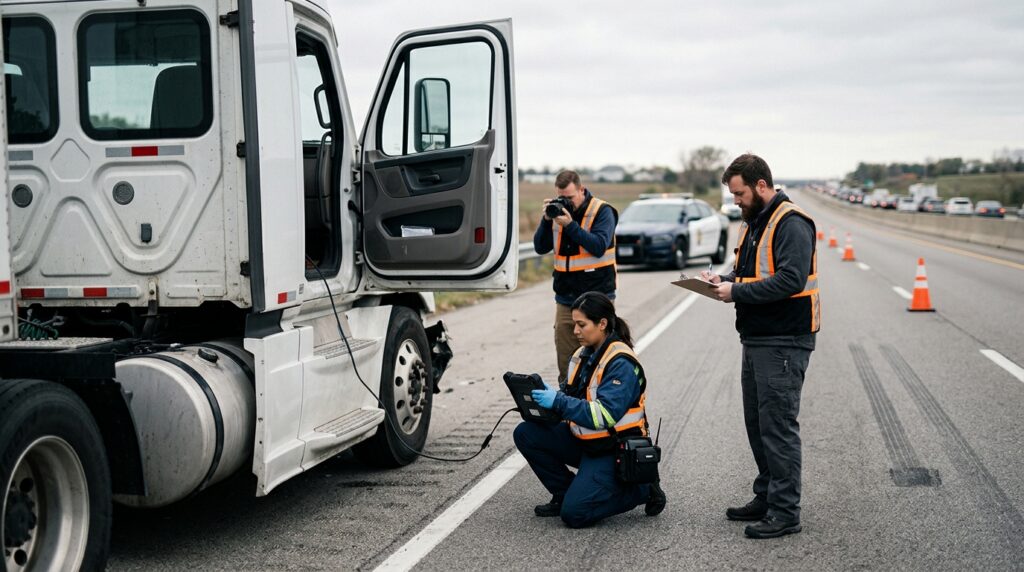
First comes the preservation letter. It demands that the truck and its records be kept safe. Next, trained experts use special tools to download the ECM and EDR data. This isn’t something you can do by plugging in a laptop. It requires the right equipment and know-how.
Chain of custody also matters. This means keeping a clear record of who handled the data and when. If the download is done wrong, the other side may try to challenge it. A firm that handles serious truck cases coordinates each step — the letter, the download, the experts, and the reconstruction — so the evidence holds up.
Why “invisible” injuries need this data most
Some catastrophic injuries are hard to prove because you can’t always see them. This is exactly where objective crash data helps most.
Traumatic brain injury (TBI) is a clear example. A TBI is a serious brain injury that can be life-altering. Yet it may not show on a routine scan or an outward look. Spinal cord injuries and internal harm can also be hard to document.
The American Spinal Injury Association uses a standard scale (the ASIA Impairment Scale) to classify how severe a spinal cord injury is. The National Spinal Cord Injury Statistical Center tracks U.S. data on these injuries. That data shows vehicle crashes are among the leading causes.
Here’s the connection. Black box data captures the raw forces of the crash — the speed, the sudden slowing, the impact. Those numbers can support why a severe injury happened. When crash data shows violent forces, it backs up the medical reality of a TBI or spinal cord injury. That’s true even for an injury that isn’t obvious to the eye.
How much are truck accident settlements? An honest answer
Almost every family asks this. It deserves a straight answer: there is no “average” settlement that tells you what your case is worth. And no honest lawyer can promise a figure. Anyone who quotes you a number before reviewing your facts is guessing — or selling.
Here’s what actually shapes the value of a serious truck-crash claim:
- The severity and permanence of the injury.
- Ongoing medical needs and the cost of future care. This is often the largest number in a catastrophic case.
- Lost earning power when someone can no longer work.
- The available insurance coverage. This often sets the practical ceiling on what can realistically be recovered.
That last point surprises people. You can learn more in our overview of trucking company insurance coverage. Be careful of any source promising specific dollar amounts. That is not how honest injury law works.
Keep the deadline in mind, too. In Florida, most negligence claims must be filed within two years. This applies to claims arising on or after March 24, 2023, under Fla. Stat. §95.11. Missing that window can end a claim before it starts.
Want to know where you stand?
Tell us what happened and our team will walk you through the options available to you, at no cost.
Talk to a catastrophic truck accident attorney
Maybe a truck crash left you or someone you love with a permanent injury. Or it took a family member. You deserve answers, not pressure. Understanding the truck’s black box data is often the first step toward the truth.
Remember: this evidence is time-sensitive. Every day the truck keeps running or sits in a shop, data can be overwritten or lost.
CHG Personal Injury Lawyers is a Florida-based firm that handles catastrophic truck cases nationwide. We offer bilingual help in English and Spanish (atención en español). Our attorneys are admitted to The Florida Bar. We can explain your options with no obligation. Request a free case evaluation here.
For the bigger picture, visit our main guide on catastrophic truck accident injuries.
Frequently asked questions
Can a black box prove who is at fault in a truck accident?
It can be powerful evidence of fault — showing speed, braking, and driver hours. But it works best combined with the police report, witnesses, and accident reconstruction.
Do insurance companies check black boxes after an accident?
Yes. Trucking companies and their insurers often send investigators quickly to download and study black box data. Sometimes this happens before the injured family hires a lawyer.
How long does black box data last after a truck crash?
It varies. But ECM and event data can be overwritten within days or weeks as the truck keeps running or gets repaired. So fast preservation matters.
What is the difference between an ECM, EDR, and ELD?
The ECM is the engine’s computer. The EDR records a crash-event snapshot. The ELD tracks the driver’s federally required hours of service under 49 CFR Part 395.
Can a family file a claim if a loved one was killed in a truck crash?
Yes. Florida law lets eligible family members bring a wrongful-death claim. Preserved black box evidence can help prove what caused the fatal crash.
Evidence Can Be Overwritten — Act Quickly
A truck's electronic control module and event data recorder can be overwritten as the vehicle is used again, and some records rotate out on a set schedule. Trucking companies and their insurers often dispatch investigators within hours. A prompt legal request — sometimes a formal preservation letter — can help stop that data from being lost. If you or a loved one suffered a catastrophic injury in a truck crash, don't wait.
What Black Box Data Can Show
Speed & Braking
The event data recorder can capture how fast the truck was traveling and whether — and when — the driver hit the brakes in the seconds before impact.
Driver Hours & Fatigue
Electronic logging devices track hours of service. That record can reveal whether a fatigued driver was on the road longer than federal rules allow.
Engine & System Data
The engine control module can log throttle position, cruise control use, and hard-braking events that help reconstruct exactly what happened.
A Fuller Picture
Black box data is strongest when paired with the police report, witness accounts, and accident reconstruction — building a clear account of who is responsible.
How We Help Preserve and Use This Evidence
Move Fast to Preserve Data
We can act quickly to request that the truck's data and records be preserved before they are altered, overwritten, or lost.
Send Preservation Demands
When appropriate, we send formal notices to the trucking company and its insurer requiring them to retain the truck, its data, and driver logs.
Work With Investigators
We coordinate with accident reconstruction professionals who can download and interpret the technical data the right way.
Stand Up to the Insurers
Trucking insurers investigate immediately to protect themselves. We help level the field for injured people and grieving families.