

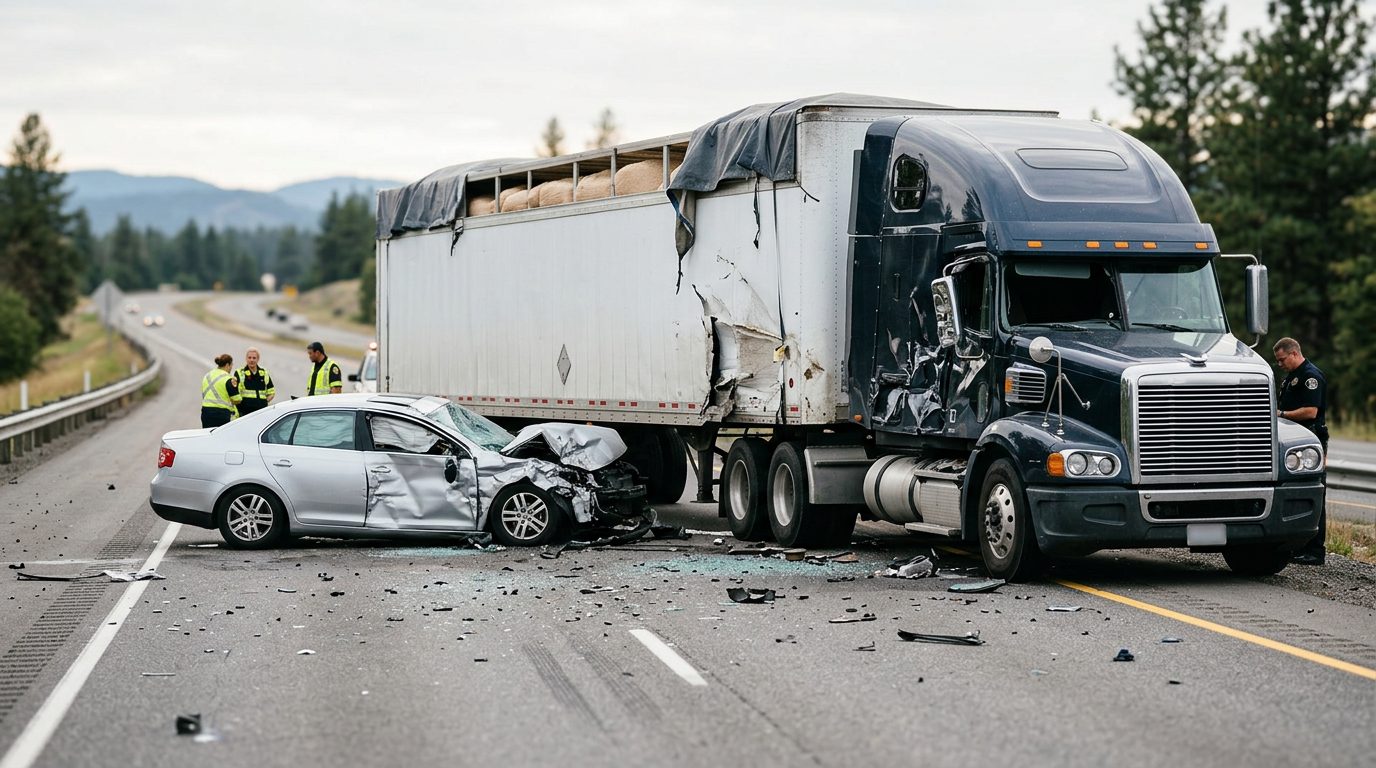
Overloaded Truck Accidents: Who Is Liable?
When a truck exceeds federal weight limits, the results are catastrophic. If you or a loved one was injured or killed in an overloaded truck crash, you may have a claim against the driver, carrier, or shipper.
By CHG Lawyers · Published August 28, 2026
Overloaded Truck Accident Claims: Liability, Evidence Preservation & Catastrophic Injury
If you were struck by an overloaded truck, the crash wasn’t random—it was the foreseeable result of someone’s choice to ignore federal weight limits and safety rules. When a truck exceeds its safe weight capacity, it loses braking power, becomes unstable on curves, and can jackknife or roll without warning. The injuries are catastrophic: spinal cord damage causing paralysis, traumatic brain injury, amputation, severe burns, or death. This page explains how overloading causes these crashes, who the law holds responsible, what evidence proves your claim, and why acting within Florida’s two-year statute of limitations is critical to preserve that evidence before it disappears.
If you or a loved one was injured or killed in an overloaded truck crash, you may have a claim against the driver, carrier, or shipper. Talk it through with our team — the first consultation is free, confidential, and carries no obligation.
How Overloaded Cargo Causes Catastrophic Truck Crashes
Overloading a truck fundamentally changes its physics in ways that make catastrophic crashes predictable. When a truck exceeds its Gross Vehicle Weight Rating (GVWR), its center of gravity rises, destabilizing it on curves and hills. Extra weight dramatically increases braking distance—a fully loaded truck requires approximately 40% more stopping distance than an empty one, and an overloaded truck needs even more. The suspension and tires degrade faster. Brake fluid boils. Brake fade sets in. In an emergency maneuver, the driver loses control.
The most dangerous scenarios occur on highways. An overloaded truck merging into traffic cannot accelerate or decelerate like a normal vehicle. A sudden stop causes jackknifing—the trailer swings sideways across multiple lanes, crushing passenger vehicles. On a curve or downhill grade, the truck rolls over, spilling cargo and the vehicle across the roadway. In rain or snow, these risks multiply exponentially. The driver may not recognize the truck is overloaded until control is already lost.
In the catastrophic-injury cases we handle, overloaded truck crashes produce permanent, life-altering injuries: spinal cord injuries causing paralysis from the neck or waist down, traumatic brain injuries that alter memory and cognition, amputations from crushed limbs, severe burns from fuel spills and fires, and wrongful deaths that devastate surviving family members. These are not minor injuries. They demand accountability.
Federal Weight Limits and Safety Standards: What the Law Requires
Federal law enforces strict weight limits for commercial trucks through the Federal Motor Carrier Safety Administration (FMCSA). The Gross Vehicle Weight Rating (GVWR) is the maximum total weight a truck can safely carry, including the vehicle itself. Federal regulations also establish axle weight limits: no single axle may exceed 20,000 pounds, and tandem axles cannot exceed 34,000 pounds. The combined weight limit for most trucks is 80,000 pounds. These limits protect road infrastructure and, critically, protect the public from crashes caused by unsafe vehicles.
Violating these limits is illegal under federal motor carrier safety regulations. Trucking companies, shippers, and loaders who knowingly exceed weight limits face federal fines, out-of-service orders (the truck is removed from operation), and civil liability for injuries. State highway patrols and DOT officers inspect trucks at weigh stations and roadside checkpoints. When a truck is found overloaded, the violation is documented in official records—records that become critical evidence in your injury claim.
Is It Illegal to Overload a Truck?
Yes. Federal law prohibits exceeding the GVWR and axle weight limits. Knowingly overloading a truck violates federal motor carrier safety regulations and can result in criminal charges for the company, the shipper, or the loader if someone is injured or killed.
When a truck is inspected and found overloaded, the driver receives a citation. The trucking company receives a fine. If the company has a pattern of violations, it can lose its operating authority. If the overloading caused a crash that injured you, those violations and citations become evidence that the company was negligent—that it knew or should have known the truck was unsafe and sent it onto the road anyway.
Who Is Responsible If a Truck Is Overloaded?
Liability in an overloaded truck crash is shared among multiple parties. Florida law uses comparative negligence to determine who pays.
The trucking company has a legal duty to maintain safe vehicles, enforce proper loading procedures, and ensure drivers refuse overloaded loads. Failure to do so creates liability.
The shipper or cargo owner is responsible for providing accurate weight information and proper loading instructions. If the shipper knowingly shipped cargo that was too heavy or failed to disclose its true weight, the shipper is liable.
The loader or freight handler must load cargo safely and within weight limits. Improper stacking or exceeding total weight creates liability.
The truck driver has a responsibility to refuse an overloaded load and report violations. If the driver knew the truck was overloaded and drove it anyway, the driver shares liability.
The maintenance provider must inspect and repair braking systems, suspension, and tires. If brake failure or suspension collapse contributed to the crash because maintenance was neglected, the maintenance company is liable.
Under Fla. Stat. §768.81 (comparative fault), you can recover damages from any responsible party, even if you were partially at fault—as long as you were not more than 50% responsible for the crash.
Improperly Distributed Cargo: A Related and Often-Overlooked Hazard
Overloading isn’t the only cargo problem that causes crashes. Improper weight distribution is equally dangerous and is frequently overlooked by non-specialists. A truck can be within its total weight limit but still be unstable if cargo is loaded unevenly—too much weight on one side, or concentrated at the rear or front.
Unbalanced loads shift the truck’s center of gravity and impair steering and braking. Cargo can shift during transit, especially on curves or sudden stops, throwing the truck further off balance. The truck becomes prone to rollover, jackknifing, and loss of control. Federal and industry standards require that cargo be loaded evenly and secured to prevent shifting. When it isn’t, the result is identical to overloading: catastrophic crashes and permanent injuries.
Not sure what your next step is?
Talk it through with our team — the first consultation is free, confidential, and carries no obligation.
Critical Evidence in Overloaded Cargo Cases—and Why It Disappears
Proving that overloading caused your crash requires specific evidence. Here’s what we pursue:
Electronic Logging Devices (ELDs) and weight records. Modern trucks have onboard computers that record weight, fuel consumption, and operational data. These records document whether the truck was overloaded at the time of the crash.
Weigh station records and DOT inspection reports. If the truck was weighed before or after the crash, or inspected at a weigh station, those records document the overload and create an official record of the violation.
Shipping manifests and cargo documentation. These show what was loaded, its documented weight, and who loaded it—critical for establishing who knew the truck was overloaded.
Maintenance records. Records showing brake defects, suspension problems, or accelerated tire wear prove the truck was unsafe because of overloading.
Accident scene evidence. Photographs of cargo scatter patterns, vehicle damage, and skid marks reconstruct what happened.
Expert reconstruction and engineering analysis. Accident reconstructionists and engineers calculate the truck’s actual weight, center of gravity, and braking distance to prove overloading caused the crash.
The critical problem: This evidence disappears fast. Trucks are repaired or scrapped within weeks. Electronic logs are overwritten. Cargo is cleaned up. Weigh station records have retention limits. Maintenance records are discarded. If you don’t act quickly, the evidence that proves your claim vanishes.
Evidence Preservation: Why Acting Immediately Matters
After a crash, the truck and its cargo may be removed from the scene within hours. The trucking company may repair or scrap the vehicle, destroying evidence. Electronic logs can be overwritten. Weigh station records have retention limits. If you don’t act quickly, the evidence that proves your claim is lost forever.
An attorney can send a preservation letter (a legal hold) to the trucking company, requiring it to preserve the truck, cargo, records, and electronic data. This freezes the evidence and prevents its destruction. Early investigation—photographs, witness interviews, scene documentation—captures details that fade over time.
In Florida, you have two years from the date of injury to file a personal-injury claim under Fla. Stat. §95.11. That sounds like a long time, but it isn’t. Evidence degrades, witnesses move away, memories fade, and records are destroyed. The sooner you contact an attorney, the sooner we can preserve what matters and prevent irreversible loss of proof.
Compensation in Overloaded Cargo Accident Cases
If you were injured in an overloaded truck crash, you may recover compensation for:
- Medical care: Emergency treatment, surgery, hospitalization, rehabilitation, ongoing therapy, and future medical needs.
- Lost income: Wages you lost while recovering, and diminished earning capacity if your injury prevents you from working at your previous level.
- Pain and suffering: Compensation for physical pain, emotional distress, and loss of enjoyment of life.
- Permanent disability: If your injury is permanent—paralysis, amputation, cognitive damage—you recover damages for the lifetime impact.
- Long-term care costs: If you need in-home care, assisted living, or specialized equipment, those costs are recoverable.
- Wrongful death: If a family member was killed, surviving family can recover funeral expenses, lost financial support, and loss of companionship.
The amount of compensation depends on the severity of your injury, the strength of the liability evidence, and the insurance coverage available. In overloaded truck cases, where liability is often clear and injuries are catastrophic, settlements and verdicts can be substantial.
Next Steps If You Were Injured in an Overloaded Truck Crash
If you or a family member were hurt in a crash involving an overloaded or improperly loaded truck:
- Seek immediate medical attention. Document all injuries and follow your doctor’s treatment plan.
- Report the crash to police. Obtain a copy of the accident report.
- Preserve evidence. Take photographs and video of the scene, vehicle damage, and cargo. Get contact information from witnesses.
- Do not speak to the trucking company or its insurance. Anything you say can be used against you.
- Contact an attorney who focuses exclusively on catastrophic truck accident injuries. The sooner you reach out, the sooner we can preserve evidence and begin investigating the parties responsible for your harm.

Have questions about what happened?
Ask our team directly. The first conversation is free, confidential, and there is no obligation to continue.
Frequently Asked Questions
What are the federal weight limits for commercial trucks?
The Gross Vehicle Weight Rating (GVWR) varies by truck type, but federal law caps axle weights at 20,000 pounds (single axle) and 34,000 pounds (tandem axle), with a maximum combined weight of 80,000 pounds for most trucks.
How does an overloaded truck cause a rollover or jackknife?
Overloading raises the truck’s center of gravity and reduces braking power. On curves or during emergency stops, the truck becomes unstable and tips over or the trailer swings sideways (jackknifing), crossing multiple lanes.
Who is liable if a truck is overloaded and causes a crash?
The trucking company, shipper, loader, driver, and maintenance provider may all share liability depending on their role in the overloading and the crash.
How long do I have to file a claim after an overloaded truck accident in Florida?
You have two years from the date of injury to file a personal-injury claim under Florida law, but evidence can disappear much faster—act immediately to preserve it.
Is it illegal to overload a truck?
Yes, violating federal weight limits is illegal and can result in fines, out-of-service orders, and civil liability for injuries caused by the overloading.
What evidence proves an overloaded truck caused my injuries?
Electronic logs, weigh station records, DOT inspection reports, shipping manifests, maintenance records, accident-scene photographs, and expert engineering reconstruction all help prove overloading caused the crash.
If you or a family member suffered a life-altering injury in a crash involving an overloaded or improperly loaded truck, you’re likely facing overwhelming medical bills, uncertainty about your future, and questions about who’s responsible. We focus exclusively on catastrophic truck accident injuries—spinal cord damage, paralysis, traumatic brain injury, amputation, severe burns, and wrongful death. The evidence that proves your claim may disappear within weeks. Contact us for a free case evaluation to discuss what happened, what evidence we can preserve, and what your claim may be worth. You don’t have to navigate this alone.
Overloaded Trucks Are Dangerous
Federal law limits truck weight for safety. An overloaded truck cannot brake, steer, or maneuver properly. It is more likely to roll over, jackknife, or lose control—especially on curves, hills, or wet roads. If a carrier knowingly overloads a truck, that negligence is actionable.
How Overloaded Trucks Cause Catastrophic Injuries
Rollover Crashes
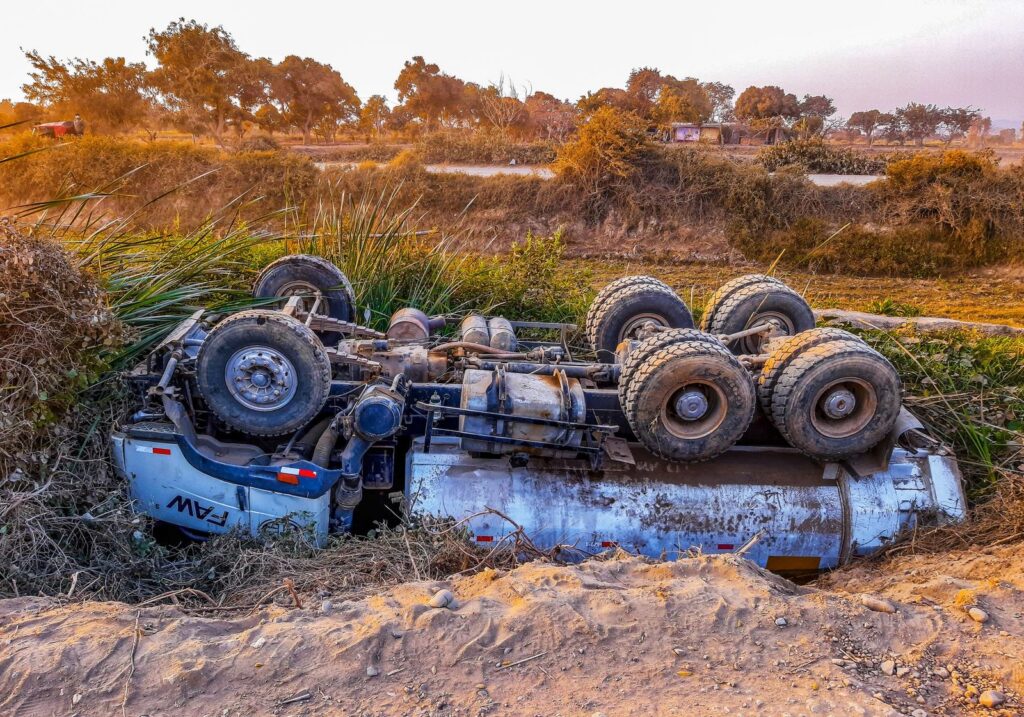
Excess weight raises the truck's center of gravity, making it unstable on turns. A rollover can crush vehicles below the trailer, causing spinal cord injuries, paralysis, traumatic brain injuries, and death.
Jackknife Accidents
An overloaded truck cannot brake evenly. The trailer swings out of control, striking other vehicles and causing multi-vehicle pile-ups with severe, permanent injuries.
Loss of Control
Overloaded trucks require longer stopping distances and are harder to steer. On highways or in traffic, this leads to rear-end collisions, underride crashes, and catastrophic injuries to occupants of smaller vehicles.
Tire and Brake Failure
Excess weight strains tires and brakes beyond their limits. Blowouts and brake failure can cause the truck to veer into traffic, resulting in life-altering injuries or wrongful death.
Who Can Be Held Liable
The Trucking Company
The carrier is responsible for ensuring trucks are loaded within federal limits. Knowingly or negligently overloading a truck violates federal law and creates liability.
The Shipper or Loader
The company that loads cargo onto the truck may be liable if it exceeds weight limits or fails to distribute weight properly, knowing the truck will be overloaded.
The Truck Driver
The driver has a duty to refuse to operate an overloaded truck and to inspect the load. Proceeding anyway can establish negligence or recklessness.
Maintenance and Inspection Failures
If the carrier failed to maintain brakes, tires, or other systems that would have prevented a crash, that negligence may also be actionable.
Evidence in Overloaded Truck Claims
Weigh Station Records
Federal weigh stations record truck weights. If a truck exceeded the legal limit, those records are critical proof of negligence.
Logbooks and Dispatch Records
Trucking companies maintain records of cargo, routes, and loads. These documents can show that the carrier knew the truck was overloaded.
Maintenance and Inspection Reports
Brake and tire failures are often linked to overloading. Maintenance records can reveal whether the carrier neglected safety systems.
Accident Reconstruction
Expert analysis of the crash scene, vehicle damage, and physics can demonstrate that the truck's overloaded condition caused the accident.
Why Overloaded Truck Cases Matter
Catastrophic, Permanent Injuries
Overloaded truck crashes cause spinal cord injuries, paralysis, traumatic brain injuries, amputations, severe burns, and wrongful death—injuries that change lives forever.
Clear Negligence
Federal weight limits exist for safety. Violating them is negligence, and the evidence is often straightforward and documentable.
Significant Compensation
Catastrophic injuries require lifetime medical care, lost income, and pain and suffering. Damages in these cases are substantial and justified.
Time-Sensitive Investigation
Evidence must be preserved quickly. Trucking companies may destroy records, and witnesses' memories fade. Early action is critical.
Act Quickly
Overloaded truck cases require immediate investigation to preserve weigh station data, dispatch records, maintenance logs, and witness testimony. The sooner you contact an attorney, the better your chances of securing the evidence needed to prove liability.