

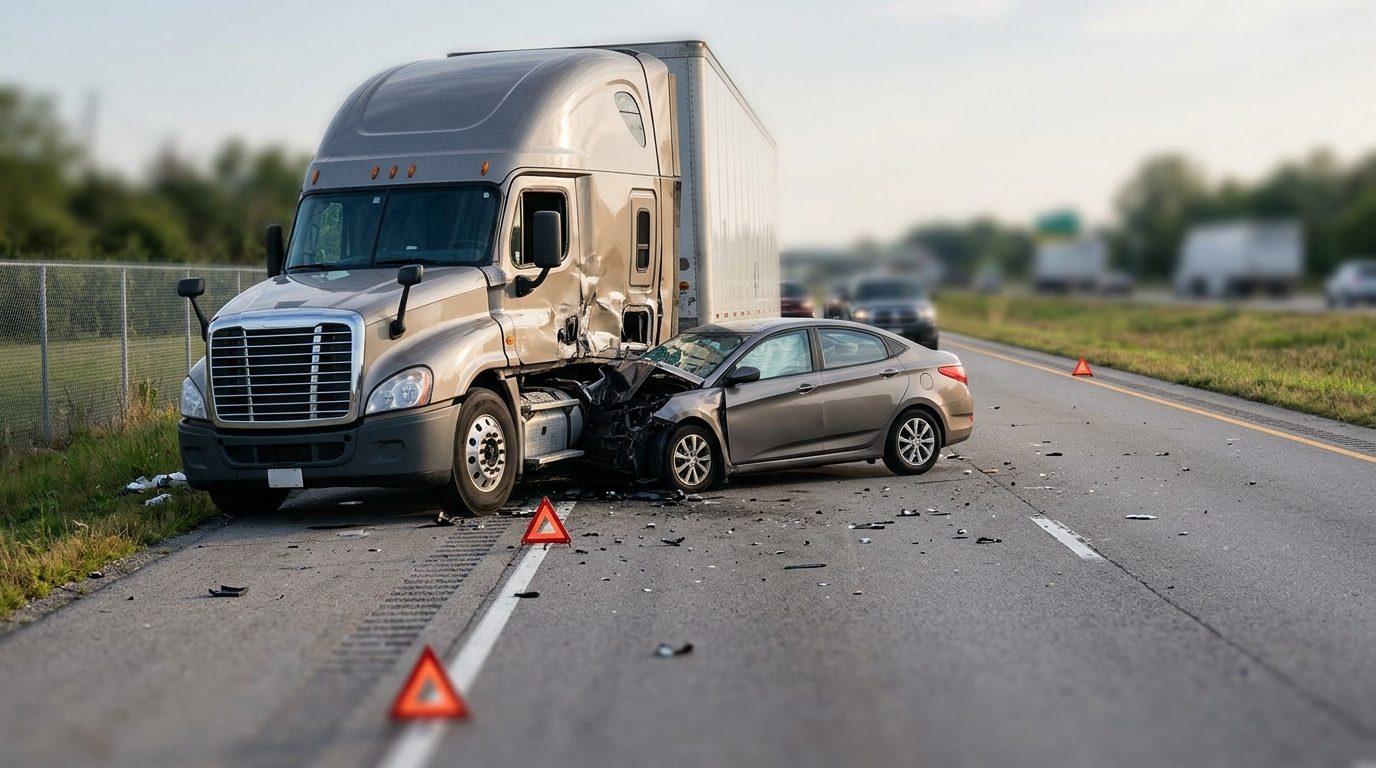
Catastrophic Truck Accidents
Understanding Insurance Claims After a Devastating Truck Crash
When a truck accident causes permanent injury or death, the insurance process is complex. Learn what you need to know to protect your family's future.
By CHG Lawyers · Published August 22, 2026
How Insurance Companies Handle Catastrophic Truck Injury Claims
When a commercial truck crashes into a car, the truck’s weight and force cause permanent, life-altering injuries. A truck accident insurance claim for catastrophic injury is not a routine fender-bender case. It involves multiple insurance policies, specialized medical evidence, and significant money at stake. Understanding how insurers evaluate these claims helps you protect yourself and your family during a difficult time.
Not sure what your next step is?
Talk it through with our team — the first consultation is free, confidential, and carries no obligation.
What Counts as a Catastrophic Injury in a Truck Accident?
A catastrophic injury is permanent harm that fundamentally changes how a person lives, works, and functions day-to-day. These injuries don’t heal completely. They require lifelong medical care, assistive devices, or personal support.
In truck accidents, catastrophic injuries include:
- Spinal cord injuries causing paraplegia (paralysis of the lower body) or quadriplegia (paralysis of all four limbs)
- Traumatic brain injuries (TBI) affecting memory, thinking, speech, or physical control
- Amputation or limb loss requiring prosthetics and lifelong rehabilitation
- Severe burns covering large areas of the body and causing permanent scarring or disfigurement
- Catastrophic back or neck injuries resulting in chronic pain, limited mobility, or permanent nerve damage
- Wrongful death, the most catastrophic outcome—when a family loses a loved one
Truck accidents cause these injuries because commercial trucks weigh 20–30 times more than passenger cars. They travel at highway speeds. The force of impact is catastrophic. In contrast, minor injuries—soft-tissue damage, uncomplicated fractures, or minor burns—heal within weeks or months. They don’t permanently alter a person’s life. Insurance companies treat catastrophic and minor claims very differently.
How Insurance Companies Evaluate Catastrophic Truck Injury Claims
When a catastrophic truck accident occurs, the at-fault driver’s insurance company (or the trucking company’s insurer) launches an investigation. Their job is to determine who was at fault and assess how severe the injuries are. They also calculate how much they must pay.
The investigation process includes:
- Scene inspection: Adjusters or investigators visit the crash site, photograph damage, and collect physical evidence.
- Medical records review: Insurers request all medical documentation—emergency room reports, surgery records, rehabilitation notes, imaging studies. This helps them understand the injury’s severity and whether it’s permanent.
- Witness statements: Adjusters interview the injured person, the truck driver, bystanders, and police officers.
- Accident reconstruction: In serious crashes, insurers may hire engineers. These experts analyze vehicle damage, skid marks, and impact dynamics to determine how the crash happened and who was at fault.
Assessing injury severity is critical in catastrophic cases. Insurers examine:
- Medical diagnosis and prognosis from treating physicians
- Whether the injury will improve, stabilize, or worsen
- Impact on daily functioning (mobility, self-care, work capacity)
- Ongoing medical needs (surgeries, therapy, medications, assistive devices)
- Life expectancy and long-term care requirements
For spinal cord injuries, doctors use the ASIA Impairment Scale. This classifies injury severity from complete paralysis (AIS A) to normal function (AIS E). This medical classification directly affects claim value.
Insurers often hire their own medical experts—doctors, neuropsychologists, or rehabilitation specialists. These experts review the injured person’s medical records and offer an independent opinion on injury severity and future care needs. This is standard practice. However, insurers have a financial incentive to minimize what they pay. Understanding this dynamic helps you recognize when an insurer’s evaluation may underestimate your injury or needs.
What Insurance Coverage Applies to Catastrophic Truck Accidents?
Commercial trucks carry different insurance than passenger vehicles. Federal law requires trucking companies to maintain liability insurance. This covers bodily injury and property damage caused by their drivers.
Commercial truck liability insurance typically includes:
- Bodily injury coverage: Pays for injuries to people in other vehicles
- Property damage coverage: Pays for vehicle damage and other property
- Coverage limits: Often $1 million or more per accident. This reflects how severe truck crashes are (compared to typical personal auto policies with $25,000–$100,000 limits)
However, catastrophic injuries often exceed a single policy’s limits. For example, a spinal cord injury may require $5 million in lifetime medical care, home modifications, assistive devices, and lost earning potential. This far exceeds the truck’s liability limit.
Additional coverage sources may include:
- Underinsured motorist (UIM) coverage: Your own auto insurance policy covers the gap if the truck driver’s liability insurance isn’t enough. If the truck’s policy maxes out at $1 million but your damages total $3 million, your UIM coverage may pay the additional $2 million (up to your policy limit).
- Uninsured motorist (UM) coverage: Protects you if the truck driver has no insurance or is uninsured.
- Umbrella or excess liability policies: Trucking companies often carry additional layers of insurance above their primary policy. This covers catastrophic claims.
- Your own health insurance: May cover medical expenses, though it may seek reimbursement (called a lien) from your settlement.
Navigating multiple policies and coverage sources is complex. Insurers may dispute which policy applies, what the limits are, or whether coverage exists. This is why catastrophic claims require careful documentation and often benefit from legal guidance.
Factors That Affect the Value of Your Catastrophic Truck Accident Claim
Insurance companies use several factors to calculate what a catastrophic claim is worth:
1. Severity of injury
Permanent, complete paralysis is worth more than partial paralysis. A traumatic brain injury affecting thinking and work capacity is worth more than a minor concussion. The more severe and permanent the injury, the higher the claim value.
2. Medical costs (past and future)
Catastrophic injuries require emergency surgery, hospitalization, rehabilitation, ongoing therapy, medications, and assistive devices (wheelchairs, ventilators, communication devices). Home modifications—ramps, accessible bathrooms, specialized beds—add tens of thousands of dollars. Lifetime care costs for a spinal cord injury can exceed $1 million to $5 million, depending on age at injury and level of paralysis.
3. Lost wages and earning capacity
If you were working before the injury, you’ve lost income during recovery. More importantly, a catastrophic injury often prevents you from returning to work or earning at your previous level. A 30-year-old professional earning $80,000 per year who becomes paralyzed has lost decades of earning potential. Vocational experts calculate this loss by estimating what you would have earned over your working lifetime.
4. Pain, suffering, and loss of life enjoyment
Non-economic damages compensate for the profound, permanent changes catastrophic injuries cause: chronic pain, emotional trauma, loss of independence, inability to participate in hobbies or family activities, and permanent disability. These damages are harder to quantify than medical bills, but they’re often the largest component of a catastrophic claim.
5. Liability strength
If the truck driver was clearly at fault (ran a red light, was speeding, or was fatigued), the claim value is higher. If liability is disputed or shared, the value may be lower.
6. Insurance policy limits
You can’t recover more than the insurance policy allows. If the policy limit is $1 million and your damages are $3 million, the policy pays $1 million (though other coverage sources may apply).
7. State law
Florida and other states have different rules about what damages are recoverable. They also have different rules about how comparative negligence (shared fault) affects the claim. Florida’s comparative-negligence statute allows recovery if you’re 50% or less at fault. You recover only your proportionate share of damages.
Economic Damages in Catastrophic Truck Injury Claims
Economic damages are measurable, documented financial losses. In catastrophic truck injury claims, they include:
- Emergency and acute medical care: ambulance, emergency room, surgery, hospitalization
- Ongoing medical treatment: rehabilitation, therapy, specialist visits, medications
- Assistive devices and equipment: wheelchairs, walkers, communication devices, ventilators, hospital beds
- Home and vehicle modifications: wheelchair ramps, accessible bathrooms, hand controls for vehicles
- Home care and personal attendant services: if the injury requires full-time or part-time care assistance
- Lost wages: income lost during recovery and medical treatment
- Lost earning capacity: reduced or eliminated ability to work and earn over a lifetime
Insurers scrutinize these damages carefully. They may dispute whether a particular treatment is medically necessary. They may question whether a home modification is reasonable or whether the cost is inflated. Medical experts and vocational experts often testify about future care needs and lost earning potential. This provides evidence to support these claims.
Have questions about what happened?
Ask our team directly. The first conversation is free, confidential, and there is no obligation to continue.
Pain, Suffering, and Non-Economic Damages
Non-economic damages compensate for harm that can’t be reduced to a dollar amount: physical pain, emotional suffering, loss of enjoyment of life, permanent disability, and disfigurement.
A catastrophic injury causes profound changes:
- Chronic, intractable pain
- Anxiety, depression, post-traumatic stress
- Loss of independence and dignity
- Inability to work, participate in hobbies, or engage in family activities
- Loss of companionship or intimacy
- Permanent disfigurement or disability
Insurers often resist non-economic damage claims. They may offer amounts far below what injured people deserve. They may argue that pain and suffering are “subjective” or that a settlement should focus only on economic losses. However, the law recognizes that a catastrophic injury destroys a person’s quality of life. Compensation should reflect that reality. The strength of medical evidence, the injured person’s testimony, and expert testimony support these claims.
How Insurance Companies Use Delay and Tactics in Catastrophic Claims
Catastrophic injury claims are high-value. Insurers have strong financial incentives to minimize payouts. Common tactics include:
Delay
Insurers may slow-walk investigations, request excessive documentation, or take months to respond to settlement proposals. Meanwhile, injured people face urgent medical bills, lost income, and financial pressure. This pressure often forces injured people to accept lower settlements than they deserve.
Social media scrutiny
Insurance adjusters monitor social media. A post showing you at a social gathering, even if you’re in pain or with family support, may be used to argue that your injury isn’t as severe as claimed. Avoid posting about the accident or injury.
Statements to adjusters
Anything you say to an insurance adjuster can be used against you. Inconsistent statements, minimizing your pain, or admitting partial fault can undermine your claim. Never give a recorded statement without legal counsel.
Excessive documentation requests
Insurers may request medical records dating back years, employment records, tax returns, or other documents. They look for inconsistencies or reasons to dispute the claim.
Hiring their own medical experts
As noted above, insurers hire doctors to evaluate your injury. They often reach conclusions that minimize severity or future care needs.
These tactics are legal and common. Understanding them helps you protect yourself. Document everything, avoid social media discussion of the accident or injury, and consider consulting a lawyer early. This is especially important in catastrophic cases where the stakes are high.
The Truck Accident Claim Process: What to Expect
Catastrophic truck injury claims typically follow this timeline:
Step 1: Report and seek care
Call 911, report the accident to police, and seek emergency medical care immediately. Your health and safety come first.
Step 2: Document
Photograph the scene, vehicle damage, and your injuries. Gather witness names and contact information. Keep the accident report number.
Step 3: Notify insurance
Report the accident to the truck driver’s insurance company (or have your attorney do so). You may also notify your own insurance company.
Step 4: Investigation
The insurer investigates liability and injury severity over weeks or months. They review medical records, interview witnesses, and may hire experts.
Step 5: Initial settlement offer
The insurer makes an opening offer. In catastrophic cases, this offer is often significantly lower than fair value.
Step 6: Negotiation
You and the insurer exchange settlement proposals, medical evidence, and expert reports. This phase can last months or years.
Step 7: Settlement or litigation
If you reach agreement, the claim settles. If not, you may file a lawsuit. Catastrophic cases often go to trial.
Timeline: Catastrophic injury claims typically take 1–3 years to resolve, sometimes longer if litigation is necessary. The complexity of medical evidence, multiple coverage sources, and high claim values all extend the timeline.
Why Catastrophic Truck Injury Claims Are Different
Catastrophic claims are fundamentally different from routine accident claims:
- Permanent, life-altering harm requires specialized medical analysis and expert testimony
- Substantial claim values trigger rigorous insurer investigation and resistance
- Multiple insurance policies may apply, complicating coverage and liability
- Future care and earning potential must be carefully calculated and documented
- Urgent medical and financial needs create pressure on injured people during negotiations
- Legal complexity often justifies early attorney involvement
Protecting Yourself During the Insurance Claim Process
If you or a family member has suffered a catastrophic injury in a truck accident, take these steps:
- Seek immediate medical care and follow all treatment recommendations. Document every appointment, test, and procedure.
- Report to police and obtain the accident report.
- Avoid social media: Don’t post about the accident, your injury, or your recovery.
- Don’t give statements to the insurance company without legal counsel present.
- Keep detailed records: Medical bills, receipts, photos, wage statements, and notes about how the injury affects your daily life.
- Don’t accept early offers: An initial settlement proposal rarely reflects the true value of a catastrophic claim.
- Consult an attorney early: Catastrophic injury claims are complex. Many injured people benefit from legal representation from the start.

Want to know where you stand?
Tell us what happened and our team will walk you through the options available to you, at no cost.
FAQ
What is considered a catastrophic injury in a truck accident?
A catastrophic injury is permanent harm that fundamentally changes how a person lives and functions. Examples include spinal cord injury (paraplegia or quadriplegia), traumatic brain injury, amputation, severe burns, catastrophic back or neck injury, or wrongful death. These injuries require lifelong medical care and significantly reduce quality of life.
How long does a catastrophic truck accident claim take to settle?
Catastrophic claims typically take 1–3 years to resolve, sometimes longer if litigation is necessary. The complexity of medical evidence, multiple insurance policies, and high claim values extend the timeline.
Can I recover damages if I was partially at fault in the truck accident?
Under Florida’s comparative-negligence law, you can recover if you’re 50% or less at fault. You recover only your proportionate share of damages. If you’re 51% or more at fault, you recover nothing.
What is the statute of limitations for a truck accident claim in Florida?
Florida’s statute of limitations for personal-injury actions is 2 years from the date the injury occurs. After 2 years, you lose the right to file a claim or lawsuit. Don’t delay.
Should I hire a lawyer for a catastrophic truck accident claim?
Catastrophic injury claims involve complex medical evidence, multiple insurance policies, and high financial stakes. Many injured people benefit from legal representation. An attorney can navigate insurer tactics, gather expert evidence, and negotiate or litigate on your behalf.
If you or a family member suffered a permanent, life-altering injury—spinal cord damage, traumatic brain injury, amputation, severe burns, or catastrophic back or neck injury—in a truck accident, you’re facing urgent medical decisions and financial pressure. You’re trying to understand what comes next. People in your situation reach out regularly to discuss their options and learn what a fair claim may look like. Contact us for a free case evaluation to talk through your specific circumstances with someone who understands catastrophic injuries.
What Makes a Truck Accident Claim Catastrophic
Spinal Cord Injury & Paralysis
Damage to the spine can result in paraplegia (lower-body paralysis) or quadriplegia (full-body paralysis), requiring lifelong care, mobility equipment, and home modifications.
Traumatic Brain Injury
A severe blow to the head can cause permanent cognitive, physical, or behavioral changes that affect work, independence, and quality of life for years to come.
Amputation & Limb Loss
Loss of an arm, leg, hand, or foot demands prosthetics, ongoing rehabilitation, and adaptation to a fundamentally different way of living and working.
Severe Burns & Catastrophic Back/Neck Injury
Severe thermal injuries or catastrophic spinal damage can cause permanent disfigurement, chronic pain, and loss of function requiring extensive medical intervention.
Why Truck Accident Insurance Claims Are Different
Multiple Insurance Policies May Apply
Truck accidents often involve commercial insurance, cargo insurance, and multiple liable parties. Identifying all available coverage is critical to maximizing recovery.
Complex Liability & Negligence Issues
Truck drivers, trucking companies, maintenance contractors, and cargo loaders can all bear responsibility. Determining who is liable requires investigation and expert analysis.
Lifetime Care Costs Must Be Calculated
Catastrophic injuries demand decades of medical care, therapy, adaptive equipment, and home care. Insurance claims must account for these long-term expenses, not just immediate hospital bills.
Insurance Companies Delay & Dispute
Insurers often undervalue catastrophic claims or deny responsibility. Early action and experienced representation protect your right to fair compensation.
Act Quickly After a Catastrophic Truck Crash
Evidence at the accident scene—vehicle damage, skid marks, witness statements, and electronic data from the truck—can disappear or be lost. Insurance companies and trucking companies may also begin their own investigation immediately. The sooner you contact an attorney, the sooner we can preserve critical evidence and protect your claim.
Steps in a Catastrophic Truck Accident Insurance Claim
Investigation & Evidence Gathering
We obtain police reports, truck maintenance records, driver logs, electronic control module (ECM) data, witness statements, and accident scene photos to establish liability and the full scope of your injuries.
Medical Documentation & Causation
We work with your medical team to document the catastrophic nature of your injury, its permanence, and its direct connection to the truck accident—essential for proving damages.
Damage Calculation & Valuation
We calculate past and future medical expenses, lost wages, home care costs, adaptive equipment, pain and suffering, and loss of quality of life to establish the true value of your claim.
Negotiation & Resolution
We present your claim to the insurance company with evidence and expert support. If a fair settlement is not offered, we are prepared to take your case to trial.
How CHG Personal Injury Lawyers Approaches Your Claim
Dedicated Legal Team
Our attorneys focus exclusively on catastrophic injury cases. We understand the medical, financial, and emotional complexity of spinal cord injuries, brain injuries, amputations, and severe burns.
No Fees Unless There Is a Recovery
We work on contingency. You pay nothing upfront, and we only collect a fee if we recover compensation for you.
Expert Network & Resources
We retain medical specialists, accident reconstruction engineers, life care planners, and economists to build the strongest possible case for your family.
Nationwide Representation
While based in Florida, we handle catastrophic truck accident cases across the United States, so geography is never a barrier to justice.