

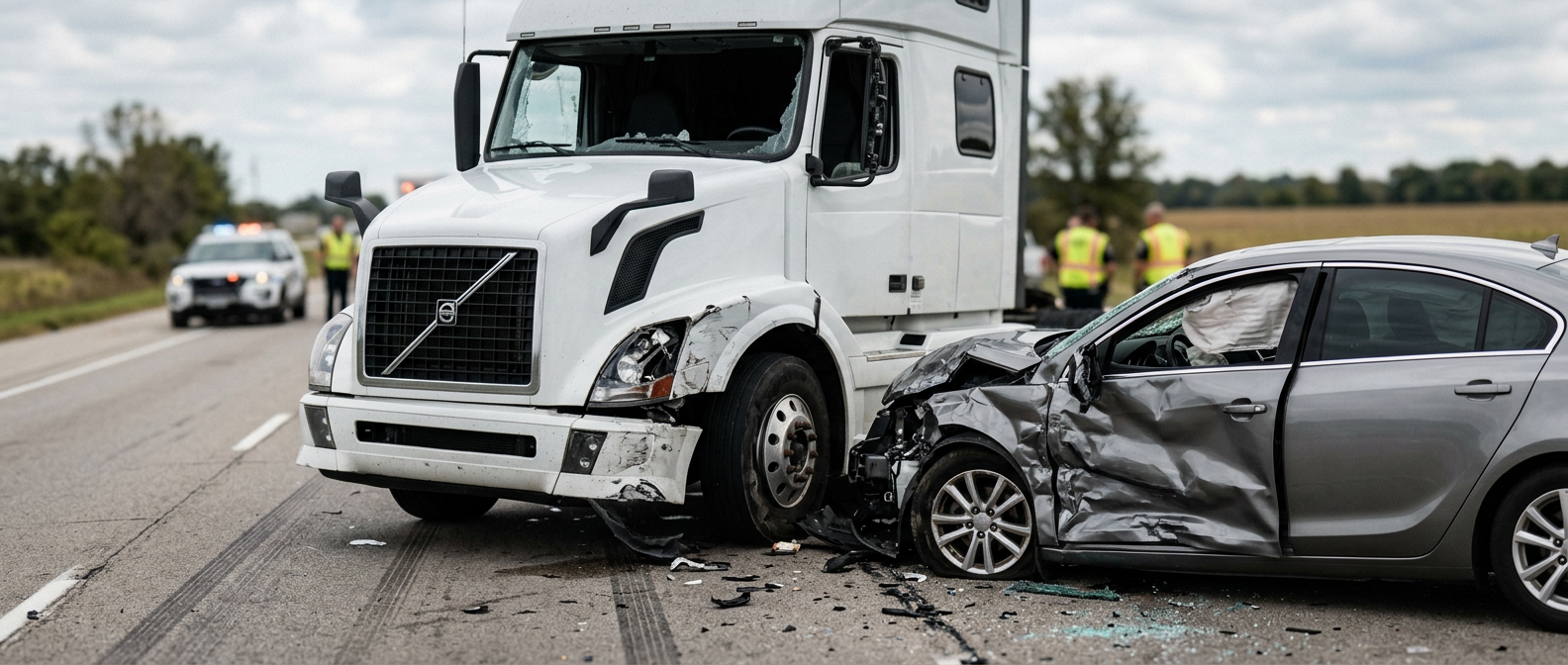
Truck Accident Claims
When a Truck Crash Changes Everything, Federal Rules Can Prove What Went Wrong
Trucking companies and drivers must follow strict federal safety regulations. When those rules are broken and someone suffers a spinal cord injury, brain injury, amputation, or dies, that violation can become powerful evidence in your claim.
Serious Injury Advocacy You Can Rely On
Licensed
Attorneys admitted to the Florida Bar
Nationwide
Catastrophic truck cases across the U.S.
Bilingual
English & Spanish client support
Focused
Only serious, life-altering injuries
By CHG Lawyers · Published July 29, 2026
Federal Trucking Safety Rules and How Violations Prove Your Case
When a trucking company or driver breaks a federal safety rule and causes a crash, that violation can become powerful evidence of negligence in your injury or wrongful-death claim. Federal trucking rules set strict standards for how commercial trucks must operate. When a company or driver breaks one of these rules and hurts or kills someone, that often helps prove fault.
This guide explains the main federal trucking rules in plain language. It shows how breaking them ties to serious crashes. If you or someone you love was badly hurt or killed by a large truck, these rules can help you see what may have gone wrong. They can also show you what to do next.
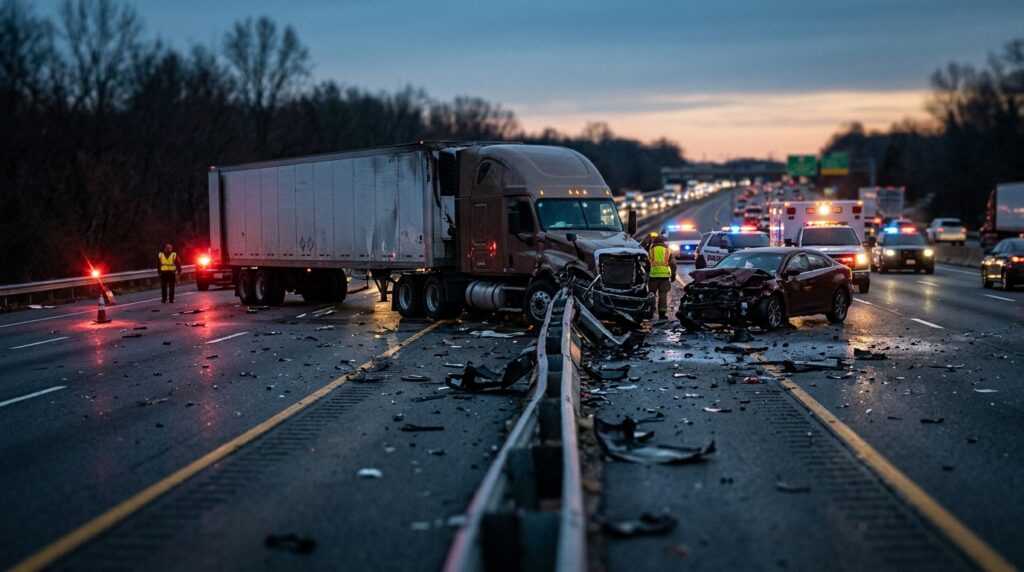
If you are reading this after a devastating crash, we know you feel overwhelmed. Talk it through with our team — the first consultation is free, confidential, and carries no obligation.
Why federal trucking rules matter after a catastrophic crash
Federal trucking rules matter because a fully loaded big rig is huge. It can weigh 20 to 30 times more than a passenger car. When a violation causes a crash at that size and speed, the result is rarely minor. It is often permanent, life-altering injury or death.
That is why commercial trucking follows detailed federal safety rules. Ordinary drivers never face these rules. The stakes are simply too high. In the serious-injury cases our attorneys handle, one broken rule can change everything. It can be the difference between a safe trip and a spinal cord injury, a brain injury, an amputation, or a fatal crash.
If you are reading this after a devastating crash, we know you feel overwhelmed. Learning how these rules work can give you back a little clarity. It can also show you that families have real options after a truck company cuts corners.
The federal framework: who makes the rules
The rules come from the Federal Motor Carrier Safety Administration (FMCSA). It is part of the U.S. Department of Transportation. The FMCSA writes and enforces the safety standards for commercial motor carriers. It also publishes crash data, like Large Truck and Bus Crash Facts (FMCSA — Regulations).
These standards are called the Federal Motor Carrier Safety Regulations (FMCSRs). You can find them in Title 49 of the Code of Federal Regulations, Parts 350–399. They apply to interstate trucking companies across the country. That is why they matter no matter which state your crash happened in.
Many states also have their own motor-carrier rules. These often mirror or add to the federal ones. A licensed attorney can confirm which rules applied to your crash.
Hours-of-service rules: preventing driver fatigue (49 CFR Part 395)
Hours-of-service rules limit how long a truck driver can drive and work. This keeps exhausted drivers off the road. Tired driving slows reaction time, much like impaired driving does. And at 80,000 pounds, a slow reaction can be deadly.
Here are the key limits in plain language:
- 11-hour driving limit — a driver can drive up to 11 hours after 10 straight hours off duty.
- 14-hour window — driving must stop 14 hours after the driver starts a shift.
- 30-minute break — required after 8 hours of driving.
- 10-hour rest — required off-duty time before driving again.
What is the 60/70-hour rule?
The 60/70-hour rule limits total on-duty time over several days. A driver can’t drive after 60 hours on duty in 7 days. They also can’t drive after 70 hours in 8 days. A driver can “restart” that clock by taking at least 34 hours off duty in a row.
When a driver breaks these limits and causes a crash, the violation can point to negligence. This is true even if the driver seemed alert. FMCSA hours-of-service violations are among the most common issues we see in serious truck-crash cases.
The electronic logging device (ELD) mandate
An electronic logging device (ELD) automatically records a driver’s time behind the wheel. ELDs replaced paper logs, which were easy to fake. This matters after a crash. The ELD data can show whether the driver drove too long before the wreck.
That electronic record is often key evidence your attorney can request. But there is a catch. Log and ELD data can be overwritten or lost if no one acts fast. This is one of the biggest reasons to contact a lawyer quickly after a serious truck crash. Acting fast helps get the data saved before it disappears.
Driver qualification and CDL requirements (49 CFR Part 391)
Trucking companies must confirm that every driver is qualified before putting them on the road. That means a valid commercial driver’s license (CDL), a passing medical exam, and a clean enough driving history.
Companies must keep a “driver qualification file” and check each driver’s background. Suppose they don’t, and they hire or keep an unfit or dangerous driver. That can support a claim for negligent hiring or retention.
A missing, incomplete, or faked qualification file is a red flag. It can help show the company ignored its own duty to keep unsafe drivers off the road.
Drug and alcohol testing rules
Federal rules require trucking companies to test drivers for drugs and alcohol. Testing happens before hiring, at random, after certain crashes, and when there’s reasonable suspicion of use.
Post-crash testing is especially important. A positive test can reveal impairment. So can a company’s failure to test at all, which may show a cover-up. Evidence of impairment strengthens a negligence case.
Companies are also responsible for running their testing program correctly. When they skip required tests or ignore failed results, that failure can become part of your case.
Not sure what your next step is?
Talk it through with our team — the first consultation is free, confidential, and carries no obligation.
Cargo securement and loading rules (49 CFR Part 393)
Federal rules set strict standards for tying down and balancing cargo. This keeps loads from shifting, spilling, or causing rollovers. An unbalanced or loose load can make a truck impossible to control.
Overloading matters too. A truck carrying too much weight needs much longer to stop. That extra stopping distance can turn a near-miss into a serious crash.
More than one party may share the blame here. The trucking company, the shipper, or an outside loading company could each be responsible. It depends on who loaded and secured the freight.
Vehicle inspection, maintenance, and repair requirements
Federal rules require regular truck inspections and maintenance records. Drivers must also check the truck before each trip. When a company skips this upkeep, small problems turn into deadly failures.
Brake failures, worn tires, and broken lights are common causes of serious crashes. Maintenance logs can show whether a company kept up with repairs. They can also show if it let a known problem slide.
In the cases our attorneys handle, records sometimes show a company knew about a defect and did nothing. That paper trail can be strong evidence of negligence.
What qualifies as a DOT-reportable accident?
A DOT-reportable accident is a crash involving a commercial vehicle that causes one of the following: a death, an injury needing immediate medical treatment away from the scene, or a vehicle towed away because of disabling damage. If a crash meets any one of these, the carrier must record it.
Trucking companies must keep an “accident register” listing these crashes. That register, and the documents behind it, can be important evidence in your case.
Keep one thing in mind. A “reportable” crash and a legal claim are related but not the same. A crash can support a strong claim even if the paperwork is incomplete. And a reportable crash still needs proof of fault.
Staying current: recent and upcoming rule changes
FMCSA rules change over time. The version in effect on your crash date is what matters to your case. If you’ve searched for “new laws for truck drivers in 2026,” be careful with undated summaries online. Rules get updated, and old blog posts may not reflect the current text.
The safest step is to check current rules directly with the FMCSA, the official source. Better still, have a licensed attorney confirm exactly which regulations applied on the day you were hurt. That detail can shape your entire claim.
How a violation becomes evidence that proves your case
Some safety rules are meant to protect the public. Breaking one can help establish fault under a legal idea called negligence per se (fault shown by breaking a safety law). When a company violates a federal trucking rule and that violation causes your injury, it becomes strong evidence of negligence.
These rules also create a rich evidence trail:
- ELD data and driving logs
- Inspection and maintenance records
- Driver qualification files
- Drug and alcohol test results
- The company’s accident register
A key early step is an evidence-preservation letter (often called a spoliation letter). Your attorney sends it to stop the company from destroying records. Sent early, it can lock down the very data that proves what happened.
When several violations stack up, they can paint a picture. They can show a company that cut corners for profit. This same evidence trail matters just as much for families pursuing a wrongful-death claim after a fatal truck crash. A death is the most catastrophic outcome of all. These records help families understand what took their loved one.
What to do if you believe a trucking violation caused your injury
First, focus on medical care and recovery. Serious injuries like spinal cord damage and brain injury need immediate, ongoing treatment. Vehicle crashes are a leading cause of spinal cord injury. This can cause permanent loss of movement and feeling below the injury (Mayo Clinic).
Next, preserve what you can. This includes the crash report, photos, medical records, and any names or contact details. Then act promptly. Critical trucking records can vanish quickly, and legal deadlines apply.
In Florida, most negligence claims must be filed within two years. This applies to causes of action arising on or after March 24, 2023 (Fla. Stat. §95.11). Florida also follows a modified comparative-negligence rule. A person found more than 50% at fault generally can’t recover damages (Fla. Stat. §768.81). Deadlines vary by state, so confirm the rules that apply to your crash.
A free case evaluation with a licensed attorney can help identify which federal trucking rules may apply to your accident. We can’t promise a result. But we can help you understand your options. Bilingual (English/Spanish) help is available.
Have questions about what happened?
Ask our team directly. The first conversation is free, confidential, and there is no obligation to continue.
Frequently asked questions
What is the 60/70-hour rule for truck drivers?
The 60/70-hour rule bars a driver from driving after 60 hours on duty in 7 days, or 70 hours in 8 days. A 34-hour break resets the clock.
What qualifies as a DOT-reportable accident?
A DOT-reportable accident involves a commercial vehicle. It causes a death, an injury needing treatment away from the scene, or a vehicle towed for disabling damage.
How do federal trucking regulations affect an accident case?
When a driver or company breaks a federal safety rule and causes a crash, that violation can serve as evidence of negligence. It helps prove who is at fault.
Are there new trucking laws for truck drivers in 2026?
FMCSA rules are updated over time, so check the current text at FMCSA. What matters most is the rule in effect on your crash date.
Can a family file a claim after someone is killed in a truck crash?
Yes. Families can pursue a wrongful-death claim. Federal trucking records can help show what caused the fatal crash. A licensed attorney can explain the process.

Related resources
- Catastrophic Truck Accident Injuries — our main guide to serious truck-crash claims
- Damages in a Catastrophic Truck Accident
- What to Do After a Serious Truck Crash
- Amputation and Limb Loss in Truck Accidents
Federal Rules That Often Matter in Catastrophic Truck Cases
Hours-of-Service Limits
The 60/70-hour rule bars a driver from driving after 60 on-duty hours in 7 days, or 70 in 8 days. A 34-hour break resets the clock. Fatigued driving is a common factor in high-speed, high-impact crashes.
Logbooks & ELD Records
Electronic logging devices record a driver's hours. When logs conflict with fuel receipts, GPS, or dispatch data, they can reveal a company that pushed a driver past legal limits.
Inspection & Maintenance Duties
Carriers must inspect, repair, and maintain their trucks. Failed brakes, bald tires, or ignored defects can turn a routine haul into a catastrophic collision.
DOT-Reportable Accidents
A crash involving a commercial vehicle that causes a death, an injury needing treatment away from the scene, or a vehicle towed from the scene is DOT-reportable, triggering records that may help your case.
Evidence Can Disappear Fast
Electronic logs, dash-cam footage, and maintenance records can be overwritten or lost within weeks of a crash. If you or a loved one suffered a catastrophic injury or a death in a truck collision, acting quickly helps preserve the proof that federal rules were broken.
Common Questions After a Serious Truck Crash
What is the 60/70-hour rule?
It limits a driver to no more than 60 on-duty hours in 7 days or 70 in 8 days, with a 34-hour break to reset. Violations can point to unsafe scheduling by the carrier.
What is a DOT-reportable accident?
One involving a commercial vehicle that results in a death, an injury requiring off-scene treatment, or a vehicle towed away. These reports create records that may support a claim.
Who can be held responsible?
Depending on the facts, the driver, the trucking company, a maintenance provider, or others may share responsibility for a catastrophic or fatal crash.
What if a loved one died?
A death is the most catastrophic outcome of all. Surviving family members may be able to bring a wrongful-death claim. We handle these cases with care and dignity.