

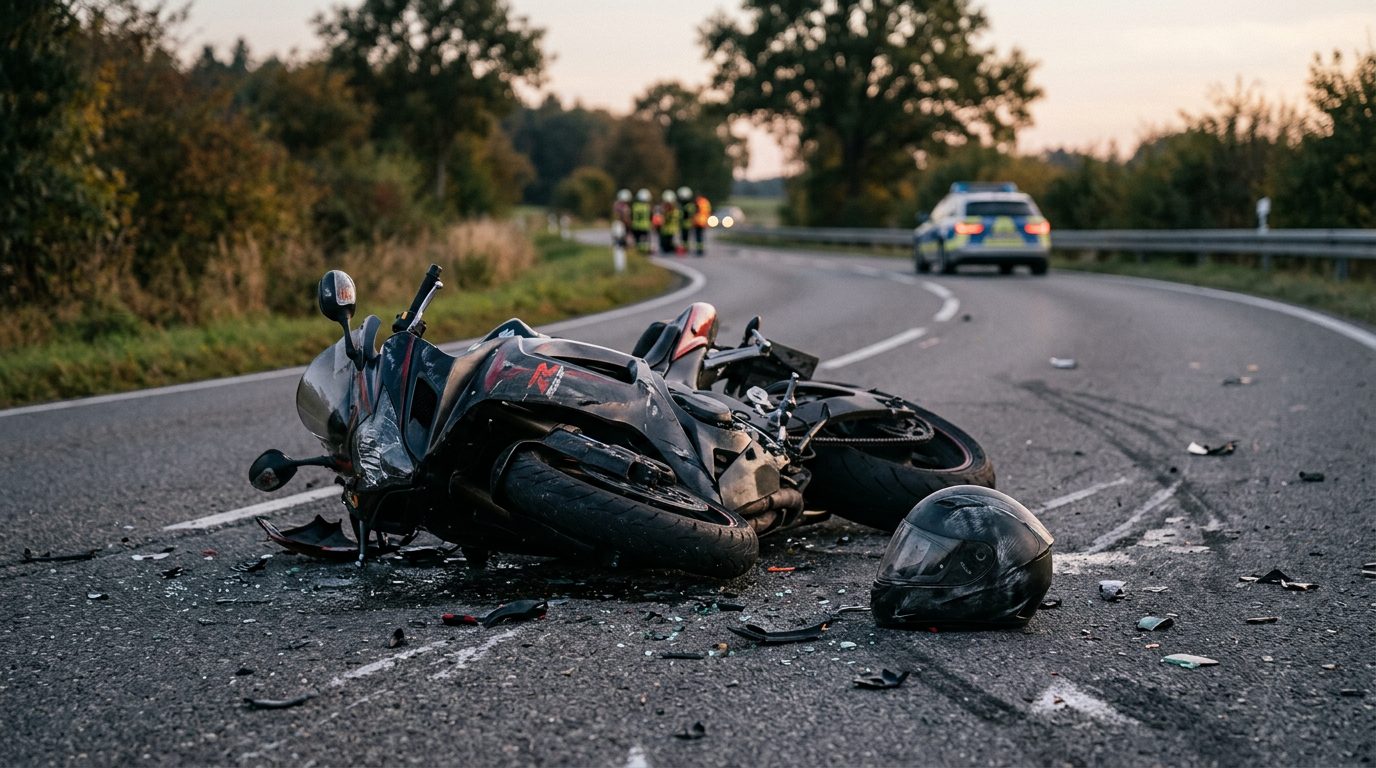
Motorcycle Accidents
Common Causes of Motorcycle Accidents & Negligence
Understand how negligence leads to catastrophic motorcycle injuries—and what you can do if you've been hurt.
By CHG Lawyers · Published September 24, 2026
Motorcycle Accident Negligence & Legal Liability in Florida
A motorcycle crash that causes permanent paralysis, brain damage, or amputation is often the direct result of someone else’s negligence or recklessness. Understanding the common causes, the physics that make motorcycles vulnerable, and whether another party bears responsibility is the foundation for exploring your legal options.

Not sure what your next step is?
Talk it through with our team — the first consultation is free, confidential, and carries no obligation.
Why Motorcycles Are Uniquely Vulnerable to Catastrophic Injury
Motorcycles have no protective shell, airbags, crumple zones, or frame to absorb impact. The rider’s body absorbs the full force of collision. Two-wheel design also means that loss of traction—from a side impact, debris, or road hazard—can cause immediate loss of control in ways a four-wheeled vehicle can recover from.
Motorcyclists face a far greater risk of dying in a crash than passenger vehicle occupants. Motorcycle riders represent less than 3% of registered vehicles but account for roughly 14% of all traffic deaths.
Spinal cord injuries and paralysis. A motorcycle crash at 35 mph can cause severe spinal cord damage. The spine may be compressed, fractured, or severed. The result is paraplegia (lower-body paralysis) or quadriplegia (all-four-limb paralysis). Approximately 18,000 new spinal cord injuries occur each year in the United States, according to the Christopher & Dana Reeve Foundation. Recovery of significant motor function is rare. Lifelong medical care and adaptive equipment are the reality.
Traumatic brain injury. Without a protective shell, the rider’s head strikes pavement, a vehicle, or debris at high speed. Even a helmet reduces—but does not eliminate—the risk of severe brain damage. Traumatic brain injury is a serious risk in motorcycle crashes. Traumatic brain injury can cause permanent cognitive impairment, memory loss, personality changes, and lifelong disability.
Amputation and severe burns. A motorcycle pinned under a truck can crush a limb beyond surgical repair. Contact with hot engine parts or road friction can cause severe burns. Both injuries require immediate surgery, multiple procedures, and lifelong rehabilitation.
According to the Christopher & Dana Reeve Foundation, approximately 5.4 million Americans live with paralysis. Paralysis can mean lifelong medical care and ongoing costs. When negligence caused the crash, the responsible party may be legally liable for all those costs.
How Motorcycle Physics Make Certain Crashes More Dangerous
Motorcycles’ two-wheel design creates vulnerabilities that four-wheeled vehicles do not face:
Braking dynamics. A car distributes braking force across four wheels and a larger contact patch. A motorcycle brakes on two wheels with a much smaller contact patch. On wet pavement, gravel, or debris, a motorcycle’s front wheel can lock or lose traction suddenly, causing the rider to be thrown over the handlebars or the bike to slide sideways. A car in the same conditions may slow safely.
Weight distribution and lean angle. Motorcycles lean into turns. A side-impact collision while leaning—common in left-turn crashes—can cause the rider to be ejected at high velocity or trapped under the motorcycle. The lean angle also means the rider’s body is closer to the pavement, increasing head and spinal injury risk.
Visibility and size. A motorcycle’s small profile makes it harder for other drivers to judge distance and speed. At night or in low light, a motorcycle is often invisible to drivers looking for larger vehicles. This perception gap is a leading cause of left-turn and failure-to-yield crashes.
Acceleration and speed misjudgment. Motorcycles accelerate faster than most drivers expect. A driver pulling out in front of a motorcycle often misjudges how quickly it approaches, leading to front-end collisions at high relative speed.
Most Common Causes of Motorcycle Accidents Involving Other Drivers’ Negligence
Left-Turn Crashes: The Deadliest Scenario
Left-turn crashes are among the most common and severe motorcycle accidents. A car driver turns left in front of an oncoming motorcycle. The driver says, “I didn’t see it.”
At 40 mph, the motorcycle strikes the car’s side or front. The rider is thrown over the handlebars or crushed between vehicles. Spinal cord injury, brain damage, and death are common outcomes.
The turning driver had a legal duty to ensure the intersection was clear before turning. Failure to do so is negligence. The motorcycle operator had the right of way and no time to react.
Failure to Yield at Intersections
A driver runs a red light or stop sign and strikes a motorcycle. The motorcycle operator had the right of way but no time to react. The impact often occurs at the driver’s side, directly at the motorcycle rider’s body. This scenario frequently results in catastrophic injury because the collision happens at the rider’s torso or head.
Blind-Spot Collisions
A car changes lanes without checking mirrors or looking over the shoulder. The motorcycle is in the blind spot. The side-to-side impact often ejects the rider or pins the motorcycle under the vehicle.
A driver’s failure to perform a proper shoulder check before changing lanes is negligence. Motorcycles are particularly vulnerable to blind-spot collisions because their small size makes them easy to miss.
Unsafe Merging by Trucks and Large Vehicles
A truck or large vehicle merges onto a highway without seeing a motorcycle already in that lane. The motorcycle is struck from behind or from the side. The size and weight difference means the motorcycle operator has no chance to escape. A fully loaded semi-truck weighs 80,000 pounds; a motorcycle weighs 300–500 pounds. The force differential is catastrophic.
Misjudgment of Motorcycle Speed
A driver misjudges how quickly a motorcycle approaches and pulls out in front of it. Motorcycles accelerate faster than most drivers expect. Their smaller size makes distance judgment difficult. This is a common cause of intersection crashes.
In each scenario, the other driver’s negligence—not the motorcycle operator’s error—caused the crash. When that negligence results in catastrophic injury, the injured rider may have a legal claim.
Speeding and High-Speed Crashes
Excessive speed reduces braking distance, turning ability, and reaction time. At 60 mph on a wet road, a motorcycle cannot brake or swerve as quickly as a car. The physics of two-wheel vehicles means that speed increases instability.
High-speed crashes produce forces that cause catastrophic injuries. A motorcycle struck by a car at 50 mph often results in severe head trauma, internal bleeding, spinal cord damage, and death.
When another driver was speeding and struck the motorcycle, the other driver bears responsibility for the negligence.
Impaired Driving
Alcohol impairs balance, reaction time, judgment, and coordination—all essential for vehicle control. An impaired driver fails to see a motorcycle, misjudges its speed, or makes an unsafe maneuver that strikes the motorcycle. Impaired driving is a common factor in fatal motorcycle crashes and those resulting in permanent disability.
Distracted Driving
A driver texting, adjusting a radio, or using a GPS fails to notice a motorcycle and drifts into it. At highway speeds, even a momentary lapse in attention can result in permanent spinal cord injury, brain damage, or death. Distracted driving is negligence, and the distracted driver is liable when it causes a motorcycle crash.
Have questions about what happened?
Ask our team directly. The first conversation is free, confidential, and there is no obligation to continue.
Poor Road Maintenance and Hazardous Conditions
Low light, rain, fog, or darkness make motorcycles harder for other drivers to see. Potholes, gravel, debris, and wet pavement cause motorcycles to lose traction more easily than cars. A road hazard that a passenger vehicle might navigate safely can throw a motorcycle off balance or cause a skid.
Poor road maintenance or failure to warn of hazards can be the basis for a negligence claim against a municipality or property owner responsible for the roadway.
Mechanical Failure and Product Defects
Brake failure, tire blowouts, chain failure, or steering problems can cause sudden loss of control without any error by the rider. A defective motorcycle or part may be the basis for a product liability claim against the manufacturer. Poor maintenance by a mechanic can result in preventable failures. In some cases, the manufacturer’s failure to warn of a known defect or to recall a dangerous part may create liability.
Understanding Negligence and Legal Liability Under Florida Law
When a motorcycle accident occurs, the question is not always “What caused it?” but rather “Who was responsible for the unsafe condition or action that caused it?“
Under Florida Statute 768.81, a claimant’s own fault in a negligence action proportionately reduces the damages awarded.
If another driver’s negligence caused your motorcycle accident and you suffered catastrophic injury, you may have a legal claim. That claim may include:
- All past and future medical expenses, including surgery, hospitalization, and ongoing care
- Lost wages and loss of earning capacity
- Pain and suffering
- Cost of home modifications and adaptive equipment
- Cost of in-home care or assisted living
- Punitive damages (in cases of recklessness or gross negligence)
Comparative Negligence in Florida
Florida follows a comparative negligence rule under Florida Statute 768.81. You may still recover damages even if you were partially at fault for the crash, as long as your share of fault is 50 percent or less.
For example: If a crash resulted from both your speeding and another driver’s failure to yield, and a jury determines you were 30% at fault and the other driver was 70% at fault, you can recover 70% of your damages.
This rule is important because it means that even riders who made a mistake may still have a claim.
Florida’s Statute of Limitations for Motorcycle Injury Claims
Under Florida Statute 95.11, you have two years from the date of the accident to file a personal injury lawsuit. For claims arising after March 24, 2023, this two-year window applies. This deadline is strict. If you do not file within two years, you lose the right to pursue a claim, regardless of its merit.
Contact an attorney as soon as possible after your accident to ensure your claim is filed within the legal deadline.
What to Do After a Serious Motorcycle Crash
Seek emergency medical care immediately. Do not refuse treatment or delay going to a hospital. Spinal cord injuries, brain injuries, and internal bleeding may not be immediately apparent.
Report the crash to police. A police report creates an official record of the crash, witness statements, and the other driver’s information.
Gather evidence. If you are able, take photos of the crash scene, vehicle damage, road conditions, and traffic signs. Get the names and contact information of all witnesses.
Preserve medical records. Keep all medical reports, imaging (X-rays, MRI, CT scans), treatment notes, and bills. These documents are essential to proving the extent of your injuries.
Do not discuss the crash on social media or with the other driver’s insurance company without legal advice. Anything you say can be used against you.
Contact an attorney as soon as possible. An attorney who focuses exclusively on catastrophic motorcycle injuries can investigate the crash, identify all liable parties, and advise you on your options.
Want to know where you stand?
Tell us what happened and our team will walk you through the options available to you, at no cost.
When Catastrophic Injury Changes Everything
A motorcycle accident that results in permanent paralysis, brain damage, or amputation is often the direct result of someone else’s negligence, recklessness, or failure to maintain safe conditions. The visibility gap—drivers not seeing motorcycles—combined with the physics of two-wheel vehicles and the lack of protective structure, creates a perfect storm for catastrophic injury.
If you or a family member has suffered a catastrophic motorcycle injury, understanding what caused the crash and whether another party bears responsibility is the first step toward exploring your legal options. Many people in your situation reach out to discuss what happened and whether negligence played a role. A conversation with an attorney can help clarify your circumstances and what may be possible next.
Get a free case evaluation to discuss your accident, your injuries, and your options. There is no obligation, and all information is confidential.

Frequently Asked Questions
What is the most common cause of motorcycle accidents involving catastrophic injury?
Other drivers’ failure to see motorcycles or respect their right of way—particularly left-turn crashes and failure-to-yield scenarios—are leading causes. Motorcycles’ small profile and lack of protective structure make them vulnerable to severe injury even in moderate-speed crashes. NHTSA data shows that visibility-related crashes are disproportionately represented in fatal and severe motorcycle accidents.
Can I be held liable if I was partially at fault for the crash?
Florida follows a comparative negligence rule (Fla. Stat. § 768.81(6)). You may still recover damages even if you were partially at fault, as long as your share of fault is 50 percent or less. For example, if you were 40% at fault and the other driver was 60% at fault, you can recover 60% of your damages.
What should I do immediately after a serious motorcycle crash?
Seek emergency medical care first. Then, if safe, document the scene, gather witness information, and report the crash to police. Preserve all evidence and medical records. Do not speak to the other driver’s insurance company without legal advice.
How long do I have to file a lawsuit?
Under Florida Statute 95.11, you have two years from the date of the accident to file a personal injury lawsuit. Florida law allows this period to be tolled (paused) in certain circumstances, so do not assume an extension applies. Contact an attorney immediately to ensure your claim is filed on time.
How do I know if I have a claim?
If another party’s negligence, recklessness, or violation of law caused or contributed to the crash, you may have a claim. An attorney can review the circumstances and advise you.
What damages can I recover?
Damages may include medical expenses, rehabilitation costs, lost wages, pain and suffering, and—in cases of permanent disability—ongoing care costs, home modifications, and loss of earning capacity. In cases of gross negligence or recklessness, punitive damages may also be available.
Leading Causes of Motorcycle Accidents
Other Drivers Failing to See You
Motorcycles' small profile makes them easy to miss. Left-turn crashes and failure-to-yield collisions happen when drivers don't check their blind spots or misjudge a motorcycle's speed and distance. These crashes often cause severe injuries because motorcycles lack the protective frame of a car.
Unsafe Road Conditions
Potholes, gravel, oil slicks, and debris that a car might navigate safely can cause a motorcycle to lose traction and crash. Property owners and municipalities can be held responsible when they fail to maintain roads or warn riders of hazards.
Reckless or Impaired Driving
Speeding, tailgating, sudden lane changes, and driving under the influence put motorcyclists at extreme risk. When another driver's negligence causes a crash, they may be liable for your injuries.
Defective Motorcycles or Parts
Brake failure, tire defects, steering problems, or manufacturing flaws can cause loss of control. Manufacturers and sellers can be held accountable for unsafe products that lead to crashes.
How Negligence Creates Liability
Driver Negligence
When another driver breaches a duty of care—failing to look, turning without signaling, or driving recklessly—and that breach causes your crash, they are liable for your injuries and losses.
Property Owner Responsibility
Owners of roads, parking lots, and commercial properties must maintain safe conditions. Failure to repair hazards, remove debris, or provide adequate warnings can make them liable for accidents they could have prevented.
Product Liability
Manufacturers and distributors have a duty to produce safe motorcycles and parts. Defects in design, manufacture, or warnings can create liability when those defects cause crashes or amplify injuries.
Visibility & Road Design
Poor road design, missing signage, inadequate lighting, or blind curves that aren't properly marked can contribute to accidents. Entities responsible for road maintenance and safety may bear liability.
Why Motorcycle Injuries Are Often Catastrophic
Motorcycles offer no airbags, crumple zones, or protective frame. Even moderate-speed crashes can cause spinal cord injuries, traumatic brain injuries, amputations, and severe burns. The lack of protection means riders absorb the full force of impact, making negligence claims especially important for securing the resources you need to rebuild your life.
What to Do After a Motorcycle Accident
Seek Medical Care Immediately
Even if you feel okay, get evaluated by a doctor. Injuries like internal bleeding, spinal damage, and traumatic brain injury may not be immediately obvious. Medical records are also critical evidence for your claim.
Document the Scene
If you're able, take photos of the accident scene, vehicle damage, road conditions, traffic signs, and weather. Get contact information from witnesses and the other driver. This evidence helps establish negligence.
Report the Accident
File a police report and notify your insurance company. Keep copies of all reports and correspondence. Do not admit fault or sign anything without legal advice.
Contact an Attorney
Motorcycle accident claims can be complex, especially when catastrophic injuries are involved. An attorney can investigate the crash, identify all liable parties, and fight for fair compensation while you focus on recovery.