

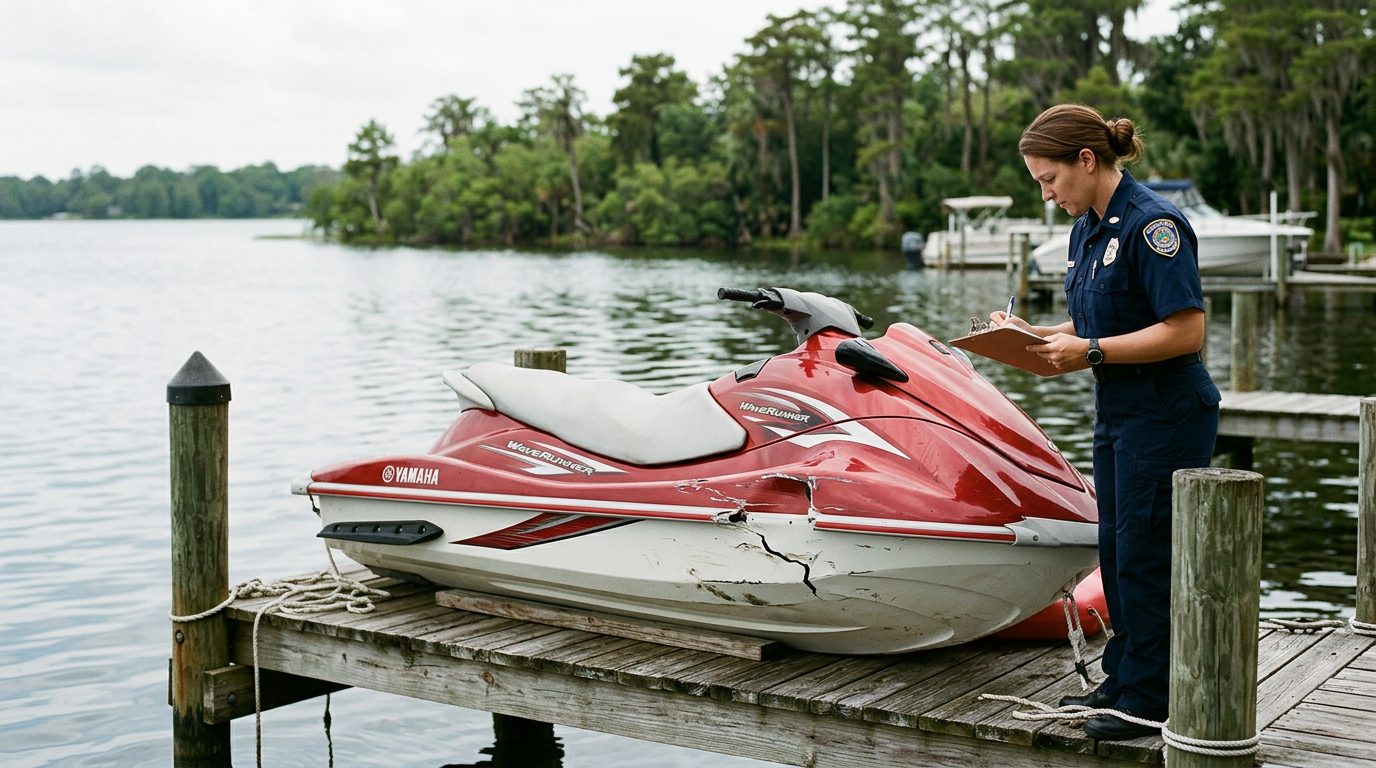
Jet Ski & Personal Watercraft Injuries
Defective Jet Ski Injury Claims: Florida Legal Guide
When a defect causes catastrophic injury on the water, you may have a claim against the manufacturer. Learn what you need to know.
By CHG Lawyers · Published September 02, 2026
Defective Jet Ski Injury Claims: When Design or Manufacturing Flaws Cause Serious Injury
If a flaw in the jet ski itself—not how it was used—caused your injury, you may have a product liability claim. You can sue the manufacturer, designer, or seller.
A defective jet ski can fail in dangerous ways: – A steering system that stops responding – A throttle stuck open – A fuel system that catches fire – A hull that capsizes without warning
This guide explains what makes a jet ski defective, how product liability works, and what you need to know about pursuing a claim.
Not sure what your next step is?
Talk it through with our team — the first consultation is free, confidential, and carries no obligation.
What Makes a Jet Ski Defective?
A jet ski is defective when it has a design flaw, manufacturing error, or missing safety warning that makes it unreasonably dangerous to use as intended. The defect must exist when the jet ski leaves the manufacturer’s control, and it must cause your injury.
A defective jet ski is different from one that is simply old, worn out, or misused. Operator error—speeding, reckless driving, or ignoring instructions—is not a defect. Poor maintenance by a rental company is not a defect either, though rental negligence is a separate claim.
A defect is a problem with the product itself: something wrong with how it was designed, made, or marketed that makes it unsafe no matter how carefully you operate it.
Examples of defects include:
- Steering failures: Loss of steering response, unresponsive controls, or sudden loss of directional control
- Throttle problems: Throttle that sticks open, causing uncontrolled acceleration, or fails to respond
- Fuel system defects: Leaks that cause fires, explosions during operation, or fuel ignition after impact
- Hull and stability issues: Design that causes capsizing in normal water conditions or excessive instability
- Engine problems: Sudden shutdown without warning, uncontrolled speed changes, or loss of power
- Safety equipment failures: Defective kill switches (emergency stop devices), missing or non-functional flotation devices, or inadequate handholds
- Visibility hazards: Poor sightlines or blind spots that increase collision risk
The key question is: would the injury have happened if the jet ski had been designed or made correctly? If the answer is no, a defect may be the cause.
Design Flaws vs. Manufacturing Defects: What’s the Difference?
Understanding the type of defect matters. The evidence and expert analysis differ for each type.
A design flaw means the jet ski model itself has an unsafe design. All units of that model have the same problem. For example, if the manufacturer designed all jet skis of a particular model with a steering system prone to failure, that is a design defect. Every jet ski built to that design carries the same risk.
A manufacturing defect means this particular jet ski was made incorrectly. The design may be safe, but something went wrong during production. A weld might have failed, a component might have been installed wrong, or materials might have been substandard. Only this jet ski—or a batch of them—has the problem.
A failure to warn occurs when the manufacturer knew of a risk but did not provide adequate warnings or instructions to users. The product itself may not be defective, but the failure to alert people to a known danger can create liability.
In catastrophic-injury cases our attorneys handle, design flaws often cause the most serious outcomes. They affect many units and may go undetected for years. Manufacturing defects can be equally catastrophic but may be harder to prove because the defect is unique to one jet ski.
Common Types of Jet Ski Defects That Cause Serious Injury
Jet ski defects frequently lead to catastrophic injuries. The defect often occurs during high-speed operation on water, where escape or recovery is difficult.
Steering and control failures cause loss of directional control and collision with other watercraft, docks, or objects. A sudden loss of steering at speed often results in spinal cord injuries, traumatic brain injuries, or drowning.
Fuel system defects create fire and explosion risks. Jet ski fuel systems are pressurized and located near the operator. A leak or design flaw can cause a fuel fire during operation or after impact, resulting in severe burns, respiratory injuries, and death.
Hull and stability problems cause capsizing or loss of control. A hull design that is inherently unstable or prone to taking on water can flip unexpectedly, trapping the operator underwater and causing spinal cord injury, brain injury, or drowning.
Engine and propulsion failures include sudden shutdown, uncontrolled acceleration, or loss of power. These failures often occur when the operator is far from shore, increasing the risk of drowning or collision.
Safety equipment failures involve defective kill switches that do not work, missing or non-functional flotation devices, or inadequate handholds. A kill switch that fails to stop the jet ski in an emergency can prevent the operator from regaining control.
Visibility and design hazards include blind spots or poor sightline design that increase the risk of collision with other watercraft or objects.
How Product Liability Works in Jet Ski Injury Claims
Product liability is the legal principle that a manufacturer, designer, or seller can be held responsible for injuries caused by a defective product. You do not have to prove the manufacturer was careless or negligent.
Instead, you must prove three things: 1. The product was defective 2. The defect existed when it left the manufacturer’s control 3. The defect caused your injury
This is called strict liability. The focus is on the product, not on the manufacturer’s state of mind. A company can be strictly liable for a defect even if it took reasonable care in design and manufacture. What matters is whether the product was unreasonably dangerous.
Three main theories of product liability apply to jet skis:
- Defective design: The jet ski model itself was designed in a way that makes it unreasonably dangerous.
- Defective manufacture: The jet ski was made incorrectly, deviating from the safe design.
- Failure to warn: The manufacturer knew of a risk but did not provide adequate warnings or instructions.
Who can be sued depends on the facts. The jet ski manufacturer is the primary defendant. The designer, distributor, and sometimes the rental company or seller may also be liable, depending on their role and knowledge of the defect.
What You Need to Prove in a Defective Jet Ski Injury Claim
Evidence that strengthens your claim includes: – Expert testimony – Product testing – Maintenance records – The jet ski itself (preserved without repair or alteration) – Witness statements – Rental agreements – Safety briefing materials – Reports of similar incidents involving the same model
Catastrophic Injuries Caused by Jet Ski Defects
Defects transform ordinary accidents into life-altering events by removing the operator’s ability to respond or escape.
Drowning and near-drowning are the leading catastrophic outcomes in jet ski accidents. They are often linked to capsizing, loss of control, or inability to re-board after falling into the water. When a defect causes loss of control or capsizing, the risk of drowning increases dramatically. The U.S. Coast Guard tracks personal watercraft fatalities; drowning remains the primary cause of death in recreational boating accidents.
Spinal cord injuries and paralysis result from impact with the jet ski, other watercraft, or objects after loss of control. A steering failure or sudden deceleration can throw the operator forward or strike them with the jet ski, resulting in paraplegia (lower-body paralysis) or quadriplegia (full-body paralysis). These injuries are permanent and life-altering.
Traumatic brain injuries occur from impact with the jet ski, water, or other objects. Loss of control due to a throttle failure or steering defect often leads to collision at high speed, causing severe brain damage.
Amputation and severe lacerations result from propeller contact. A defective kill switch that fails to stop the jet ski can leave the propeller spinning, causing catastrophic propeller injuries that result in partial or complete limb loss.
Severe burns result from fuel-system fires or explosions caused by a defect in the fuel system design or construction. Jet ski fuel systems are pressurized and located near the operator; a rupture can cause immediate, severe thermal injury.
Federal and Florida Regulatory Standards for Jet Ski Safety
These standards establish minimum requirements for personal watercraft design, including:
Federal regulations under 33 CFR Part 183 cover boats and associated equipment.
Florida law recognizes product liability claims for defective watercraft, including jet skis, under strict liability and negligence theories. Florida Statutes § 768.81 addresses comparative fault in personal-injury cases, which may apply if you were partly at fault for the accident. Under the statute’s definition, a products liability action is a negligence action, so comparative fault rules may apply to a defect claim.
Multi-jurisdictional claims involving jet skis may implicate Coast Guard jurisdiction, CPSC authority, and state law.
Have questions about what happened?
Ask our team directly. The first conversation is free, confidential, and there is no obligation to continue.
Defects vs. Operator Error: Why the Distinction Matters
Operator error means the injury resulted from how the jet ski was used: speeding, reckless driving, failure to follow instructions, or poor judgment. Defect means the injury resulted from a flaw in the jet ski itself, regardless of how it was used.
This distinction is critical because it affects liability and damages. A signed waiver may limit claims based on operator error and ordinary risks of jet skiing. But a waiver does not eliminate claims based on defects.
If you were operating the jet ski reasonably and the jet ski failed or behaved unexpectedly—the steering stopped responding, the throttle stuck, the jet ski capsized without warning—that is a defect, not operator error. The waiver you signed does not protect the manufacturer from liability for that defect.
Defects vs. Rental-Company Negligence: Understanding the Difference
Rental-company negligence occurs when the rental company fails to maintain the jet ski, inspect it properly, or warn you of known problems. Manufacturer defect occurs when the jet ski was defectively designed or made, regardless of maintenance or rental practices.
These are separate claims. A defective jet ski rented by a negligent company creates multiple liability paths. You may have claims against both the manufacturer (for the defect) and the rental company (for negligence in maintenance or failure to warn).
Some catastrophic-injury cases involve both a defect and rental negligence. For example, a jet ski with a known steering defect rented by a company that failed to inspect it or warn renters. You may recover damages from both defendants.
How Hard Is It to Sue for a Defective Jet Ski Injury?
Defective jet ski injury claims are complex. They require expert testimony from engineering specialists to analyze design and manufacturing standards, medical experts to explain how the defect caused your injury, and sometimes accident reconstruction specialists to recreate the incident.
The manufacturer will defend itself aggressively. The company may argue the jet ski was misused, maintained improperly, or altered after sale. Manufacturers have resources and legal teams; you need experienced representation to level the playing field.
Evidence preservation is critical. The jet ski itself must not be repaired, altered, or discarded—it is the primary evidence of the defect. Witness statements, rental agreements, safety briefing materials, and your medical records are also essential.
These cases take time to investigate and develop. Early involvement of a lawyer and expert specialists strengthens your claim and protects your rights.
Damages in a Defective Jet Ski Injury Claim
If you succeed in a defective jet ski injury claim, you may recover several types of damages:
-
Medical expenses: Emergency care, surgery, rehabilitation, ongoing treatment, adaptive equipment, and future medical care related to your injury.
-
Lost income: Wages lost during recovery and future earning capacity if the injury is permanent and prevents you from working.
-
Pain and suffering: Compensation for physical pain, emotional trauma, loss of enjoyment of life, and psychological injury.
-
Permanent disability: If the injury causes lasting impairment—paralysis, amputation, brain injury, disfigurement, or loss of bodily function—you may recover additional damages for the permanent change to your life.
-
Wrongful death: If the defect caused a fatal injury, the family may recover damages for the loss of the deceased, including funeral expenses, loss of support, and loss of companionship.
Steps to Take If You Believe a Defect Caused Your Jet Ski Injury
Seek medical attention immediately. Document all injuries and treatment. Your medical records are evidence of the severity of your injury.
Preserve the jet ski. Do not repair, alter, or discard it. The jet ski is critical evidence. If it is in the rental company’s possession, request in writing that it be preserved.
Document the incident. Take photos and video of the jet ski, the accident scene, and your injuries if possible. Record the names and contact information of witnesses. Keep the rental agreement, safety briefing materials, and any communications with the rental company.
Report the incident. Notify the rental company, the manufacturer if possible, and relevant authorities (Coast Guard, local police, or park rangers).
Keep records. Maintain copies of medical bills, receipts, correspondence, insurance documents, and any statements you make.
Consult a lawyer early. Early investigation and expert involvement strengthen your claim. A lawyer can send a preservation letter to the manufacturer and rental company, ensuring evidence is not destroyed.
Why Waivers Don’t Eliminate Defective Product Claims
A waiver is a contract in which you agree to give up certain legal rights in exchange for the opportunity to participate in an activity. Waivers are common in recreational activities like jet skiing.
A waiver may limit liability for operator error and ordinary risks of the activity. But unambiguous exculpatory contracts are enforceable unless they contravene public policy, so a waiver’s effect on a defect claim against a manufacturer or rental company depends on that policy.
Courts in Florida and nationwide recognize that a signed waiver does not eliminate product liability claims. If a defect caused your injury, the waiver you signed does not shield the manufacturer or rental company from responsibility.
Want to know where you stand?
Tell us what happened and our team will walk you through the options available to you, at no cost.
The Role of Expert Testimony in Defective Jet Ski Claims
Expert witnesses are essential in defective jet ski claims. They translate technical and medical information into evidence a jury can understand.
Engineering experts analyze the jet ski’s design, manufacturing process, and whether it met federal standards (33 CFR Part 183) and industry best practices. They compare the jet ski to competitor designs and industry standards to determine whether the design or manufacture was defective.
Medical experts explain how the defect caused your specific injuries. They connect the mechanism of injury (e.g., loss of steering control) to the medical outcome (e.g., spinal cord injury from impact).
Accident reconstruction specialists may recreate the incident to show how the defect led to the injury. They use physics, engineering principles, and data from the jet ski to demonstrate causation.
Manufacturers will present their own experts to argue the jet ski was not defective or that the defect did not cause the injury. Your lawyer will prepare your experts to counter these arguments and present a compelling case to a jury.
Statute of Limitations: How Long You Have to File
Florida’s statute of limitations for personal-injury actions is two years from the date the cause of action accrues. But a claim founded on the design, manufacture, distribution, or sale of personal property has four years under Florida Statutes § 95.11(3)(d).
In some cases, the deadline may be different. For example, if the injury was not discovered immediately, the clock may start when the injury was discovered, not when the accident occurred. If the injured person is a minor, the deadline may be extended when no parent, guardian, or guardian ad litem exists, or when one has an interest adverse to the minor, under Florida Statutes § 95.051.
Time is critical. Do not delay in consulting a lawyer. Early investigation and evidence preservation protect your claim.
Frequently Asked Questions
What is the most common injury on a jet ski?
Drowning and near-drowning are most common, often linked to capsizing or loss of control. Spinal cord injuries, brain injuries, amputations, and severe burns also occur when defects cause loss of control or impact.
What are the three types of product defects?
Design defects (the model itself is unsafe), manufacturing defects (this particular jet ski was made incorrectly), and failure to warn (the manufacturer knew of a risk but did not warn users).
Can I sue a jet ski manufacturer if I signed a waiver?
Yes. A waiver does not eliminate product liability claims for defects. Waivers limit liability for operator error and ordinary risks, but not for defective products.
What damages can I recover in a defective jet ski injury claim?
Medical expenses, lost income, pain and suffering, permanent disability compensation, and in fatal cases, wrongful death damages for the family.
How long do I have to file a defective jet ski injury lawsuit in Florida?
Four years for a claim founded on the design, manufacture, distribution, or sale of personal property, under Florida Statutes § 95.11(3)(d). Consult a lawyer immediately to protect your rights.
What evidence do I need to prove a jet ski was defective?
The jet ski itself (preserved without repair), expert testimony, maintenance records, witness statements, rental agreements, and reports of similar incidents involving the same model.
Can a rental company be liable for a defective jet ski?
Yes. A rental company may be liable for negligence in maintaining the jet ski or failing to warn of known defects. The manufacturer is liable for the defect itself.
Why do I need an expert in a defective jet ski claim?
Experts analyze whether the jet ski met federal safety standards and design and manufacturing best practices. They explain how the defect caused your injury and recreate the incident to show causation. Manufacturers will present their own experts; you need experienced representation.
If a jet ski defect caused your injury—not how it was operated—people in your situation reach out regularly to discuss whether they have a claim. A free case evaluation can help you understand your legal options and next steps. Contact us to speak with a lawyer who focuses exclusively on catastrophic injury claims.
The Three Types of Product Defects
Design Defects
The jet ski model itself is inherently unsafe—for example, a design that makes capsizing likely, or a throttle that sticks open without warning.
Manufacturing Defects
The individual jet ski was built incorrectly—a faulty engine component, a cracked hull, or improperly installed safety equipment that differs from the manufacturer's design.
Failure to Warn
The manufacturer knew of a danger but failed to provide adequate warnings or instructions to prevent injury—such as not warning of a known stability problem.
Why Defective Jet Ski Claims Matter
Accountability for Manufacturers
Manufacturers have a responsibility to design and build jet skis safely. When they fail, injured riders and their families deserve answers and compensation.
Catastrophic Injuries Are Preventable
Many jet ski injuries—spinal cord damage, brain injuries, amputations, and drowning—result from defects that could have been prevented with proper design or warnings.
Evidence Matters
Defect claims require investigation into the jet ski's design, manufacturing records, prior complaints, and expert analysis. Early action preserves critical evidence.
Your Recovery Deserves Support
A catastrophic injury changes everything. A defect claim can help cover medical care, rehabilitation, lost income, and the long-term costs of living with permanent injury.
Act Quickly—Evidence Fades
Jet skis are often repaired, sold, or scrapped after an accident. The manufacturer's records, witness statements, and the condition of the defective jet ski itself are time-sensitive. The sooner you report your injury and preserve evidence, the stronger your claim.
Common Catastrophic Jet Ski Injuries from Defects
Spinal Cord Injuries & Paralysis
Loss of control or sudden impact caused by a defect can result in permanent paralysis (paraplegia or quadriplegia), requiring lifelong care and mobility support.
Traumatic Brain Injuries
Impact injuries from capsizing or collision—often triggered by a defective throttle, steering, or stability system—can cause permanent cognitive and physical damage.
Drowning & Near-Drowning
Defects that cause sudden capsizing, engine failure, or loss of control can lead to drowning or hypoxic brain injury, the most common catastrophic outcome in jet ski accidents.
Amputation & Severe Lacerations
Defective jet skis with unguarded propellers or sudden acceleration can cause severe cuts, crush injuries, and loss of limbs.
Severe Burns
Fuel leaks, engine fires, or defective electrical systems can cause catastrophic burns requiring emergency care and long-term reconstruction.