

Spinal Cord Injuries
Burst Fractures: What They Are and Why They Matter
A burst fracture scatters bone into the spinal canal, often causing nerve damage and paralysis. If you or a loved one suffered this injury in an accident, you need to understand what happened—and what comes next.
By CHG Lawyers · Published September 14, 2026
Vertebral Fractures Explained: Burst, Compression & Dislocation Injuries
A vertebral fracture is a break in one or more spine bones (vertebrae). Not all vertebral fractures are the same—and this matters profoundly. Understanding vertebral fractures helps you recognize why your injury is catastrophic and why it demands immediate action.
Fractures from serious accidents—truck crashes, falls on unsafe property, violent assaults, or high-impact collisions—are not minor injuries. They damage the spinal cord and nerve roots inside the spinal canal. This often causes permanent paralysis, loss of feeling, or loss of bodily function.
If this happened to you, understanding what a vertebral fracture is, how it damages your spine, and why it demands immediate specialized care is your first step toward protecting your health and your rights.
Not sure what your next step is?
Talk it through with our team — the first consultation is free, confidential, and carries no obligation.
Why Vertebral Fractures Are NOT Routine Injuries
Many people hear “fracture” and think of a broken arm or leg. Those heal with a cast and time. Vertebral fractures are fundamentally different.
Your spine is a stack of bones (vertebrae) separated by cushioning discs. A spinal canal runs through the center of each vertebra—a tunnel where your spinal cord lives. Your spinal cord is the main highway for nerve signals between your brain and your body. It controls movement, feeling, and vital functions like breathing and bowel control.
Low-impact trauma may break bone without damaging the cord. Routine arm or leg fractures heal because bone has excellent blood supply and repairs itself.
Serious accidents create severe force. This does more than break bone. Bone fragments, displacement, or swelling often invade the spinal canal and injure the spinal cord or nerve roots directly.
Here’s what makes this catastrophic: the spinal cord does not repair itself the way bone does. According to the National Institute of Neurological Disorders and Stroke (NINDS), spinal cord injuries cause permanent loss of function below the injury level in most cases. A vertebra may fuse and heal over 8–12 weeks. But if the fracture damaged your spinal cord, that damage is usually irreversible. You may live with paralysis, chronic pain, or permanent disability for life.
This is why vertebral fractures demand immediate specialized medical care—and why they are catastrophic injuries.
The Three Main Types of Vertebral Fractures
Vertebral fractures are classified by how the bone breaks and how much damage occurs to the spinal cord and nerves. The type determines treatment urgency, surgery need, and what long-term disability you may face.
Compression Fractures
A compression fracture occurs when the front part of the vertebral body collapses or is squeezed—like a sponge being pressed down.
How it happens: Heavy downward force on the spine causes compression fractures. This includes falls from height (especially on unsafe property with inadequate railings or lighting), motor vehicle crashes, or direct blunt impact to the back. A person falling down an unlit staircase at an apartment complex or struck by a falling object on a construction site may suffer a compression fracture.
Severity varies: A minor compression fracture in a low-impact fall might heal with bracing alone. A severe compression fracture from a serious accident crushes the bone significantly. Bone fragments push into the spinal canal.
When bone fragments compress the spinal cord and nerve roots, you experience severe pain, numbness, tingling, weakness, or partial or complete paralysis.
Long-term impact: Severe compression fractures often lead to chronic pain, permanent loss of mobility, or irreversible nerve damage. Some people regain limited function through rehabilitation. Others live with lifelong disability.
Burst Fractures
A burst fracture is more severe than a compression fracture. The vertebral body shatters in multiple directions. Bone fragments scatter into the spinal canal where the spinal cord is located.
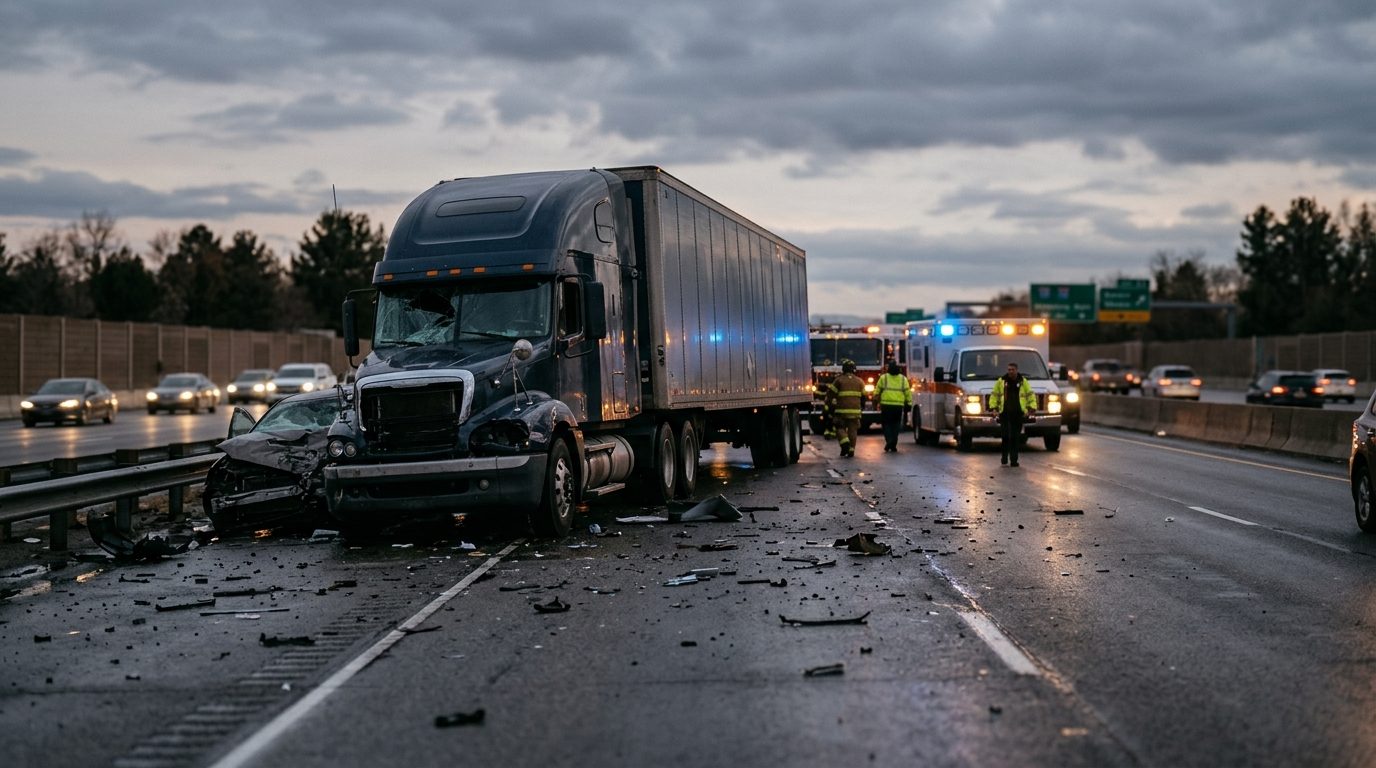
What causes it: Burst fractures result from extreme, high-impact trauma. This includes truck crashes (especially rollovers or T-bone collisions at high speed), falls from significant height, violent collisions, or rollover accidents. The force is severe enough to shatter the bone rather than simply compress it.
Real-world example: A person ejected from a vehicle in a rollover crash, or struck by a truck running a red light, may suffer a burst fracture. The sudden, violent deceleration or impact transmits extreme force through the spine.
Why burst fractures are catastrophic: Burst fractures almost always involve direct damage to the spinal cord or nerve roots. According to Cleveland Clinic, burst fractures frequently cause partial or complete paralysis, loss of feeling, or loss of bowel and bladder control.
The spinal cord damage is usually immediate and severe. Many people with burst fractures experience significant or complete paralysis below the injury level.
Stability and urgency: Most burst fractures are unstable. The spine cannot safely support your body’s weight or protect the spinal cord. They require urgent surgery to stabilize the spine and prevent further nerve damage.
Fracture-Dislocation
A fracture-dislocation is the most severe type of vertebral fracture. The vertebra not only breaks, but it shifts out of alignment with the vertebra above or below it. The bone is both fractured and dislocated.
What causes it: Fracture-dislocation results from severe rotational or shearing forces. This includes rollover crashes, high-speed collisions with violent twisting, or impacts that force the spine to bend and twist at the same time.
Real-world example: A person in a vehicle struck broadside and spun violently, or ejected and struck by another vehicle, may suffer a fracture-dislocation. The rotational and compressive forces are extreme.
Why it is catastrophic: When the vertebra shifts out of alignment, the misaligned bones pinch or tear the spinal cord directly. This causes immediate, severe spinal cord damage.
Neurological outcome: Fracture-dislocation almost always results in significant or complete paralysis below the injury level. The spinal cord damage is often irreversible.
Medical emergency: Fracture-dislocation is a medical emergency requiring immediate surgery to realign the spine and decompress the spinal cord. Every hour of delay increases the risk of permanent, total paralysis or death.
Other Vertebral Fracture Patterns
Chance fractures are horizontal fractures through the vertebra. They are often caused by sudden flexion injury—such as a lap-belt-only restraint in a motor vehicle crash. They can be stable or unstable.
Wedge fractures occur when the front of the vertebra is crushed more than the back, creating a wedge shape. They are often stable but can progress over time.
Teardrop fractures involve a small piece of bone breaking off from the front of the vertebra. They usually indicate severe ligament damage and instability, making them serious injuries.
Measuring Spinal Cord Injury Severity: The ASIA Impairment Scale
When you suffer a spinal cord injury from a vertebral fracture, medical providers use a standardized tool to measure and document the severity of your injury. This is critical for your medical treatment—and for your legal claim.
The ASIA Impairment Scale (developed by the American Spinal Injury Association) classifies spinal cord injuries into five levels:
- ASIA A (Complete): No motor or sensory function is preserved below the injury level. This is total paralysis.
- ASIA B (Incomplete): Sensory function is preserved, but motor function is lost below the injury level.
- ASIA C (Incomplete): Motor function is preserved, but more than half of the key muscles below the injury level have a strength grade less than 3 (cannot move against gravity).
- ASIA D (Incomplete): Motor function is preserved, and at least half of the key muscles below the injury level have a strength grade of 3 or better.
- ASIA E (Normal): Motor and sensory function are normal.
Why this matters for your claim: Your ASIA classification is documented in your medical records and becomes part of the evidence in your case. It provides objective, standardized proof of your injury severity. Insurance companies and juries understand the ASIA Scale. It removes ambiguity about whether your injury is truly catastrophic or minor.
If you are classified as ASIA A or B, you have documented, severe, permanent spinal cord injury. This strengthens your claim for significant compensation.
Stable vs. Unstable: Why the Difference Matters
Stable fractures allow the spine to support your body’s weight and protect the spinal cord. Many stable fractures heal without surgery. They require immobilization (bracing or bed rest) and close medical monitoring to prevent movement that could cause further damage.
Unstable fractures cannot safely support your body or protect the spinal cord. They require surgery to stabilize the spine and prevent additional nerve damage or paralysis.
This distinction determines your entire treatment path. An unstable fracture means surgery is urgent. A stable fracture may allow time for conservative treatment. But it still requires strict medical oversight and compliance with your doctor’s restrictions.
Have questions about what happened?
Ask our team directly. The first conversation is free, confidential, and there is no obligation to continue.
Symptoms of a Vertebral Fracture from a Serious Accident
Immediate signs include:
- Severe back or neck pain
- Inability to move
- Numbness or tingling in the limbs
- Loss of feeling
- Loss of bowel or bladder control
- Paralysis
Some people develop pain, weakness, or nerve symptoms hours or days after the injury as swelling increases.
Any sign of spinal injury requires immediate medical evaluation. Do not wait or assume the pain will resolve on its own.
The Worst Locations for a Vertebral Fracture
Cervical spine (neck): Fractures in the neck are the most dangerous. The spinal cord is thickest in the cervical region. It controls all four limbs and vital functions like breathing. Cervical fractures often cause quadriplegia (paralysis of all four limbs) or death.
Thoracic spine (mid-back): Fractures here can cause paraplegia (paralysis of the legs) and loss of bowel and bladder control.
Lumbar spine (lower back): Fractures here may cause leg paralysis or loss of function, depending on nerve involvement.
The reality: Any vertebral fracture from a serious accident has the potential to be catastrophic. Severity depends on the fracture type, exact location, and whether nerves are damaged.
Treatment: From Emergency Care to Long-Term Disability
Emergency care: Any suspected vertebral fracture requires immediate medical imaging (X-ray, CT, or MRI) and evaluation by a spine specialist.
Conservative treatment: Stable fractures may be treated with bracing, immobilization, and physical therapy.
Surgical treatment: Unstable fractures, burst fractures, and fracture-dislocations almost always require surgery to stabilize the spine and decompress the spinal cord.
Long-term reality: Rehabilitation, pain management, and adaptation to permanent disability are ongoing parts of recovery. Many people require assistive devices, home modifications, ongoing therapy, and long-term care.
Proving Liability: Why Accident Investigation and Expert Testimony Matter
When a vertebral fracture results from someone else’s negligence, proving liability requires evidence. Insurance companies and defendants will challenge your claim.
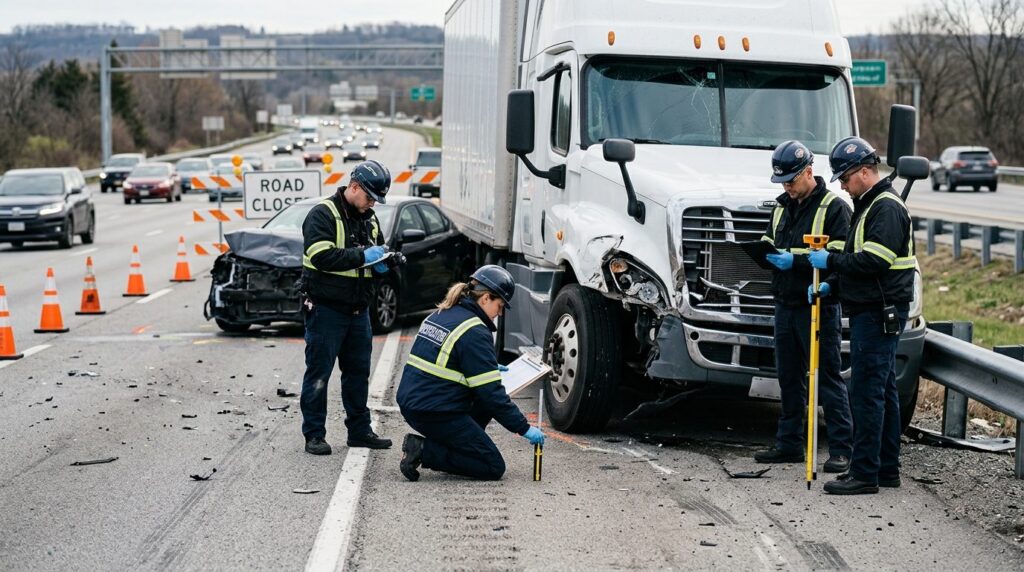
Accident reconstruction is often essential. A qualified accident reconstructionist analyzes the scene, vehicle damage, road conditions, and the physics of the collision to determine how the accident happened and who was at fault. In truck crashes, for example, reconstruction may show that the truck driver was speeding, failed to brake, or violated hours-of-service regulations under 49 CFR Part 395.
Biomechanical analysis explains how the forces in the accident caused your specific injury. An expert witness calculates the G-forces, impact angles, and energy transfer to show that the accident was severe enough to cause a vertebral fracture and spinal cord damage.
Medical expert testimony from a spine surgeon or neurologist documents your injury severity using the ASIA Scale, explains the mechanism of injury, and testifies about your prognosis and long-term disability.
Preservation of evidence is time-critical. Vehicles are repaired or scrapped. Surveillance footage is deleted. Witnesses move away or forget details. The sooner an attorney is involved, the sooner evidence can be preserved and experts can be retained.
When a Vertebral Fracture Results from Someone Else’s Negligence
Vertebral fractures from serious accidents often result from someone else’s negligence or wrongdoing:
- A truck driver’s reckless speeding, fatigue, or failure to maintain the vehicle causes a crash.
- A property owner fails to maintain safe conditions (broken railings, poor lighting, uneven surfaces), and you fall.
- A business fails to provide adequate security, and you are assaulted or attacked on the property.
- A rideshare vehicle is involved in a collision due to another driver’s negligence.
- A construction zone lacks proper safety barriers, warnings, or supervision.
- A negligent security failure at an apartment complex, parking garage, or hotel allows an assault that causes your injury.
In each situation, someone else’s carelessness, recklessness, or failure to maintain safe conditions caused your catastrophic injury. You may have a legal claim for compensation.
Time is critical. Under Florida Statute §95.11, you generally have two years from the date of injury to file a personal injury lawsuit. That deadline is firm and cannot be extended except in rare circumstances.
The sooner you consult with an attorney, the sooner evidence can be preserved, witnesses can be interviewed, and your claim can be properly investigated.
What compensation may cover:
- Medical treatment, surgery, and hospitalization
- Rehabilitation and ongoing therapy
- Assistive devices and home modifications
- Lost income and reduced earning capacity
- Disability accommodations and long-term care
- Pain and suffering
Want to know where you stand?
Tell us what happened and our team will walk you through the options available to you, at no cost.
Why Early Legal Consultation Matters
If you suffered a vertebral fracture in a serious accident, you’re likely facing urgent medical decisions, significant financial strain, and deep uncertainty about the future.
You may be struggling with paralysis, chronic pain, or permanent disability. You may be wondering how you’ll afford treatment, ongoing care, and adaptive equipment. You may be unsure whether anyone else bears responsibility for what happened.
Understanding your injury is the first step. Understanding whether you have a legal claim is the next—and it’s time-sensitive.
Many people dealing with a catastrophic spinal injury reach out to discuss what happened and whether they have options. The sooner you do, the sooner you can protect your rights and your future.
Our team focuses exclusively on representing people with catastrophic injuries—including spinal cord injuries from accidents, catastrophic back and neck injuries, paralysis from truck accidents, and injuries from negligent security—from serious accidents and negligence. We understand the medical, emotional, and financial toll these injuries take. We work with accident reconstructionists, biomechanical engineers, and medical experts to build strong claims.
If you’d like to discuss your circumstances and explore what may be possible, contact us for a free case evaluation. There’s no obligation, and we’re here to answer your questions.
Frequently Asked Questions
Can a burst fracture cause paralysis?
Yes. Burst fractures almost always involve spinal cord or nerve root damage because bone fragments scatter into the spinal canal, frequently causing partial or complete paralysis.
How long does it take for a vertebral fracture to heal?
Vertebral bone typically fuses over 8–12 weeks. But if nerve damage occurred, nerve recovery is usually incomplete or permanent.
Do all vertebral fractures require surgery?
No. Stable fractures may heal with bracing and immobilization. Unstable fractures, burst fractures, and fracture-dislocations almost always require surgery.
What is the difference between a stable and unstable vertebral fracture?
Stable fractures allow the spine to support the body and protect the spinal cord. Unstable fractures cannot and require surgery to prevent further damage.
What is the ASIA Impairment Scale?
The ASIA Scale is a standardized tool used by medical providers to classify spinal cord injury severity from A (complete paralysis) to E (normal function). Your ASIA classification is documented in your medical records and becomes evidence in your legal claim.
What is the statute of limitations for a vertebral fracture claim in Florida?
Under Florida Statute §95.11, you have two years from the date of injury to file a personal injury lawsuit. This deadline is firm and should not be delayed.
Burst Fractures Carry High Risk of Paralysis
Because bone fragments scatter into the spinal canal during a burst fracture, spinal cord or nerve root damage is common. Partial or complete paralysis can result. If you were injured in a truck crash, fall, or other accident and experienced sudden loss of feeling or movement, seek immediate medical attention and contact a lawyer who understands catastrophic spinal injuries.
What Happens During Recovery
Bone Healing Timeline
Vertebral bone typically fuses over 8–12 weeks with proper immobilization. However, healing time depends on fracture severity, your age, and overall health.
Nerve Recovery Is Separate
Even after bone heals, nerve damage may not resolve completely. Recovery from spinal cord injury can take months or years, and some loss of function may be permanent.
Immediate Medical Care Is Critical
How you are treated in the first hours and days after injury affects your long-term outcome. Stabilization, imaging, and specialist care can make a significant difference.
Long-Term Support and Costs
Catastrophic spinal injuries often require ongoing physical therapy, adaptive equipment, home modifications, and medical care—costs that can reach hundreds of thousands of dollars over a lifetime.
Why This Injury Demands Legal Action
Protect Your Family's Future
A burst fracture can end a career and transform your family's life. You deserve compensation that reflects the true cost of your injury—not just medical bills, but lost income, ongoing care, and pain.
We Handle the Legal Complexity
Proving liability in truck crashes, falls, negligent security incidents, and other accidents requires investigation, expert testimony, and knowledge of how insurance companies work. We focus exclusively on catastrophic injury cases.
You Focus on Healing
While you recover, we manage the claim. You won't pay attorney fees unless there is a recovery, so you can concentrate on medical treatment and rebuilding your life.