


Negligent Security · Florida & Nationwide
Attacked on Someone Else's Property? The Owner May Be Responsible.
If you were assaulted, shot, robbed, or seriously hurt at an apartment complex, parking garage, hotel, or business, and the owner failed to provide basic security, you may have a claim against them. We help victims of catastrophic, life-altering injuries and grieving families understand their rights.
Serious Advocacy for Serious Injuries
Licensed
Florida Bar–admitted attorneys
Nationwide
We take catastrophic cases across the U.S.
Bilingual
English & Spanish resources
Free
No-cost case evaluation
By CHG Lawyers · Published August 06, 2026
Attacked on Someone Else’s Property? Holding the Owner Accountable for a Catastrophic Back or Neck Injury
If you were assaulted, robbed, shot, or otherwise attacked on property you didn’t own — an apartment complex, a parking garage, a hotel, a store — and you were left with a serious back or neck injury, you may be able to recover money from the property owner, not only from the person who hurt you.
That surprises a lot of people. So let’s start with the question that matters most to families we talk to.
Not sure what your next step is?
Talk it through with our team — the first consultation is free, confidential, and carries no obligation.
“Why Would I Sue the Property Owner Instead of the Attacker?”
Because suing the attacker usually leads nowhere — and holding the owner accountable often can.
The person who attacked you may never be identified. Even if police catch and convict them, a criminal conviction sends someone to jail; it does not pay for spinal surgery, a wheelchair-accessible home, or a lifetime of care. Most individual attackers have no assets and no insurance. A judgment against them is, in practice, often a piece of paper you can never collect on.
The property owner is different. A business, apartment landlord, or hotel is far more likely to carry liability insurance — and the law can hold that owner responsible for security failures that made the attack possible in the first place.
These are two separate matters:
- The criminal case punishes the attacker. It is run by the state.
- The civil case is your claim, focused on the owner’s failure to keep the property reasonably safe.
You can pursue a claim against the owner whether or not the attacker is ever arrested, charged, or convicted.
This page is for people left with a permanent, life-altering back or neck injury — and for families who lost a loved one — after an attack on someone else’s property. If you want to talk now, you can request a free, confidential case evaluation.
Security Failures That May Mean You Have a Claim
The legal term for this kind of case is negligent security — a form of premises liability. But you don’t need the term to recognize the problem. Property owners are supposed to take reasonable steps to protect the people they invite onto their property from crime they should have seen coming.
Read this list. If one of these describes where you were hurt, it’s worth a conversation:
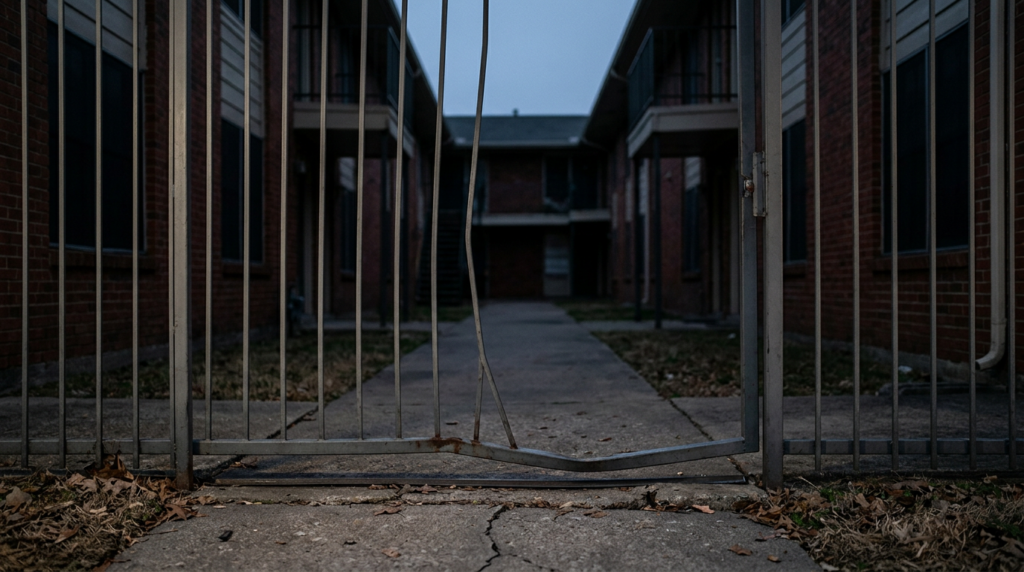
- Broken gate locks or fences — a “gated community” whose gate had been broken for weeks
- Dead or missing lighting — a parking lot, stairwell, or breezeway left dark at night
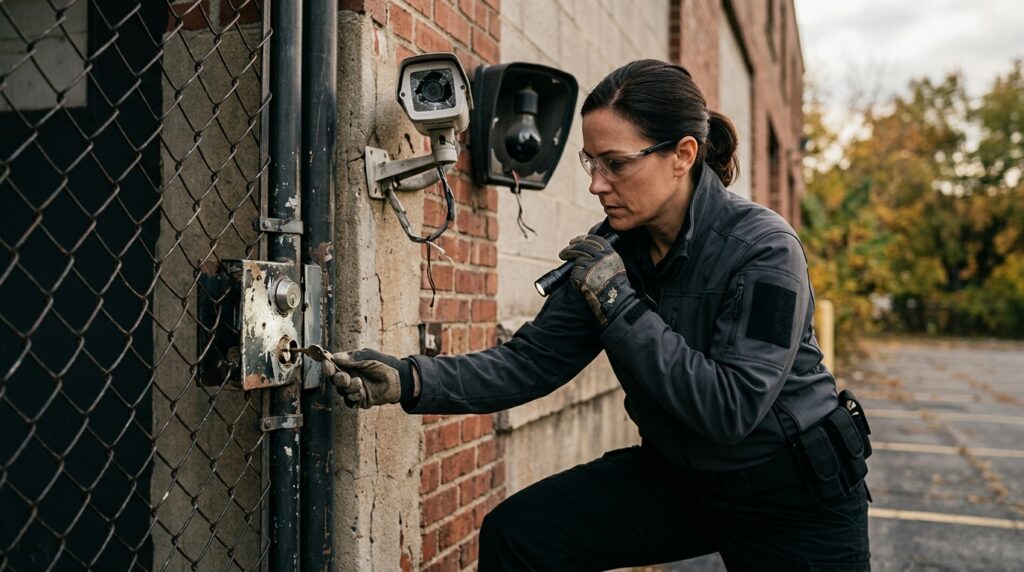
- Cameras that didn’t work — or no cameras at all in a spot known for trouble
- No security guards where prior violence made the danger obvious
- Ignored complaints — tenants or customers reported break-ins, loitering, or threats, and nothing changed
- A history of crime on or near the property — earlier robberies, assaults, or shootings the owner knew about or should have known about
That last point is the heart of most cases. Lawyers call it foreseeability: was the danger predictable? When crime has happened before at the same complex, garage, or block, a reasonable owner is expected to respond — with working locks, lighting, cameras, or guards. When they don’t, and someone is seriously hurt, they can share the blame.
The Injuries We Handle
We focus on catastrophic, permanent injuries. We do not handle bruises, short-term soreness, or injuries that fully heal. We concentrate on serious back and neck injuries, including:
- Broken vertebrae (spinal fractures) in the neck, mid-back, or lower back
- Spinal cord damage, which can cause permanent loss of movement and feeling
- Paralysis — paraplegia (legs) or quadriplegia (arms and legs)
- Cauda equina syndrome — pinched nerves that can cause lasting loss of bladder or bowel control
- Fatal spine or neck injuries (see the note below for families)
These attacks commonly happen at apartment complexes and rental communities, parking lots and garages, hotels and motels, bars and nightclubs, gas stations and convenience stores, shopping centers, and ATMs.
What makes an injury “catastrophic”? It causes permanent harm — surgery, lasting loss of movement, and often lifelong care. Doctors describe spinal cord injuries as “complete” or “incomplete,” according to the Mayo Clinic, and grade severity using the ASIA Impairment Scale, a standard from the American Spinal Injury Association. This classification — the letter grade (A through E) your treating team assigns — becomes important evidence, so it’s worth noting where it appears in your records.
For Families Who Lost Someone
If an attack on an unsafe property took the life of someone you love, we are sorry. Nothing here can undo that.
Florida law allows the surviving family to bring a wrongful-death claim against a property owner whose security failures allowed the attack to happen. That claim can address the medical and funeral costs, the loss of the income and support your loved one provided, and the loss of their companionship. You do not have to gather everything yourself — reaching out is the first step, and we handle the rest with care and without asking you to relive graphic detail.
What You Have to Prove (Plain Language)
To succeed in a negligent security claim, you generally must show four things:
- Duty. As a tenant, guest, or customer, you were owed reasonable care and security.
- Breach. The owner failed to provide it — the broken gate, the dark lot, the ignored complaints.
- Causation. That failure allowed the attack to happen, or made your injury worse.
- Damages. You suffered real, serious harm — medical bills, lost income, permanent impairment.
In the cases our attorneys handle, prior police reports and the property’s own crime history often become the strongest evidence of foreseeability.
Have questions about what happened?
Ask our team directly. The first conversation is free, confidential, and there is no obligation to continue.
Two Florida Rules Every Family Should Know
1. The filing deadline is generally two years. Under Fla. Stat. §95.11, most negligence claims that arose on or after March 24, 2023, must be filed within two years. Miss it and you can lose the right to recover entirely. That clock is one reason acting early matters so much.
2. Florida uses “modified comparative fault.” Under Fla. Stat. §768.81, if you are found partly at fault, your recovery is reduced by your percentage of fault — and if you are found more than 50% at fault, you recover nothing. Insurers often try to shift blame onto the victim (“Why were you there at night?”). Do not accept that framing. A crime victim who was lawfully on the property is not to blame for an owner’s failure to secure it, and part of our job is to keep the focus where it belongs.
What to Do Next — Practical Steps
If you’re able, these steps protect your health and your case:
- Get medical care and follow through. Your health comes first, and your records document the injury. Note the injury-severity classification your doctors use (for a spinal cord injury, that ASIA grade).
- Report the attack. A police or incident report creates a dated, independent record.
- Preserve evidence quickly. Security camera footage is often overwritten within days. Write down what you remember, and save names or numbers of anyone who saw what happened or the property’s condition.
- Don’t give a recorded statement to an insurer before you understand your rights.
- Reach out early so a lawyer can send a legal notice to preserve footage and records before they disappear.
What a Claim Can Recover
A claim can seek money for the medical, financial, and personal harm a catastrophic back or neck injury causes:
- Medical costs — emergency care, spinal surgery, hospital stays, and rehabilitation
- Future and lifelong care — assistive equipment, home modifications, and ongoing therapy
- Lost wages and reduced ability to earn a living
- Pain, suffering, and loss of enjoyment of life
- Wrongful-death damages for surviving family members
Every case is different, and we cannot promise a specific amount. What we can do is document your losses fully and pursue a fair result. We handle these cases on a contingency fee — you don’t pay attorney’s fees unless there is a recovery.
Why Work With CHG Personal Injury Lawyers
We focus on catastrophic, life-changing injuries, including spinal and neck trauma from attacks on unsafe property.
- Licensed attorneys admitted to the Florida Bar, based in Florida and handling cases nationwide
- Bilingual (English/Spanish) team, so you can tell your story in the language you know best
- An empathetic, plain-language approach for injured people and grieving families
- Deep understanding of the medical and financial toll of permanent spine and neck injuries
We don’t make win-rate or “best” claims. We commit to treating your case seriously and preparing it thoroughly.
Want to know where you stand?
Tell us what happened and our team will walk you through the options available to you, at no cost.
Frequently Asked Questions
The attacker was never caught. Do I still have a case?
Often, yes. Your claim focuses on the property owner’s failure to provide reasonable security — not on convicting the attacker. It can proceed whether or not anyone is ever arrested.
How much is a back injury claim worth?
There is no set number. Value depends on the severity of the injury, medical costs, lost income, and the facts of the attack. We cannot guarantee any amount.
What must I prove?
Duty, breach, causation, and damages: the owner owed you reasonable security, failed to provide it, that failure allowed your harm, and you suffered real losses.
Is there a deadline?
Yes. Florida generally allows two years for recent negligence claims under Fla. Stat. §95.11. Contact a lawyer promptly.
Talk to Us
A permanent back or neck injury changes everything — your health, your work, your family’s future. If you were attacked and badly hurt on a property that should have been safer, you deserve real answers. Please act before evidence and deadlines slip away.
Request your free, confidential case evaluation now — in English or Spanish.
You Do Not Need the Attacker to Be Caught
Many people assume they have no case because the person who hurt them was never arrested or identified. That is not how these claims work. Your case focuses on whether the property owner failed to provide reasonable security — not on convicting the attacker. It can move forward whether or not anyone is ever caught.
Where These Serious Attacks Happen
Apartment Complexes
Broken gates, dead security cameras, or no lighting in stairwells and parking areas where residents and guests are attacked.
Parking Lots & Garages
Dark, unmonitored, and unpatrolled spaces where robberies, shootings, and assaults occur.
Hotels & Motels
Failed locks, unsecured entrances, and absent security staff that leave guests exposed to violence.
Bars, Stores & Gas Stations
Businesses that ignore a known history of violent crime and fail to protect the people they invite in.
Common Questions From Victims and Families
The attacker was never caught. Do I still have a case?
Often, yes. Your claim focuses on the property owner's failure to provide reasonable security — not on convicting the attacker. It can proceed whether or not anyone is ever arrested.
What makes a property owner responsible?
When an owner knows — or should know — that violence is a risk on their property and fails to take reasonable steps like working locks, gates, lighting, cameras, or guards, the law may hold them accountable. This is called negligent security.
What if a loved one was killed?
A death is the most catastrophic outcome of all. Surviving family members may be able to bring a wrongful-death claim against the property owner. We handle these cases with care for the family left behind.
How much is a claim worth?
There is no set number. Value depends on the severity of the injury, medical costs, lost income, and other lasting harm. We can review your specific situation during a free case evaluation.
You Were Hurt on Their Property. Let Us Help You Understand Your Rights.
Related practice areas
- How a Catastrophic Back Injury Changes Daily Life: Mobility, Work, and Independence
- Whiplash vs. Catastrophic Neck Injury: When Neck Trauma Becomes Permanent
- Proving Fault in a Catastrophic Back or Neck Injury Claim in Florida
- Vertebral Fracture vs. Spinal Cord Damage: When a Back Injury Becomes Catastrophic
- What Is Cauda Equina Syndrome? A Back Injury Emergency After an Accident
- Cervical, Thoracic, and Lumbar: Where a Spine Injury Happens and Why It Matters
- Hurt by a Violent Attack on Someone Else’s Property? Your Rights After an Assault, Shooting, or Attack
- Tetraplegia