

Negligent Security Guide · Florida & Nationwide
Attacked on Someone Else's Property? You May Have a Right to Answers.
If you or a loved one was assaulted, shot, or attacked where the owner failed to keep the place reasonably safe, the law may hold that owner responsible. Here is what that means in plain language.
By CHG Lawyers · Published July 20, 2026
Attacked on Someone Else’s Property? A Plain-Language Guide for Victims and Their Families
You went to your apartment parking lot. A hotel hallway. A gas station at night. You were doing something ordinary — and someone attacked you. Maybe you were beaten, shot, stabbed, robbed, or sexually assaulted. Now you’re facing a life-changing injury, hospital bills you never planned for, and a question no one prepared you to ask: Could this have been prevented?
If the property owner failed to keep the place reasonably safe, the answer may be yes — and the law may hold that owner responsible, not just the person who hurt you.
We know how heavy this is. This guide is written for you — the injured person or a grieving family member — not for lawyers. It uses plain words, explains what may have gone wrong, and shows what you can do next. There is no legal jargon you need to understand first.
If you were seriously hurt in an attack on someone else's property, reach out for a free case evaluation . Talk it through with our team — the first consultation is free, confidential, and carries no obligation.
You May Have More Options Than You Realize
The person who attacked you is responsible for their crime. But that is not always the whole story.
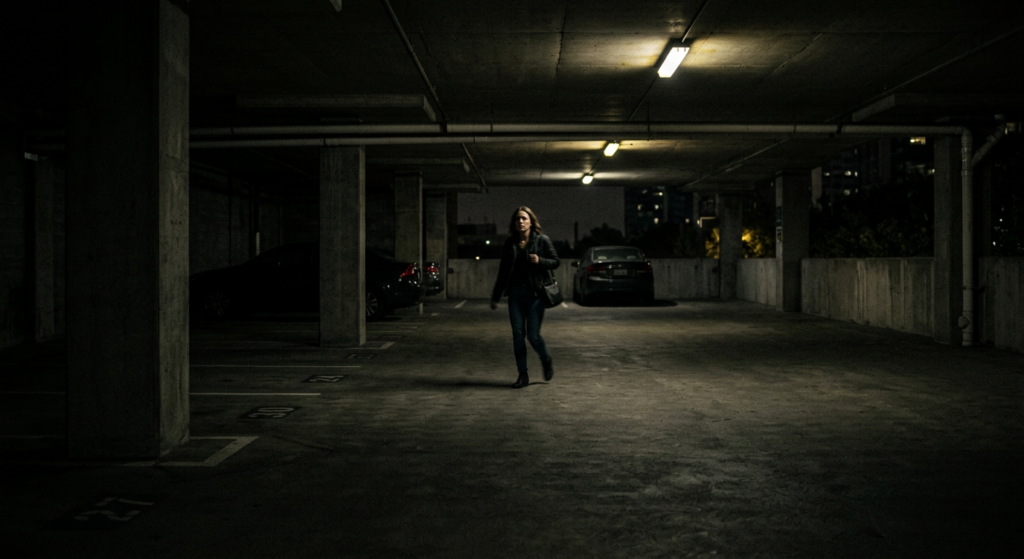
Think about a security gate that broke months ago and was never fixed. A parking garage left dark because the owner wouldn’t replace the bulbs. An apartment complex where robberies and assaults kept happening — and management put up no cameras, hired no guards, and warned no one.
When an owner ignores clear, known dangers and someone gets seriously hurt because of it, that owner may share the blame. Property owners in Florida who invite the public in — landlords, hotels, bars, stores — generally have a legal duty to take reasonable steps to protect people from foreseeable crime. Failing to do that is the failure this guide is about.
The Legal Term for This Situation: “Negligent Security”
Lawyers call the situation described above a negligent security claim. It’s a specific type of premises liability case, which simply means a claim about something dangerous on someone’s property.
A negligent security claim doesn’t excuse the attacker. It’s about a separate failure — the owner’s failure to protect people from harm they should have seen coming. Both wrongs can be true at once.
“Reasonable security” means the basic safety steps a careful owner should take for that specific property. Depending on the location and its history, that can include:
- Working locks, gates, and fences
- Adequate lighting in parking lots, hallways, and stairwells
- Functioning security cameras
- Trained security guards when the risk calls for them
Why Suing the Property Owner Can Matter More Than the Criminal Case
The attacker and the property owner can both be held responsible — but in two completely separate systems.
The criminal case is run by the state. Its goal is to punish the attacker. You are a witness, not the person in control, and it does not put money in your pocket for medical care.
A civil negligent security claim is your case. Its goal is to recover money to help you rebuild.
Here is a point many families don’t know: your civil claim can move forward even if the attacker is never caught, never charged, or found not guilty. Your case against the property owner does not depend on a criminal conviction.
And there’s a practical reality. An individual attacker rarely has the money to pay for a lifetime of care after a catastrophic injury. A property owner — apartment company, hotel chain, national retailer — usually carries liability insurance that can. For a family facing decades of medical costs, that difference can determine whether the injured person gets the care they need.
What Has to Be True for a Claim to Succeed
A negligent security claim generally requires proving five things. Here they are in everyday words. (This is general information, not legal advice about your specific case.)
Duty. The owner had a responsibility to keep lawful visitors reasonably safe.
Foreseeability. The crime was reasonably predictable — similar attacks happened before, the area was known to be dangerous, or the owner ignored specific threats.
Breach. The owner failed to provide reasonable security (broken locks, dead cameras, no lighting where it was clearly needed).
Causation. That failure allowed the attack — or made it worse. A working gate or a present guard might have stopped it.
Damages. You suffered serious, lasting harm, or a loved one died.
In the catastrophic cases our attorneys handle, foreseeability is usually the heart of the fight. We don’t just take the owner’s word that “no one saw this coming.” We pull the property’s own history — police call logs for the address, prior incident reports, 911 records, and internal complaints from tenants or staff. Under Florida’s public records law, Fla. Stat. Ch. 119, much of the law-enforcement call data for a location can be requested. What the owner knew before you were hurt is often what makes or breaks the case.
Where These Attacks Commonly Happen
You may recognize your own situation below. These are everyday places people trust to be reasonably safe:
- Apartment complexes and residential communities — broken gates, non-working locks, no lighting, no cameras, no response to repeated crime
- Parking lots and parking garages — dark corners, no patrols, no working cameras
- Hotels and motels — poor entry control, unsafe hallways, keys that open the wrong rooms
- Bars, nightclubs, and restaurants — no crowd control, no trained security, over-serving that leads to violence
- Gas stations, convenience stores, and ATMs — known robbery hotspots left unaddressed
- Retail stores and shopping centers — unsafe entrances or unlit lots
If you were hurt at a place like this, the details of the property matter as much as the details of the attack.
Not sure what your next step is?
Talk it through with our team — the first consultation is free, confidential, and carries no obligation.
The Injuries This Guide Is About
These claims usually involve violent crimes that leave permanent, life-altering harm — physical assaults, shootings, stabbings, robberies, and sexual assaults.
Our firm focuses on catastrophic injuries — the kind that change a life forever:
- Spinal cord injuries and paralysis (paraplegia and quadriplegia)
- Traumatic brain injury (TBI)
- Amputation and limb loss
- Severe burns
- Catastrophic back and neck injuries
- Wrongful death
These injuries often cause permanent impairment and lifelong care needs. A spinal cord injury, for example, can cause lasting loss of movement and sensation and can affect breathing, bladder, and bowel function, according to the Mayo Clinic. Doctors grade the severity of spinal cord injuries using the ASIA Impairment Scale. The Christopher & Dana Reeve Foundation reports that millions of Americans live with some form of paralysis.
This guide is for serious, permanent harm — not minor injuries.
Negligent Security Under Florida Law
Florida does not have a single statute titled “negligent security.” These claims grow out of general negligence law and the duty property owners have to protect lawful visitors from foreseeable criminal acts. Two Florida rules matter a great deal:
There is a deadline to file — the statute of limitations. For general negligence and personal-injury claims that arose on or after March 24, 2023, the deadline is generally two years under Fla. Stat. §95.11. (Claims that arose before that date were generally subject to a four-year deadline.) Wrongful-death claims have their own timeline. Miss the deadline and you can lose your right to recover entirely — which is why acting early matters.
Florida uses a modified comparative-negligence rule under Fla. Stat. §768.81, amended in 2023. If a claimant is found more than 50% at fault, they generally recover nothing. You can read the official text of these laws on Online Sunshine, the Florida Legislature’s website.
Our firm is based in Florida and handles cases nationwide. Laws differ from state to state, so where the attack happened controls which rules apply. Talk with a licensed attorney about the law for your situation.
Questions People Often Ask
Can I still sue if the attacker was never caught? Often, yes. A civil negligent security claim against the property owner does not require the attacker to be identified, arrested, or convicted.
Do property owners go to jail for this? Generally, no. Negligent security is a civil claim for money damages, not a crime. The attacker may face jail through a separate criminal case.
Are there reliable national statistics on negligent security claims? Reliable national numbers are limited, and we won’t cite figures we can’t verify. What matters most is the documented history of your specific property.
What Compensation May Be Available
Every case is different, and no lawyer can promise a specific result. In general, families may seek:
- Medical bills, past and ongoing
- Future and lifelong care — therapy, equipment, home modifications, in-home nursing
- Lost income and reduced ability to earn a living
- Pain and suffering
- Losses for families in wrongful-death cases
Catastrophic injuries carry high, long-term costs. A spinal cord injury or severe TBI can require care for decades. That is a central reason pursuing the property owner — not just the attacker — can matter so much for your family’s stability.
What to Do If This Happened to You or a Loved One
Your health comes first. Get medical care and follow your doctor’s advice. Then, if you’re able:
- Keep all medical records and bills
- Write down what was wrong with the property — broken locks, dark lots, past incidents you know about
- Save photos, videos, and the names and numbers of any witnesses
- Act quickly, before evidence disappears and before the filing deadline
An attorney can reach evidence most families can’t. We can request security records, prior crime reports, camera footage, and maintenance logs — but that evidence can be overwritten or deleted within days or weeks. Time genuinely matters.
When you’re ready — and only when you’re ready — you can request a free case evaluation. No pressure. Just honest answers.
Learn More
Negligent security is one part of a larger area of catastrophic-injury law. To understand the bigger picture, see our resource on catastrophic back and neck injuries.
CHG Personal Injury Lawyers represents victims of catastrophic injuries in Florida and nationwide. If you were seriously hurt in an attack on someone else’s property, reach out for a free case evaluation.

Have questions about what happened?
Ask our team directly. The first conversation is free, confidential, and there is no obligation to continue.
Related practice areas
When a Property Owner May Be Responsible
Missing or Broken Security
Locks that didn't work, gates left open, no cameras, no lighting, or no guards where they were reasonably needed to keep people safe.
Known Danger, Ignored
The owner knew — or should have known — that crime was happening nearby, yet did nothing to protect the people they invited onto the property.
Places This Happens
Apartment complexes, parking lots and garages, hotels and motels, bars and nightclubs, gas stations, stores, and ATMs.
The Legal Term
Lawyers call this a 'negligent security' claim. You don't need to know the term — you just need to know you may have a case.
Act Before the Evidence Disappears
Security footage is often erased within days, and repairs can quietly cover up the very problems that caused your injury. If you're able, speak with an attorney early so important evidence can be preserved.
What This Kind of Case Involves
It's Not About the Attacker
A criminal caused the harm, but a negligent security claim asks a separate question: did the property owner fail to provide the reasonable safety measures that could have prevented it?
Serious, Life-Altering Injuries
We focus on catastrophic harm — spinal cord injuries and paralysis, traumatic brain injuries, gunshot and stab wounds, amputations, and wrongful death from an attack that should have been stopped.
You Don't Pay Us Upfront
Medical bills come fast after a violent injury. A case evaluation costs nothing, and you can ask questions before deciding anything.
Why Families Turn to CHG
Licensed Attorneys
Our lawyers are admitted to the Florida Bar and handle serious injury cases with care and diligence.
We Focus on Catastrophic Injury
We concentrate on life-altering harm — the kind that changes everything for a person and their family.
English & Spanish
We explain your options in plain language, in the language you're most comfortable with.