

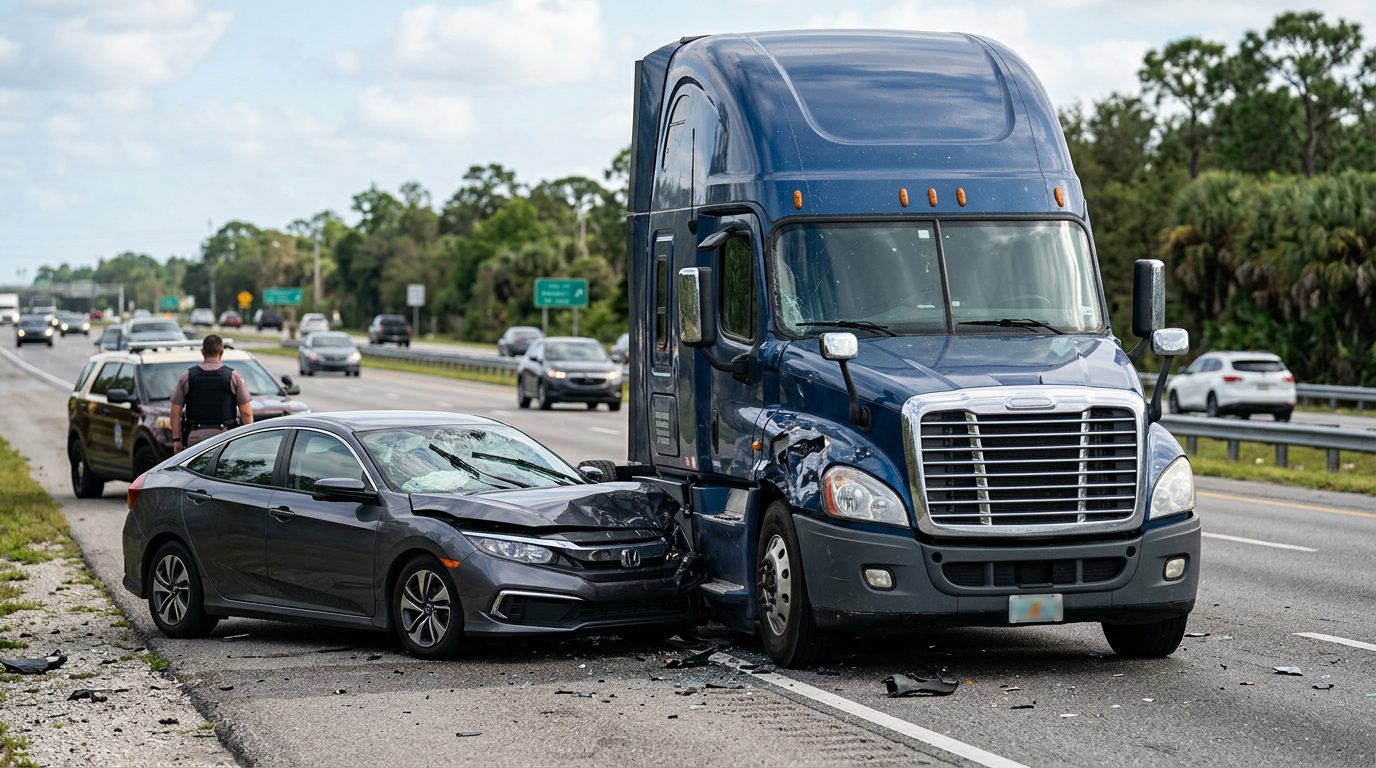
Accident Reporting & Your Claim
What Happens if You Don't Report an Accident Within the Required Time
Delays in reporting can jeopardize your injury claim. Learn what you need to do—and when—to protect your rights.
By CHG Lawyers · Published October 02, 2026
Florida’s Immediate Accident Reporting Requirement: What You Must Know
In Florida, the driver must immediately give notice of a crash to law enforcement by the quickest means of communication if anyone was injured, someone died, or apparent damage to a vehicle or other property is at least $2,000. Missing this deadline is a noncriminal traffic infraction under Florida law, and it can also create problems with your insurance claim. Understanding Florida’s immediate crash-notice requirement—and what to do if you’ve missed it—protects you from compounding consequences.

Not sure what your next step is?
Talk it through with our team — the first consultation is free, confidential, and carries no obligation.
The Legal Requirement: Florida Statute 316.065
This is a legal obligation, not optional—even if both drivers agree to handle it privately or exchange cash on the spot.
Because the duty is to give notice immediately, it does not wait until you leave the scene or discover your injuries. Reporting does not mean you’re admitting fault; it means you’re complying with the law and creating an official record.
Police Reporting vs. Insurance Reporting: Two Separate Deadlines
Many drivers confuse these two distinct obligations:
Police reporting: Required by Florida law immediately if anyone is injured, someone dies, or apparent damage to a vehicle or other property is at least $2,000. Violating this requirement is a noncriminal traffic infraction.
Insurance reporting: Florida law allows your insurer to require written notice as soon as practicable after a motor vehicle accident, and your policy sets the specific timing. Check your specific policy language. This is a contractual obligation between you and your insurer.
Missing the police report deadline does not extend or replace the insurance reporting deadline. Both must be done. Failing to give police notice of a crash is a noncriminal traffic infraction under Florida law. Failing to report to your insurer can result in claim denial. They are separate requirements with separate consequences.
No-Fault Insurance Does Not Exempt You from Reporting
Florida is a no-fault insurance state. Your own insurance—specifically Personal Injury Protection (PIP)—covers your medical expenses and lost wages, regardless of who caused the accident. PIP pays 80% of reasonable medical expenses and 60% of lost income if you get initial care within 14 days of the crash, up to a $10,000 medical benefit limit. That full $10,000 is available only if a qualified provider determines there was an emergency medical condition; otherwise, medical benefits are limited to $2,500 (Fla. Stat. § 627.736). Many drivers believe this means reporting to police is unnecessary.
This is a dangerous misconception. Florida Statute 316.066 still requires reporting. No-fault status does not exempt you from this duty. No-fault only affects how claims are paid, not whether you must report. You may still be able to pursue a claim against the other driver if your injuries meet Florida’s permanent injury threshold.
Consequences of Not Reporting an Accident
The consequences of failing to report a required accident are serious and cumulative.
Severity depends on whether anyone was injured and the extent of damage.
Insurance claim problems: Delayed notice to your insurer can complicate your claim, so it is important to report the accident promptly.
Without a police report, there is no official record of the crash to rely on if the other driver’s account differs.
In serious car accident claims, a missing or delayed police report can significantly complicate a victim’s ability to recover compensation. The report can be an important record of how the crash occurred.
Do You Have to Call Police After a Car Accident in Florida?
Yes, if the accident involves injury, death, or apparent property damage of at least $2,000. If no one is injured and apparent damage is under $2,000, you may not be legally required to call police, but you should still exchange information with the other driver and document the incident with photos and witness names.
Even in minor accidents, calling police creates an official record that protects you if injuries appear days after the crash, if the other driver is uncooperative, or if you suspect fraud. That police report becomes invaluable evidence later.
Have questions about what happened?
Ask our team directly. The first conversation is free, confidential, and there is no obligation to continue.
Minor Accidents and the Reporting Requirement
However, you should still document the incident thoroughly. Always err on the side of reporting.
What If the Other Driver Asks You Not to Report?
Do not agree to skip the report, even if the other driver offers to pay for damages out of pocket or claims they’ll lose their license. Agreeing to skip the report can leave you without an official record if injuries appear later or the other driver changes their mind. You are not responsible for the other driver’s consequences. Report the accident as required by law.
If You Are Severely Injured: Reporting on Your Behalf
Document your medical condition at the time—this can justify a delayed report if needed.
This scenario is especially critical for catastrophic-injury victims. If you’ve suffered a spinal cord injury, traumatic brain injury, severe burns, or amputation, someone close to you should file the report immediately. You can provide your own detailed statement with police once you are able, ensuring your account is on record.
How a Police Report Protects Your Claim
An official police report can be an important record for any insurance claim or personal injury case. The report includes the officer’s observations, statements from both drivers, witness information, contact details, and often a preliminary determination of fault based on physical evidence and witness accounts.
If you later need to pursue a claim, the police report can help document what happened. Without it, there is less independent documentation of how the crash happened. The report creates an impartial, contemporaneous record made by someone trained to investigate crashes and document evidence objectively.
Reporting the Accident to Your Insurance Company
Notify your insurance company as soon as possible, ideally within 24–48 hours. Check your policy for the specific notice deadline, since the timing is set by your policy language. Provide factual information only; do not admit fault or speculate about what happened.
Keep a record of who you spoke with, when, and what was discussed. Obtain a claim number and the name of your adjuster. Reporting to insurance is separate from reporting to police, but both are important and serve different purposes: police create the official record; insurance processes your claim.
You Missed the 24-Hour Deadline: What to Do Now
If you missed the deadline, do not panic. Contact law enforcement immediately to file a late report. Explain why the report is late—injury, hospitalization, confusion, shock, or any other reason—and provide as much detail as you can remember. A late report is better than no report, though it may be viewed less favorably by insurers and courts.
Document the reason for the delay. If you were hospitalized, provide hospital records showing admission date and time. If you were injured, explain how that prevented timely reporting. This context can mitigate the impact of lateness.
If you’re facing criminal charges or license suspension, consult an attorney about your options. If an injury claim is involved, the delay may complicate your case, but it does not necessarily eliminate your right to compensation. Acting now is far better than waiting longer or doing nothing.
Want to know where you stand?
Tell us what happened and our team will walk you through the options available to you, at no cost.
Frequently Asked Questions
What if I can’t remember all the details of the accident?
Report what you do remember and be honest about gaps. The officer will document your account and may have information from other sources (witnesses, the other driver, physical evidence). Accuracy matters more than completeness.
Can I report an accident online in Florida?
Some jurisdictions allow online reporting for minor accidents. Contact your local police department or the Florida Highway Patrol to ask about online options in your area.
Does a police report mean I’ll win my insurance claim?
No. A report is essential evidence, but insurers still investigate.
What if the other driver was uninsured or involved in a hit-and-run?
Report it to police immediately. Your own insurance (uninsured motorist coverage) may cover your damages, and whether it requires a police report depends on your policy’s terms.
What if I was injured and didn’t realize it until days after the accident?
Report the accident to police immediately anyway. Then notify your insurance company and seek medical attention. The delay in discovering injury does not excuse the delay in reporting the accident itself, but it explains it—and a report filed immediately protects your claim.

Key Takeaways
- Report any accident involving injury, death, or apparent damage of at least $2,000 to law enforcement immediately under Florida Statute 316.065.
- Police reporting and insurance reporting are separate obligations with separate deadlines—both are required.
- No-fault insurance does not exempt you from the police reporting requirement.
- Failing to report to police is a noncriminal traffic infraction under Florida law, and failing to report to your insurer can result in claim denial.
- A police report is essential evidence for any insurance claim or lawsuit.
- If you missed the deadline, file a report as soon as possible and explain the delay.
- Never agree to skip reporting, even if the other driver asks.
If you’ve been in an accident and aren’t sure whether you reported it correctly—or if you’re dealing with injuries that appeared after the crash—we can help you understand your options and what comes next. For more information about accident reporting requirements, reach out to us today.
Time Matters
The sooner you report an accident, the better. Evidence is fresher, witnesses are easier to locate, and your account is documented while details are clear. Delays can weaken your claim and may affect your ability to recover compensation.
Why Prompt Reporting Protects Your Claim
Evidence Preservation
Physical evidence—skid marks, vehicle damage, road conditions—fades or disappears. Photos taken at the scene and official police reports create a contemporaneous record that strengthens your case.
Witness Statements
People who saw the accident may move, change phone numbers, or forget details over time. Early reporting captures their accounts while memories are fresh and contact information is available.
Medical Documentation
Injuries from accidents can develop or worsen over days or weeks. Prompt medical evaluation and treatment records establish the link between the accident and your harm—critical for any injury claim.
Insurance Cooperation
Insurance companies expect timely notice. Unexplained delays can give them grounds to deny or reduce your claim, even if you have a valid injury.
What Reporting Accomplishes
Official Record
A police report creates an independent, contemporaneous account of the accident. This document is often essential in settlement negotiations and litigation.
Protects Your Rights
Reporting notifies the at-fault party's insurance company and begins the claims process. Delays can complicate or derail recovery.
Establishes Timeline
Early reporting locks in the date, time, and circumstances of the accident. This prevents disputes about when the injury occurred or how it happened.
Identifies Witnesses
Police reports often include witness contact information and statements. Early reporting ensures these details are captured before people disperse.
Common Questions About Accident Reporting
What if I can't remember all the details?
Report what you do remember and be honest about gaps. The officer will document your account and may have information from other sources—witnesses, the other driver, physical evidence, or security cameras. Accuracy matters more than completeness.
Can I report an accident online in Florida?
Some jurisdictions allow online reporting for minor accidents with no injuries. However, if you are injured, you should file a police report in person or by phone to ensure your injuries are documented. Contact your local police department or sheriff's office for their specific procedures.
What should I include in my report?
Provide your name, contact information, and insurance details; the other driver's information; the date, time, and location of the accident; a description of what happened; any injuries you sustained; and the names and contact information of any witnesses. Take photos of vehicle damage, the accident scene, and road conditions if it is safe to do so.
Should I talk to the other driver's insurance company?
You can provide a factual account of the accident, but do not discuss your injuries, medical treatment, or claim value. If you have been seriously injured, consider consulting with an attorney before giving a recorded statement.
Injured in an Accident?
If you or a loved one has been injured in a car accident, truck crash, motorcycle accident, or other incident, do not wait. Report the accident promptly and then reach out to us for a free case evaluation. We focus exclusively on personal injury claims and can help you understand your rights and options.