

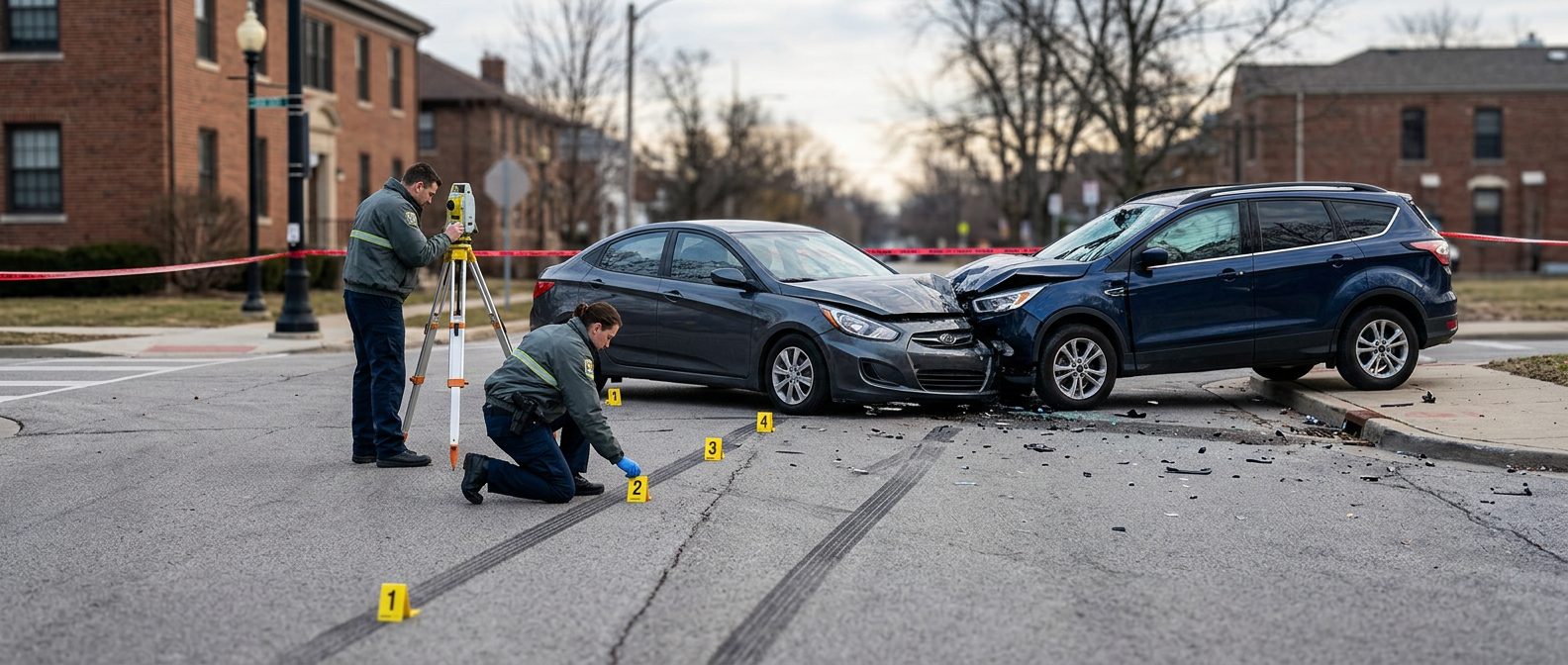
Car Accident Claims
Pursuing Compensation After a Car Accident
From minor injuries to catastrophic harm, we help accident victims pursue compensation for medical bills, lost wages, and pain and suffering.
By CHG Lawyers · Published September 04, 2026
Car Accident Injury Claims: What Your Case Could Be Worth and How Florida Settlements Work
A car accident injury claim is a legal demand for money when another driver injures you through negligence or recklessness. These claims cover all injury types—from minor whiplash to catastrophic injuries like spinal cord damage, traumatic brain injury, amputation, or wrongful death. They’re designed to recover your medical costs, lost income, pain and suffering, and other losses.
Hundreds of thousands more suffered serious or permanent injuries. If you’ve been hurt in a car accident, understanding how claims work, what your case might be worth, and how Florida’s unique no-fault insurance system affects your recovery is the first step toward protecting your rights and your family’s financial security.

Not sure what your next step is?
Talk it through with our team — the first consultation is free, confidential, and carries no obligation.
What Is a Car Accident Injury Claim?
A car accident injury claim is a legal action seeking money from the at-fault driver or their insurance company for injuries and losses you suffered in a crash.
When you file a claim, you’re asking the responsible party to pay for the harm they caused. That includes direct, measurable costs—medical bills, rehabilitation, lost wages—and also intangible losses like pain, suffering, emotional trauma, and permanent disfigurement. Claims can be resolved through a negotiated settlement with the insurance company or, if necessary, through a court judgment. The goal is to restore you financially as much as possible to where you were before the accident.
How Much Could Your Car Accident Case Be Worth?
No two car accident cases are identical. Your claim’s value depends on the specific facts of your accident, the severity of your injuries, and how clearly the other driver was at fault.
Economic damages are concrete losses you can calculate and document: – Medical bills, emergency care, surgery, and ongoing treatment – Rehabilitation and physical therapy – Lost wages and lost earning capacity – Future medical care and home modifications – Vehicle repair or replacement
Catastrophic injuries—spinal cord injury, traumatic brain injury, amputation, or severe burns—can involve lasting consequences that affect a person’s life. They cause permanent disability and require lifetime medical care, home modifications, and ongoing support. A person paralyzed from a spinal cord injury, for example, may require decades of medical treatment, wheelchair accessibility modifications, and lost earning capacity. Each case’s value depends on its own facts.
Wrongful death claims—brought by surviving family members when a car accident is fatal—recover compensation for funeral costs, loss of financial support, and loss of companionship.
Economic vs. Non-Economic Damages: Understanding the Two Types of Compensation
Economic damages are straightforward financial losses: – All medical expenses from the date of injury forward – Rehabilitation, therapy, and ongoing treatment – Lost wages during recovery and permanent loss of earning capacity – Vehicle repair or replacement – Travel costs to medical appointments – Home modifications (ramps, accessible bathrooms, medical equipment)
These are supported by receipts, medical bills, pay stubs, and repair estimates. They’re easier to prove and less subject to dispute.
Non-economic damages are the personal, subjective harms: – Physical pain and suffering during recovery – Emotional trauma, anxiety, and depression – Loss of ability to enjoy hobbies, sports, or activities you loved – Permanent scarring or disfigurement affecting appearance or function – Loss of companionship with a spouse or family member
Non-economic damages are harder to calculate because there’s no receipt or invoice. Instead, they’re supported by medical records, testimony, and the severity and permanence of your injury. There is no exact formula for measuring non-economic damages; the amount should be fair and just in light of the evidence.
What Factors Affect the Value of Your Car Accident Claim?
Several factors influence how much your claim is worth:
Severity of injury. Minor injuries (small cuts, minor sprains) typically settle for a few thousand dollars. Serious injuries (broken bones, significant burns, back and neck injuries requiring surgery) settle for tens of thousands. Catastrophic injuries (paralysis, permanent brain damage, amputation) settle for hundreds of thousands to millions.
Clarity of fault. If the other driver clearly caused the accident (rear-ended you, ran a red light, was speeding), your claim is stronger and settles faster. If fault is disputed or shared, the value drops.
Insurance policy limits. The at-fault driver’s liability insurance has a maximum payout. If your damages exceed their policy limit, you may not recover the full amount unless the driver has other assets.
Medical evidence. Strong documentation—imaging studies, surgical records, therapy notes, specialist evaluations—proves the injury and supports higher damages.
Permanence of injury. Temporary injuries (healed within weeks or months) are worth less than permanent injuries. A permanent limp, chronic pain, scarring, or paralysis significantly increases claim value.
Lost income and earning capacity. Higher-earning individuals or those unable to return to work may recover more. A 35-year-old construction worker paralyzed by a spinal cord injury has lost decades of earning potential.
Age and life expectancy. Younger injured persons typically recover more because they face longer lives with the injury and its consequences.
Witness testimony and accident reconstruction. Credible witnesses and expert analysis of how the crash occurred strengthen liability arguments and increase settlement value.
Common Types of Car Accidents and Their Claim Characteristics
Rear-end collisions occur when one vehicle strikes another from behind. The driver who rear-ended is almost always at fault because they failed to maintain a safe distance or speed. Florida presumes the rear driver was negligent, but the presumption can be rebutted and fault can be shared. These accidents often cause whiplash, back and neck injuries, and soft-tissue damage. Liability is typically clear, so settlements are often faster.
T-bone (side-impact) accidents happen when one vehicle strikes the side of another, often at an intersection. These crashes are frequently severe because there’s little protection on the side of a vehicle. Injuries include broken ribs, internal injuries, spinal cord damage, and traumatic brain injury. Fault depends on traffic signals, right-of-way rules, and witness accounts.
Single-vehicle accidents involve only one vehicle. Liability is harder to establish unless another party’s negligence caused the crash—for example, a pothole on a poorly maintained road, a defective vehicle part, or debris left by another driver.
Intersection crashes occur when vehicles collide at a traffic light or stop sign. Fault depends on who had the right of way, whether traffic signals were obeyed, and witness testimony.
Parked vehicle damage is straightforward: if your parked car is hit, the driver who struck it is liable for repair or replacement costs.
Backing collisions typically place liability on the driver backing up, who has a duty to ensure the path is clear.
Catastrophic car accidents—multi-vehicle pileups, high-speed impacts, or rollovers—often result in severe or fatal injuries and the highest claim values.
How Do Car Accident Settlements Work?
A settlement is a negotiated agreement between you (or your attorney) and the at-fault driver’s insurance company. Here’s the typical process:
-
Investigation and demand. Your attorney (or you, if unrepresented) gathers medical records, police reports, photos, and witness statements. You then send a demand letter to the insurance company describing the accident, your injuries, and the compensation you’re seeking.
-
Insurance company response. The insurer investigates the claim and makes an initial settlement offer, often lower than your demand.
-
Negotiation. You and the insurer exchange offers and counteroffers over days, weeks, or months. Your attorney advocates for fair compensation based on your damages and the strength of your claim.
-
Agreement. When both sides agree on a number, you sign a settlement agreement and release. The release means you give up the right to sue the at-fault driver in exchange for the payment.
-
Payment. The insurance company pays the agreed amount, typically within 30 days.
Settlements avoid the cost, time, and uncertainty of a trial. Most car accident claims settle without going to court.
How Long Does a Car Accident Settlement Take?
Settlement timelines vary widely. Simple cases with minor injuries may resolve in weeks to a few months. Complex cases with serious or catastrophic injuries often take 6 months to 2 or more years.
The timeline depends on:
- Injury severity and medical treatment. You shouldn’t settle until your injuries have stabilized and you understand the full scope of harm. Rushing to settle before completing treatment can leave you with inadequate compensation for ongoing or future medical needs.
- Investigation complexity. Accidents with disputed liability or multiple vehicles take longer to investigate.
- Insurance company responsiveness. Some insurers respond quickly; others delay.
- Whether litigation is necessary. If settlement negotiations stall, filing a lawsuit can extend the timeline but often motivates the insurer to offer better terms.
Delayed injury symptoms—back pain, headaches, or neurological problems appearing days or weeks after the accident—can extend settlement timelines. You need time to understand the full extent of your injuries.
Have questions about what happened?
Ask our team directly. The first conversation is free, confidential, and there is no obligation to continue.
What Are Common Causes of Car Accidents?
Understanding what caused your accident can help establish fault and strengthen your claim.
Distracted driving (texting, phone use, eating, adjusting controls) is a leading cause. A driver looking at their phone isn’t watching the road.
Speeding reduces reaction time and increases injury severity. A crash at 60 mph causes far worse injuries than one at 30 mph.
Impaired driving (alcohol or drugs) slows reaction time and impairs judgment.
Reckless driving includes tailgating, unsafe lane changes, and aggressive maneuvers.
Failure to obey traffic signals or signs causes intersection crashes.
Drowsy driving impairs judgment and reaction time as much as intoxication.
Poor weather conditions (rain, fog, ice) increase accident risk, though the driver is responsible for adapting their speed and following distance.
Defective vehicles (brake failure, steering problems, tire blowouts) can cause crashes if the manufacturer or owner failed to maintain or repair the vehicle.
Road hazards (potholes, debris, inadequate signage) may create liability for the property owner or road maintenance authority.
How Is Fault Determined in a Car Accident?
Fault is established by proving the other driver owed you a duty of care (to drive safely and follow traffic laws), breached that duty (drove recklessly or negligently), and caused your injury as a result.
Evidence used to determine fault includes:
- Police report. The officer’s investigation and observations.
- Witness statements. Accounts from people who saw the accident.
- Traffic camera footage. Video evidence of the crash.
- Accident reconstruction. Expert analysis of vehicle damage, skid marks, and physics to determine how the crash occurred.
- Traffic signals and road conditions. Whether traffic lights were working, road was wet, visibility was poor, etc.
Florida follows a comparative fault rule under Fla. Stat. §768.81. This means you can recover compensation even if you were partially at fault—but your recovery is reduced by your percentage of fault. For example, if you were 20% at fault and your damages total $100,000, you’d recover $80,000.
Florida No-Fault Insurance and the Threshold: How Your Claim Actually Works
Florida is a no-fault state, which means the process for car accident claims is fundamentally different than in other states. Understanding this system is critical because many injured people don’t realize how it affects their right to compensation.
How the no-fault system works:
Florida’s no-fault system pays benefits through your own Personal Injury Protection (PIP) insurance regardless of who caused the accident. Under Fla. Stat. §627.736, PIP typically covers up to $10,000 in medical expenses and 60% of lost wages (up to $10,000 total). Under Florida’s no-fault law, a driver may be exempt from tort liability for bodily injury damages to the extent that PIP benefits are payable for that injury (Fla. Stat. §627.737).
The threshold requirement:
To pursue a claim against the at-fault driver’s liability insurance for additional compensation—especially for pain and suffering—you must meet the “threshold.” Under Fla. Stat. §627.737, the threshold is met if you’ve suffered:
- Significant and permanent scarring or disfigurement
Once you meet the threshold, you can pursue a claim against the at-fault driver’s liability insurance for pain and suffering, emotional distress, and other non-economic damages—in addition to any remaining economic damages.
Why this matters:
Many injured people don’t realize they can pursue additional compensation beyond PIP once the threshold is met. They accept the PIP payment and never pursue the at-fault driver’s liability claim, resulting in severely inadequate recovery. For example, if you suffer a permanent spinal cord injury with $50,000 in medical expenses and $100,000 in pain and suffering damages, your PIP covers only $10,000. You then pursue the at-fault driver’s liability claim for the remaining $140,000. Without understanding the threshold, you might accept $10,000 and miss $140,000 in compensation.
Catastrophic injuries—spinal cord injury, traumatic brain injury, amputation, severe burns—almost always meet the threshold because they cause permanent disability and typically generate medical expenses exceeding $10,000.
Delayed Injury Symptoms After a Car Accident
Not all car accident injuries appear immediately. Some injuries—whiplash, back and neck injuries, traumatic brain injury, internal injuries—may not cause noticeable symptoms until days, weeks, or even months after the crash.
Why do injuries appear late? Adrenaline and shock can mask pain immediately after an accident. Inflammation and swelling develop over time. Some injuries (like mild traumatic brain injury) don’t produce obvious symptoms until the person attempts normal activities. According to the Mayo Clinic, traumatic brain injury symptoms can include headache, confusion, dizziness, and nausea that may not appear until hours or days after the injury.
Why does this matter for your claim? If you don’t seek medical attention immediately, the insurance company may argue your injuries weren’t serious or weren’t caused by the accident. Seeking medical evaluation immediately—even if you feel fine—creates documentation linking your injuries to the crash.
When you see a healthcare provider, tell them about the accident. Medical records should clearly state: “Patient was in a motor vehicle accident on [date]. Presenting with [symptoms]. Injuries consistent with mechanism of injury from accident.”
Delayed symptoms don’t eliminate your right to compensation. Strong medical documentation is your protection.
Will Your Car Accident Claim Go to Court?
Most car accident claims settle without litigation. Court proceedings become necessary only when:
- Liability is disputed. The insurance company denies fault or claims you were partially responsible.
- Settlement offers are inadequate. The insurer refuses to offer fair compensation despite strong evidence of liability and damages.
- The insurance company refuses to negotiate in good faith. Some insurers delay, deny, or lowball claims unreasonably.
If your case goes to court, a judge or jury hears evidence and determines fault and damages. Litigation is more time-consuming and costly than settlement, but it may result in higher awards. The threat of trial often motivates insurers to offer better settlements before trial.
What Should You Do After a Car Accident?
Immediate actions protect your health, your claim, and your legal rights:
-
Seek medical attention immediately. Even if injuries seem minor, get evaluated. Some injuries appear later. Medical records are essential evidence.
-
Call police. Request a police report and get the report number. The report documents the accident and often assigns fault.
-
Document the scene. Take photos of vehicle damage, road conditions, traffic signals, debris, and the overall scene. Photos are powerful evidence.
-
Collect information. Get the other driver’s name, phone number, address, driver’s license number, vehicle make and model, license plate, and insurance information. Also collect contact information from witnesses.
-
Report to your insurance company. Notify your insurer promptly. Delays can complicate your claim.
-
Keep detailed records. Save all medical bills, treatment notes, receipts, pay stubs showing lost wages, and repair estimates. These documents prove your damages.
-
Don’t admit fault. Don’t tell the other driver or their insurer “I’m sorry” or “It was my fault.” Statements made at the scene can be used against you.
-
Don’t sign anything without understanding it. Never sign a medical authorization, settlement agreement, or release without reading it carefully or having an attorney review it.
-
Consult an attorney early. Before accepting any settlement offer, discuss your claim with a lawyer. You may be entitled to far more than the insurer’s initial offer.
Want to know where you stand?
Tell us what happened and our team will walk you through the options available to you, at no cost.
When Should You Contact a Car Accident Attorney?
You should consider contacting an attorney:
-
Immediately after a serious or catastrophic injury. Spinal cord injuries, traumatic brain injuries, amputations, severe burns, and permanent disabilities require aggressive representation to secure adequate compensation.
-
If the insurance company denies your claim. A denial doesn’t mean you don’t have a valid claim. An attorney can challenge it.
-
If the settlement offer seems low. Insurance companies often undervalue claims. An attorney can negotiate for fair compensation.
-
If liability is disputed or unclear. If the other driver claims you were at fault or the accident was your fault, you need legal representation.
-
If you’ve suffered permanent injury, significant scarring, or substantial medical expenses. These cases are complex and high-value. An attorney ensures you recover everything you’re entitled to.
-
If you’re unsure about your rights, the no-fault threshold, or the value of your claim. A free consultation with an attorney clarifies your options.
Early consultation protects your rights. An attorney can ensure evidence is preserved, medical records are obtained, your claim is properly documented and valued, and you understand how Florida’s no-fault system and threshold requirement affect your recovery.

Frequently Asked Questions
What is the average car accident settlement amount?
There is no average. Settlements range from a few thousand dollars for minor injuries to millions for catastrophic injuries. Your settlement depends on injury severity, medical expenses, lost income, and how clearly the other driver was at fault.
How long do I have to file a car accident claim in Florida?
You have 2 years from the date of the accident to file a lawsuit under Florida law. However, you should contact an attorney much sooner to preserve evidence and protect your rights.
Can I still recover if I was partially at fault?
Yes, in some cases. Florida’s comparative fault rule reduces your recovery by your percentage of fault, but if you are found greater than 50 percent at fault for your own harm, you may not recover any damages.
What if the other driver doesn’t have insurance?
You may be able to file a claim under your own uninsured motorist (UM) coverage, if your policy includes it. An attorney can help you pursue this claim.
Do I need an attorney to settle my car accident claim?
You don’t legally need an attorney, but having one protects you. Insurance companies often offer less to unrepresented claimants. An attorney negotiates on your behalf and ensures you’re not pressured into an inadequate settlement.
How do I know if my injuries meet Florida’s threshold?
An attorney can evaluate whether your specific injuries meet the threshold and help you pursue the at-fault driver’s liability claim.
If you’ve been injured in a car accident and are wondering whether you have a claim, what your case might be worth, or how Florida’s no-fault system affects your recovery, reach out. People in your situation contact our team regularly to discuss their options. A free case evaluation can clarify your rights and help you understand what comes next. Contact us today.
Why Choose CHG Personal Injury Lawyers
Focused on Personal Injury
We focus exclusively on personal injury claims—from everyday accidents to life-altering catastrophic injuries. Your case gets the full attention it deserves.
No Attorney’s Fees Unless There’s a Recovery
We work on contingency. You pay nothing upfront, and we only collect a fee if we recover compensation for you.
Florida-Based, Cases Nationwide
Empathetic, Plain-Language Guidance
We explain your rights and options in straightforward terms—no legal jargon, just honest answers about what comes next.
What Affects Your Car Accident Settlement
Severity of Your Injuries
Settlements reflect the full scope of harm—from soft-tissue injuries and broken bones to spinal cord damage, traumatic brain injury, amputation, or permanent disability. More severe injuries typically result in higher compensation.
Medical Expenses & Ongoing Care
Your claim includes all treatment costs: emergency care, surgery, rehabilitation, therapy, and any future medical needs tied to the accident.
Lost Income & Earning Capacity
If the accident forced you to miss work or left you unable to earn at your previous level, you can recover those lost wages and reduced future income.
Fault & Liability
The clearer the other driver's responsibility, the stronger your claim. We investigate the accident, gather evidence, and build a case showing how their negligence caused your harm.
Time Matters in Florida
Florida law sets strict deadlines for filing car accident claims. Waiting too long can cost you your right to compensation. The sooner you reach out, the sooner we can protect your claim and begin building your case.
Common Questions About Car Accident Claims
What if I was partially at fault?
Florida's comparative negligence rule allows you to recover even if you share some responsibility—as long as you were not more than 50% at fault. Your compensation is reduced by your percentage of fault.
Do I need to hire a lawyer?
You can file a claim alone, but insurance companies are skilled at minimizing payouts. An attorney levels the playing field, handles negotiations, and ensures you understand your rights and options.
How long does a settlement take?
Simple claims may settle in weeks or months. Complex cases—especially those involving catastrophic injury—may take longer. We work at a pace that protects your interests, not the insurance company's timeline.
What if the other driver has no insurance?
Your own uninsured motorist coverage may protect you. We investigate all available sources of recovery to maximize your compensation.