

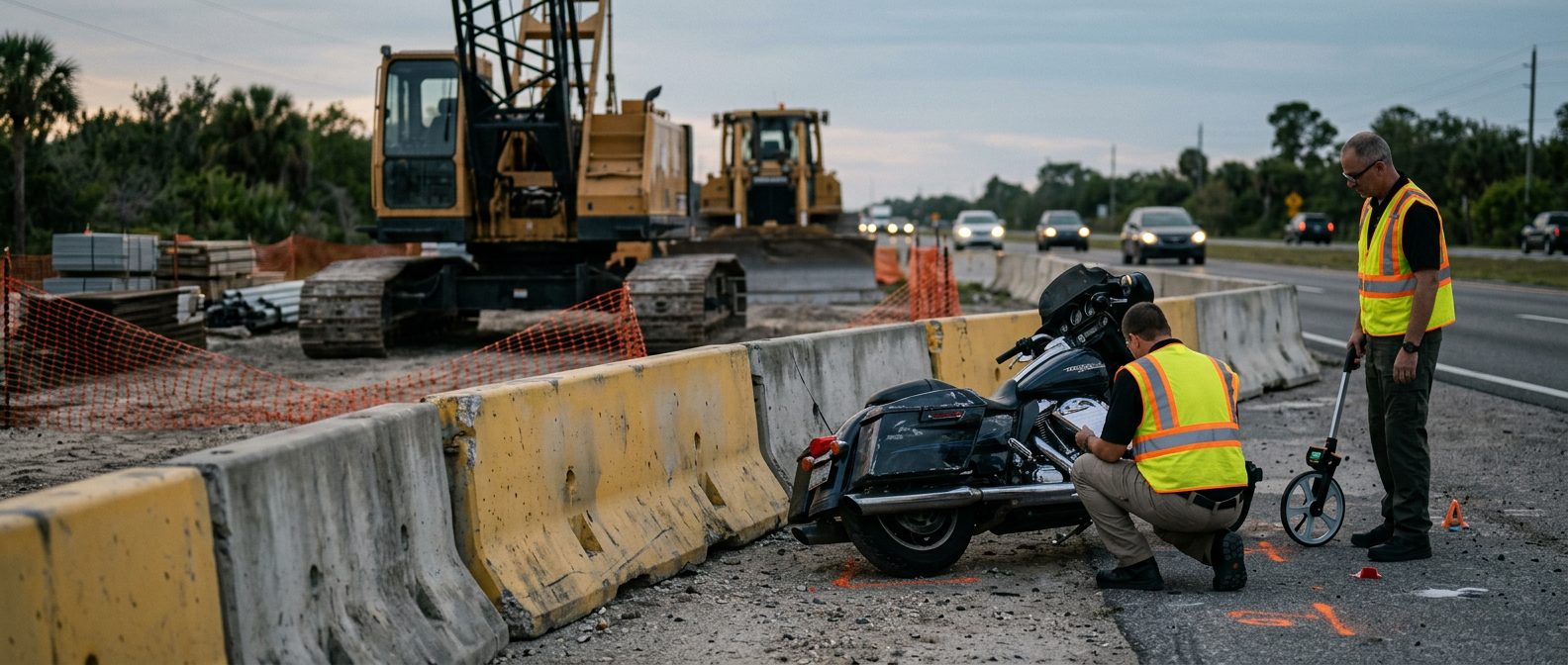
Motorcycle Accidents Near Tampa
Injured in a Motorcycle Accident Near Tampa? Here's What You Need to Know
Motorcycle crashes often result in severe, life-altering injuries. If you were hurt due to someone else's negligence, you may have a claim for damages. CHG Personal Injury Lawyers handles personal injury cases, including catastrophic, life-altering injuries, and is ready to help.
By CHG Lawyers · Published September 13, 2026
Motorcycle Accidents Near Tampa: Catastrophic Injuries, Wrongful Death, and Your Legal Rights
Motorcycle crashes on Tampa-area highways—particularly US-41 in Hillsborough County and I-275 corridors—regularly result in deaths and permanent, life-altering injuries. When a truck or car driver fails to see a rider or turns directly into a motorcycle’s path, the outcome is categorically different from a car accident. A motorcyclist has no frame, no airbags, no roof—only exposure to the full force of impact.
If you’re searching for information about a specific crash, or if you’re trying to understand what happens after a serious motorcycle accident in the Tampa area, this page explains why motorcycle injuries are uniquely severe, the legal responsibility of at-fault drivers, and what families and injured riders need to know about the two-year deadline to file a claim.

If you were hurt due to someone else's negligence, you may have a claim for damages. Talk it through with our team — the first consultation is free, confidential, and carries no obligation.
Why Motorcycle Accidents Are Categorically Different From Car Accidents
The injury outcomes in motorcycle crashes differ fundamentally from car accidents because of rider exposure. A car occupant is surrounded by a steel frame, crumple zones designed to absorb impact energy, airbags, and seat belts. A motorcyclist is seated on an exposed vehicle with no protective shell.
When a motorcycle collides with a car or truck at highway speed, the rider absorbs nearly all of the impact force. The bike may slide or tumble; the rider is often thrown from the vehicle, struck by the other vehicle, or run over. Even crashes at moderate speeds—30 to 40 mph—can cause severe injury or death.
Size and weight disparity amplify the danger. A typical motorcycle weighs 300 to 600 pounds; a truck weighs 10,000 to 26,000 pounds. When these vehicles collide, the motorcycle and rider are no match for the truck’s mass and momentum. The rider may be crushed, dragged, or thrown dozens of feet from the point of impact.
Visibility and blind spots. Tampa’s heavy traffic, frequent lane changes, and highway merges create conditions where drivers regularly fail to see motorcycles. A rider in a driver’s blind spot—or traveling at a speed the driver didn’t anticipate—can be struck without warning. Left-turn crashes, where a driver turns across traffic without yielding to oncoming motorcycles, are among the most common and deadly scenarios.
Common Causes of Tampa-Area Motorcycle Crashes
Left-turn collisions occur when a driver turning left across traffic fails to yield to an oncoming motorcycle. The driver may misjudge the motorcycle’s speed or simply not see the rider. These crashes are frequently fatal or result in catastrophic injury.
Lane-change crashes happen when a driver changes lanes without checking mirrors or blind spots and strikes a motorcycle traveling in an adjacent lane. At highway speeds, a rider has seconds—or less—to react.
Speed and inattention. Drivers distracted by phones, eating, or adjusting controls may not notice a motorcycle until collision is imminent. Excessive speed by either the car driver or the motorcyclist can reduce reaction time and increase impact severity.
Road hazards and poor visibility. Wet pavement, debris, potholes, and nighttime darkness all increase crash risk.
Catastrophic Injuries From Motorcycle Crashes
Even a motorcycle crash at moderate speeds can cause permanent disability because riders are exposed to the full force of impact. Motorcycle crashes can cause injuries such as the following:
Traumatic brain injury (TBI). When a rider’s head strikes pavement, another vehicle, or debris, the brain can be bruised, bleeding can occur inside the skull, or nerve fibers can be damaged. Helmeted riders are better protected, but helmets cannot prevent all brain injuries. TBI can result in memory loss, difficulty concentrating, balance problems, speech difficulties, personality changes, and chronic headaches. Recovery is often incomplete, and many survivors face lifelong cognitive and physical limitations.
Spinal cord injury and paralysis. The force of a crash can damage the vertebrae or the nerve tissue inside the spine. Depending on the location and severity, a rider may experience partial or complete paralysis. Paraplegia (paralysis of the lower body and legs) and quadriplegia (paralysis of all four limbs) can be permanent conditions. A person with quadriplegia has impairment of all four limbs, and the extent of lost function, including walking, arm and hand use, and breathing, depends on where and how severely the spinal cord is injured. These injuries demand lifelong medical care, adaptive equipment (wheelchairs, hospital beds, specialized vehicles), personal care assistance, and continuous rehabilitation.
Amputation. A limb can be severed or so severely crushed that surgical removal is necessary. A rider may lose a leg, arm, hand, or foot. Amputation requires emergency surgery, followed by months or years of rehabilitation, prosthetic fitting, and adaptation to a fundamentally changed life. The psychological impact—grief, depression, and adjustment to disability—is as significant as the physical loss.
Severe burns. If a motorcycle catches fire or the rider is exposed to hot surfaces or fuel, burn injuries can cover large areas of the body. Severe burns require extensive hospitalization, multiple surgeries, skin grafts, and often result in permanent scarring, contractures (tightening of skin and tissue), and loss of function. Burn survivors often face years of reconstructive surgery and therapy.
Road rash and lacerations. When a rider slides across pavement at high speed, the skin is abraded away, exposing muscle and tissue. Road rash can cover large areas of the body and, while often less immediately life-threatening than other injuries, can result in permanent scarring, infection, and chronic pain.
The long-term impact of these injuries extends far beyond the hospital. A rider with a spinal cord injury faces decades of medical appointments, medications, equipment maintenance, and personal care assistance. Lost wages, the cost of home modifications (wheelchair ramps, accessible bathrooms, specialized beds), and the emotional toll on the rider and family are enormous.
Who Is Responsible for a Motorcycle Accident?
Determining fault in a motorcycle crash requires examining the actions of all drivers involved, road conditions, and traffic laws. A police accident report is the first step—officers document the scene, interview witnesses, and often cite the driver they believe violated traffic laws.
Fla. Stat. § 768.81. A truck driver who turns left without yielding to oncoming traffic, a car driver who changes lanes without looking, or a driver traveling at unsafe speeds all may be liable for a motorcycle crash.
Florida’s comparative-fault rule. Under Fla. Stat. § 768.81, if you were partially at fault for the accident, your recovery is reduced by your percentage of fault—but you can still recover damages if you were 50% or less at fault. For example, if you were speeding but a driver still turned directly into your path, you might be found 20% at fault and the other driver 80% at fault. You’d recover 80% of your damages.
What to Do Immediately After a Motorcycle Accident
If you or someone you know is injured in a motorcycle crash, the immediate priority is medical care. Call 911 if anyone is seriously hurt. Even if injuries seem minor, seek medical evaluation—some injuries, like internal bleeding or brain injury, don’t show symptoms right away.
Once you’re safe and medical care is underway, gather as much information as possible:
- Get the other driver’s name, phone number, address, and insurance information.
- Take photos of the accident scene, vehicle damage, road conditions, and any visible injuries (if safe to do so).
- Write down the names and contact information of any witnesses who saw the crash.
- Request a copy of the police accident report from the Florida Highway Patrol or local police department.
- Keep all medical records, bills, and receipts related to your treatment and recovery.
- Document lost wages if you’re unable to work during recovery.
Report the accident to your insurance company, but be cautious about recorded statements. Insurance adjusters may use your words against you later.
Florida generally requires a negligence lawsuit to be filed within two years, but exceptions may apply, so do not wait to get advice. Talk it through with our team — the first consultation is free, confidential, and carries no obligation.
Motorcycle Accident Claims and Settlements in Florida
Motorcycle accident claims differ from car accident claims in several important ways. Riders have less physical protection than people inside a car, so a crash can cause more serious injuries.
The value of a motorcycle accident claim depends on several factors:
- Severity of injury: Catastrophic injuries like spinal cord damage or brain injury result in much higher settlements than minor fractures.
- Medical costs: Emergency care, surgery, hospitalization, rehabilitation, ongoing therapy, and adaptive equipment all factor into damages.
- Lost wages: If the injury prevents you from working, you can recover lost income and, in cases of permanent disability, lost earning capacity over your lifetime.
- Permanent disability: An injury that leaves you unable to perform your job or enjoy activities you once did increases settlement value significantly.
- Pain and suffering: Compensation for physical pain, emotional distress, and reduced quality of life.
When a Motorcycle Accident Results in Wrongful Death
Fatal motorcycle crashes devastate families. A rider killed due to another driver’s negligence leaves behind spouses, children, parents, and siblings who must grieve while facing financial uncertainty. Surviving family members can make an insurance claim with the at-fault driver’s insurance company, but under Florida law, a lawsuit against that liability insurer generally cannot begin until a settlement or verdict against the insured driver has been obtained.
Under Florida law, wrongful-death claims allow family members to recover damages for:
- Loss of companionship – the emotional loss of the relationship
- Loss of support – income the deceased would have provided to the family
- Loss of services – household work, childcare, or caregiving the deceased would have performed
- Funeral and medical expenses – costs incurred as a result of the death
Fla. Stat. § 768.19 and § 768.21.
The goal is not to bring back a loved one—nothing can—but to hold the responsible party accountable and provide financial recovery to help the family move forward. Wrongful-death settlements in motorcycle cases can be substantial, especially when the deceased was young, had a long work life ahead, or was the primary earner for the family.
The Two-Year Statute of Limitations: Why Timing Matters
Under Fla. Stat. § 95.11(5)(a) and (5)(e), an action founded on negligence and an action for wrongful death each must be brought within two years.
This two-year window is not a suggestion—it is a hard legal deadline. Under Florida law, a lawsuit generally must be filed within this window, although exceptions may apply, so waiting past it can cost you the right to recover damages. You lose the right to recover damages.
Why does this matter? Evidence can disappear. Witnesses move away or forget details. Medical records can be lost. The longer you wait, the harder it becomes to reconstruct what happened and prove fault. Additionally, insurance companies know about the statute of limitations and may delay settlement negotiations, hoping you’ll miss the deadline.
Consulting with an attorney early—even if you’re still in recovery—protects your rights and ensures that deadlines are met and evidence is preserved.
Frequently Asked Questions
How long do I have to file a motorcycle accident claim in Florida?
Under Florida law, you have two years from the date of injury to file a personal-injury lawsuit. For wrongful-death claims, the deadline is also two years from the date of death (Fla. Stat. § 95.11(5)(e)). This is a hard deadline—missing it means losing your right to recover damages. Don’t wait.
Can I recover damages if I was partially at fault?
Yes, as long as you were 50% or less at fault. Your recovery will be reduced by your percentage of fault, but you can still pursue a claim.
What if the at-fault driver doesn’t have insurance?
You may be able to recover through your own uninsured motorist coverage or through a lawsuit against the driver personally, though collecting from an uninsured driver is often difficult.
Should I talk to an insurance adjuster after a motorcycle accident?
Be cautious. Anything you say can be used against you. It’s often wise to consult with an attorney before giving a recorded statement to any insurance company.

Not sure what your next step is?
Talk it through with our team — the first consultation is free, confidential, and carries no obligation.
If You or a Loved One Was Injured or Killed in a Tampa Motorcycle Accident
The weeks and months after a serious motorcycle crash are overwhelming. Medical bills arrive, you’re struggling with pain and disability, insurance companies are asking questions, and you’re trying to understand who is responsible and what happens next. If the crash resulted in death, the grief and confusion are even more profound.
These are exactly the situations families and injured riders face regularly. Questions about fault, liability, insurance coverage, and long-term financial recovery are normal—and you don’t have to figure them out alone.
A free case evaluation can help you understand what happened, who bears responsibility, and what your legal options are moving forward. Most importantly, it can ensure that you don’t miss the two-year deadline to file a claim.
If you or someone you love was injured or killed in a motorcycle crash near Tampa, contact us today for a free case evaluation.
Critical Deadline
In Florida, you have two years from the date of your injury to file a personal-injury lawsuit. This deadline is firm—missing it means losing your right to pursue compensation. If someone died in the crash, the family has two years from the date of death to file a wrongful-death claim. Do not delay.
What to Do After a Motorcycle Accident
Seek Medical Care Immediately
Even if you feel okay, get checked by a doctor. Motorcycle injuries—spinal cord damage, traumatic brain injury, internal bleeding, fractures, and severe road rash—can develop or worsen over hours or days. Medical records also create crucial evidence for your claim.
Document the Scene and Gather Evidence
If you are able, take photos of vehicle damage, road conditions, traffic signals, and the accident scene. Get the names, phone numbers, and insurance information of the other driver and any witnesses. Request a police report and note the report number.
Report the Accident to Insurance
Notify your own insurance company and the at-fault driver's insurer. Be factual and brief—do not admit fault or speculate about what happened. Avoid recorded statements without legal counsel.
Consult a Personal-Injury Attorney
Motorcycle accident claims involve complex liability, medical evidence, and often significant damages. An attorney who focuses exclusively on catastrophic injury cases can protect your rights and help you recover fair compensation.
Why CHG Personal Injury Lawyers
Focused on Catastrophic Injury
We focus exclusively on serious, life-altering injuries—spinal cord damage, paralysis, traumatic brain injury, amputations, severe burns, and wrongful death. We understand the medical, financial, and emotional toll.
Thorough Investigation & Evidence
We reconstruct accident scenes, obtain police reports, subpoena traffic camera footage, and work with accident-reconstruction experts to establish liability and prove negligence.
Experienced Legal Team
Our attorneys are licensed in Florida and handle motorcycle accident cases throughout Florida.
No Attorney’s Fees Unless There Is a Recovery
We work on contingency—you pay no attorney fees unless we recover compensation for you. Our success depends on yours.
Common Questions About Motorcycle Accidents in Florida
Can I recover damages if I was partially at fault?
Florida follows comparative negligence rules. Even if you bear some responsibility, you may still recover damages—reduced by your percentage of fault. For example, if you are 20% at fault, you can recover 80% of your damages. An attorney can evaluate the facts and advise you.
What damages can I claim?
Damages may include medical expenses (past and future), lost wages, loss of earning capacity, pain and suffering, disability, disfigurement, and in wrongful-death cases, funeral costs and loss of companionship. The value depends on the severity of your injuries and the strength of liability evidence.
What if the other driver was uninsured or underinsured?
If the at-fault driver lacks adequate insurance, you may have a claim under your own uninsured or underinsured motorist coverage. We can help you navigate this process and pursue all available sources of recovery.
How long does a motorcycle accident claim take?
Timeline varies. Simple claims may settle within months; complex cases involving catastrophic injury, disputed liability, or multiple parties may take longer. We keep you informed and work efficiently toward resolution.