
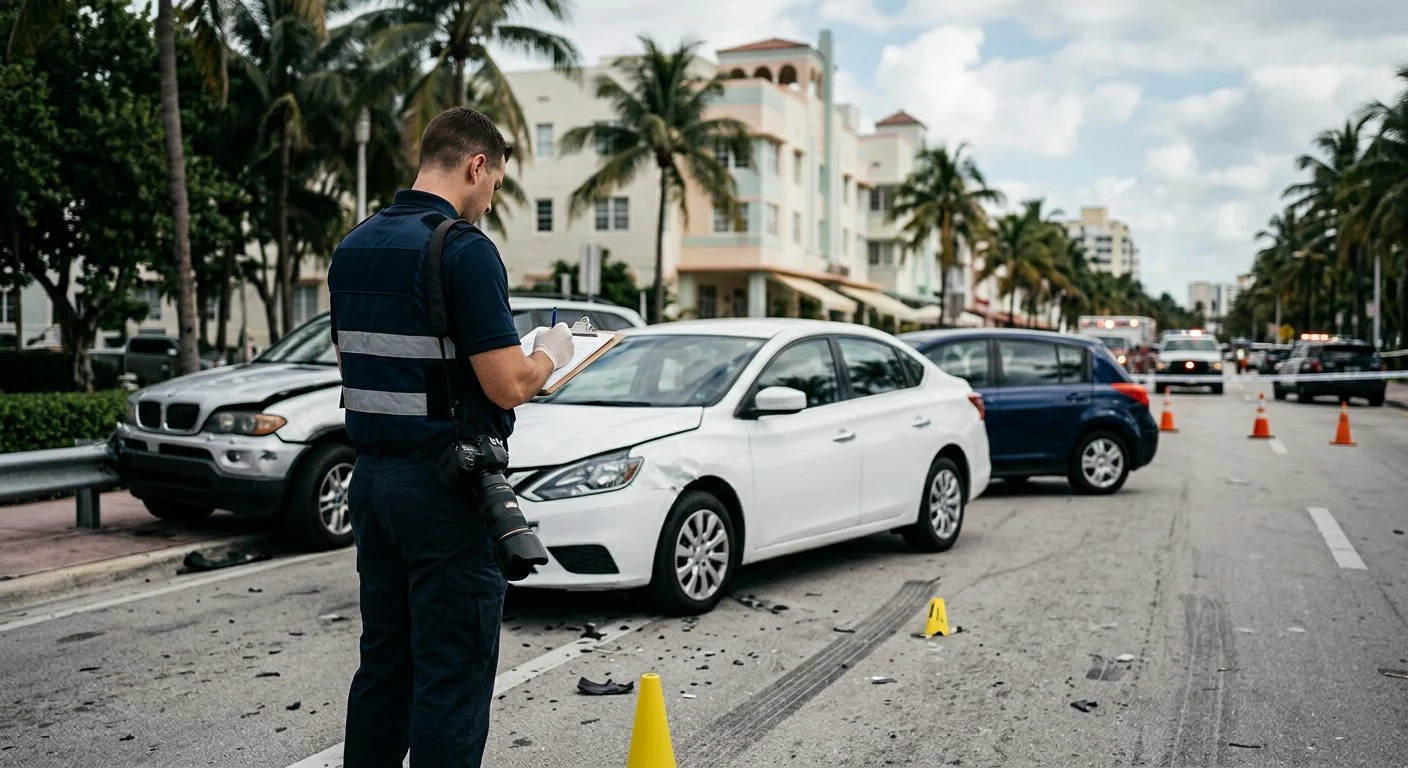
Miami Beach · Car Accidents
Hurt in a Car Accident on Miami Beach? Start With These Steps
Plain-language guidance from CHG Personal Injury Lawyers, a Florida personal injury firm that focuses on serious injury claims, including crashes that cause lasting harm.
Where to Start After a Car Accident on Miami Beach
The first steps after a car crash on Miami Beach are simple. Get medical care. Record what happened. Keep the crash report number.
A crash can happen on a short drive to the beach. It can also happen during a busy weekend on the causeway. It can leave a driver, passenger, or pedestrian hurt, shaken, and buried in paperwork all at once.
The first hours and days can affect your health, your records, and your insurance paperwork. Knowing the basic steps early helps you protect each one.
This page covers the steps at the scene. It explains how to request a Florida crash report. It describes how no-fault (PIP) insurance works and how fault is decided. It also explains why deadlines matter. The page ends with notes for families facing a fatal crash.
Insurance paperwork alone can feel like crossing the Causeway at rush hour without a map. You do not have to navigate it by yourself.
This guide is general information about Florida law. It is not medical advice. Please follow your doctors’ care plan.

Not sure what your next step is?
Talk it through with our team — the first consultation is free, confidential, and carries no obligation.
Traffic on Miami Beach: Many Kinds of Road Users Share the Same Streets
Miami Beach roads carry residents, visitors, delivery trucks, rideshare cars, cyclists, scooter riders, and people on foot. The MacArthur Causeway brings traffic onto the island. Collins Avenue and Alton Road carry heavy local traffic past hotels, restaurants, and shops. Near the Art Deco hotels along Ocean Drive, drivers and walkers share busy crossings.
Some types of crashes happen on roads like these. Rear-end collisions can happen in stop-and-go traffic. Left turns at intersections can lead to side-impact crashes. Pedestrians can be struck at crosswalks near hotels and restaurants. A pattern is not proof of fault, though. What matters is what happened in your crash.
Some crashes raise extra questions. A rideshare crash can involve a transportation network company. Florida law says a transportation network company is not deemed to own or control its vehicles or drivers. The exception is when a written contract says so.
Truck and motorcycle crashes can bring different insurers and different rules.
Steps That Help Protect Your Health and Your Crash Record
Call 911 if anyone is hurt. Get checked by a doctor. Write down what you saw as soon as you safely can. These steps protect your health and the evidence you may need later.
- Ask for medical help. If anyone is hurt, call 911. If it is safe, move to a shoulder or safe spot. Turn on your hazard lights.
- Get evaluated promptly. Some symptoms can appear hours or days after a crash. Tell your doctor about every ache. Follow the treatment plan your doctors give you.
- Write down the details. Note the date, time, location, and names of the people involved. Photograph vehicles, road conditions, and visible injuries.
- Keep the report number. Ask the responding officer for the crash report or case number.
- Think before posting. Social media posts about the crash can be used by other parties. This includes comments about who was at fault. Keep posts brief, or wait.
- Gather your records. Keep medical bills, prescriptions, and records of missed work in one place.
Organized records make it easier to explain what happened. They also help a lawyer review your facts if you decide to talk about your options.
How to Get a Florida Crash Report for a Miami Beach Crash
The responding law enforcement agency may prepare a crash report. That report is a starting point for crash records. It can list the people and vehicles involved. It can include a diagram, a written narrative, and the officer’s preliminary findings.
A preliminary finding is not a final ruling on who was at fault.
The Florida Department of Highway Safety and Motor Vehicles offers information for people involved in a crash. Reports can take time to become available. That is why the report number from the scene matters.
Reviewing the report early can help you catch errors. Examples include a wrong street name, a missing witness, or a mistake in the vehicle details. A lawyer can compare the report with your photos, witness information, and medical records. That review is one part of understanding the facts of your crash.
Florida No-Fault Insurance (PIP) and the Permanent Injury Threshold
Florida’s Personal Injury Protection (PIP) pays certain medical and income benefits after a crash.
The Florida Office of Insurance Regulation notes that Florida automobile insurance may provide no-fault medical and related benefits to people hurt in vehicle accidents.
The statute sets key limits:
- PIP can pay up to $10,000 in medical and disability benefits.
- Initial care generally must be received within 14 days of the crash for PIP benefits to apply.
- Under Fla. Stat. § 627.736(1)(a), the $2,500 medical benefits limit applies only when no emergency medical condition is determined; if one is determined, medical benefits may reach the $10,000 limit.
Claims for pain and suffering against an at-fault driver follow a different rule.
- significant and permanent loss of an important bodily function;
- permanent injury within a reasonable degree of medical probability, other than scarring or disfigurement;
- significant and permanent scarring or disfigurement; or
- death.
Whether an injury fits one of these categories turns on medical records, the facts, and Florida law.
How Fault Is Decided Under Florida Law
Florida uses a modified comparative negligence rule. Under this rule, a person found more than 50 percent at fault for their own harm may not recover damages. Subsection (1) of Fla. Stat. § 768.81 defines terms as they are used in that section. It defines a “negligence action” to mean, without limitation, a civil action for damages based on a theory of negligence, strict liability, products liability, or professional malpractice, whether couched in terms of contract or tort. It defines “economic damages” to include past and future lost income (reduced to present value), medical and funeral expenses, and lost support and services. Under Florida’s modified comparative negligence rule, a person found more than 50% at fault for their own harm may not recover damages in a negligence action (Fla. Stat. § 768.81(6)). This subsection does not apply to personal injury or wrongful death claims arising from medical negligence under chapter 766, and how the rule affects any particular case depends on its facts and applicable Florida law.
Medical-negligence actions under chapter 766 follow a different rule.
Florida also divides damages by each party’s percentage of fault. The court enters judgment against each liable party based on that party’s share. The judgment is not based on joint and several liability (§ 768.81(3)).
Insurers and other drivers may dispute who caused a Miami Beach crash. Evidence can make a real difference. That evidence may include the crash report, photos, witness statements, traffic camera footage, vehicle data, and medical records. Some cases also use an accident reconstruction professional to analyze how the crash happened.
None of this promises a result. Clear evidence helps show the facts.
Have questions about what happened?
Ask our team directly. The first conversation is free, confidential, and there is no obligation to continue.
Time Limits: Why Florida Deadlines Need Early Attention
Florida sets deadlines for filing lawsuits. A general two-year period applies to many negligence actions. Florida law sets deadlines for filing negligence lawsuits, and those deadlines can depend on the facts of each case, so contact the firm promptly. That statute also sets different periods for other types of actions.
Those periods have exceptions. Claims involving government entities can follow different notice and waiting-period rules. Insurance claims can have their own notice and timing rules.
The right deadline for your claim depends on the type of claim, the defendant, and the dates involved.
Waiting can limit your options. The safest step is to contact a lawyer early. That way, the deadlines that may apply are identified while evidence is still fresh. Deadlines apply to every claim. Missing one can end a claim that might otherwise have been pursued.
When a Crash Is Fatal: Guidance for Miami Beach Families
A fatal crash on a Miami Beach road changes a family’s life. The change goes far beyond paperwork. The people left behind deserve clear information and compassionate support.
Florida’s Wrongful Death Act sets out who may bring a claim after a death caused by a wrongful act. Under § 768.20, the action is brought by the decedent’s personal representative. That person recovers for the benefit of the survivors and the estate.
The types of damages depend on the family. Under § 768.21:
- A surviving spouse may recover for loss of companionship and protection. A surviving spouse may also recover for mental pain and suffering.
- Minor children may recover for lost parental companionship, instruction, and guidance.
- Survivors who paid medical or funeral expenses may also recover those costs.
Which family members qualify depends on the facts and the statute’s terms.
Families often face practical tasks early on. These include getting the crash report, arranging for the vehicle and personal belongings, and keeping records of funeral and medical expenses. Keep those records together. Bring in trusted counselors, clergy, or family members for support.
If a family member is struggling with thoughts of self-harm or is in emotional crisis after a loss, they can call or text 988, the Suicide & Crisis Lifeline.
Frequently Asked Questions About Miami Beach Car Accidents
Was there a fatal car accident recently in Miami?
Public traffic-incident pages from the Florida Highway Patrol and local sheriff’s offices post crash information as it is published. For a specific crash, ask the investigating agency.
What happened on Miami Beach today?
Live traffic and road conditions change quickly. Public traffic sources report them. The responding agency’s crash report is the official record of a specific crash.
How do I find out if someone I know was in a car accident?
The investigating agency can confirm whether a crash report exists. It can also give you the report number.
How do I look up car accidents in Florida?
The Florida Highway Patrol publishes live crash information. To get a crash report, contact the agency that responded to the scene.
Do I need a lawyer after a minor crash?
That question depends on your injuries, the facts, and Florida law. A free, confidential initial consultation can help you understand your options.
Talk With CHG Personal Injury Lawyers About Your Miami Beach Crash
CHG Personal Injury Lawyers is a Florida-based personal injury firm. It focuses on catastrophic injuries, wrongful death, and the crashes that cause them.
Your first consultation is free, confidential, and comes with no obligation to continue. CHG charges no attorney’s fees and no case costs unless there is a recovery.
If you were hurt on a Miami Beach road, or you are now handling a loss in your family, you may be weighing medical bills, insurance calls, and approaching deadlines. Reach out to contact CHG Personal Injury Lawyers to talk through your crash and the steps that may apply to you.
What to Do in the First Days After a Crash
1. Get medical care right away
Follow your doctors' care. Some injuries, including head and spinal injuries, may not cause obvious symptoms right after a crash, so an early medical exam matters.
2. Report the crash and document the scene
Make sure a police report is filed. If it is safe, note the location, vehicles, road conditions, and the names and contact details of any witnesses.
3. Keep every record
Save photos, medical bills, prescriptions, repair estimates, and letters from insurance companies. Organized records help show what happened and how it affected your life.
4. Talk with a lawyer before major statements
Whether a claim exists depends on the facts of your case, your medical records, and applicable Florida law. A conversation with an attorney can help you understand your options.
Want to know where you stand?
Tell us what happened and our team will walk you through the options available to you, at no cost.
Why Talk to CHG After a Crash
Florida-based
CHG Personal Injury Lawyers represents people throughout Florida who have been hurt in car accidents, truck crashes, and other serious incidents.
Igor Hernandez
Igor Hernandez is the attorney responsible for this page. He is licensed to practice law in Florida, and our support staff helps keep your records and appointments organized.
Free first consultation
Your first consultation is free, confidential, and comes with no obligation to continue.
No fees unless there is a recovery
CHG charges no attorney's fees and no case costs unless there is a recovery.
Be Careful With Insurance Calls
An insurance adjuster may ask for a recorded statement soon after a crash.