
Florida Car Accident Guide
Car Accident Settlement Calculator: What Could Your Claim Be Worth?
A plain-language guide to the numbers behind a Florida car accident claim, from medical bills and lost wages to the insurance limits that can shape an offer. Then talk with our Florida-based team about your situation.
By CHG Lawyers · Published October 24, 2026
Car Accident Settlement Calculator: What Shapes Your Florida Claim
Searching for a car accident settlement calculator? A car accident settlement is an agreed payment. It ends an injury claim without a trial. The amount in a settlement offer is often not the amount the injured person keeps. Fees, case costs, and repayment claims can come out before any money reaches the injured person.
If you want a quick sense of value, you probably want to know where to start. This page is for people hurt in Florida crashes. It is also for the family members who help them.
Maybe the injured person is still in treatment. Maybe bills are piling up. Maybe an insurance adjuster has called. A generic calculator can’t see your medical records, bills, or insurance. So this page explains the structure instead. It covers what makes up a claim’s value, which costs come out, and who is responsible for each one.

If you're recovering from a crash, reading a settlement letter, or watching bills pile up, you don't have to sort this out alone. Talk it through with our team — the first consultation is free, confidential, and carries no obligation.
Using a Car Accident Settlement Calculator: Who This Page Is For
A car accident settlement is an agreed payment. It ends an injury claim without a trial. The amount in a settlement offer is often not the amount the injured person keeps. Fees, case costs, and repayment claims can come out before any money reaches the injured person.
If you’re searching for a car accident settlement calculator, you probably want a quick sense of value. This page is for people hurt in Florida crashes. It is also for the family members who help them.
Maybe the injured person is still in treatment. Maybe bills are piling up. Maybe an insurance adjuster has called. A generic calculator can’t see your medical records, bills, or insurance. So this page explains the structure instead. It covers what makes up a claim’s value, which costs come out, and who is responsible for each one.
What Makes Up the Value of a Car Accident Claim
A car accident claim is valued through two kinds of damages: economic and non-economic.
- Economic damages are money losses you can document.
- Non-economic damages are harder to measure.
Economic damages usually include:
- Medical bills, both past and future
- Lost wages and lost earning ability
- Out-of-pocket costs, such as rides to appointments
Non-economic damages include pain and suffering, mental anguish, and loss of enjoyment of life. Florida limits these in car accident cases. Under Fla. Stat. § 627.737, pain and suffering damages are available only in certain cases. The injury must consist in whole or in part of:
- a significant and permanent loss of an important bodily function;
- a permanent injury within a reasonable degree of medical probability, other than scarring or disfigurement;
- significant and permanent scarring or disfigurement; or
- death.
The value doesn’t come from these labels alone. It comes from the records behind each one. Those records include the medical chart, the bills, proof of lost wages, and photos.
The Costs You May Face: Fees, Case Costs, and Who Pays Them
The main costs in a settlement are attorney’s fees, case costs, and repayment claims. Fees and case costs come first. Repayment claims are covered in the next section.
- Attorney’s fees. In a contingency arrangement, the fee is a percentage. The percentage is set in a written agreement. It is paid only from a recovery.
- Case costs. These are the expenses of running the case. Examples include filing fees, records requests, medical billing fees, and fees for outside professionals who review the case.
- Who pays. CHG Personal Injury Lawyers charges no attorney’s fees and no case costs unless there is a recovery.
Before you sign, ask to see the fee percentage and the case cost terms in the written agreement. Knowing these terms up front makes the rest of the math easier to follow.
Medical Bills, Liens, and Reimbursement Claims
Several payers may ask to be repaid from a settlement. These repayment claims are often called liens or reimbursement claims. A lien is a legal claim to be paid from money owed to you. These claims are often resolved before any money is paid out.
Florida’s personal injury protection (PIP) is paid by your own insurer. Under Fla. Stat. § 627.736, PIP pays up to $10,000 in medical and disability benefits and $5,000 in death benefits. Here is how it works:
- Medical benefits cover eighty percent of reasonable expenses for medically necessary care, including medical, surgical, X-ray, dental, and rehabilitative services. Limits and conditions apply (Fla. Stat. § 627.736).
- Initial care must start within 14 days of the crash to qualify for these medical benefits.
PIP payments can change the medical and wage figures used in settlement talks.
Health plans, Medicare, and Medicaid may also have rights to repayment. Under Fla. Stat. § 768.76, a court reduces an award by amounts paid from collateral sources. There is no reduction for sources that hold a repayment right.
A provider with a repayment right can be repaid only up to the actual amount of its collateral source payments that the injured person recovered from the at-fault party. That amount is reduced by the provider’s share of the claimant’s costs and attorney’s fees.
Letters of protection. Some providers treat patients under a letter of protection. This is a promise to be paid from any judgment or settlement. Fla. Stat. § 768.0427 addresses evidence of medical treatment bills in personal injury and wrongful death actions, and defines a “factoring company” as a person who buys a health care provider’s accounts receivable at a discount below invoice value.
Factors That Raise or Lower the Value of a Settlement
Four main factors drive the value of a claim. They are the severity of the injury, the quality of the records, fault, and available insurance. Each one changes the math.
- Severity and permanence. Spinal cord injuries, traumatic brain injuries, amputations, and severe burns often involve long treatment. They can also cause lasting limits.
- Documentation. Medical records, imaging, treatment gaps, photos, and witness names all matter. This also applies to crashes that involve a death, a personal injury, or a complaint of pain. For crashes involving a death, a personal injury, or a complaint of pain, Fla. Stat. § 316.066 requires the investigating officer to complete a long-form crash report and submit it within 10 days after the investigation is completed. Access to a crash report requires identification and a sworn statement.
- Comparative fault. Fault can be divided among the people who contributed to an accident. Florida’s apportionment statute, Fla. Stat. § 768.81, addresses how fault is divided.
- Commercial vehicles. Trucks and rideshare vehicles can involve more insurers and more parties.
- Under Fla. Stat. § 95.11, Florida sets time limits for filing actions other than for recovery of real property, and they depend on the type of action. Deadlines keep running while claims are being negotiated.
Not sure what your next step is?
Talk it through with our team — the first consultation is free, confidential, and carries no obligation.
What to Expect: The Claim Process and Typical Timeline
A typical car accident claim moves through five steps. The timing varies with the injury, the treatment, and the insurer’s response.
- Free initial consultation. You share the facts, injuries, and insurance details. The consultation is confidential. It carries no obligation to continue.
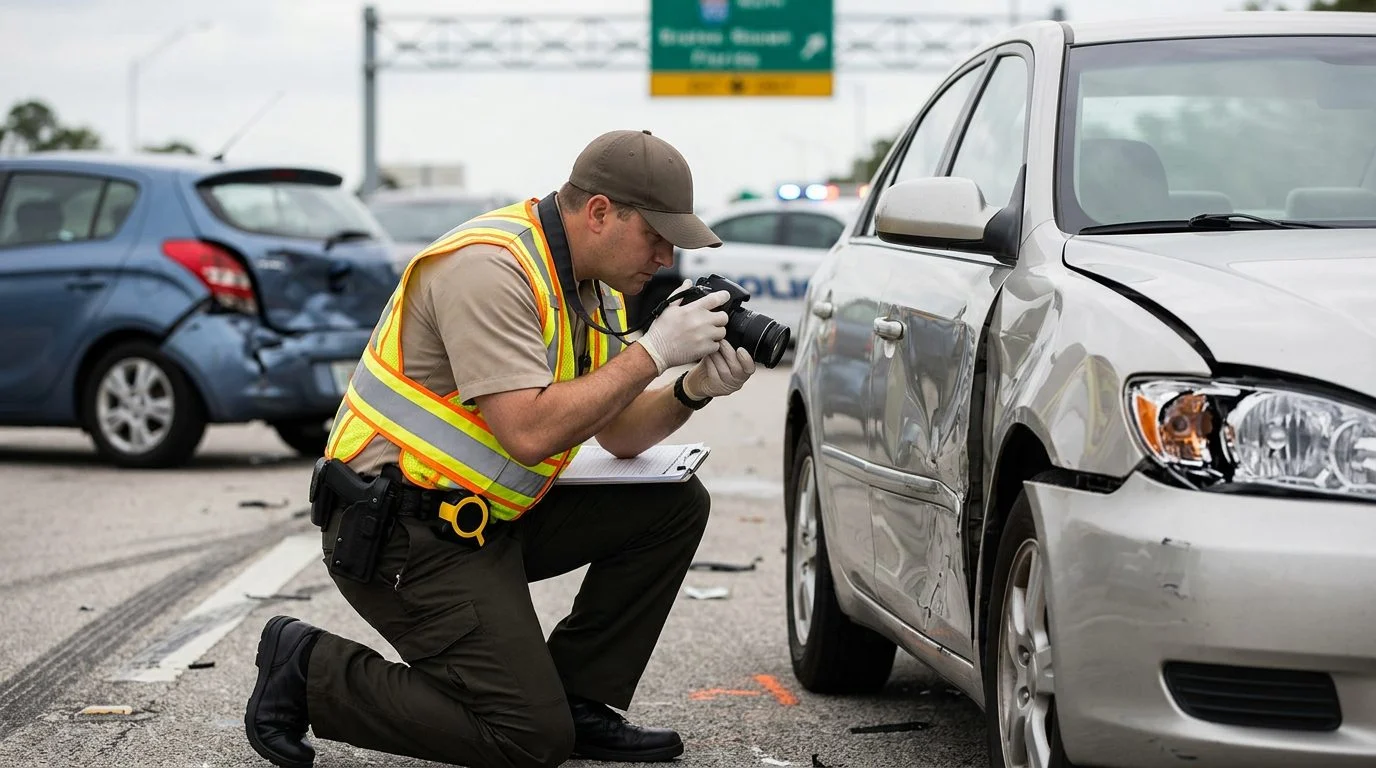
- Evidence gathering. Police reports, medical records, bills, wage records, and vehicle damage photos are collected.
- Demand to the insurer. The injuries, treatment, and losses are presented in writing.
- Negotiation. Talks can take several months. This is especially true when treatment is still ongoing.
- Lawsuit, if needed. If a fair resolution isn’t reached, a lawsuit is filed. It then moves through discovery, the exchange of evidence. It may end in a settlement or a trial.
Florida deadlines keep running while talks continue. Waiting while negotiations drag on can put a claim at risk.
Why Work With CHG Personal Injury Lawyers
CHG Personal Injury Lawyers is a Florida-based personal injury firm. It handles car accident claims. It also handles truck crashes, motorcycle and ATV accidents, rideshare cases, slip-and-fall incidents, and other injuries of every severity.
Our attorneys are licensed and admitted to practice in Florida. Igor Hernandez is the responsible attorney for this page.
Our team explains each cost in plain language. We keep you informed as the claim moves. The firm serves clients throughout Florida, including Miami, Orlando, Tampa, and Jacksonville.
No firm can promise a result. Every claim turns on its own facts. No outcome or dollar amount can be promised in advance.
Frequently Asked Questions About Car Accident Settlement Costs
Most settlement questions come down to three things. They are the injury, the records, and the costs that come out.
How much are most car accident settlements?
The amount depends on the injury, the records, the fault picture, and available insurance.
How much of a $30,000 settlement will I get?
Fees, case costs, and repayment claims are subtracted from the gross amount. The amount you keep is what remains after each one is worked out.
How much of a $100,000 settlement will I get?
The structure is the same. Subtract the fee percentage in the written agreement. Then subtract case costs and any letter of protection or repayment claim. What remains is the net. This is an illustration of structure, not a prediction.
How much will I get from a $50,000 settlement?
Use the same steps. A settlement figure is the gross amount. Each deduction lowers the amount you keep.
Can a car accident settlement calculator give me my number?
A generic calculator cannot review medical records, liens, PIP payments, or fault facts. Your number has to come from reviewing your actual case.
How long do I have to file a car accident lawsuit in Florida?
Florida sets time limits for filing a lawsuit. Under Fla. Stat. § 95.11, the time limit depends on the type of action. Contact a lawyer promptly so no deadline is missed.

Talk Through Your Own Numbers With CHG
If you’re recovering from a crash, reading a settlement letter, or watching bills pile up, you don’t have to sort this out alone. Family can help, and so can our team. We can review your accident, injuries, and insurance with you.
You can contact CHG for a free consultation. The consultation is confidential. It carries no obligation to continue. Florida deadlines apply, so reaching out sooner is better.
Have questions about what happened?
Ask our team directly. The first conversation is free, confidential, and there is no obligation to continue.
How We Can Help You Think Through Your Claim
Organize Your Records
We help you gather medical bills, wage records, photos, and insurance correspondence so the full picture of your losses is clear.
Review Your Insurance
We look at the coverage that may apply, including your own policy and the other driver's, and explain how limits can affect what is available.
Focused on Florida Families
Our practice focuses on people hurt in Florida, and we work to explain each step in clear, everyday language.
Plain-Language Answers
Our lawyers take the time to answer your questions, so you know what to expect before you decide anything.
Before You Accept Any Offer
An early settlement offer may arrive before the full extent of your injuries is known. Follow your doctors' care, keep every bill and record, and speak with a lawyer before you sign a release or accept a payment. A calculator is only an estimate, not a prediction of what your claim will bring.
Common Parts of a Car Accident Claim
Medical Costs
Emergency care, hospital stays, surgery, therapy, medication, and future treatment your doctors recommend.
Lost Income
Wages you missed while recovering, and any reduction in your ability to earn in the future.
Property Damage
Repair or replacement of your vehicle and personal items damaged in the crash.
Pain and Daily Life
The physical and emotional impact of the injury, including how it affects work, family, and everyday activities.