
Car Accidents | Serving Florida
What Really Shapes the Value of a Serious Car Accident Claim in Florida
Big settlement headlines rarely tell the whole story. Here is how injuries, lost income, insurance, and the family's day-to-day needs come together in a claim.
Why Families Contact CHG Personal Injury Lawyers
Florida
Florida-based personal injury firm serving clients across the state
Florida Bar
Attorneys admitted to The Florida Bar
Free
Confidential first consultation with no obligation to continue
By CHG Lawyers · Published November 28, 2026
If a car crash left you or someone you love with lasting injuries, you may have searched for the highest settlement for a car accident. No single number tells you what your claim is worth.
Your claim’s value depends on your injuries. It also depends on the costs those injuries create. It depends on who is at fault and on the insurance available to pay. This guide explains each factor in plain language.
Why a single “highest settlement” number does not tell you what your claim is worth
A headline number does not tell you what your own claim is worth. Large reported settlements and verdicts come from cases with different facts, injuries, defendants, and insurance limits.
Two crashes can look alike on paper. Their costs can still be very different once the medical records arrive.
Most of the biggest headline numbers involve lifelong, catastrophic harm or a death. A minor crash with soft-tissue injuries (injuries to muscles, ligaments, and tendons) follows a different path. It rarely reaches the same figures.
Instead, ask three practical questions:
- What has the crash cost you so far?
- What will it cost you going forward?
- Who can be held responsible, and what insurance is available?
Those answers rest on your own records and facts. No lawyer or website can predict a specific result from a headline.
If a serious crash left you or a family member with lasting injuries, you don't have to sort out the insurance and deadlines alone; our team can start with a free, confidential consultation. Talk it through with our team — the first consultation is free, confidential, and carries no obligation.

What a car accident settlement is made of
A car accident settlement has two parts. The first part covers economic losses. These are costs you can document, such as bills and lost pay.
The second part covers non-economic losses. These cover harm that bills do not show.
Economic losses (documented costs)
- Emergency care, hospital stays, surgery, and rehabilitation
- Medications, medical equipment, and future treatment
- Past and future lost income and reduced ability to earn
Under Florida law, economic damages include any other economic loss that would not have occurred but for the injury giving rise to the cause of action.
Non-economic losses (harm bills don’t capture)
Examples include pain and suffering, emotional distress, loss of enjoyment of life, and disfigurement.
In a Florida motor vehicle case, these damages are available only if the injury meets a legal threshold. A threshold is a minimum requirement. The threshold is met by:
- a significant and permanent loss of an important bodily function
- a permanent injury
- significant and permanent scarring
- death
Other money in the picture
Florida has a no-fault system. It uses personal injury protection (PIP) benefits. PIP can pay certain medical and rehabilitation costs.
Payments from health coverage can also reduce a final award. See Fla. Stat. § 768.76. This applies unless the payer keeps a right to be repaid.
Injuries and crash types that often produce the largest claims
The largest claims usually involve injuries that change a person’s life for years. They may also involve a death. Common examples include:
- Spinal cord injuries and paralysis (paraplegia and quadriplegia), with lifetime costs for care, home changes, and equipment
- Traumatic brain injuries that can affect memory, work, and daily function for years
- Amputations and limb loss, including prosthetic costs (artificial limbs) that are replaced over time
- Severe burns, which may require many surgeries, skin grafts, and long rehabilitation
- Serious back and neck injuries that limit work or need ongoing treatment
Some crash types often involve high-value claims. These include commercial truck crashes, Amazon and FedEx delivery truck accidents, motorcycle and ATV crashes, bicycle collisions, and rideshare accidents.
Florida also recognizes crashworthiness claims. These claims allege that a design or manufacturing defect made injuries worse. The defect did not cause the crash itself.
The Florida Supreme Court has said a vehicle maker may be held liable for a defect that caused an injury but did not cause the crash. This may happen under certain conditions (D’Amario v. Ford Motor Co.).
When a crash causes death, the Florida Wrongful Death Act lets survivors seek damages. A surviving spouse may recover for lost companionship and protection. A surviving spouse may also recover for mental pain and suffering. See § 768.21.
Florida rules that shape the value of a car accident claim
Florida’s rules on fault, deadlines, and evidence shape every car accident claim. Each rule can change what a claim is worth.
- Fault. Under § 768.81, a person found more than 50 percent at fault for their own harm may not recover any damages in a negligence action, except for personal injury or wrongful death claims arising out of medical negligence under chapter 766. Each defendant pays only its own percentage of fault.
- Deadlines. Florida’s time limit for a negligence lawsuit is called a limitations period. It is the deadline to file suit. For negligence claims, it is two years.
- Medical bills. Chapter 2023-15 also changed how medical costs are proven. Under § 768.0427, bills already paid are limited to the amount actually paid. A letter of protection is an arrangement. In it, a provider treats you in exchange for a promise of payment from a settlement or judgment.
- Medicare. If Medicare paid for accident-related care, it may expect repayment. These are called conditional payments, meaning amounts it expects back. They must be repaid from a settlement. See CMS.
- Policy limits and other defendants. Low coverage on the at-fault driver’s policy can limit recovery. Other defendants, such as a trucking company or a vehicle maintenance contractor, can change the picture.
Signs a settlement offer may be too low
An offer is often too low when it ignores your future care, lost earning ability, or pain. Watch for these warning signs:
- It arrives before your doctors say your condition has settled. This point is often called maximum medical improvement. It means your condition is as stable as it is expected to get.
- It covers only bills to date and ignores future treatment.
- It ignores documented lost wages or reduced ability to work.
- It asks for a recorded statement or signed medical authorizations before you understand the claim.
- It sets a short deadline or asks you to release all claims without a review of your records.
You can ask the at-fault driver’s liability insurer in writing for its policy limits. Under § 627.4137, the insurer must provide a sworn statement. This is a statement signed under oath. It must be provided within 30 days of your written request.
Keep a log of appointments, missed work, and daily limits. Follow your doctors’ care plan.
How a car accident injury claim moves from first call to resolution
A serious claim usually moves through five stages. A lawsuit comes only if the claim cannot be resolved.
- Free consultation. The initial consultation is free and confidential. It carries no obligation to continue. We review the crash, your injuries, and any insurance information.
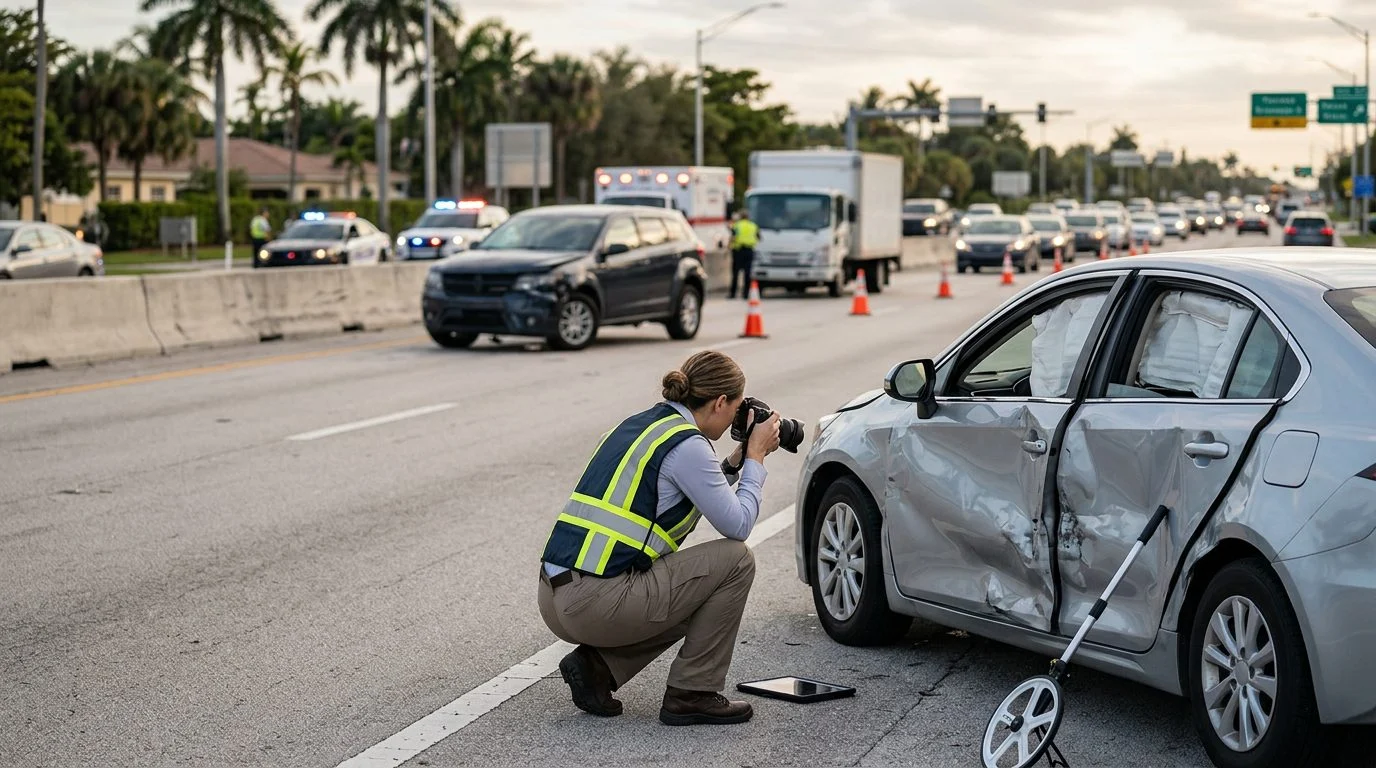
- Investigation. We gather crash reports, photographs, witness statements, and vehicle data. For complex crashes, we may use accident reconstruction professionals. These people rebuild how the crash happened.
- Damages picture. We collect medical records, bills, and wage records. For serious injuries, we may add estimates of future care.
- Demand and negotiation. We send a settlement demand to the insurer. This is a written request for payment. Then we negotiate.
- Lawsuit, if needed. If a fair resolution is not reached, we file suit within Florida’s deadlines. The case then moves through discovery, which is the exchange of evidence. It may move to mediation, which means talks led by a neutral helper. If needed, it goes to trial.
Simple claims can resolve in months. Catastrophic injury and wrongful death cases often take longer. The full cost of the injury must be known first.
Not sure what your next step is?
Talk it through with our team — the first consultation is free, confidential, and carries no obligation.
How CHG Personal Injury Lawyers handles serious car accident claims
CHG Personal Injury Lawyers is a Florida-based firm. It handles car accident claims for people throughout Florida. The firm takes personal injury cases of every severity. These range from everyday crashes to catastrophic injuries and wrongful death.
Igor Hernandez is the responsible lawyer for this page. Our lawyers are licensed attorneys admitted to The Florida Bar. Our team reviews the facts of each case before recommending a path.
Some matters may be referred to, or handled together with, another law firm. If that happens, we will tell you.
CHG charges no attorney’s fees and no case costs unless there is a recovery.
Frequently asked questions about car accident settlements in Florida
How much would I get out of a $100,000 settlement?
No headline number can answer that. The amount you keep depends on your injuries, fault, insurance, and any repayment rights, such as Medicare’s.
What is considered the worst car accident in history?
Historic crashes are not a useful guide to your own claim. Your claim’s value depends on your injuries, the costs they create, and who is responsible.
What are the signs of a good settlement offer?
A complete offer covers current and future medical care, lost income, and pain and suffering. It also comes after your medical condition is clearer.
What is the hardest lawsuit to win?
Difficulty depends on evidence, defenses, and how fault is divided. Florida’s fault and deadline rules shape every claim.

Talk with CHG about the crash you are weighing
If a serious crash left you or a family member with lasting injuries, you may be deciding whether to act now. Start with a free, confidential consultation.
We will review the crash, your records, and the Florida deadlines that apply. You can contact CHG Personal Injury Lawyers to schedule it. Our team can also help protect evidence while you focus on recovery.
What We Look at When We Review a Crash
The injuries themselves
Spinal cord damage, brain injuries, fractures, and other lasting harm often carry the greatest weight, along with the care they are expected to need over time.
Lost work and future earnings
Time away from work now and reduced earning ability later are central parts of many serious injury claims.
Medical records and bills
Complete records of treatment, therapy, and equipment show what the injury has required so far and what may be needed ahead.
Insurance coverage
The policies involved, including those of the at-fault driver and of the injured person, can shape how a claim is pursued.
Before You Speak With an Insurance Company
An adjuster works for the insurer, not for you. Early offers are often made before the full extent of an injury is known. Follow your doctors' care, keep your records, and talk with a lawyer before you accept any payment or sign any release.
How We Help Florida Families Move Forward
Listen first
We take time to understand the crash, the injuries, and the questions that keep you up at night.
Gather the evidence
We work to collect police reports, records, and other proof that shows what happened and what the injury has cost.
Explain your options
We walk you through the process in plain language so you can make informed decisions at every step.
No fees unless there is a recovery
CHG charges no attorney's fees and no case costs unless there is a recovery.