

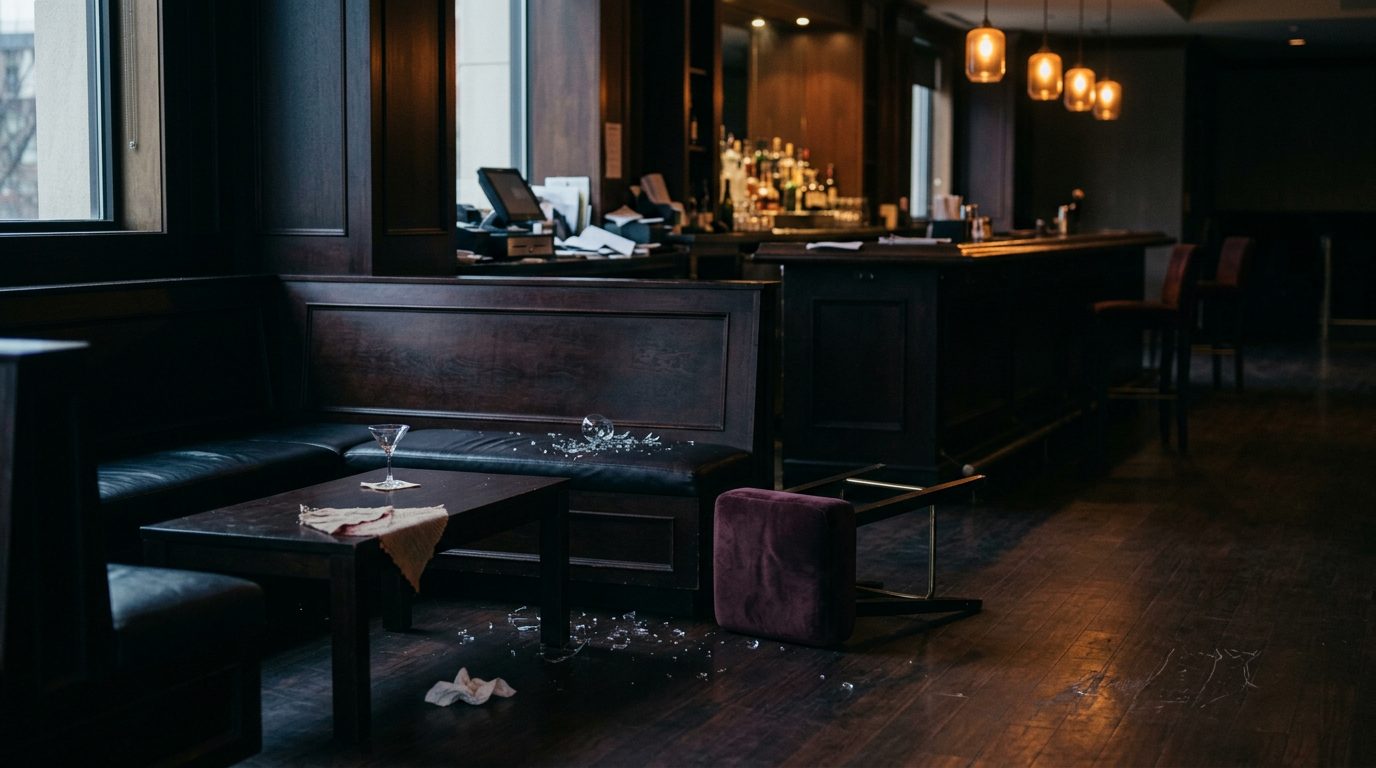
Negligent Security | Bar & Nightclub Attacks
Attacked at a Bar or Nightclub? You May Have a Claim Against the Venue
If you were assaulted, shot, or injured at a bar, nightclub, or similar venue because the owner failed to provide adequate security, CHG Personal Injury Lawyers can help you pursue compensation.
By CHG Lawyers · Published September 29, 2026
Bar and Nightclub Attack Injury Lawyer: Hold the Venue Accountable for Negligent Security
You were having a night out when someone attacked you. A punch. A fall. A stabbing. A shooting. The attacker may have been a stranger or someone who turned violent.
You suffered serious injuries—broken bones, head trauma, stab wounds, or worse.
Here is what matters now: the bar or nightclub owner may be legally responsible for your injuries. Not because they threw the punch, but because they failed to protect you from foreseeable violence.
If you were assaulted, shot, robbed, or sexually attacked on someone else’s property—a bar, nightclub, parking lot, hotel, apartment complex, or other commercial venue—and you were hurt because the owner did not provide reasonable security, you may have a legal claim. This is called a negligent security claim.
Not sure what your next step is?
Talk it through with our team — the first consultation is free, confidential, and carries no obligation.
You Were Attacked Because the Venue Failed to Protect You
Bars and nightclubs are commercial properties. Their owners have a legal duty under Florida law to keep guests reasonably safe. This includes protecting them from foreseeable violent crime.
You may have a negligent security claim if:
- You were injured in an assault, fight, stabbing, shooting, or violent attack at a bar, nightclub, restaurant, parking lot, or similar venue.
- The owner failed to provide reasonable security: working locks, adequate lighting, security cameras, trained staff, or security personnel.
- You suffered serious, permanent injuries because of that failure.
- Violence at that venue was foreseeable. This is based on location, neighborhood crime rate, prior incidents, time of night, or the nature of the business.
You do not need to:
- Know the attacker’s name or identity.
- Prove the venue expected that exact attack.
- Show the owner intended to harm you.
You only need to show violence was foreseeable and the venue did not take reasonable steps to prevent it.
Understanding Negligent Security: The Legal Claim Explained
When you cannot identify or sue the attacker, or they have no money to pay a judgment, Florida law allows you to hold the property owner liable instead. This is called a negligent security claim or premises liability claim.
Under Florida premises liability law, a property owner owes a duty of reasonable care. They must protect customers and guests from foreseeable criminal acts by third parties.
A negligent security claim requires proof of five elements:
-
Duty: The venue owed you a duty to provide reasonable security appropriate to the risks at that location.
-
Breach: The venue failed to provide adequate security. Examples: no working locks, insufficient lighting, no cameras, untrained staff, or no security presence.
-
Foreseeability: Violence was foreseeable based on objective facts. These include the venue’s location, neighborhood crime statistics, prior violent incidents at that property, time of night, or the business type.
-
Causation: Inadequate security directly contributed to your injury. Adequate security would likely have prevented the attack.
-
Damages: You suffered serious, permanent injuries and financial losses.
Important distinction: The attacker may face criminal charges. Criminal prosecution punishes the attacker. Your civil negligent security claim holds the venue accountable and recovers compensation for your injuries.
Who Bears Responsibility for Your Safety?
The bar or nightclub owner or operator is responsible for maintaining a safe environment. This includes:
- Hiring and training adequate security staff to de-escalate conflicts, recognize threats, and respond to violence.
- Installing and maintaining working lighting throughout the venue, parking areas, and entrances.
- Operating and maintaining security cameras that record incidents and deter crime.
- Controlling access through working doors, locks, and gates.
- Responding to warning signs—past incidents, guest complaints, or known troublemakers.
- Implementing violence-prevention policies: no-weapons policies, staff training, and protocols for removing dangerous patrons.
Employees and third parties:
If a bouncer, bartender, or security guard was negligent or failed to intervene, the venue is typically liable under Florida law. If a bouncer or security employee caused your injury, the venue is almost always liable.
A third-party security company hired by the venue may also share liability if they failed to provide adequate services, training, or supervision.
Have questions about what happened?
Ask our team directly. The first conversation is free, confidential, and there is no obligation to continue.
Catastrophic Injuries from Bar and Nightclub Attacks
We focus exclusively on catastrophic injuries—the kind that permanently change your life. Attacks at bars and nightclubs often result in severe, permanent harm.
Injuries we handle include:
- Traumatic brain injuries (TBI): Concussions, intracranial bleeding, skull fractures, and permanent cognitive impairment from blows to the head.
- Spinal cord injuries and paralysis: Paraplegia (lower-body paralysis) or quadriplegia (all-four-limb paralysis) from trauma to the spine.
- Catastrophic back and neck injuries: Permanent disability, chronic pain, and neurological complications.
- Facial and jaw injuries: Fractures, permanent disfigurement, dental trauma, and tooth loss.
- Eye injuries: Vision loss, blindness, or permanent eye damage.
- Severe lacerations and scarring: Permanent disfigurement affecting appearance and self-esteem.
- Stab and gunshot wounds: Organ damage, nerve damage, permanent disability, and chronic pain.
- Nerve damage and chronic pain: Permanent conditions affecting quality of life and function.
- Wrongful death: If the attack resulted in a fatality, the family may pursue a wrongful-death claim. This recovers funeral expenses, lost financial support, and loss of companionship.
The Legal Process: How to Hold a Bar Accountable
Pursuing a negligent security claim involves several steps. Understanding the process helps you know what to expect.
Step 1: Gather evidence
We obtain the police report, your medical records, witness statements, photographs of injuries, and security footage. We request incident reports and prior complaints filed with the venue.
Step 2: Preserve evidence
We send a formal preservation letter to the venue. This requires them to preserve security camera footage, incident reports, staff records, training materials, prior complaints, and other security-related evidence. Evidence can disappear if not formally preserved.
Step 3: Investigate the venue’s security practices and history
We investigate whether the venue had a known history of violent incidents. We review neighborhood crime statistics. We determine what security measures were in place and whether they were adequate.
Step 4: Consult with experts
We work with security consultants, medical experts, and investigators. They establish that the venue’s security was inadequate. They show that adequate security would likely have prevented your injury.
Step 5: Send a demand letter
Your attorney notifies the venue and its insurance company of your claim. We describe your injuries, the venue’s negligence, your damages, and your settlement demand.
Step 6: Negotiate
The insurance company may respond with a settlement offer. We negotiate on your behalf to reach fair compensation.
Step 7: Litigation (if necessary)
If negotiation fails, we file a lawsuit. Discovery and depositions typically take 6–12 months. Both sides exchange evidence and take recorded statements under oath.
Step 8: Trial or settlement
Most cases settle before trial. We are prepared to present your case before a judge or jury if the insurance company will not offer fair compensation.
What Damages Can You Recover?
Damages in a negligent security claim include both economic losses (money you spent) and non-economic losses (pain, suffering, and lost quality of life).
Economic damages:
- Emergency care, surgery, hospitalization, and intensive care costs.
- Ongoing medical treatment, therapy, medications, and specialist care.
- Future medical care and adaptive equipment (wheelchairs, prosthetics, home modifications, assistive technology).
- Lost wages during recovery and rehabilitation.
- Ongoing lost earning capacity if the injury prevents you from working.
- Home and vehicle modifications to accommodate permanent disability.
Non-economic damages:
- Pain and suffering from your physical injuries.
- Emotional trauma, anxiety, depression, post-traumatic stress disorder (PTSD), and psychological injury.
- Reduced quality of life and loss of enjoyment of activities you once enjoyed.
- Permanent disability and loss of function.
- Disfigurement and scarring affecting your appearance and self-esteem.
- Loss of companionship and consortium (if applicable).
Punitive damages:
In cases where the venue’s conduct was particularly reckless, a jury may award punitive damages. Examples: ignoring a known pattern of violence, failing to hire security despite prior assaults, or deliberately disabling security cameras. These damages punish the venue and deter similar conduct in the future.
Wrongful death damages:
If a loved one was killed in the attack, the family may recover funeral and burial expenses, lost financial support the deceased would have provided, and loss of companionship.
Common Questions About Negligent Security Claims
Do I have to prove the venue knew an attack would happen?
No. You only need to show violence was foreseeable given the venue’s location, history, or nature. You must show the venue failed to take reasonable security measures. Foreseeability is based on objective facts—crime statistics and prior incidents—not on the venue’s subjective knowledge.
What if I was drinking when I was attacked?
Your alcohol consumption does not prevent you from holding the venue liable for negligent security. However, the venue may argue comparative fault (shared responsibility) (Fla. Stat. § 768.81(6)). We will address this and fight for fair compensation.
Under Florida Statute § 768.81, the comparative fault rule allows you to recover even if you are partially at fault, as long as you are not more than 50% responsible for your own injury. For example, if a jury finds you 20% at fault and the venue 80% at fault, you can recover 80% of your damages.
What if the attacker was never caught or identified?
You can still sue the venue. The attacker’s identity is not required to prove negligent security. The focus is on the venue’s failure to provide adequate security, not on identifying the attacker.
How long do I have to file a claim?
This deadline is strict. If you do not file a lawsuit within two years, you lose your right to recover. Do not wait—contact an attorney as soon as possible to preserve your claim and gather evidence while it is fresh.
Will my case go to trial?
Most cases settle before trial. We are prepared to litigate if the insurance company will not offer fair compensation. We will advise you on the strength of your case and the likely outcome.
What if the venue claims I assumed the risk by going there?
Assumption of risk is a weak defense in negligent security cases. You have the right to expect reasonable security at a commercial venue. The venue cannot escape liability simply by claiming you knew the risks.
Want to know where you stand?
Tell us what happened and our team will walk you through the options available to you, at no cost.
Why CHG Personal Injury Lawyers Handles These Cases
We focus exclusively on catastrophic injuries—the kind that permanently change your life. We understand the full scope of what you are facing: medical complexity, financial burden, emotional trauma, and the need for justice.
Our approach:
- We have deep experience investigating negligent security claims. We know what questions to ask, what evidence to demand, and how to prove inadequate security.
- We work with security consultants, medical experts, and investigators to build evidence-based cases.
- We handle cases nationwide, bringing Florida Bar credentials and deep local experience to every investigation.
- Our attorneys are licensed and in good standing with the Florida Bar and other state bars.
- We understand the emotional and financial toll of catastrophic injury. We approach every case with empathy and determination.
- We do not charge you unless we recover compensation for you. We work on a contingency basis, so you have no upfront costs.

Get a Free Case Evaluation Today
If you were attacked at a bar or nightclub and suffered serious injuries because the venue failed to provide adequate security, CHG Personal Injury Lawyers is here to help.
We will review what happened, explain your legal options, and tell you honestly whether we believe you have a viable claim. We will answer your questions and help you understand what comes next.
Contact us for a free case evaluation. There is no obligation, and you will not pay unless we recover compensation for you.
Important: Your Injuries Matter, Regardless of Circumstances
If you were drinking when you were attacked, that does not prevent you from holding the property owner accountable for failing to provide reasonable security. Venues have a duty to protect patrons from foreseeable harm—including violent crime—through working locks, adequate lighting, security cameras, trained staff, and other reasonable measures.
Why Property Owners Are Responsible for Negligent Security
Duty of Care
Bar and nightclub owners have a legal obligation to maintain reasonably safe premises and protect patrons from foreseeable violent crime.
Foreseeability, Not Certainty
You do not need to prove the venue knew an attack would happen. You only need to show violence was foreseeable based on the location, the venue's history, crime statistics in the area, or prior incidents—and that the owner failed to take reasonable security steps.
Reasonable Security Measures
Adequate security includes working locks and gates, proper lighting in parking areas, security cameras, trained staff, and other measures appropriate to the venue's location and risk profile.
Your Recovery Matters
Injuries from violent crime at a venue can be severe and life-altering. You deserve support in holding the property owner accountable and pursuing the compensation you need.
What Happens Next: How We Can Help
Free Case Evaluation
Tell us what happened. We'll listen, answer your questions, and explain your options—with no obligation and no upfront cost.
Investigation & Evidence
We gather police reports, security footage, witness statements, crime statistics, and other evidence to build your claim against the property owner.
Negotiation & Legal Action
We pursue fair compensation through settlement discussions or, if necessary, by filing a lawsuit on your behalf.
No Attorney’s Fees Unless There Is a Recovery
We work on a contingency basis. You pay nothing unless we recover compensation for you.
Common Questions About Bar & Nightclub Attack Claims
Do I have to prove the venue knew an attack would happen?
No. You only need to show violence was foreseeable given the venue's location, history, or nature, and that the venue failed to take reasonable security measures. Foreseeability is based on objective facts—crime statistics and prior incidents—not on the venue's subjective knowledge.
What if I was drinking when I was attacked?
Your alcohol consumption does not prevent you from holding the property owner accountable. The venue's duty to provide reasonable security applies to all patrons. However, the details of your case matter, and we'll discuss how this may factor into your claim.
What kinds of injuries qualify for a negligent security claim?
Any injury caused by a violent attack at a venue where security was inadequate—including assault, gunshot wounds, stabbings, sexual assault, robbery, and other violent crimes. Injuries can range from minor to catastrophic and life-altering.
What compensation can I recover?
Compensation may include medical expenses, lost wages, pain and suffering, and other damages related to your injury. We'll evaluate your specific situation and pursue the full amount you deserve.