

Negligent Security · Florida & Nationwide
Hurt by a Violent Crime on Someone Else's Property?
If you were assaulted, shot, robbed, or attacked at an apartment complex, parking garage, hotel, or business — and unsafe conditions helped make it happen — the property owner may be responsible. We help victims of catastrophic injuries and grieving families understand their options.
Why Families Turn to Us
Licensed
Florida Bar–admitted attorneys
Nationwide
Cases accepted across the U.S.
Bilingual
English & Spanish support
Free
Confidential case review
By CHG Lawyers · Published August 15, 2026
Inadequate Security Premises Liability: Your Rights After an Attack Caused by Poor Security
Were you attacked on someone else’s property and badly hurt? You may have the right to hold the property owner responsible. The law for this is called inadequate security premises liability. It applies even though a criminal did the actual harm.
Let’s be clear from the start. The attacker and the owner can each carry separate legal responsibility. The owner is the person or company who left the property unsafe. Punishing the attacker in criminal court does not pay you back for your losses. A claim against the property owner is a different case. It goes to a different court. And it is about a different failure.
Not sure what your next step is?
Talk it through with our team. The first talk is free and private. There are no strings attached.
If you or a loved one was seriously hurt in an attack on someone else's property, reaching out early helps preserve the proof your claim may depend on. Talk it through with our team — the first consultation is free, confidential, and carries no obligation.
If You Were Attacked on Someone Else’s Property, You May Have Rights
You may have rights if you were assaulted, shot, robbed, sexually assaulted, or attacked. This is true when the attack happened at an apartment complex, parking garage, hotel, bar, gas station, store, or ATM. It also matters that the owner failed to keep you reasonably safe.
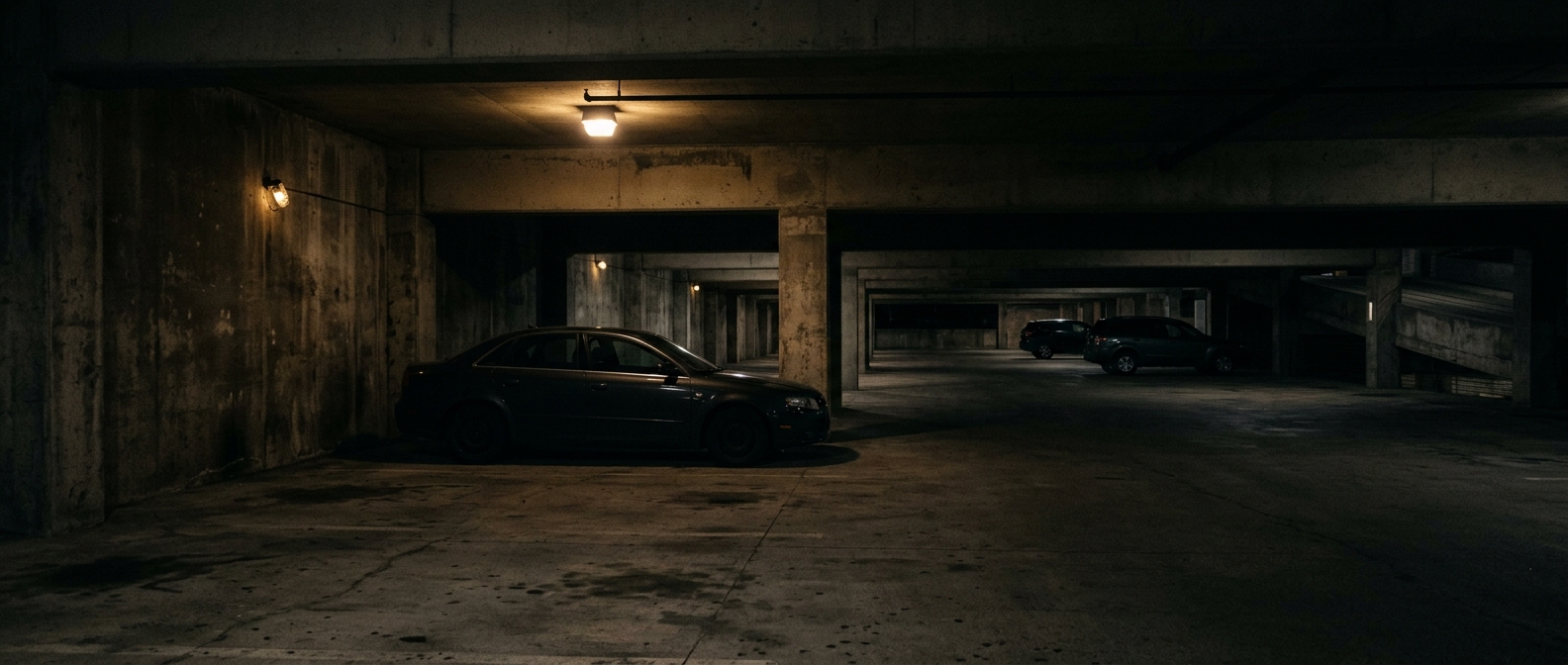
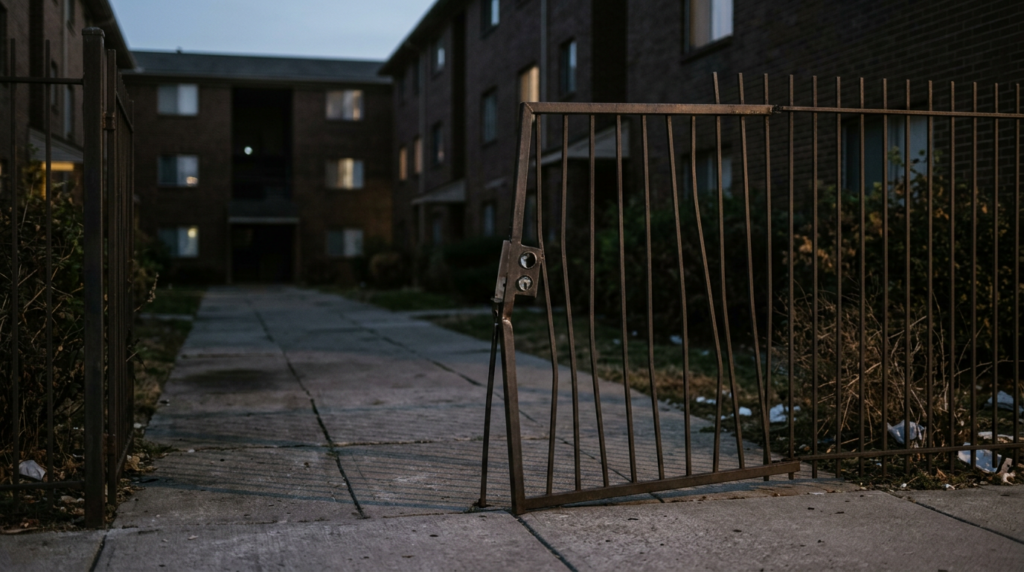
Maybe you were shot in a dark parking lot with a broken gate. Maybe you were beaten in an apartment stairwell where the locks never worked. Maybe a loved one was killed at a business that ignored years of nearby violent crime. These attacks change lives forever. And they leave families with unbearable loss.
This page explains your rights in plain language. We’ll show why an owner can share the blame. We’ll cover what a claim must prove, what money may be available, and the deadline to act.
CHG Personal Injury Lawyers is based in Florida. We take catastrophic-injury cases nationwide. Our focus is narrow on purpose: permanent, life-altering injuries. These include spinal cord injuries, paralysis, brain injuries, amputations, severe burns, and wrongful death. We publish every one of these resources in English and Spanish. A family should not have to fight a language barrier while trying to understand their rights after an attack.
The Criminal Attacked You — So Why Can the Property Owner Be Responsible?
Nearly everyone in your situation asks this. So we’ll answer it directly.
The attacker committed a crime. That is the attacker’s responsibility. The state handles the criminal case. But the law also gives property owners a separate duty. They must take reasonable steps to protect the people they invite onto their property. That means protecting them from foreseeable harm — harm the owner could reasonably expect. And that includes violent crime.
When an owner ignores that duty and someone is hurt, the owner can be held responsible in a civil lawsuit. This is called inadequate security premises liability. It is also known as negligent security.
The attacker being guilty does not erase the owner’s responsibility. These are two different failures. Two parties can each be responsible for the same tragedy.
Think of it this way. An apartment complex knows shootings have happened in its parking lot. It advertises “gated, secure” living. But it lets the gate stay broken for months. Then a resident is shot. The shooter is a criminal. And the owner failed to provide the security it promised and owed. Both facts are true. Both matter to your recovery.
So, can you sue an apartment complex for lack of security? Often, yes. That’s true if the complex failed to provide reasonable protection against a foreseeable danger. It must also be true that this failure helped cause your injury.
Where These Attacks Happen: Unsafe Properties That Fail to Protect People
These attacks happen in everyday places. Owners there often know — or should know — that crime is a real risk. These places include apartment complexes, parking lots and garages, hotels and motels, bars and nightclubs, gas stations, stores, and ATMs.
Owners of these places usually have information the public doesn’t. They see the police calls. They know their neighborhood’s crime pattern. They hear tenant complaints. In the cases our attorneys handle, that knowledge often existed long before the attack. And simple, affordable fixes were ignored.
If your attack happened at one of these places, these pages go deeper:
- Apartment complex assault injury lawyer
- Parking lot and garage attack injury lawyer
- Hotel and motel assault injury lawyer
- Bar, nightclub, and gas station shooting injury lawyer
What Counts as a Security Failure?
A security failure happens when an owner skips reasonable protection. That protection could have stopped a foreseeable attack. There’s no single checklist. But common examples are clear.
Real-world security failures include:
- Broken or missing locks, gates, or fences
- Burned-out or missing lighting in lots, stairwells, and hallways
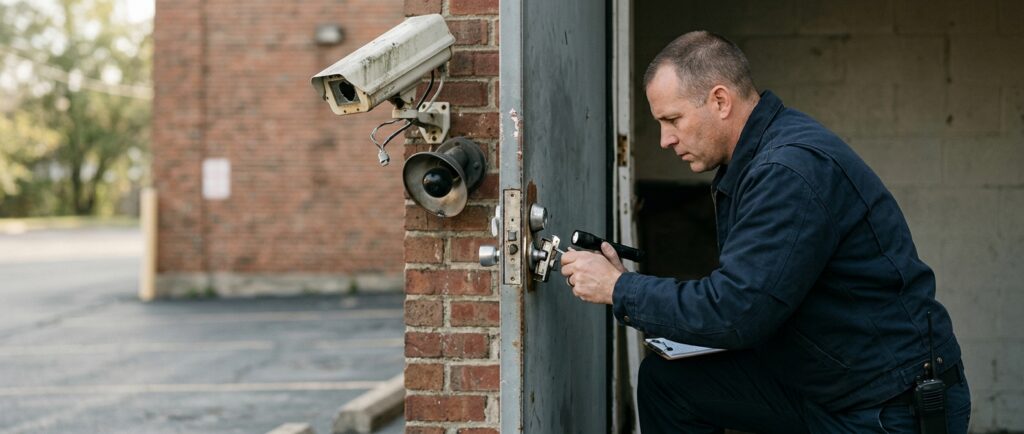
- Cameras that don’t work — or no cameras where crime is a known risk
- No security guards where the danger clearly called for them
- Broken doors or windows the owner never repaired
- Ignored complaints and past incidents
So how much security is “inadequate”? It depends on what was reasonable for that property and its known risks. A quiet suburban office may not need armed guards. A hotel in an area with repeated violent crime might. Each case is judged on its own facts, not by a rigid rule.
The Key Question: Was the Attack Foreseeable?
Foreseeability is usually the heart of these cases. In plain terms: could the owner reasonably have expected a crime like this? If yes, the duty to provide better security grows stronger.
Evidence of foreseeability often includes:
- Prior crimes on or near the property
- A history of police calls to the location
- The neighborhood’s overall crime pattern
- Warnings, complaints, or reports the owner ignored
When an owner knew about a real danger and did nothing, the attack was often preventable.
Not sure what your next step is?
Talk it through with our team — the first consultation is free, confidential, and carries no obligation.
The Four Things an Inadequate Security Premises Liability Claim Must Show
A negligent security claim must prove four things: duty, breach, causation, and damages.
- Duty. The owner owed you a duty. That means a duty to take reasonable steps to keep you reasonably safe.
- Breach. The owner broke that duty by providing poor security — like a broken gate or missing lighting.
- Causation. That security failure helped cause the attack and your injury.
- Damages. You suffered real harm — physical, financial, and emotional.
All four must be present. This is general information, not legal advice about your situation.
The Serious Injuries These Attacks Cause
These attacks often cause catastrophic, permanent injuries. This is the kind of harm our firm focuses on. We describe them plainly. We rely on the clinical bodies that study them. That way you understand what is at stake, without needless graphic detail:
- Spinal cord injuries and paralysis. A gunshot or violent beating can damage the spinal cord. Mayo Clinic explains this can cause permanent changes in strength, feeling, and body function below the injury. An injury in the neck can cause tetraplegia. This is also called quadriplegia — the loss of function in all four limbs. A lower injury may cause paraplegia. Doctors grade how severe it is with the International Standards for Neurological Classification of Spinal Cord Injury (ISNCSCI) — the ASIA Impairment Scale. It’s the standard tool used to tell a “complete” injury from an “incomplete” one. The National Spinal Cord Injury Statistical Center (NSCISC) reports that acts of violence — chiefly gunshot wounds — are one of the leading causes of spinal cord injury in the United States. The Christopher & Dana Reeve Foundation estimates that millions of Americans live with some form of paralysis.
- Traumatic brain injury (TBI). A gunshot or a blow to the head can cause lasting harm to thinking, memory, mood, and movement. Mayo Clinic notes that the effects of a moderate to severe TBI can be permanent and require lifelong care.
- Amputation and limb loss. Severe wounds sometimes require surgical amputation. That means a lifetime of prosthetic fittings, replacements, and physical adaptation.
- Severe burns. Attacks involving fire or accelerants can leave permanent scarring, nerve damage, and disability. They often require repeated reconstructive surgery.
Sexual assault is a distinct and deeply serious harm. Survivors may have the right to bring a claim against a property owner whose poor security allowed the attack. We handle these matters with care and respect.
When a loved one is killed, that is the most catastrophic outcome of all. In Florida, the wrongful-death claim is filed by the personal representative of the estate on behalf of the survivors, such as the spouse, children and parents (Fla. Stat. § 768.20). This is a claim against the property owner whose neglect helped make the attack possible. We explain this gently. We know no claim replaces the person you lost. What a claim can do is hold the responsible owner accountable and help secure your family’s future.
What Compensation May Be Available
Compensation in these cases may cover money losses. It may also cover the deep personal toll of a serious injury. No one can promise a specific amount. Every outcome depends on the facts.
Damages often include:
- Medical bills, both past and ongoing
- Future care, rehabilitation, and equipment (for a spinal cord injury, that can mean a lifetime of attendant care and adaptive equipment)
- Lost income and reduced ability to earn
- Pain, suffering, and emotional harm
- Losses to the family in fatal cases
What does premises liability mean for insurance? Property owners usually carry liability insurance. It may cover injuries caused by their negligence, including poor security. In practice, an insurer may try to limit or deny these claims. That’s one reason it helps to have a lawyer review the situation early.
We do not guarantee any result or amount.
How Long These Cases Take — and the Deadline to Act
Serious cases may need detailed medical proof and expert review. They may also need a look into the property’s crime history. Catastrophic cases often take more time. That’s because future care needs must be documented fully. Rushing rarely helps a victim with permanent injuries.
But there is a hard deadline. In Florida, the general time limit to file a negligence claim is two years. This applies to claims that arise on or after March 24, 2023, under Fla. Stat. §95.11. Miss the deadline, and you may lose the right to recover anything. Because our firm handles cases nationwide, other states set different deadlines. That’s one more reason to have your situation reviewed early.
Evidence also disappears fast. Security camera footage is often recorded over within days or weeks. Incident reports get filed away. Witnesses move. Acting early protects your claim.
One more Florida rule matters here. The state follows a modified comparative-negligence system under Fla. Stat. §768.81. This means your recovery is reduced by your share of fault. And if you’re found more than 50% at fault, you generally recover nothing. But the attacker’s guilt does not shift fault onto you. And it does not erase the owner’s responsibility. The law can assign fault to more than one party.
What to Do After an Attack on Someone Else’s Property
Protect your health first. Then protect the evidence that supports your claim.
- Get medical care right away. Your health comes first. Medical records also document your injuries.
- Report the crime to police. A report creates an official record.
- Keep everything. Save bills, photos, and names of witnesses. Save any messages or lease promises about “secure” or “gated” property.
- Don’t sign anything from the property’s insurer before getting advice. Early offers may not reflect the true cost of a lifelong injury.
Why the urgency? Because the proof that wins these cases can vanish quickly. That proof includes footage, incident reports, and past complaints. Our guide on what to do after an attack on a property walks through each step.
Have questions about what happened?
Ask our team directly. The first conversation is free, confidential, and there is no obligation to continue.
Help Where You Are: Florida and Nationwide
CHG Personal Injury Lawyers is based in Florida. We take catastrophic-injury cases nationwide. We publish these resources in English and Spanish so more families can understand their rights.
Explore help for your area:
- Florida
- Miami
- Orlando
- Tampa
- Jacksonville
Talk With a Lawyer About Your Situation — Free Case Evaluation
You are not alone. The attacker’s crime does not erase the property owner’s responsibility. If poor security helped make a violent attack possible, the law may give you a path forward.
The single clear next step: contact us for a free, confidential case evaluation. We’ll listen. We’ll explain your options in plain language. And we’ll help you understand whether you may have a claim.
Our team includes licensed attorneys admitted to the Florida Bar. We follow all attorney-advertising rules. We cannot and do not guarantee any specific result — outcomes always depend on the facts. This page is general information, not legal advice for your case.
Frequently Asked Questions
Can you sue an apartment complex for lack of security?
Often yes. That’s true if the complex failed to provide reasonable security against a foreseeable crime, and that failure helped cause your injury. Every case depends on its facts.
If a criminal attacked me, why can the property owner be responsible?
Property owners have a separate legal duty. They must take reasonable steps to keep visitors reasonably safe from foreseeable harm. The attacker is at fault for the crime. But a negligent owner may share the blame for failing to prevent it. Both can be true at once.
Does the attacker being arrested or convicted affect my claim against the property owner?
No. The criminal case punishes the attacker. It does not pay you back. And it does not erase the property owner’s separate civil responsibility. Your claim against the owner is a different case for a different failure.
What are the four elements of a negligent security claim?
Duty, breach, causation, and damages. A claim must show the owner owed a duty, broke it, and caused your injury. It must also show you suffered real harm.
What is the deadline to file a negligent security claim in Florida?
For claims arising on or after March 24, 2023, Florida generally allows two years under Fla. Stat. §95.11. Other states set different deadlines. Waiting can cost you the right to recover.
How long does it take to resolve a premises liability case?
It varies with the injury, the evidence, and how complex the case is. Catastrophic cases often take longer. They require detailed medical proof and investigation.
Can my family bring a claim if a loved one was killed in an attack on an unsafe property?
Yes. Families may be able to bring a wrongful-death claim when poor security helped cause a fatal attack. Contact us to learn about your options.
Evidence Disappears Fast
Security-camera footage is often erased within days or weeks, and incident reports can go missing. If you or a loved one was seriously hurt in an attack on someone else's property, reaching out early helps preserve the proof your claim may depend on.
What a Property Owner May Owe You
A Duty to Keep You Reasonably Safe
Owners of apartments, hotels, garages, and businesses have their own legal duty to protect visitors from foreseeable harm — a duty separate from the criminal's guilt.
Foreseeable Danger
When prior crimes, a dangerous area, or known threats made an attack predictable, the owner was on notice and expected to respond.
Reasonable Security
Working locks and gates, adequate lighting, functioning cameras, and trained guards are common examples of the protections a property may be expected to provide.
Support After Catastrophic Harm
We focus on life-altering injuries — spinal cord damage, paralysis, traumatic brain injury, severe burns, amputation — and wrongful-death claims when a family has lost a loved one.
Where These Attacks Happen
Apartment Complexes
Broken gates, failed locks, dark stairwells, and unrepaired security systems can leave residents and guests exposed to violence.
Parking Lots & Garages
Poor lighting, no cameras, and no patrols in isolated garages are common factors in assaults, robberies, and shootings.
Hotels & Motels
Guests trust that doors, locks, and property monitoring will keep them safe. When they don't, serious injuries can follow.
Bars, Stores & Gas Stations
Businesses that ignore known threats or fail to provide basic security may bear responsibility when a customer is attacked.
Common Questions
Can you sue an apartment complex for lack of security?
Often, yes — when a complex failed to provide reasonable security against a foreseeable crime, and that failure helped cause the injury. Every case depends on its facts.
A criminal attacked me — why can the owner be responsible?
Property owners carry their own legal duty to take reasonable steps to protect people on their property. That duty exists alongside the attacker's criminal responsibility, not instead of it.
What if a loved one died?
A death is the most catastrophic outcome of all. Surviving family members may be able to bring a wrongful-death claim. We handle these matters with care and dignity.
How much does it cost to talk to you?
Your initial case evaluation is free and confidential. Reach out to learn where you stand before any deadlines pass.