


Catastrophic Injury Claims
Machine Amputation Injury Claim: Your Legal Rights
If you lost a limb or fingers in a workplace or commercial machine accident, you may have the right to pursue compensation. Learn what you need to know.
By CHG Lawyers · Published August 27, 2026
Machine Amputation Injury Claim: Your Legal Rights After Losing a Limb
When a machine fails or is defectively designed, the result can be catastrophic: the sudden, permanent loss of a finger, hand, arm, foot, leg, or multiple limbs. You may be able to recover from the manufacturer or a property owner; if you were hurt on the job, workers’ compensation is generally your employer’s exclusive liability. This page explains how these injuries happen, who is legally responsible, what compensation is available, and the critical steps to preserve evidence and pursue your claim.
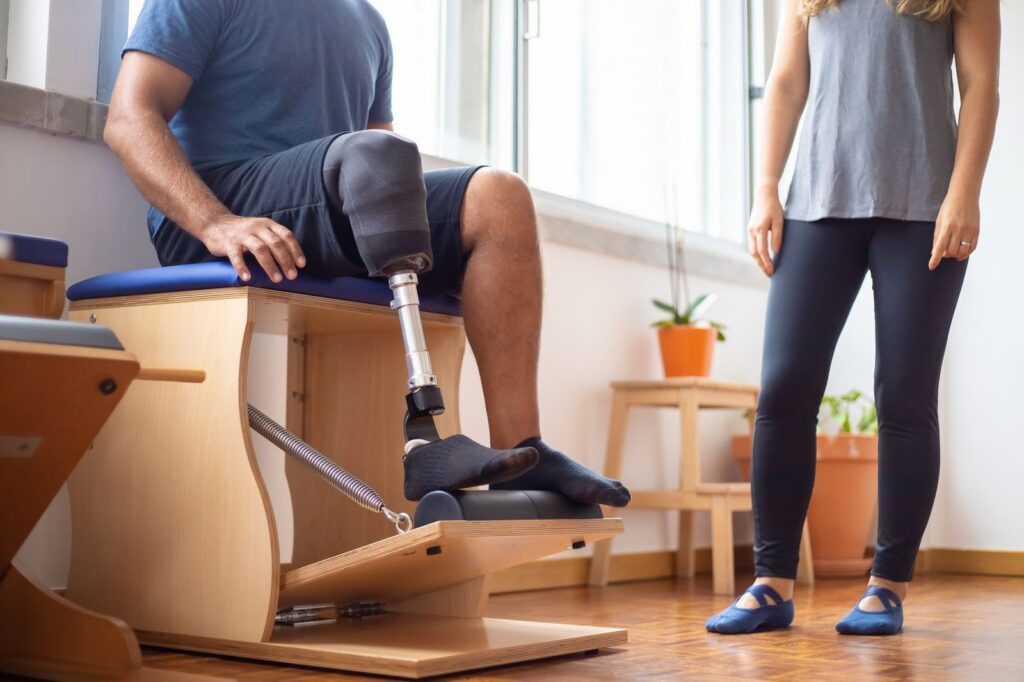
If you lost a limb or fingers in a workplace or commercial machine accident, you may have the right to pursue compensation. Talk it through with our team — the first consultation is free, confidential, and carries no obligation.
How Defective Machines and Equipment Cause Amputation Injuries
Machinery causes amputation when it fails in ways that trap, crush, or sever limbs in seconds. These failures typically stem from:
- Missing or disabled safety guards
- Malfunctioning emergency stops
- Inadequate or missing warnings
- Design flaws
- Poor maintenance
- Failure to recall known hazards
Common machines involved in amputation injuries include industrial presses, conveyor systems, power tools, manufacturing equipment, agricultural machinery, construction equipment, forklifts, and commercial appliances. The injury often happens so quickly—before a worker realizes the danger—that the limb cannot be saved.
Defects can exist when the machine leaves the factory, or they can develop over time due to poor maintenance, lack of repair, or deliberate disabling of safety features. Either way, if a defect caused your amputation, someone may be legally responsible.
Who Is Legally Responsible for Your Machine Amputation Injury
Multiple parties may share responsibility for your amputation. You may have claims against more than one.
The manufacturer or designer may be liable if the equipment was defectively designed, defectively manufactured, or lacked adequate warnings or safety features. For example:
- A press without a functional guard
- A conveyor system with no emergency stop
- A machine that leaves the factory with a faulty safety mechanism
Under product-liability law, you do not need to prove the manufacturer was careless. You only need to show the product was defective and caused your injury.
The employer or property owner may be liable if they:
- Failed to maintain the equipment
- Failed to provide proper training
- Disabled or removed safety features
- Ignored known hazards
For an employer, however, these failures generally lead to a workers’ compensation claim rather than a negligence lawsuit: an employee can sue the employer directly only in narrow cases, such as proving by clear and convincing evidence that the employer deliberately intended to injure the employee.
A third party—such as a contractor, vendor, installer, or maintenance company—may be liable if their negligence or failure to maintain the equipment contributed to the injury.
Types of Legal Claims for Machine Amputation Injuries
Your claim may take one or more of these forms:
Product liability claims allege that the machine was defectively designed, defectively manufactured, or lacked adequate warnings. You do not need to prove negligence. You only need to show the product was defective and that the defect caused your injury.
Negligence claims allege that someone failed to maintain, inspect, or safely operate the equipment, or failed to warn of known dangers. This requires proof that the defendant owed you a duty, breached it, and caused your injury.
Workers’ compensation claims apply if the injury occurred at work. Workers’ compensation typically covers medical expenses and lost wages, but it also limits your ability to sue your employer directly. However, you may still have a third-party claim against a machine manufacturer or another non-employer party.
Third-party liability claims allow you to pursue damages against someone other than your employer—such as a manufacturer, contractor, or property owner—even if the injury occurred at work.
What Compensation Can I Claim for Losing a Limb
Amputation compensation falls into two main categories: economic damages (measurable financial losses) and non-economic damages (real losses that are harder to quantify).
Economic damages include:
- Emergency medical care, surgery, and hospitalization
- Prosthetic devices and their ongoing replacement (prosthetics typically require replacement every 3–5 years and can cost $5,000 to $100,000 or more per limb)
- Rehabilitation and physical therapy
- Home modifications (ramps, accessible bathrooms, specialized equipment)
- Assistive devices and technology
- Lost wages
- Loss of earning capacity over your lifetime
- Future medical care and treatment
Non-economic damages account for:
- Pain and suffering
- Loss of enjoyment of life
- Emotional distress
- Scarring and disfigurement
- Loss of independence
- Permanent impact on your quality of life, relationships, and mental health
Amputation can cause phantom limb pain (the sensation that the missing limb is still there and often in pain), depression, anxiety, and post-traumatic stress. All of these should be reflected in your damages claim.
Punitive damages may be available in cases where the defendant’s conduct was especially reckless or intentional. For example:
- A manufacturer knowingly sold a machine with a disabled safety feature
- An employer deliberately disabled a guard to speed up production
Punitive damages are designed to punish the defendant and deter similar conduct.
Wrongful death damages apply if the amputation injury resulted in death. The family may pursue a wrongful-death claim for loss of companionship, funeral expenses, and loss of financial support.
How Much Is an Amputated Limb Worth in a Lawsuit
There is no fixed formula or “standard” value for a lost limb. Each case depends on the specific facts:
- Your age
- Your occupation
- Your earning potential
- The severity of the injury (loss of a finger differs from loss of a leg)
- The jurisdiction
Your age and career matter significantly. A 30-year-old construction worker who loses a leg faces different lifetime impacts—lost earning potential, retraining costs, career change—than a 65-year-old retiree. A surgeon who loses fine motor control in their hand faces different damages than a retail worker. A 45-year-old electrician who loses both legs faces catastrophic loss of earning capacity and independence.
Compensation reflects the full scope of your losses:
- Immediate and ongoing medical costs
- Lifetime prosthetic care and replacement
- Lost income
- Reduced earning capacity
- Home and vehicle modifications
- Assistive technology
- The non-monetary impact of permanent disability
An experienced attorney works with vocational experts and economists to calculate your lifetime earning loss. They work with medical experts to project your future care needs.
Settlement amounts and jury verdicts in amputation cases vary widely—from hundreds of thousands to millions of dollars—depending on these factors and the strength of the evidence. Rather than speculate about “average” settlements, a thorough evaluation of your specific case will give you realistic expectations about what your claim is worth.
Not sure what your next step is?
Talk it through with our team — the first consultation is free, confidential, and carries no obligation.
Evidence Preservation: The Critical First Step
Evidence preservation is one of the most important actions you can take immediately after an amputation injury. What often determines the outcome is whether the machine itself and the conditions surrounding the injury are preserved for investigation and expert analysis.
Preserve the machine and all equipment involved. Do not allow it to be repaired, dismantled, or discarded. The machine itself is critical evidence in establishing the defect and causation. Send a written notice to your employer or property owner stating that the equipment must be preserved pending investigation. Keep a copy of this notice.
Photograph the scene, the machine, and any visible defects as soon as it is safe to do so. If you cannot do this yourself, ask a trusted person to do it for you. Photograph:
- The machine from multiple angles
- Close-ups of safety features (or their absence)
- Warning labels
- Any damage or malfunction
Collect the names and contact information of all witnesses to the injury. Their statements may be crucial later. Ask them to write down what they saw while their memory is fresh.
Preserve maintenance records, training materials, and any prior complaints or incident reports related to the machine. Request these from your employer in writing.
Seek emergency medical care immediately. Preserve the severed limb in a clean, dry container on ice if possible, and get to a hospital that specializes in replantation or amputation care. Time is critical for replantation surgery. Your medical records will also document the severity of the injury.
Report the injury to your employer (if at work) and document the report in writing. Keep a copy for your records.
Do not sign any settlement, release, or waiver without speaking to an attorney first. Insurance companies often pressure injured people to settle quickly and for less than they deserve.
Keep detailed records of all medical treatment, expenses, communications with your employer or insurance company, and any statements you make about the injury. These records are essential to your claim.
How a Machine Amputation Injury Claim Works: Step-by-Step
Investigation: Your attorney gathers evidence—the machine itself, maintenance records, design specifications, prior complaints or recalls, expert analysis of the defect, and witness statements. This phase is critical and often determines the strength of your case. Preservation of the machine itself is essential; once it is repaired or destroyed, the evidence is gone.
Determining liability: Your attorney identifies all responsible parties and the legal basis for holding them accountable (product defect, negligence, failure to warn, failure to maintain, etc.).
Calculating damages: Your attorney works with medical experts, vocational experts, and economists to quantify your losses—past and future medical costs, lost income, reduced earning capacity, and non-economic damages like pain and suffering.
Demand and negotiation: Your attorney sends a detailed demand letter to the defendant(s) and their insurance company, and negotiates a settlement. Most cases resolve at this stage.
Litigation (if necessary): If settlement negotiations fail, your attorney files a lawsuit, conducts discovery (exchanging evidence with the other side), and prepares for trial.
Resolution: Most amputation cases settle before trial. If yours proceeds to trial, a jury will decide liability and the amount of damages you deserve.
The Long-Term Impact of Amputation Injuries
Amputation is a permanent, life-altering injury that affects your physical ability, independence, career, relationships, and mental health. It is not a condition that “heals” and goes away.
Prosthetic technology has advanced significantly, but prosthetics remain expensive. They require ongoing maintenance and periodic replacement, and do not fully restore the function or sensation of a natural limb. Many amputees experience phantom limb pain—the sensation that the missing limb is still there and often in pain—which can persist for years or a lifetime.
Depression, anxiety, and post-traumatic stress are common long-term consequences of amputation. Returning to work may be possible, but often requires retraining, job modification, or a career change. It may result in lower income than before the injury.
Your legal claim should account for the full scope of these lifelong impacts, not just immediate medical costs. This is why working with an attorney who understands the catastrophic nature of amputation is essential.
Frequently Asked Questions About Machine Amputation Claims
Q: Can I sue my employer if I was injured at work?
Workers’ compensation typically covers work injuries and bars direct suits against your employer, but you may have a third-party claim against a machine manufacturer or another party whose negligence contributed to the injury. This distinction is important and depends on the specific facts of your case.
Q: How long do I have to file a claim?
Florida’s statute of limitations is generally 2 years for negligence-based personal-injury actions, but 4 years for an injury claim founded on the design, manufacture, distribution, or sale of a product, measured from the date the cause of action accrues—so prompt action is critical. Other states have different deadlines. Do not delay—evidence can be lost, witnesses’ memories fade, and deadlines are strict.
Q: What if the machine had a warning label?
A warning label does not automatically shield a manufacturer from liability if the machine was defectively designed or if the warning was inadequate or failed to communicate the true danger. Courts evaluate whether the warning was clear, conspicuous, and sufficient to alert a reasonable person to the hazard. A small label on a machine with a known, severe hazard may not be enough.
Q: Can I recover if I was partially at fault?
Under Florida’s comparative-negligence rule (Fla. Stat. § 768.81), a claimant who is 50% or less at fault may recover their proportionate share of damages. If you are found greater than 50% at fault for your own harm, you may not recover any damages; at exactly 50% you can still recover.
Q: What if I signed a waiver or release?
Waivers are often unenforceable, especially in cases of gross negligence or product defects. Courts generally do not allow waivers to shield manufacturers or employers from liability for defective equipment or reckless conduct. An attorney can review whether a waiver applies to your claim and challenge it if necessary.
Q: What is the difference between a design defect and a manufacturing defect?
A design defect means the machine was unsafe as designed—for example, a press with no guard as originally manufactured. A manufacturing defect means the machine left the factory with a flaw—for example, a guard that was supposed to be installed but was missing or broken. Both are actionable under product-liability law.
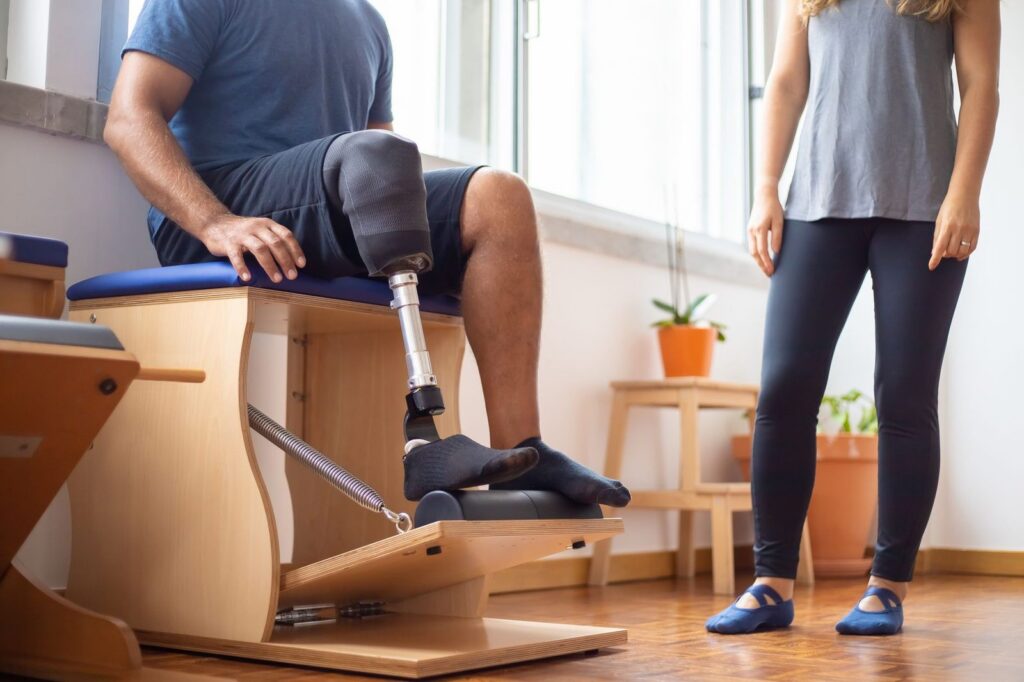
Have questions about what happened?
Ask our team directly. The first conversation is free, confidential, and there is no obligation to continue.
Next Steps: Pursuing Your Machine Amputation Injury Claim
If you or a family member has lost a limb or digit in an accident involving a defective or malfunctioning machine, you may have a legal claim for compensation. The path forward depends on the specific circumstances—where the injury occurred, what caused it, and who was responsible. It requires a thorough investigation and expert analysis.
The first step is preserving evidence. The second is speaking with an attorney who understands both the legal and the human dimensions of catastrophic amputation injuries.
Contact us for a free case evaluation to discuss your rights and next steps. People who have lost a limb to a defective machine reach out regularly to understand their options. We are here to listen and to help.
Why You Need Legal Help After a Machine Amputation
Protect Your Rights
Machine amputation cases involve complex liability questions. A manufacturer, employer, property owner, or multiple parties may share responsibility. We identify all potential defendants and hold them accountable.
Navigate Complex Claims
These injuries often trigger workers' compensation, product liability, third-party negligence, and premises liability claims simultaneously. We handle the legal complexity so you can focus on recovery.
Pursue Full Compensation
Amputation changes your life permanently. You deserve compensation for medical care, rehabilitation, lost income, prosthetics, home modifications, and the ongoing impact on your quality of life.
Act Within Legal Deadlines
Claims have strict time limits. Waiting too long can cost you your right to recover. Early legal action preserves evidence and protects your claim.
Common Machine Amputation Scenarios
Workplace Machine Accidents
Caught in manufacturing equipment, conveyor belts, presses, or industrial machinery due to inadequate guards, missing safety devices, or failure to follow lockout/tagout procedures. You may have both a workers' compensation claim and a third-party claim against the machine manufacturer or property owner.
Defective or Unsafe Equipment
A machine lacked proper safety guards, warning labels, or emergency stops; or the manufacturer knew of a defect that caused amputation. Product liability claims hold manufacturers responsible for unsafe designs and failures to warn.
Negligent Maintenance or Operation
An employer or operator failed to maintain the machine safely, ignored warning signs, or allowed untrained workers to operate dangerous equipment. Negligence claims pursue compensation from those responsible for unsafe conditions.
Commercial or Retail Settings
Amputation injuries at a business, farm, construction site, or rental property where the owner failed to maintain equipment safely or warn of hazards. Premises liability may apply if the property owner's negligence caused your injury.
Important: Don't Wait to Seek Legal Help
Machine amputation claims involve strict deadlines for filing and gathering evidence. The longer you wait, the harder it becomes to preserve crucial information—accident scene photos, maintenance records, witness statements, and the machine itself. Contact a lawyer immediately to protect your rights and your claim.
What We Handle in Machine Amputation Claims
Investigation & Evidence
We investigate the accident scene, obtain maintenance and inspection records, interview witnesses, and work with engineers to determine what caused the amputation and who is responsible.
Third-Party Claims
If you were injured at work, workers' compensation may cover some costs—but you may also have a separate claim against a machine manufacturer, contractor, property owner, or another negligent party. We pursue both avenues.
Damages & Compensation
We calculate the full scope of your losses: emergency and ongoing medical care, prosthetics and rehabilitation, lost wages and earning capacity, home and vehicle modifications, pain and suffering, and long-term quality-of-life impacts.
Negotiation & Litigation
We handle settlement negotiations with insurers and defendants, and we are prepared to take your case to trial if a fair settlement cannot be reached.