

Negligent Security | Amputation Injury
Attacked on Someone Else's Property and Lost a Limb? You May Have a Claim
When a property owner fails to provide reasonable security, victims of assault and amputation may be able to pursue a claim. CHG Personal Injury Lawyers focuses on catastrophic injury cases and can help you understand your options.
Amputation From Assault on Unsafe Property: Your Negligent Security Claim
You were attacked on someone else’s property—an apartment complex, parking garage, hotel, bar, or store—and lost a limb. The attacker may never be caught. But that does not mean no one else is responsible.
If the property owner failed to provide reasonable security—working locks, adequate lighting, functioning cameras, or security presence—they may be legally liable for your amputation. This is called a negligent security claim. It is separate from any criminal case. It is a civil lawsuit where you seek money from the property owner whose negligence allowed a foreseeable attack to happen.
You do not need to know the legal term to have a case. You need to have been hurt somewhere you had a right to feel reasonably safe, and the owner’s failure to secure that place made the attack possible.

Not sure what your next step is?
Talk it through with our team — the first consultation is free, confidential, and carries no obligation.
The Critical Difference: Criminal Case vs. Your Civil Claim
This confusion stops many survivors from pursuing justice:
- Criminal prosecution. The state pursues the attacker for punishment. You do not control it. The court may order the attacker to repay your medical costs as restitution, but that depends on the criminal case. The attacker may never be caught or convicted.
- Your civil negligent security claim. You sue the property owner for money. You control it. It does not depend on catching anyone.
Here is what matters: your civil claim succeeds or fails based on the owner’s duty and failure—not on whether the attacker is ever arrested. Civil cases use a lower standard of proof (“more likely than not”) than criminal trials (“beyond a reasonable doubt”).
When Property Owners Have a Legal Duty to Protect You
Florida courts recognize that property owners owe a duty to keep lawful visitors—tenants, guests, customers—reasonably safe from foreseeable criminal acts. This duty is not absolute, but it is real.
An owner breaches that duty when they fail to take reasonable security measures despite knowing (or should have known) that criminal activity was foreseeable. Courts examine:
- Past crimes at or near the property. Police reports, incident logs, and area crime statistics show whether violence was foreseeable.
- The location’s known risks. A parking garage in a high-crime area, an apartment complex with a history of assaults, or a bar in a neighborhood with frequent shootings all signal foreseeability.
- Tenant and customer complaints. Ignored reports of break-ins, assaults, or suspicious activity strengthen your claim.
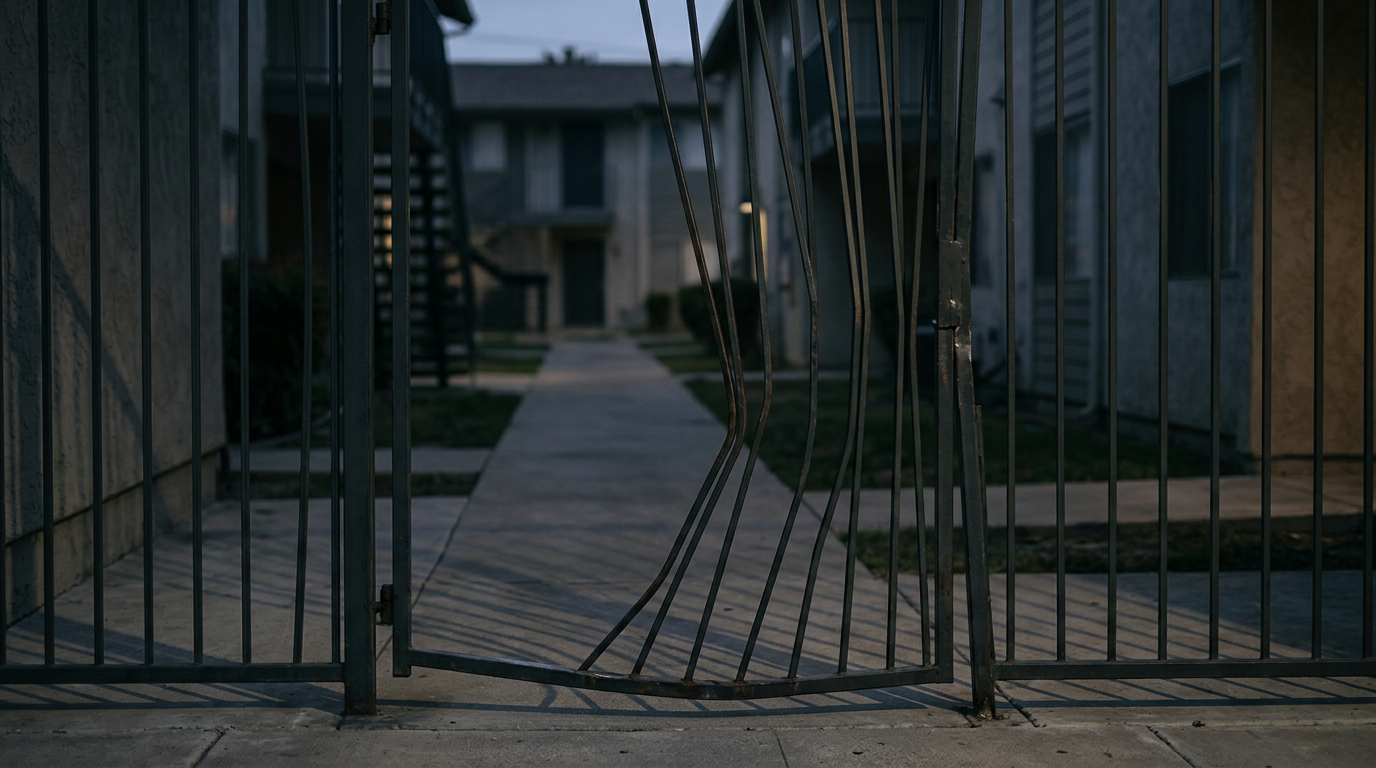
- Concrete security failures. Broken or missing locks, burned-out lighting, non-functional cameras, absent security guards, propped-open doors, or missing gates are evidence the owner knew what was needed but did not provide it.
The core question: Could reasonable security have stopped or reduced this attack? If the answer may be yes, it is worth having your situation reviewed.
What “Reasonable Security” Means in Court
Judges and juries do not expect property owners to prevent all crime. They expect owners to take reasonable steps matched to the known risk. This typically includes:
- Locks and gates. Functioning entry locks, perimeter gates, and controlled access to common areas.
- Lighting. Adequate illumination in parking lots, stairwells, walkways, and entry points—not just compliance with code, but enough to deter and detect criminal activity.
- Surveillance. Working security cameras in high-risk areas, with footage retained long enough to investigate incidents.
- Security personnel. Guards, patrols, or monitoring where crime history and location warrant it.
- Maintenance. Prompt repair of broken locks, lights, and cameras—not months of delay.
If the property owner knew or should have known these measures were necessary and failed to provide them, that failure may support a finding of negligence, which depends on the facts of each case.
The Lifetime Financial Reality of Limb Loss
Online settlement numbers are misleading. They describe someone else’s case. What matters is your actual lifetime cost.
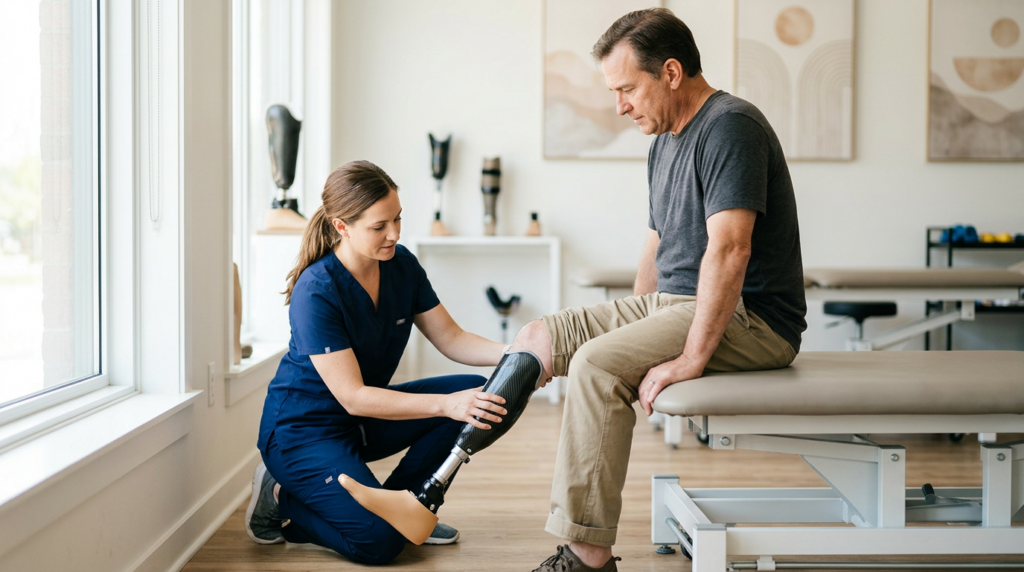
Prosthetics are not a one-time purchase. Prosthetic devices can be costly, and advanced models cost more than basic ones. Add sockets, liners, suspension systems, and repairs.
Your home and vehicle require modification. Wheelchair ramps, widened doorways, roll-in showers, lowered counters, grab bars, and accessible parking spaces are expensive. A wheelchair-accessible van with hand controls can also be a significant expense.
Lost earning capacity is the largest loss. You may lose not just current wages but your ability to earn over your entire career. A construction worker, truck driver, or factory worker with a leg amputation may be unable to return to that trade, requiring retraining for lower-paying work.
Ongoing care continues for decades. Physical therapy, occupational therapy, phantom limb pain management, prosthetic adjustments, and in-home assistance are ongoing costs, not one-time expenses.
This is why we work with life-care planners and vocational rehabilitation experts. They document your specific medical needs, functional limitations, and earning capacity loss over your lifetime. A credible claim reflects your real future, not just the first hospital bill.
What Your Negligent Security Claim Can Seek
We pursue all forms of limb loss from violent attacks on unsafe property:
- Single or multiple limb amputations (leg, foot, arm, hand)
- Amputations resulting from crush injuries, gunshot wounds, or infection after the initial attack
- Amputations required during emergency treatment
Depending on your facts, a negligent security claim may seek:
- Past and future medical care: surgeries, hospital stays, emergency treatment, ongoing medical management
- Prosthetics and assistive devices: initial prosthetics, lifetime replacements, sockets, liners, suspension systems, maintenance, and repairs
- Rehabilitation: physical therapy, occupational therapy, psychological counseling, and pain management
- Lost wages and earning capacity: wages lost during recovery and retraining, plus reduced lifetime earnings in a new field
- Home and vehicle modifications: accessibility upgrades, assistive technology, and transportation equipment
- In-home care and assistance: personal care attendants, home health aides, and household help
- Pain, suffering, disfigurement, and loss of enjoyment of life: non-economic damages for your permanent disability
- In fatal cases: wrongful-death damages under Fla. Stat. § 768.21 may include the survivors’ loss of support, services, and companionship, and mental pain and suffering, depending on who the survivors are
Important: No attorney can promise a specific amount. Every case depends on its facts, evidence, and applicable law.
Have questions about what happened?
Ask our team directly. The first conversation is free, confidential, and there is no obligation to continue.
How We Prove Negligent Security: The Four-Element Framework
Negligent security claims rest on proving four elements—that the owner owed you a duty to keep the property reasonably safe, that the attack was foreseeable, that the owner failed to provide reasonable security, and that this failure caused your injury.
Why timing matters: Evidence in these cases can disappear quickly. Broken locks get repaired. Witnesses move away. Acting promptly may help preserve evidence.
Florida’s Statute of Limitations and Comparative Fault Rules
Deadline to sue: For most negligence claims accruing on or after March 24, 2023, Florida law gives you two years to file a lawsuit under Fla. Stat. § 95.11. This two-year filing deadline is generally strict, and missing it may bar your claim, although tolling rules and other exceptions under Florida law may affect the deadline in some cases.
Comparative fault: Florida uses a modified comparative-fault rule under Fla. Stat. § 768.81. If a jury finds you more than 50% at fault for the attack, you recover nothing; fault of 50% or less does not bar recovery.
Filing deadlines depend on the facts of each case, so contact us to confirm how Florida’s rules apply to yours.
How the Process Works, Step by Step
-
Free, confidential case evaluation. You describe what happened; we explain your legal options and next steps. No cost, no obligation.
-
Immediate evidence preservation. We send preservation letters to the property owner, management company, and security contractor demanding they preserve all evidence—surveillance footage, incident reports, maintenance records, and the scene’s condition. We conduct site inspections and photograph conditions before they change.
-
Investigation and expert consultation. We obtain police reports, 911 records, prior incident logs, and area crime data. We interview witnesses and consult security experts to establish foreseeability and what reasonable security would have required.
-
Medical and damages documentation. We work with your medical team, life-care planners, and vocational experts to document your injuries, lifetime medical needs, prosthetic costs, and lost earning capacity.
-
Identifying all responsible parties. This may include the property owner, management company, security contractor, or others. We pursue all liable parties.
-
Negotiation and, if necessary, litigation. We negotiate with insurers for a fair settlement. If no reasonable offer emerges, we file a lawsuit and prepare for trial.
Realistic timeline: Catastrophic cases typically take 12–36 months from evaluation to resolution. We cannot and do not promise any specific timeline or outcome.
Why Families Choose CHG Personal Injury Lawyers
- Licensed Florida Bar attorneys handling catastrophic injury cases nationwide
- Bilingual service in English and Spanish
- Contingency-fee representation—you typically pay no attorney fee unless we recover money for you
- Experience with catastrophic amputation claims arising from violent crime on unsafe property
- Immediate evidence preservation to protect your case before critical evidence disappears
- Collaboration with life-care planners and vocational experts to document your lifetime needs
- Plain-language communication that keeps you informed and treats your family with dignity
Want to know where you stand?
Tell us what happened and our team will walk you through the options available to you, at no cost.
Frequently Asked Questions
Can I still sue if the attacker was never caught or convicted?
Yes. Your civil negligent security claim is against the property owner, not the attacker. It does not require an arrest or conviction. Civil cases use a lower standard of proof than criminal prosecutions.
How much can I recover for losing a limb?
There is no fixed amount. Recovery depends on your lifetime prosthetic and medical costs, lost earning capacity, home and vehicle modifications, pain and suffering, and your case’s specific facts and evidence. We work with experts to document these costs.
What if I was a guest, customer, or tenant—does that matter?
Yes. Property owners generally owe a duty to keep lawful visitors reasonably safe. Trespassers typically have much weaker claims. Your status as a lawful visitor strengthens your case.
What if I was partially at fault for being in that location?
Florida’s comparative-fault rule applies. If you are found 50% or less at fault, you can still recover, but your award is reduced by your percentage of fault (Fla. Stat. § 768.81(2)). If you are found more than 50% at fault, you recover nothing.
How long do I have to file a lawsuit in Florida?
Most negligence claims accruing on or after March 24, 2023 must be filed within two years under Fla. Stat. § 95.11. This deadline is strict.
Important: You Don't Need a Criminal Conviction
Your civil claim against the property owner is separate from any criminal case against the attacker. You can pursue compensation even if the person who harmed you was never arrested or convicted. Civil cases use a lower standard of proof.
What Negligent Security Means—And Why It Matters to You
Inadequate Locks, Gates, or Lighting
A property owner is responsible for maintaining working locks on doors and gates, adequate lighting in parking areas and common spaces, and other basic security measures that a reasonable owner would provide.
No Cameras or Security Monitoring
Depending on the property type and location, owners may be liable if they fail to install or maintain security cameras or fail to monitor them, especially in high-risk areas like parking garages, ATMs, or late-night establishments.
No Security Personnel
Hotels, apartment complexes, nightclubs, and other high-risk properties may be required to employ security guards or conduct regular patrols—particularly in areas where violent crime is foreseeable.
Known Prior Incidents Ignored
If the property owner knew about previous assaults, robberies, or attacks on the premises and did nothing to improve security, they may be liable for your injury.
Why CHG Personal Injury Lawyers Handles These Cases Differently
Focused on Catastrophic Injury
We focus exclusively on severe, life-altering injuries—including amputation from assault. We understand the medical, financial, and emotional impact of losing a limb and pursue claims that reflect the full scope of your damages.
Help With Negligent Security Claims
We handle amputation and assault cases arising from inadequate property security at apartment complexes, parking lots, hotels, bars, gas stations, and other venues where owners failed to prevent foreseeable harm.
Nationwide Reach, Local Knowledge
Based in Florida and taking cases nationwide, we combine local insight into Florida premises-liability law with the resources to pursue claims wherever your injury occurred.
Empathetic, Straightforward Guidance
We communicate in plain language, never legal jargon. We listen to your story, explain your options honestly, and work toward fair compensation without pressure or false promises.
Common Questions About Amputation and Negligent Security Claims
Can I still sue if the attacker was never caught or convicted?
Yes. Your civil negligent security claim is against the property owner, not the attacker. It does not require an arrest or conviction. Civil cases use a lower standard of proof than criminal prosecutions.
What damages can I recover for losing a limb?
Recovery depends on your individual circumstances, including medical expenses, lost income, rehabilitation and prosthetic costs, pain and suffering, and long-term care needs. Each case is unique, and we evaluate all factors that affect your future.
How long do I have to file a claim?
Time limits vary by state and situation. It is critical to act promptly. Contact us as soon as possible so we can review the details and ensure your claim is filed within the applicable deadline.
What if I was partly at fault for being in that location?
Comparative fault rules vary by state (Fla. Stat. § 768.81(6)). Even if you bear some responsibility, you may still recover damages. We evaluate your specific circumstances and advise you of your options.
Your Recovery Starts With a Conversation
Related practice areas
- Amputation & Limb Loss Injury Claims: A Guide for Victims and Families
- Above-Knee vs. Below-Knee Amputation: What the Difference Means for Your Claim
- Above-Knee & Below-Knee Amputation Injury Lawyer: Leg Loss Claims
- Arm & Hand Amputation Injury Lawyer: Upper-Limb Loss Claims
- Amputation Wrongful Death Lawyer: When Catastrophic Limb Loss Turns Fatal