
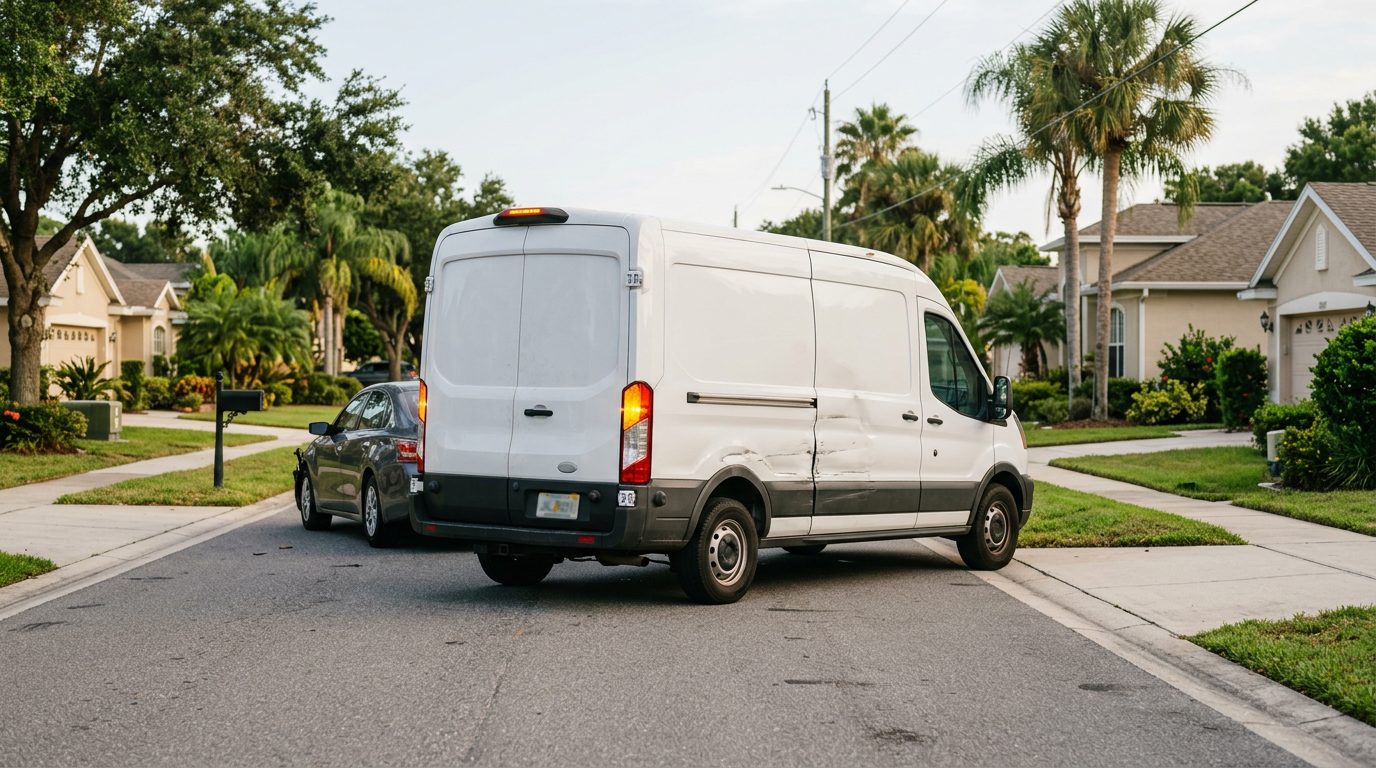
Truck Accidents · Serving Florida
Hit by an Amazon Delivery Van? Learn Which Safety Rules May Apply
Big rig rules, van rules, and the questions Florida families ask after a delivery vehicle crash.
About CHG Personal Injury Lawyers
Florida
Florida-based personal injury firm
Free
Confidential first consultation with no obligation to continue
Licensed
Attorneys admitted to The Florida Bar
By CHG Lawyers · Published November 25, 2026
If a delivery van hurt someone you love, you may be trying to work out which rules applied to the driver and the van.
Are Amazon delivery vans held to trucking safety rules? Not automatically. The answer depends on three things:
- The vehicle’s weight rating
- Whether the trip stayed inside Florida or crossed state lines
- Who operated the van
Every driver still has to follow Florida traffic law.
This page is written for family members gathering facts for someone who was hurt. You do not need every answer today. The goal is to show which facts matter and which records to protect while they still exist.
Why This Question Comes Up After a Delivery-Van Crash
Families ask this question because a cargo van can look a lot like a truck on the road. The company logo does not decide which rules apply.
The law looks at facts about the vehicle and the trip. These include the vehicle’s rating, the route, the operator, and the records that show them.
Many families do not know who employs the driver at first. This gap is common after a crash. The right records can close it.
If a delivery van hurt someone you love, CHG Personal Injury Lawyers can talk through the crash, the vehicle, and who may be responsible, with no obligation to continue. Talk it through with our team — the first consultation is free, confidential, and carries no obligation.
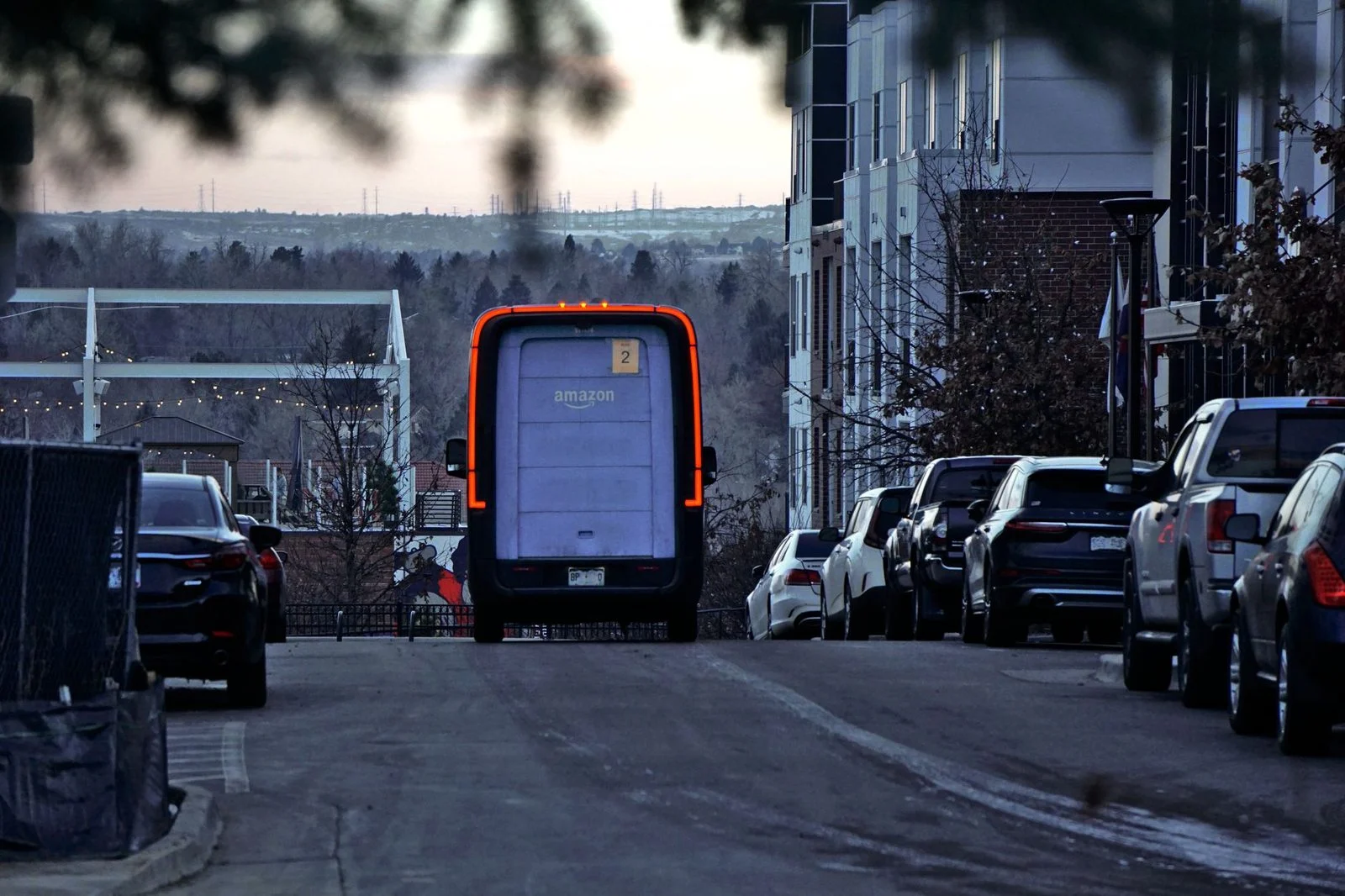
What Vehicles Amazon Delivery Routes Use, and Why Weight Matters
The vehicle’s weight rating is the first fact to check. Many last-mile routes use cargo vans, not tractor-trailers.
Federal rules define gross vehicle weight rating (GVWR) as “the value specified by the manufacturer as the maximum loaded weight of a single motor vehicle” (49 C.F.R. § 390.5T). The manufacturer sets that number, not the delivery company.
Vans that look alike can carry different ratings. The same model can also be built or equipped in different ways. The rating on the vehicle’s own documents is what counts, not its appearance.
Ask early: what does the van’s rating say? Registration papers, crash reports, and company records can help answer that.
The Federal Trucking Safety Rules and When They Apply
Federal trucking safety rules apply to employers, employees, and commercial motor vehicles. These vehicles transport property or passengers in interstate commerce, meaning trade that crosses state lines (49 C.F.R. § 390.3T).
The federal rules cover several areas:
- A driver must be at least 21.
- A driver must read and speak English well enough to understand traffic signs and respond to officials (49 C.F.R. § 391.11).
- Carriers must keep parts and accessories “in safe and proper operating condition at all times.” This includes steering, suspension, and wheels (49 C.F.R. § 396.3).
The rules follow the vehicle’s weight and how it is used. A van outside these criteria may still face other rules. That is why the rating and the trip are the first facts to check.
How Florida Law Treats Commercial Vehicles on Florida Roads
Florida law adopts many federal trucking rules. Under Florida Statutes section 316.302, owners and drivers of commercial motor vehicles operated on the public highways of this state while engaged in interstate commerce are subject to the rules and regulations contained in 49 C.F.R. parts 382-386 and 390-397.
Florida-only trucking follows a different path. A vehicle under 26,001 pounds, operated only within Florida, and not carrying hazardous materials that need placarding (required warning signs), is exempt from that main requirement.
Its operator must still follow federal parts 382, 392, and 393.
Adoption does not mean every federal rule covers every van. Under 49 C.F.R. § 396.3, every motor carrier covered by the federal rules must systematically inspect, repair, and maintain, or cause to be systematically inspected, repaired, and maintained, all motor vehicles subject to its control.
Amazon, Delivery Service Partners, and Who Controls the Van
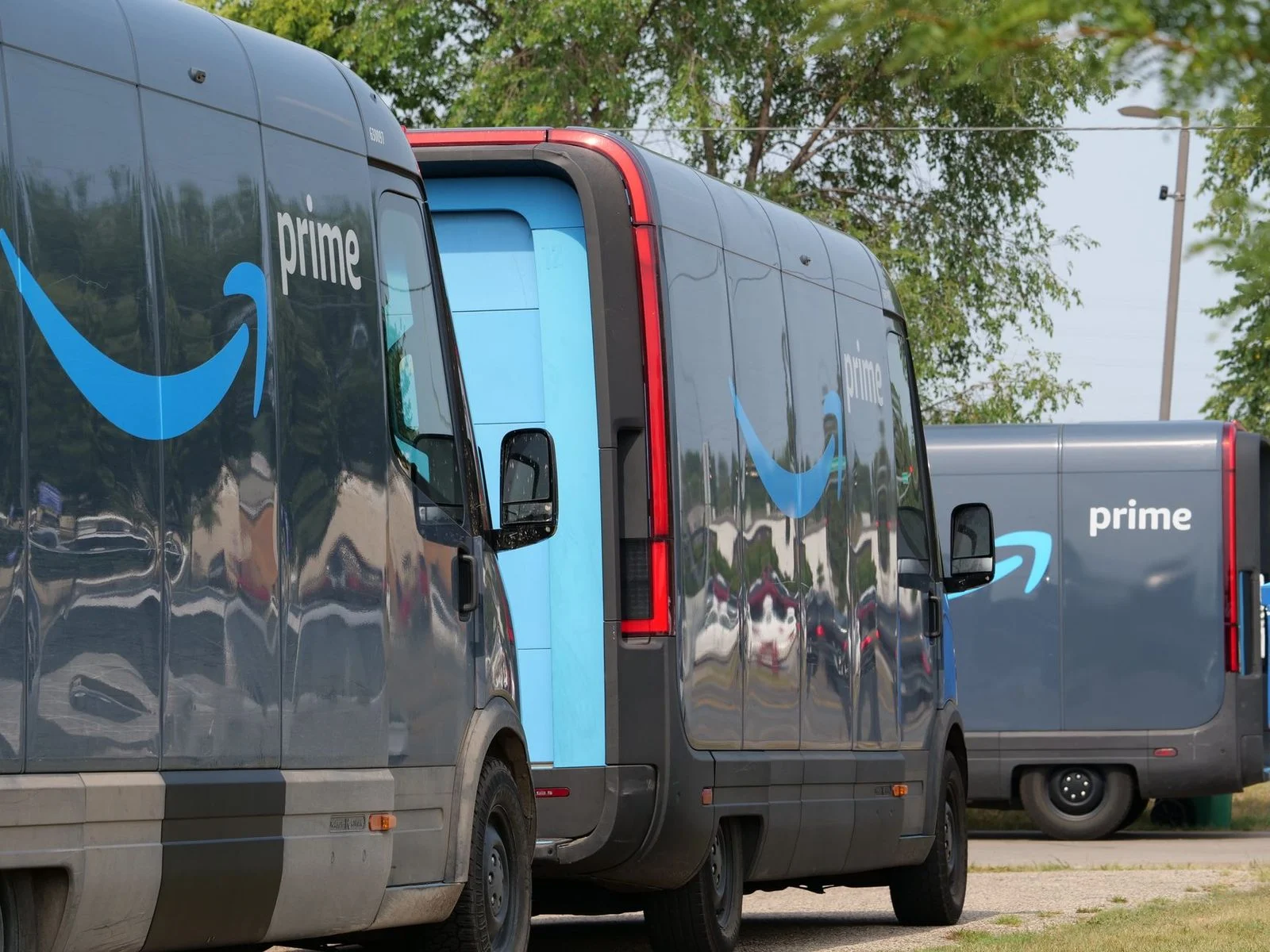
Many Amazon delivery routes are run by independent Delivery Service Partners (DSPs). These companies typically employ or contract the drivers. They usually own or lease the vans. Amazon sets certain program standards that the DSPs must follow.
Several parties may matter after a crash:
- The DSP
- The driver
- The vehicle’s owner or lessor
- Amazon
Each relationship can affect which rules and insurance apply.
The van’s markings can point to the carrier. A commercial vehicle subject to the federal rules must display its USDOT number, a federal transportation ID. If another company’s name appears, the operating carrier’s name must follow the words “operated by” (49 C.F.R. § 390.21T). Photograph those markings if you can.
Our page on who can be sued in an Amazon delivery van crash in Florida covers the parties in more detail.
Traffic Rules That Apply to Every Driver
Even when federal trucking rules do not apply, every driver must follow Florida traffic law.
No one may drive faster than is reasonable and prudent for the conditions and hazards. Drivers must also slow down when approaching intersections, curves, and hill crests (Fla. Stat. § 316.183).
Fault is decided on the facts and evidence. That is why records matter early.
Not sure what your next step is?
Talk it through with our team — the first consultation is free, confidential, and carries no obligation.
What the Rules Say Versus What a Court Would Decide
It helps to separate two questions.
The first question is what the rules say. Which federal or Florida requirements exist? What do they require of a carrier or driver?
The second question is what a court would decide in a specific case. Did a driver breach a duty? Did the van’s rating or route bring it under a given rule? What share of fault, if any, belongs to each party?
No one can say in advance how a court would answer the second question for your family’s crash. Rules that look clear on paper can turn on disputed facts. This page explains the rules so you can ask better questions. It does not predict a result.
Evidence to Preserve After a Delivery-Van Collision
The crash report, the van’s markings, and the trip and maintenance records answer the rule questions best.
For a crash involving a commercial motor vehicle, the investigating officer’s Florida Traffic Crash Report, Long Form, must be submitted to the state within 10 days after the investigation is completed (Fla. Stat. § 316.066). The parties involved and their legal representatives can access the report.
Save these items as soon as you can:
- Photos of the van, including any USDOT number and “operated by” lettering.
- The names of the delivery company, the DSP, and the driver, if known.
- Delivery route or tracking details, if known.
- Dashcam footage, surveillance video, and witness contact details. These can be lost or overwritten quickly.
Federal law requires carriers to keep maintenance records for each vehicle they control. Those records must be kept where the vehicle is housed for one year. They must also be kept for six months after the vehicle leaves the carrier’s control (49 C.F.R. § 396.3).
After certain crashes, the employer must test surviving drivers for alcohol and controlled substances. Each employer must test for alcohol as soon as practicable after certain crashes: each surviving driver who was performing safety-sensitive functions with respect to the vehicle, if the accident involved the loss of human life; and each surviving driver who receives a citation within 8 hours for a moving traffic violation arising from the accident, if the accident involved bodily injury requiring immediate medical treatment away from the scene or one or more vehicles with disabling damage requiring a tow away (49 C.F.R. § 382.303).
Keep all medical records and bills. Follow your doctors’ care.
Amazon Flex and Personal Vehicles
Some delivery work is done through Amazon Flex. In that program, drivers may use their own vehicles. We have not verified any earnings figure for that program, so this page does not state one.
After a crash, the questions are the same. What vehicle was it? Who was operating it? Whose insurance applies?
If the vehicle was a personal car, the rating and operator questions point to different records. The crash report and your own insurance paperwork will be important.
Florida Deadlines and Your Next Step
Florida generally gives two years to file a negligence lawsuit (Fla. Stat. § 95.11(5)(a)). Other deadlines can apply depending on the claim and the parties involved. The rules can also change.
Contact a lawyer promptly so the timing is clear.
Florida also requires personal injury protection (PIP, no-fault medical coverage) and property damage liability insurance (Florida DHSMV). These coverages can affect how medical bills are handled after a crash.
If you are caring for someone hurt in a crash, you are carrying a lot. If you want to talk through the crash, the van, and who may be responsible, CHG Personal Injury Lawyers invites you to contact us.
The initial consultation is free, confidential, and carries no obligation to continue. CHG charges no attorney’s fees and no case costs unless there is a recovery.
Igor Hernandez, one of the firm’s lawyers, is responsible for this page. CHG Personal Injury Lawyers is a Florida-based firm serving clients throughout Florida.
Frequently Asked Questions
Are Amazon delivery vans held to the same safety rules as big trucks?
Not always. Federal trucking safety rules depend on the vehicle’s weight, whether it operates in interstate commerce, and how it is used. Many delivery vans fall outside the main federal requirements.
All drivers must still follow Florida traffic laws, whatever the vehicle’s size.
Do Amazon delivery drivers need a commercial driver’s license (CDL)?
It depends on the vehicle and how it is used. A lawyer or the licensing rules themselves would need to be checked against the specific van. This page does not give a weight threshold for CDLs.
Do trucking rules like driving-hour limits apply to Amazon delivery vans?
It depends on the van’s gross vehicle weight rating and how it is used. Federal trucking rules apply only to vehicles they cover. The specific vehicle and the facts of the crash need to be reviewed.
What about Amazon warehouse safety policies?
This page covers road crashes and the rules for vans on the road. It does not describe Amazon’s warehouse safety policies.
What if I was hurt in a crash with an Amazon delivery van in Florida?
The initial consultation is free, confidential, and without obligation to continue. The firm charges no attorney’s fees or case costs unless there is a recovery.
What Shapes the Answer in Your Case
The Vehicle's Weight
Vehicle size and weight are among the factors that can determine which federal trucking requirements apply.
Where the Van Was Operating
Whether a delivery crossed state lines or stayed within one state can change the rules that govern it.
How the Van Was Being Used
The type of work, the route, and the company that dispatched the driver all matter when the facts are reviewed.
Do Not Assume a Van Is Exempt
A delivery van is not automatically outside the rules that apply to larger trucks. Seek medical care right away and follow your doctors' guidance. Keep any photos, reports, and paperwork from the crash, and contact our team promptly because deadlines apply.
Questions to Ask After a Delivery Van Crash
Who Employed the Driver?
Knowing which company the driver worked for and who dispatched the vehicle helps identify everyone who may be involved.
Was the Driver on a Scheduled Route?
Route assignments, delivery schedules, and tracking data can shed light on what the driver was doing at the time.
What Records Exist?
Vehicle data, maintenance logs, driver logs, and dash camera footage may be relevant, and some records can be lost over time.
When Should I Act?
Deadlines apply to injury claims in Florida. Contacting a lawyer early gives your case the best opportunity to be reviewed thoroughly.