

Motorcycle Accident Attorney in Miami, FL
Focused on Your Recovery While We Fight for Your Right to the Road
Motorcycle Accident Lawyer in Miami, FL
As a motorcycle rider injured by a negligent driver in Miami, you have a legal advantage that car accident victims do not: you are completely exempt from Florida's PIP no-fault system. No $10,000 ceiling. No serious injury threshold. No waiting. You pursue full damages from the at-fault driver directly — from day one.
If any insurer tells you that you need to 'go through PIP first' — that is false. It is one of the most common misrepresentations made to Miami motorcycle accident victims in the first hours after a crash. Florida law is clear: motorcyclists are exempt from the PIP no-fault system entirely.
Florida leads the nation in motorcycle fatalities — 578 riders killed statewide in 2024, with Miami-Dade County accounting for 11.4% of those deaths. When a distracted driver, reckless speeder, or left-turning vehicle takes you down on Miami's roads, the injuries are severe and the legal path to full recovery is different from every other vehicle accident in Florida.
Free consultation, 24 hours, English and Spanish.
Get Your Free Case Review
Takes 30 seconds. Our team will respond in under 10 minutes.
Recent Recoveries for Our Injured Clients
Motorcycle accidents cause terrible injuries. We fight to get you every dollar possible by looking at all insurance policies, including commercial and uninsured driver coverage.
South Florida
Miami-Dade County
Vehicle Collision
The PIP Exemption — What It Means for Your Miami Motorcycle Claim
For occupants of standard motor vehicles, Florida’s no‑fault system limits lawsuits for pain and suffering unless the crash causes a qualifying ‘permanent’ injury under Florida law.
Motorcyclists are categorically exempt from this system under Florida Statute 627.733. You file your claim directly against the at-fault driver's bodily injury liability insurance from the moment of injury. Every injury type recoverable — fractures, road rash, spinal cord damage, traumatic brain injury, amputations — without a preliminary threshold or a PIP waiting period.
Florida Department of Health data shows the average hospital cost for a Florida motorcyclist in a crash is $83,676 — before follow-up surgery, rehabilitation, or long-term care costs that routinely push serious injury cases into seven figures. The PIP exemption means the full measure of those damages is pursued from the first day, without any preliminary hurdle.
If the at-fault driver's coverage is insufficient for your damages, your own underinsured motorist (UIM) policy bridges the gap. CHG Lawyers evaluates every available insurance source immediately upon retention.
Florida's Helmet Law
Not wearing a helmet does not forfeit your right to compensation. We fight the defense's comparative fault arguments.
Florida's Helmet Law and How It Affects Your Miami Motorcycle Case
Florida Statute 316.211 — What Over-21 Riders Need to Know
Florida Statute 316.211 permits motorcycle operators over 21 to ride without a helmet if they carry a minimum of $10,000 in medical coverage insurance. Eye protection is required regardless of age. Riding without a helmet does not forfeit your right to compensation. What it does is give insurance defense attorneys a comparative fault argument they will deploy aggressively under Florida's 2023 modified comparative fault 51% bar (HB 837).
The Offense, Not Just the Defense
Florida's comparative fault law requires fault to be apportioned based on each party's actual contribution to the accident itself — not to injury severity resulting from equipment choices. The helmet question is legally irrelevant to whether the crash occurred. The at-fault driver ran a red light, failed to yield, changed lanes without checking mirrors, or was texting. None of those facts change based on whether you were wearing a helmet. CHG Lawyers makes this argument offensively, not just defensively: before the insurer raises helmet status, we establish the driver's negligence as the sole proximate cause of the crash — and then address helmet arguments as the legally limited factor they are.
For all non-head injuries — fractures, spinal injuries, road rash, internal trauma — helmet status is entirely irrelevant as a matter of law. Florida law does not permit insurers to use helmet status as a blanket reduction across all injury categories. We ensure it is limited to the specific analysis of head injury severity, and we retain biomechanical engineers and helmet safety experts to contest even that limited argument with evidence.
Why Miami Is Florida's Most Dangerous City for Motorcyclists
Florida's national ranking for motorcycle fatalities is concentrated in South Florida, and Miami-Dade's specific road characteristics create predictable crash patterns that CHG Lawyers investigates immediately upon retention.
Most Dangerous Roads and Corridors
I-95's express lanes through downtown Miami — where speed differentials between general and express traffic create dangerous merge conflicts — generate catastrophic motorcycle crashes when drivers change lanes without checking mirrors. The I-95/SR-836 Dolphin Expressway interchange is one of South Florida's most complex and dangerous intersections. US-1 through Coral Gables and Coconut Grove creates constant left-turn conflicts between motorcycles and drivers who misjudge closing speeds or simply fail to see riders. The MacArthur Causeway (I-395) and Venetian Causeway concentrate weekend recreational riders alongside tourists in rental vehicles unfamiliar with South Florida traffic patterns. Biscayne Boulevard through Wynwood, the Design District, and Edgewater generates sudden braking and lane changes from restaurant and venue traffic. A1A through Key Biscayne creates road debris and surface hazard exposure from tropical weather and the marine environment.
Common Crash Causes
Left-turn crashes — where a vehicle turns left across an oncoming motorcycle's path — are the single most common fatal motorcycle collision type. Lane-change crashes occur when drivers fail to check blind spots before moving into a motorcycle's lane. Distracted driving from smartphone use is a consistent factor in Miami's dense urban traffic. Rear-end crashes at traffic signals cause catastrophic injuries when drivers misjudge a motorcycle's stopping distance. Road hazards — potholes, debris, wet pavement from Miami's frequent rain events — cause single-vehicle crashes that may trigger city or county government liability for road maintenance failures. Commercial vehicle accidents involving delivery trucks, rideshare drivers, and airport transport vehicles represent a growing category in Miami's urban core.
What Damages Miami Motorcycle Accident Victims Can Recover
Because motorcyclists are exempt from Florida's PIP system and the serious injury threshold, you can recover the full spectrum of damages for virtually every motorcycle injury: all past and future medical expenses, lost wages and loss of earning capacity, pain and suffering, emotional distress, loss of enjoyment of life, and loss of consortium. For catastrophic injuries — traumatic brain injury, spinal cord damage, amputations, severe burns — lifetime care calculations and vocational impact assessments produce multi-million-dollar valuations. For wrongful death from a fatal motorcycle crash, survivors recover under Florida's 2-year Wrongful Death Act deadline.
Why CHG Lawyers for Your Miami Motorcycle Accident Case
PIP exemption expertise from day one — ensuring your claim is built as a direct liability claim from the first day, not structured around the no-fault system that does not apply to you.
Helmet comparative fault defense — biomechanical engineers and helmet safety experts who limit helmet arguments to their legally appropriate scope and defeat blanket fault-shifting.
Miami road reconstruction expertise — dashcam and helmet cam preservation, surveillance footage, signal timing records, skid mark analysis, and road maintenance records.
Bilingual English and Spanish — serving Miami's diverse riding community. Contingency fee — no upfront costs, no fees unless we win.
You Are PIP Exempt
You do not need to go through PIP or meet a "serious injury" threshold first.
We pursue full damages from the at-fault driver immediately. Let us handle the insurers.
Call For Free ConsultFlorida 2-Year Deadline
Florida's statute of limitations is strictly 2 years from the date of the incident.
Evidence and surveillance footage disappears even faster.
What to Do Immediately After a Miami Motorcycle Crash
Call 911
Accept emergency transport even if you feel you can ride. Adrenaline masks serious injuries.
Photograph Everything
All vehicles, skid marks, road conditions, traffic signals, and your injuries from multiple angles.
Preserve Cameras
If you have a dashcam or helmet cam, do not allow it to overwrite. Remove the memory card.
Collect All Info
Driver name, license, insurance, witnesses, exact location.
Seek Evaluation
Consistent medical records from the crash date are essential for proving causation.
Call CHG Lawyers
Before any statement. Adjusters make early contact to obtain statements establishing your fault.
No Social Media
Defense teams monitor social media. Any post can be used against you.
Why Miami Families Choose CHG Lawyers
Former Miami-Dade County Public Defender trial experience. Deep understanding of Miami-Dade courtrooms.
If I could give 5 more stars I would! Partner Igor Hernandez handled my case from the very beginning. He's knowledgeable, well versed in personal injury laws, and works diligently to achieve the best outcome.
These attorneys are amazing! I had a case with another lawyer I had to fire because he wouldn't pay attention to my case. CHG took my injury case over, got straight to work, and resolved it faster than expected.
I must say I had the best experience possible. Everyone I talked to was fantastic. John represented me and did an awesome job. I am very happy with the outcome.
Meet Your Personal Injury Team
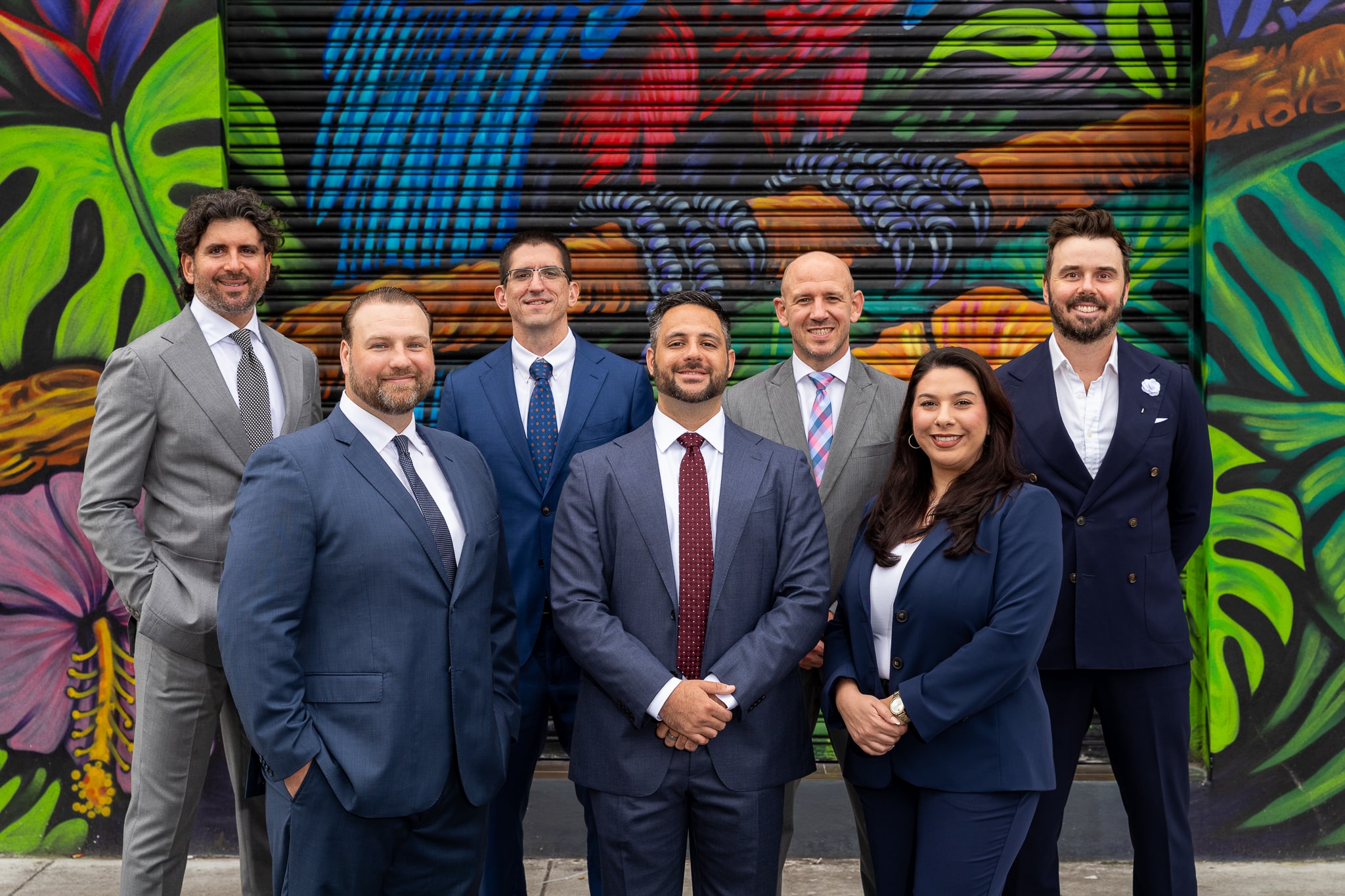
Let Us Fight For The Compensation That Is Owed To You
We’re here to fight for you, and we won’t rest until we get you the outcome you deserve.
Questions Miami Motorcycle Accident Victims Actually Ask
The at-fault driver's insurer told me I need to go through my own PIP first. Is that true?
No. This is one of the most common misrepresentations made to Miami motorcycle accident victims in the first hours after a crash. Florida's PIP no-fault system applies to motor vehicle owners and occupants — motorcyclists are specifically exempt from this requirement under Florida law. You file your claim directly against the at-fault driver's bodily injury liability insurance from the moment of injury. You do not need to exhaust any PIP coverage. You do not need to meet a serious injury threshold. If an insurer is telling you otherwise, they are either misinformed or attempting to delay and minimize your claim. Call CHG Lawyers before giving any more information to that insurer.
I wasn't wearing a helmet when I was hit. Does that mean I can't recover?
No. Florida law permits riders over 21 to ride without a helmet if they carry $10,000 in medical coverage insurance. Not wearing a helmet does not forfeit your right to compensation. What it creates is a comparative fault argument on head and brain injury claims — an argument that CHG Lawyers defeats with biomechanical engineers who establish that the at-fault driver's negligence caused the crash, and that your helmet choice did not. Critically: for all non-head injuries — fractures, spinal injuries, road rash, internal trauma — helmet status is irrelevant as a matter of law. Florida's comparative fault standard requires apportionment based on contribution to the accident itself, not equipment choices that affect injury severity. Call us before accepting any settlement that reduces your recovery based on helmet use.
The at-fault driver says they never saw me. What happens now?
'I never saw the motorcycle' is the most common defense in Miami left-turn and lane-change crash cases. It is also, in most cases, exactly what happened — and exactly why the driver is at fault. Florida law requires drivers to maintain an adequate lookout for all vehicles sharing the roadway, including motorcycles. Failure to see a motorcycle in a clear sightline is not a defense — it is the negligence. CHG Lawyers builds these cases with accident reconstruction experts, dashcam and helmet cam footage, surveillance footage from nearby businesses, and witness accounts that establish the motorcycle's visible position and speed in the seconds before impact.
My own insurance company is acting like the at-fault driver's insurer. What do I do?
This is a known pattern in motorcycle cases. Your own insurer may dispute your underinsured motorist claim, push back on injury severity, or conduct its own investigation in a way that feels adversarial. This is because your UM/UIM claim is a direct claim against your own insurer — and your insurer's interests on that claim are not aligned with yours. You are entitled to retain an attorney to represent you in UM/UIM disputes with your own insurer, and CHG Lawyers handles this regularly. Call us before giving recorded statements to your own insurer on a UIM claim.
Can I recover if the at-fault driver fled the scene?
Possibly — through your own insurance and through investigation. Uninsured motorist coverage on your motorcycle or any related household vehicle applies to hit-and-run crashes. Helmet cam or dashcam footage may capture the vehicle's plate. Surveillance footage from nearby businesses on Miami's corridors may identify the vehicle. We begin this investigation immediately upon retention because vehicle identification from camera footage degrades with every passing day.
Contact Our Miami Motorcycle Accident Lawyers
Florida exempts you from the PIP system that limits every car accident victim. The at-fault driver's insurer knows this and is counting on you not knowing it too.
Call (305) 501-8021 Now2525 Ponce de Leon Blvd., Suite 300, Coral Gables, FL 33134
Email: [email protected] · 24/7 · English & Spanish
CHG Law
With years of experience in the field of personal injury law, the attorneys at CHG Law in Coral Gables, Florida, near Miami, have a proven track record of success. They have helped clients recover millions of dollars in compensation, and they are ready to help you too.
-
2525 Ponce de Leon Blvd. Suite 300
Coral Gables, FL, 33134 - (305)-501-8021
- [email protected]
You Don't Pay Until We Win
Don’t be held back by your injuries. Give us a call or submit the simple form below to speak with a lawyer within 24 hours.