

Catastrophic Truck Accidents
Spinal Cord Injuries from Truck Crashes: Your Path Forward
When a truck accident leaves you paralyzed or with a severe spinal cord injury, life changes instantly. CHG Personal Injury Lawyers focuses exclusively on catastrophic spinal cord cases nationwide. We understand the permanent impact and fight to help you secure the resources you need.
By CHG Lawyers · Published August 29, 2026
Catastrophic Truck Accident Injuries: A Guide for Victims and Families
Truck accidents produce some of the most severe, life-altering injuries: permanent paralysis, traumatic brain damage, amputation, and severe burns that fundamentally change a person’s life. Unlike minor car crashes, catastrophic truck injuries cause permanent disability, lifelong medical care, and profound loss of independence. This guide explains the injuries that arise from truck accidents, why they happen, and what legal options are available to you and your family.

Not sure what your next step is?
Talk it through with our team — the first consultation is free, confidential, and carries no obligation.
Why Truck Accidents Cause Catastrophic Injuries
Commercial trucks weigh 20–30 times more than passenger vehicles. A fully loaded semi-truck can weigh up to 80,000 pounds; a typical car weighs 3,000–4,000 pounds. This weight disparity multiplies the force of impact in a collision and dramatically increases injury severity. When a truck traveling at highway speed collides with a car, the physics are unforgiving: the truck’s massive momentum transfers crushing force to everyone inside the smaller vehicle.
Common crash scenarios amplify this danger. A jackknife—when the trailer swings out at an angle to the cab—can crush multiple vehicles in adjacent lanes. An underride collision—when a car slides under a truck’s trailer—often proves fatal or causes severe head and spinal injuries because the car’s roof is sheared off. Rollovers scatter debris and eject occupants. Multi-vehicle pile-ups create chaos and compound trauma. Each scenario produces forces that the human body cannot withstand without catastrophic harm.
What Injuries Can You Get From Being Hit by a Truck?
Truck accidents produce permanent, life-altering injuries—not minor cuts or routine fractures. The National Safety Council reports that injuries in large-truck crashes increased 5% in 2024, to 161,201. This guide focuses exclusively on catastrophic harm: spinal cord injuries, paralysis, traumatic brain injury, amputation, severe burns, and catastrophic back and neck injuries.
These injuries differ fundamentally from routine injuries. A broken arm heals. Whiplash resolves. But spinal cord damage causes permanent paralysis. Brain injury causes permanent cognitive and behavioral changes. Amputation means lifelong prosthetic dependence and phantom pain. Severe burns require multiple surgeries and leave permanent scarring.
The long-term reality is stark: lifelong medical care, loss of employment, loss of independence, chronic pain, and psychological trauma. Families must adapt their homes, hire caregivers, and reorganize their entire lives around the injured person’s new needs.
Spinal Cord Injuries and Paralysis
Truck accidents damage the spinal cord through blunt force, crushing, or extreme bending. The spine contains the bundle of nerves that carries signals from your brain to your body. When that bundle is severed or severely bruised, those signals stop traveling, and the body below the injury site loses sensation and movement.
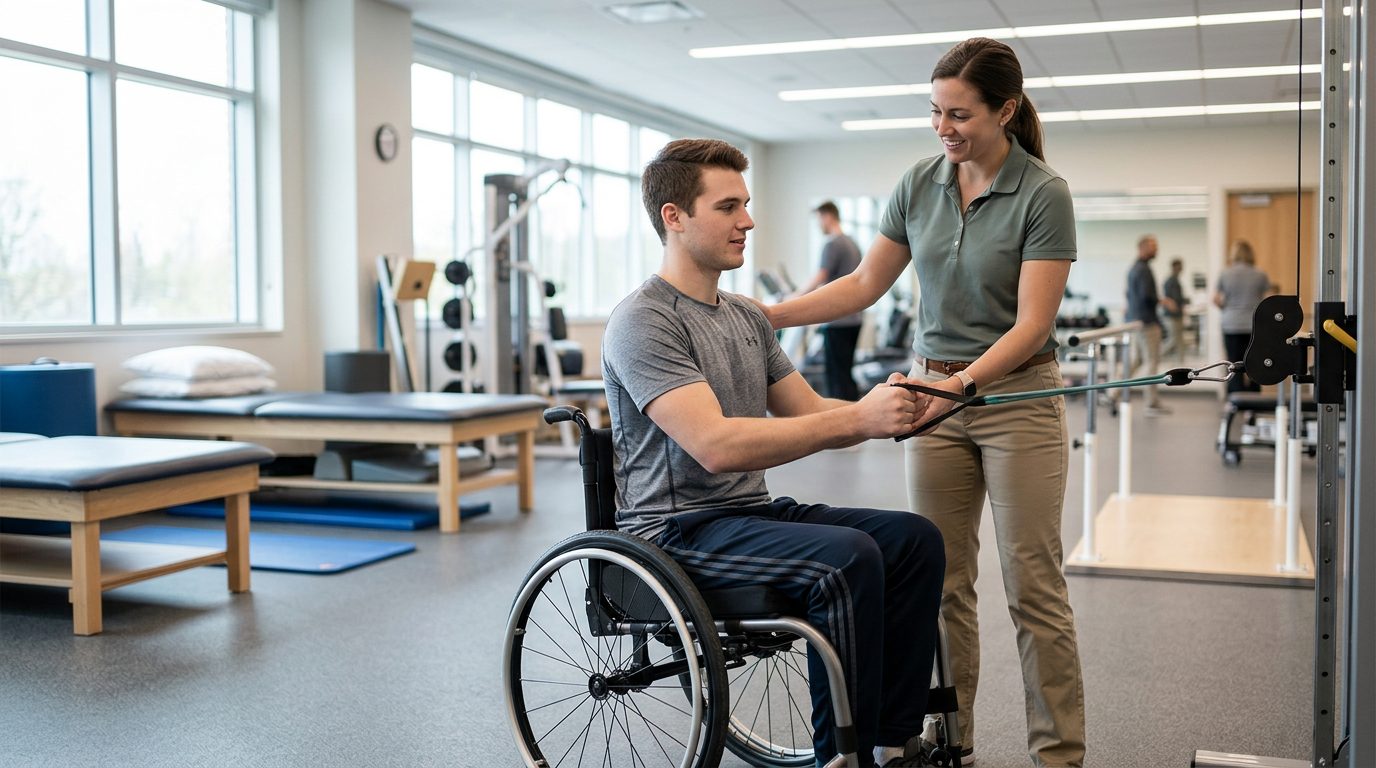
Paraplegia is paralysis of the lower body (legs and lower trunk). A person with paraplegia typically retains use of their arms and hands but cannot walk or feel their legs. Quadriplegia (also called tetraplegia) is paralysis of all four limbs and the trunk. A person with quadriplegia may have limited or no arm function, depending on where the injury occurs, and requires assistance with nearly all daily activities.
The immediate consequences are profound: loss of mobility, loss of sensation, loss of bladder and bowel control, sexual dysfunction, and chronic pain. Long-term complications include pressure sores (which can become life-threatening if infected), blood clots, respiratory infections, and spasticity (involuntary muscle contractions).
The American Spinal Injury Association’s classification system (ISNCSCI/AIS) grades spinal cord injuries by severity and helps predict recovery potential, but most severe truck-related injuries result in permanent disability. Many people with spinal cord injuries require wheelchairs, home modifications, attendant care, and lifelong medical supervision.
Traumatic Brain Injuries (TBI)
Truck accidents cause traumatic brain injuries through blunt force to the head, acceleration-deceleration forces (the brain moving inside the skull), or penetrating trauma (objects piercing the skull). In catastrophic truck crashes, severe TBI is common.
According to Mayo Clinic clinical standards, severe TBI causes permanent cognitive, behavioral, and physical changes. Memory loss, difficulty concentrating, and impaired judgment can make it impossible to return to work. Personality changes—irritability, aggression, emotional instability—strain relationships. Seizures, loss of motor control, vision problems, and chronic headaches are common. Many survivors experience depression, anxiety, and post-traumatic stress.
These injuries are often “invisible”—a person with severe TBI may look fine on the outside but struggle profoundly with thinking, emotion, and behavior. Symptoms may worsen or emerge weeks or months after the accident. Recovery is slow and incomplete; many people never fully regain their pre-injury abilities.
Amputation and Limb Loss
Truck accidents cause amputation through crushing forces that destroy tissue beyond repair, severe lacerations that sever limbs, or compartment syndrome (a condition where swelling inside a muscle compartment cuts off blood flow and kills tissue). When the damage is severe enough, amputation is the only option.
Amputation means permanent loss of a limb. Phantom pain—the sensation of pain in the missing limb—affects most amputees and can be severe and chronic. Prosthetics help restore some mobility but require ongoing adjustment, maintenance, and training. Many amputees face occupational disability: jobs that once were possible become impossible.
The psychological impact is profound. Loss of a limb changes identity, independence, and self-image. Depression and post-traumatic stress are common. Relationships, sexuality, and daily activities all shift. Rehabilitation is long and demanding.
Severe Burn Injuries
Truck accidents involving fire or explosion cause severe burn injuries. Fuel leaks, engine fires, and cargo fires can trap occupants in extreme heat. Burns are classified by depth: first-degree burns affect the outer layer of skin; second-degree burns penetrate deeper; third-degree and fourth-degree burns destroy all skin layers and underlying tissue.
Severe burns cause immediate pain and tissue death. Acute complications include infection, fluid loss, and respiratory damage (if smoke is inhaled). Chronic complications include scarring, contractures (permanent tightening of tissue that limits movement), and loss of function. Most severe burn survivors require multiple reconstructive surgeries over months or years.
The physical and psychological recovery is grueling. Burn pain is among the worst pain humans experience. Scarring is permanent and often disfiguring. Many survivors struggle with depression, anxiety, and post-traumatic stress.
Catastrophic Back and Neck Injuries
Not all back and neck injuries are catastrophic. A minor strain heals. But catastrophic back and neck injuries from truck accidents are different: severe disc herniation with nerve damage, fractures with instability, or ligament rupture that causes permanent loss of function.
These injuries may require emergency surgery and ongoing treatment. Chronic pain is common and can be severe. Loss of function—inability to work, difficulty with basic activities—is permanent. Many people live with chronic pain for the rest of their lives.
The distinction matters: routine back injuries are not in scope for catastrophic injury representation. But if your back or neck injury caused permanent nerve damage, loss of function, or chronic pain that changed your life, it is catastrophic.
Have questions about what happened?
Ask our team directly. The first conversation is free, confidential, and there is no obligation to continue.
Wrongful Death: The Most Catastrophic Outcome
Fatal truck accidents represent the most catastrophic outcome of all. Families lose a loved one instantly. The grief is immeasurable. But beyond grief, families face financial devastation: loss of the person’s income, loss of benefits, funeral costs, and loss of companionship.
Florida law allows surviving family members to bring a wrongful death claim against the parties responsible for the death. Damages in wrongful death cases include the deceased person’s lost income, lost benefits, funeral and burial costs, and the family’s loss of companionship and support.
If a family member died in a truck accident, you have legal recourse. Wrongful death claims are brought by surviving spouses, children, or parents and allow families to recover compensation for their loss.
Who Is Liable in a Catastrophic Truck Accident?
Multiple parties may bear responsibility for a catastrophic truck accident. The truck driver may be liable for negligence: driving too fast, driving while fatigued, driving while impaired, or driving while distracted. The trucking company may be liable for inadequate driver training, failure to maintain the vehicle, pressure on drivers to violate hours-of-service rules, or hiring an unfit driver.
Maintenance contractors may be liable if they failed to repair brakes, tires, or other critical systems. Cargo loaders may be liable if cargo was loaded improperly and shifted during transit. Vehicle manufacturers may be liable if a defect in the truck contributed to the crash.
Federal Motor Carrier Safety Administration (FMCSA) regulations govern trucking. Violations of these regulations—such as exceeding hours-of-service limits, failing to conduct required inspections, or maintaining an unsafe vehicle—are evidence of negligence.
Evidence and Investigation in Truck Accident Claims
Truck accidents leave behind critical evidence. Electronic logging devices (ELDs), often called “black boxes,” record the truck’s speed, braking, and steering in the moments before a crash. Event data recorders capture similar information. These devices can prove whether a driver was speeding, braking suddenly, or violating hours-of-service rules.
Maintenance records and inspection logs show whether the truck was properly maintained. Driver logs show whether the driver exceeded legal driving hours. Accident reconstruction experts analyze the crash scene, vehicle damage, and physics to determine how the accident happened and who was at fault.
Photographs, police reports, witness statements, and medical records all contribute to building a strong claim. Early investigation is critical: evidence can disappear, witnesses can be hard to locate, and memories fade.
Damages and Compensation for Catastrophic Truck Injuries
Compensation in catastrophic truck accident cases covers both economic and non-economic damages. Economic damages include emergency medical care, surgery, hospitalization, rehabilitation, ongoing medical treatment, home modifications, assistive devices (wheelchairs, prosthetics, communication aids), and caregiver costs.
Non-economic damages include pain and suffering, loss of enjoyment of life, and loss of earning capacity (the income you would have earned if you had not been injured). In wrongful death cases, families recover damages for loss of companionship and support.
A person with quadriplegia may require $1 million or more in lifetime medical care. An amputee may need prosthetics, home modifications, and vocational retraining. A person with severe TBI may require attendant care for life.
What to Do After a Catastrophic Truck Accident
Immediately after a truck accident, seek medical care—even if you feel fine. Some injuries (like brain injury) may not show symptoms right away. Call 911 if anyone is injured.
Document the scene if it’s safe to do so: take photographs of vehicle damage, the crash scene, road conditions, and traffic signs. Get the names and phone numbers of witnesses. Don’t admit fault or discuss the accident with the other driver beyond exchanging insurance information.
Report the accident to police and obtain a copy of the police report. Notify your insurance company, but be cautious about what you say; consider consulting an attorney before giving a detailed statement.
In Florida, the statute of limitations for filing a personal-injury claim is 2 years from the date the cause of action accrues. This means you have 2 years to file a lawsuit. Don’t wait—early legal consultation protects your claim and ensures evidence is preserved.
Comparative Negligence in Florida Truck Accidents
Under Florida law, a person generally cannot recover if they are found to be more than 50% at fault for the accident. This is called the comparative negligence rule. Even if you bear some responsibility for the accident, you may still recover damages if the other party is more at fault.
Thorough investigation is essential to establish that the truck driver, trucking company, or other defendant bears primary responsibility for your injuries.
Want to know where you stand?
Tell us what happened and our team will walk you through the options available to you, at no cost.
When to Consult a Truck Accident Lawyer
If you or a family member suffered a catastrophic injury in a truck accident, consult an attorney as soon as possible. Red flags that warrant immediate legal consultation include:
- Permanent injury (paralysis, brain damage, amputation, severe burns)
- Multiple parties involved (driver, trucking company, maintenance contractor)
- Significant damages (medical bills, lost income, lifelong care needs)
- Insurance disputes or denial of coverage
- Wrongful death
Early consultation protects your claim. An attorney can ensure evidence is preserved, investigate the accident thoroughly, and negotiate with insurance companies on your behalf.

Frequently Asked Questions
What is the difference between paraplegia and quadriplegia?
Paraplegia is paralysis of the lower body (legs and lower trunk); quadriplegia is paralysis of all four limbs and the trunk. Both result from spinal cord injury.
Can I recover from a traumatic brain injury caused by a truck accident?
Recovery from severe TBI is often incomplete. Some people regain some abilities; others live with permanent cognitive, behavioral, or physical changes. Recovery is slow and requires intensive rehabilitation.
How much compensation can I get for a catastrophic truck accident injury?
Damages depend on the severity of injury, medical costs, lost income, and other factors. Catastrophic injuries often result in damages in the hundreds of thousands or millions of dollars, but each case is unique.
How long do I have to file a truck accident lawsuit in Florida?
The statute of limitations in Florida is 2 years from the date the cause of action accrues. Don’t wait—consult an attorney early.
What role do electronic logging devices play in truck accident investigations?
ELDs record the truck’s speed, braking, and steering before a crash. They can prove whether a driver was speeding, braking suddenly, or violating hours-of-service rules.
Can I bring a wrongful death claim if a family member dies in a truck accident?
Yes. Surviving family members can bring a wrongful death claim against the parties responsible for the death and recover damages for lost income, lost benefits, funeral costs, and loss of companionship.
If you or a family member suffered permanent paralysis, brain injury, amputation, or severe burns in a truck accident, you may have a claim against the driver, trucking company, or both. Contact CHG Personal Injury Lawyers for a free case evaluation. We represent victims of catastrophic truck accidents in Florida and nationwide. People in your situation can reach out to us to understand their legal options and what recovery might look like.
Why Choose CHG for Your Spinal Cord Injury Case
Focused on Catastrophic Injuries
We focus exclusively on life-altering spinal cord injuries, paralysis, and other severe trauma—not routine cases. Your injury deserves a firm that understands its complexity.
Comprehensive Case Investigation
Truck accident cases require detailed reconstruction, medical evidence, and expert testimony. We handle every aspect to build the strongest possible claim.
Florida Bar–Admitted Attorneys
Our licensed attorneys bring deep experience in catastrophic injury law and work with medical specialists to document the full scope of your injury and lifetime needs.
National Reach, Local Knowledge
Based in Florida and handling cases nationwide, we understand truck accident liability across different jurisdictions and regulations.
Time Matters in Spinal Cord Injury Cases
Evidence preservation, medical documentation, and legal deadlines are critical in truck accident claims. The sooner you reach out, the sooner we can protect your rights and begin building your case.
What You Need to Know About Spinal Cord Injuries from Truck Accidents
Paraplegia vs. Quadriplegia
Paraplegia involves paralysis of the lower body (legs and lower trunk), while quadriplegia affects all four limbs and the trunk. Both result from spinal cord damage and require immediate, specialized medical care and long-term support.
Immediate Medical & Legal Steps
After a truck accident, emergency medical care is the priority. Simultaneously, preserve evidence at the scene, document injuries, and contact an attorney experienced in catastrophic spinal cord cases to protect your claim.
Lifetime Costs & Compensation
Spinal cord injuries often require lifelong medical care, rehabilitation, adaptive equipment, home modifications, and lost income. Your claim should account for all present and future needs.
Truck Accident Liability
Liability may rest with the truck driver, the trucking company, maintenance contractors, or equipment manufacturers. A thorough investigation identifies all responsible parties and maximizes your recovery.