


Truck Accidents · Traumatic Brain Injury
A Truck Crash Caused a Brain Injury. Who Actually Pays for It?
When a large truck causes a traumatic brain injury, the driver is rarely the only one responsible. Knowing every party at fault can decide how much insurance is available for a lifelong injury.
By CHG Lawyers · Published August 03, 2026
Who Can Be Held Responsible When a Truck Crash Causes a Brain Injury?
When a large truck causes a traumatic brain injury, more than one company is usually responsible — not just the driver. The trucking company can share the blame. So can the crew that loaded the cargo, a repair contractor, the truck’s owner, and even a parts maker. Finding everyone at fault matters. It decides how much insurance money is available to pay for a lifelong injury.
First, one simple definition. When we say a company is “liable,” we mean it is legally responsible for the harm — and for the costs it caused. That’s it. You don’t need any legal background to read this page.
A traumatic brain injury (TBI) can change everything for a family. Think of the medical bills, the lost income, and the years of care that follow. This page explains who can be held liable after a truck-crash brain injury. It also shows why finding everyone takes fast, careful work. For the bigger picture, see our traumatic brain injury guide.

Not sure what your next step is?
Talk it through with our team — the first consultation is free, confidential, and carries no obligation.
Why liability in a truck crash brain-injury case is rarely simple
A commercial truck crash usually involves several businesses, not one person. That’s the main difference between a big-rig case and an ordinary two-car crash. Each company carries its own insurance policy. So finding every responsible party isn’t a legal technicality. It’s what makes real, full compensation possible.
This matters even more in Florida. Here is the practical point most pages skip. Florida follows a rule called modified comparative negligence. Under Fla. Stat. § 768.81, fault is split into percentages. Your compensation drops by your own share of the fault. A March 24, 2023 change to that statute added a hard cutoff. A person found more than 50% at fault for their own injury generally recovers nothing at all.
Here’s why that changes the strategy. Insurers for a truck driver often try to shift blame onto the injured person. Their goal is to push you over that 50% line. But your attorney can point to every at-fault company — the loader, the repair shop, the carrier. Then the fault gets spread across more parties. It becomes much harder to pin most of the blame on you. Naming everyone responsible protects your recovery. It also expands the insurance available to pay it.
The truck driver
The driver is often the most direct source of fault. Common failures include fatigue, distraction, speeding, drug or alcohol use, or not slowing for weather.
Federal hours-of-service rules limit how long a driver can stay behind the wheel. The Federal Motor Carrier Safety Administration (FMCSA) sets them in 49 CFR Part 395. In general, a driver can drive no more than 11 hours after 10 hours off duty. These limits exist for a reason. A tired driver steering a vehicle that can weigh up to 80,000 pounds can cause terrible harm in seconds.
That force is what makes truck-crash brain injuries so severe. The head can strike a hard surface. Or the brain can slam against the inside of the skull. Both can cause a TBI that never fully heals. And a driver can be responsible even when other parties are too.
The trucking company that employed the driver
The trucking company can be responsible for its driver’s actions and for its own failures. This is often where the largest insurance coverage sits.
A company is generally responsible for what its employees do on the job. That idea is called vicarious liability — plainly, an employer answering for its worker’s on-duty conduct. But companies can also be directly at fault for their own choices:
- Negligent hiring — putting an unsafe driver on the road.
- Poor training — not preparing a driver for real conditions.
- Pressuring drivers to skip required rest to meet delivery deadlines.
- Ignoring a driver’s known record of violations or crashes.
- Failing to maintain the truck or enforce federal safety rules.
Why does this matter so much? Federal law (49 CFR § 387.9) requires interstate carriers hauling general freight to carry at least $750,000 in liability coverage. It’s far more for hazardous loads. Individual drivers rarely carry anything close to that. When a brain injury needs lifelong care, that gap can decide whether a family’s future costs are covered.
Companies that loaded, maintained, or owned the truck or cargo
Sometimes a company that never drove the truck still helped cause the crash.
Cargo loaders and shippers. Freight that’s loaded wrong, unbalanced, or overweight can make a driver lose control. When bad loading contributes to a crash, the loading company may be liable.
Maintenance and repair contractors. Trucks need working brakes, tires, and steering. A contractor that skipped a repair or did it badly can share the blame when a part fails.
The truck or trailer owner. The company that owns the truck or trailer is sometimes different from the carrier that operates it. The owner may still bear responsibility.
Brake failure, tire blowouts, and defective parts show up again and again in serious truck crashes. Figuring out who was responsible for each part takes a careful look at the records.
Have questions about what happened?
Ask our team directly. The first conversation is free, confidential, and there is no obligation to continue.
Truck or parts manufacturers (defective equipment)
When a defective part helped cause the crash, the manufacturer may share responsibility. This is a product-liability question — a claim that a product was unsafe. It can run alongside the main crash claim.
A faulty brake, a bad tire, a failed coupling, or a broken safety system can all point back to the company that made or designed it. This is why a thorough investigation matters. A part might fail because a mechanic never fixed it. Or it might have been defective from the factory. Those are two different claims against two different companies. Only a careful review of the parts, the records, and the crash data can tell them apart.
Other drivers or third parties
Truck crashes aren’t always caused by the truck alone. A third vehicle might have forced the truck into a dangerous move. A road hazard or a poorly maintained road could have played a role. In some cases, a government agency responsible for road conditions bears part of the blame. But claims against government bodies have their own strict notice deadlines under Fla. Stat. § 768.28.
How fault and responsibility are actually proven
Proving liability comes down to evidence. And you need to get it before it disappears. Trucking cases leave a data trail that ordinary car crashes don’t:
- The police crash report and its scene findings.
- The truck’s electronic logging device (ELD) and event data recorder — the “black box.”
- Driver logs showing hours worked and rest taken.
- Maintenance and repair records for the truck.
- Physical evidence at the scene, like skid marks and debris.
Acting quickly matters. Under FMCSA rules, carriers must keep supporting hours-of-service documents for only about six months (49 CFR § 395.8). And ELD data can be overwritten if no one demands it be saved. In the catastrophic-injury cases our attorneys handle, sending a preservation letter early can shape the entire case.
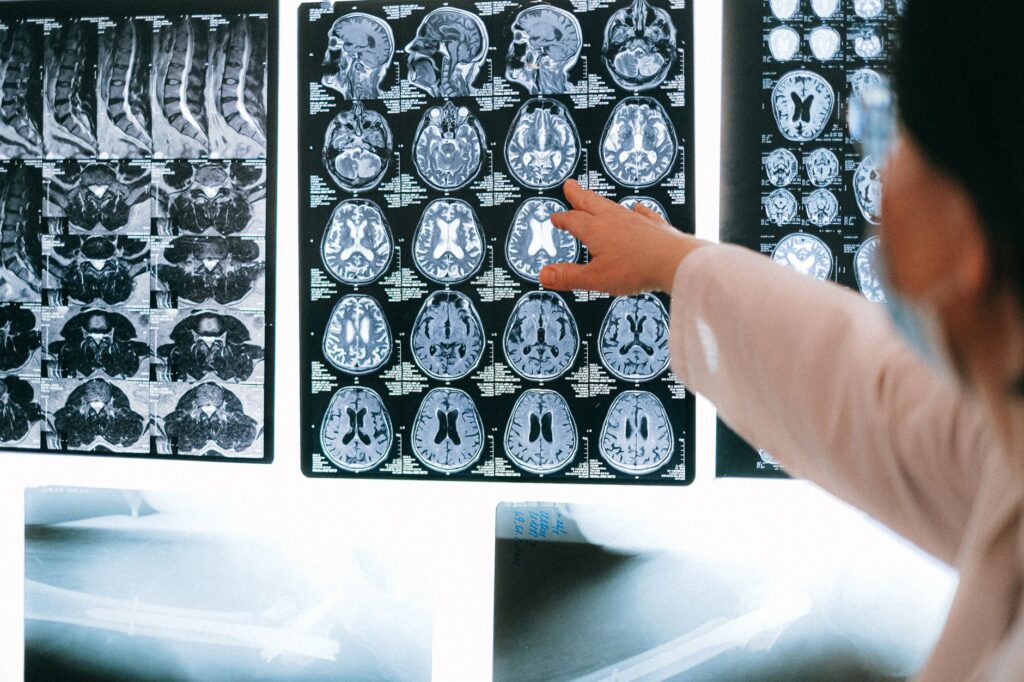
Medical proof is just as important. Records, imaging, and neuropsychological testing help link the crash to the brain injury. They also show how serious it is. Expect insurers to dispute what caused the injury or how bad it is. Our page on insurance disputes in brain injury claims explains what to watch for.
When the brain injury is fatal: the family’s claim
When a truck-crash brain injury is fatal, the same parties can still be held responsible. A death is the most catastrophic outcome of all. The law gives grieving families a path forward.
In plain terms, surviving family members may be able to bring a wrongful-death claim. This holds the driver, the trucking company, and the other responsible parties accountable — just as an injury claim would. No family should feel rushed. Our page on a family’s wrongful-death claim after a fatal brain injury walks through what you can do next. We explain it with care and without pressure.
Want to know where you stand?
Tell us what happened and our team will walk you through the options available to you, at no cost.
What a brain injury claim can actually cover
You’ll see other sites quote an “average truck accident settlement.” We won’t. Here’s the honest reason: those figures are misleading. They mix minor and catastrophic cases together. No average can predict what any one family’s claim is worth. Florida Bar advertising rules also ban unverifiable outcome claims. We take that seriously.
What we can explain is the categories of losses the law lets you recover:
- Medical care — past bills and future treatment.
- Lost income and reduced ability to earn a living.
- Long-term support — therapy, home care, and equipment.
- Pain, suffering, and other personal losses.
A TBI may also qualify someone for disability benefits. It depends on how severe the injury is and the program rules. That’s a separate process from an injury claim. And mind the deadline. Under Fla. Stat. § 95.11, most injury claims arising on or after March 24, 2023 must generally be filed within two years.
Quick answers
Who is liable for a truck accident brain injury? The driver, the trucking company, cargo loaders, maintenance contractors, the truck’s owner, and parts makers can each be liable. Often more than one is at fault at once.
Can the trucking company be responsible and not just the driver? Yes. It can answer for its driver’s on-the-job actions and for its own failures, like poor hiring, training, or maintenance.
Does it matter if I was partly at fault? Yes. Under Fla. Stat. § 768.81, your recovery drops by your share of fault. Someone found more than 50% at fault generally recovers nothing.
How long do I have to file in Florida? Generally two years for claims arising on or after March 24, 2023, under Fla. Stat. § 95.11.
Talk to a catastrophic-injury lawyer about your truck-crash brain injury
Truck-crash brain-injury cases often involve several responsible parties. Finding all of them takes fast, thorough investigation. Knowing who is liable is the first step toward protecting a family’s future.
CHG Personal Injury Lawyers’ licensed, Florida Bar–admitted attorneys handle catastrophic-injury cases. We serve clients across Florida — including Miami, Orlando, Tampa, and Jacksonville — and nationwide. We offer bilingual support in English and Spanish.
If a truck crash caused a serious brain injury to you or someone you love, request a free case evaluation. You can also return to our traumatic brain injury guide to learn more.
This page is general information, not legal advice.
Who Can Share the Blame in a Truck Crash Brain Injury
The Truck Driver
A driver who was speeding, fatigued, distracted, or impaired may be directly at fault for the crash and the resulting brain injury.
The Trucking Company
The company that employed the driver can share the blame — for pushing unrealistic schedules, skipping safety checks, or failing to train and supervise.
The Cargo Loading Crew
A crew that loaded freight improperly or overloaded the trailer can be responsible when shifting or excess weight contributes to a crash.
The Repair Contractor
A shop that serviced the truck's brakes, tires, or steering may be liable if faulty maintenance played a role.
The Truck's Owner
The owner of the truck or trailer — sometimes a separate company from the driver — can be held accountable for its condition and use.
A Parts Manufacturer
If a defective brake, tire, or safety component failed, the company that made or sold that part may share responsibility.
Why Finding Everyone at Fault Matters
Each responsible party usually carries its own insurance. Identifying all of them — not just the driver — can determine whether there is enough coverage to pay for the lifetime of care a traumatic brain injury demands. Critical crash evidence can disappear quickly, so it is important to act before it is lost.
How Liability Gets Sorted Out
1. Preserve the Evidence
Electronic logs, black-box data, maintenance records, and cargo paperwork all help show who did what. These records can be requested and protected early in a case.
2. Identify Every Responsible Party
A thorough investigation looks past the driver to the trucking company, loaders, repair shops, owners, and parts makers who may share fault.
3. Map Out the Insurance
Each at-fault party may have separate policies. Together, that coverage funds the medical care, lost income, and support a brain injury requires.
4. Build the Full Cost of Care
A traumatic brain injury can mean rehabilitation, in-home help, and lifelong needs. The claim should reflect what that future truly costs.
Serious Injury Cases, Handled by Licensed Attorneys
Florida Bar
Admitted and licensed attorneys
Nationwide
We take catastrophic injury cases across the U.S.
Bilingual
English & Spanish client resources
Free
No-cost, no-obligation case evaluations