


Traumatic Brain Injury
Second Impact Syndrome: When a Second Blow to a Healing Brain Turns Catastrophic
A second head injury before the first one heals can trigger sudden, life-threatening brain swelling. Learn why it worsens so fast — and how a family can protect their rights after a catastrophic brain injury.
By CHG Lawyers · Published August 03, 2026
Second Impact Syndrome vs. CTE: Why a Healing Brain Is Uniquely Vulnerable
Most pages about second impact syndrome are written for doctors, not families. This one is written for you. Maybe you are a parent, spouse, or adult child. You are trying to understand why a “small” second hit did so much harm. And you want to know what you can do now.
Here is the main idea, in plain words. A brain that is still healing from a first concussion has lost some of its ability to protect itself. If a second hit lands during that window, the brain can lose control of its own blood flow. It can then swell fast. That is second impact syndrome. It is rare. But when it happens, the harm is often severe and lasting.
This page is for learning only. It is not medical advice or legal advice for your situation.
Not sure what your next step is?
Talk it through with our team — the first consultation is free, confidential, and carries no obligation.
Why a still-healing brain can’t protect itself
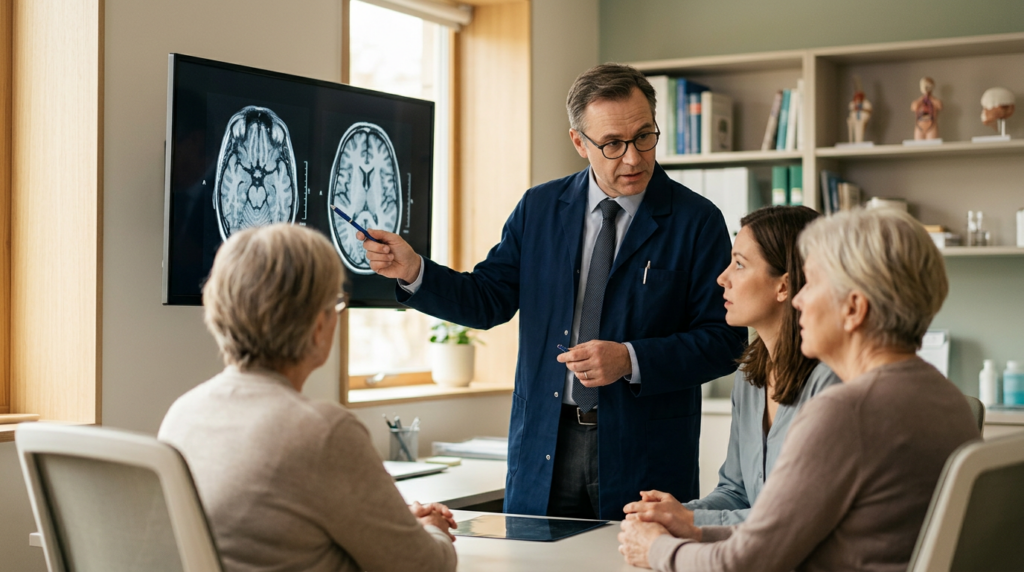
A healthy brain does one important job on its own. It controls its own blood flow. Doctors call this cerebral autoregulation. Your blood pressure goes up and down all day. But healthy blood vessels in the brain tighten and relax. This keeps blood—and oxygen—flowing steadily.
A recent concussion can shut down that system. In the days after a first injury, this control can break down. The brain’s vessels no longer adjust the way they should.
Now add a second hit during that weak window. Instead of a steady response, blood rushes in. The brain starts to swell fast. Here is why that is so dangerous. The skull is a fixed, closed box. There is no room for the brain to grow. As it swells, pressure inside the skull rises. That pressure squeezes the same blood vessels the brain needs. Then oxygen is cut off. The problem feeds itself. It can spiral in minutes.
This is why the second hit does not have to be hard. A bump during a game, a fall, or a small crash can be enough. The damage does not come from the force of the second blow. It comes from a defense system that was still switched off.
Second impact syndrome vs. CTE: two very different things
Many articles mix these two up. They are not the same. Confusing them causes real fear and false hope. Here is the clearest way to tell them apart:
- Second impact syndrome is sudden. It happens in minutes. One poorly timed hit lands while a brain is still healing from a recent concussion. It is a sudden medical emergency.
- Chronic traumatic encephalopathy (CTE) builds up. It is linked to repeated head trauma over many years. Experts think it develops slowly. A single event does not cause it.
Keep this difference in mind as you read on. The honest answers to common questions are different for each one.
Warning signs a first head injury hasn’t healed
The clearest sign a first head injury has not healed is simple. Concussion symptoms are still there—even mild ones. Watch for:
- A headache that lingers or comes back
- Dizziness or trouble with balance
- Sensitivity to light or noise
- Trouble focusing or remembering
- Sleep changes
- Mood changes, irritability, or feeling “off”
“Feeling fine” is not the same as being healed. Symptoms can be quiet. People often push through them—or hide them—to get back to sports, work, or driving.
Some signs after any head hit are emergencies. Get care right away for repeated vomiting, a worsening headache, seizures, slurred speech, or weakness. Also watch for one pupil larger than the other, unusual confusion, or passing out. When in doubt, call 911.
The U.S. Centers for Disease Control and Prevention runs a program called HEADS UP. Its rule is simple: when in doubt, sit them out. Before returning to any activity with a re-injury risk—sports, physical work, or driving—a person should get full medical clearance from a qualified provider.
Who is most at risk
Younger athletes and teens are the group most affected by second impact syndrome. Their brains are still developing, so they may be more at risk. Contact and collision sports raise that risk.
But sports are not the only setting. Anyone whose first concussion was never spotted is at risk. If no one caught the first injury, no one is guarding against the second. Real-world examples include:
- A second crash soon after a first, or repeated impacts in one truck or car crash
- A worker sent back to a dangerous task before healing
- A person attacked again at a place where the first attack was never addressed
One thread runs through these cases. Someone else made a “return to play” or “return to work” call too soon. That someone might be a coach, an employer, or a property owner. And the brain was still healing.
Can you fully recover from second impact syndrome?
Full recovery is not guaranteed. Outcomes are often severe. That is the honest answer. It is also why “wait and see” is not a safe plan.
The outlook depends on a few things. How fast does emergency care arrive? How bad does the swelling get? What is the person’s overall health? The swelling can move so fast that even quick care may not stop lasting harm.
The real protection is prevention, not treatment. Stopping a second hit before it happens is the only reliable safeguard.
For survivors, there is still real support. Rehab and long-term care can help a person and family adapt. This is true even when some impairment is permanent. Families do not have to face that road alone.
Have questions about what happened?
Ask our team directly. The first conversation is free, confidential, and there is no obligation to continue.
How do you know if you have CTE?
Right now, doctors usually cannot confirm CTE while a person is alive. It is diagnosed after death. Doctors examine brain tissue for a certain pattern of an abnormal protein called tau. Its symptoms—memory problems, mood and behavior changes, and trouble thinking—look like many other conditions. So no scan or blood test today can prove it in a living person. Medical care focuses on checking and managing those symptoms.
Can people with CTE live a normal life? This varies a great deal. No one can promise a certain path. Some people manage symptoms for years with ongoing care and support. Others face growing challenges. Honest answers avoid both false hope and needless fear.
Can a childhood head injury cause problems years later?
Yes. Some effects of a childhood head injury can show up or last over time. Repeated injuries in childhood are a special concern. A young brain is still developing.
Watch for changes in the months and years after the injury. Look for trouble with focus or memory. Watch for new behavior or mood changes. Notice a drop in school grades. These signs sometimes appear long after the injury.
Take every childhood head injury seriously. Get a medical exam. Keep records. Follow up if new symptoms appear. Good records protect the child’s health. They also save important facts for later.
Preventing a second injury
The best protection is a full medical exam after any head injury. Then get clearance before returning to activity. No one should go back to play, work, or risky activity while symptoms remain. A game, a shift, or a deadline is never worth a catastrophic brain injury.
Coaches, schools, employers, and property owners all share responsibility. They must protect people from repeat impacts. They should set clear rules, follow them, and never push someone back into danger.
When someone else’s negligence contributed to a repeat injury
Sometimes a second, catastrophic injury happens because someone else failed to act with care. For example:
- An athlete sent back into a game while still showing concussion symptoms
- A worker returned to a dangerous task before healing
- A person hurt again in a crash caused by a careless driver or an unsafe truck
There is one situation people often do not realize is a legal claim at all. Say someone was attacked—assaulted, robbed, shot, or beaten—at a place that ignored known safety problems. Picture an apartment complex with a broken security gate. Or a parking garage with burned-out lights and no cameras. Or a business with no guard after repeated crimes. Say a person was badly hurt there because the owner failed to provide reasonable security. The family may have a claim against that property owner. The legal term for this is inadequate-security premises liability. But you do not need to know that term to ask for help.
In the catastrophic brain injury cases our attorneys handle, these claims can be large. They can involve lifelong care costs, lost income, and the family’s whole future. Florida law sets deadlines. Under Fla. Stat. § 95.11, many negligence claims that start on or after March 24, 2023 must be filed within two years. Florida also follows a modified comparative-fault rule under Fla. Stat. § 768.81. This means a person found more than 50% at fault generally cannot recover damages.
We cannot promise any specific outcome. A free case evaluation with licensed attorneys can help your family understand your rights.
Want to know where you stand?
Tell us what happened and our team will walk you through the options available to you, at no cost.
Talk to a catastrophic brain injury lawyer
Is your family facing a permanent or worsened brain injury? You do not have to sort out the answers alone. These are hard days. You deserve clear, honest guidance.
Our attorneys are licensed and admitted to the Florida Bar. We take catastrophic-injury cases nationwide. We offer free, confidential case evaluations with bilingual English and Spanish support. Reach us anytime through our free case evaluation page.
To learn more, read our full traumatic brain injury guide. You can also explore local resources for Florida, Miami, and Orlando.
Frequently asked questions
Can you fully recover from second impact syndrome?
Full recovery is not guaranteed, and outcomes are often severe. Because brain swelling moves fast, prevention is the only reliable protection.
What’s the difference between second impact syndrome and CTE?
Second impact syndrome is a sudden emergency from one hit while a brain is still healing. CTE is a long-term condition linked to repeated head trauma over many years. Doctors currently confirm it only after death.
How long after a concussion is it safe to return to sports or work?
There is no single number. A qualified provider should give full medical clearance. No one should return while symptoms remain.
Can a childhood head injury cause problems years later?
Yes. Some effects can appear or last over time. So any childhood head injury deserves an exam, records, and follow-up.
Can someone be held responsible for a repeat brain injury?
Possibly. When a person is harmed because someone ignored an obvious danger, the family may have legal options worth discussing with an attorney.
A Warning Every Family Should Know
Brain swelling from second impact syndrome can develop in minutes and is often severe. If someone with a recent concussion suffers another blow to the head and shows confusion, worsening headache, collapse, or loss of consciousness, treat it as a medical emergency and call 911 immediately.
Understanding Second Impact Syndrome
Why It Worsens So Fast
The brain is still recovering from a first injury when a second impact strikes. The brain's ability to regulate blood flow is disrupted, and rapid swelling can follow, leaving little time to respond.
Can You Fully Recover?
Full recovery is not guaranteed, and outcomes are often severe. Because the swelling moves fast, prevention — allowing the brain to fully heal before returning to activity — is the only reliable protection.
SIS vs. CTE
Second impact syndrome is a sudden emergency from one hit while a brain is still healing. CTE is a long-term degenerative condition linked to repeated head trauma over time — two very different things.
When Negligence Is Involved
A catastrophic brain injury may point to someone else's failure — an unsafe property, a truck crash, or inadequate care. Families may have the right to pursue a claim for the harm done.
How CHG Personal Injury Lawyers Can Help
Focused on Catastrophic Injuries
We concentrate on life-altering harm — traumatic brain injuries, spinal cord injuries, paralysis, amputations, and severe burns — including fatal outcomes.
Licensed Florida Attorneys
Our attorneys are admitted to The Florida Bar and handle serious injury cases for clients across the country.
Empathy, Plain Language
We explain your options clearly and stand with families during the hardest moments — never legal jargon, never pressure.
Bilingual Support
We provide guidance and educational resources in both English and Spanish so every family understands their rights.