

Negligent Security | Brain Injury
Attacked on Someone Else's Property? You May Have a Claim Against the Owner
When a property owner fails to provide reasonable security and you're assaulted or injured as a result, they can be held liable. We help victims and families pursue compensation.
By CHG Lawyers · Published September 15, 2026
Brain Injury From Assault: Negligent Security Claims in Florida
You were attacked in a parking garage. Or someone broke through a gate that never locked. Or you were shot near an ATM in a lot left dark for months.
Now doctors use words like traumatic brain injury. Your family is trying to figure out how to pay for care.
Here’s what many people don’t know: the person who hurt you may not be the only one to blame. If the property owner ignored obvious danger and skipped basic security, Florida law may hold them responsible too. This is called a negligent security claim—and it’s separate from any criminal case. When a brain injury from assault results from an owner’s failure to provide reasonable security, you may have grounds to pursue compensation.
This page explains your rights after a brain injury from assault on an unsafe property. We cover what negligent security means, how to prove it, and what compensation may be available.
Request a free, confidential case evaluation.

Not sure what your next step is?
Talk it through with our team — the first consultation is free, confidential, and carries no obligation.
Your Situation — and the Legal Name for It
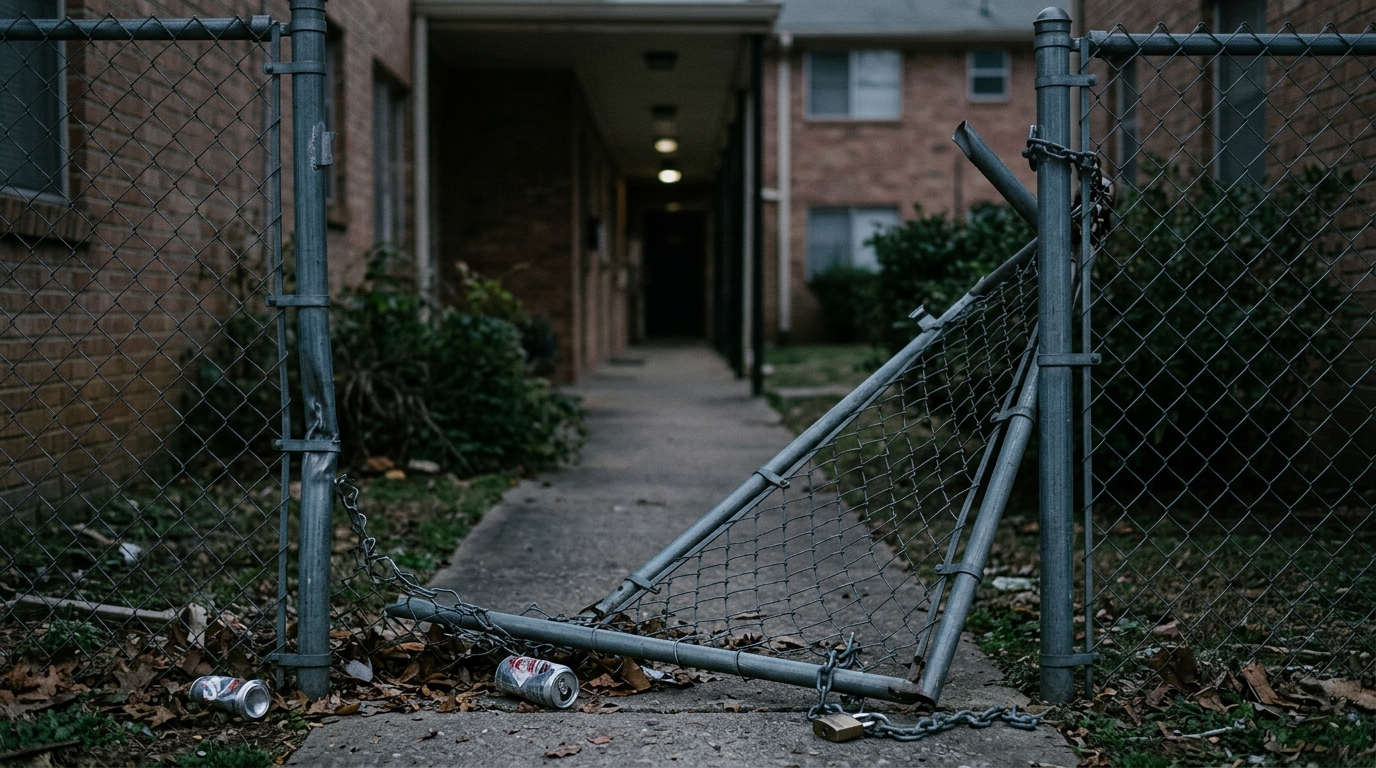
You rented an apartment advertised as “secure” and “gated.” The gate has been broken for six months. Management received complaints. Two cars were broken into last spring. One night, someone follows a resident through the open gate and attacks them.
That is the heart of a negligent security claim. A property owner fails to provide reasonable security. That failure allows an attack that could have been expected.
This is a type of premises liability lawsuit—meaning you sue over an unsafe property. It is completely separate from the criminal case against the attacker.
Your civil claim can move forward even if the attacker is never caught, charged, or convicted. Civil cases use a lower standard of proof than criminal cases.
How a Brain Injury Happens in an Assault
A traumatic brain injury can result from:
- A blow or jolt to the head
- Being knocked to the ground
- A gunshot wound
- Loss of oxygen from strangulation
The Mayo Clinic explains that a traumatic brain injury comes from a violent blow or jolt to the head or body. A moderate-to-severe TBI can cause long-term or permanent changes in thinking, movement, sensation, and behavior.
This page focuses on serious, life-altering brain injuries—lasting harm, not a brief bump that fully heals. Our traumatic brain injury claims guide explains how doctors grade injury severity using the Glasgow Coma Scale.
When Is a Property Owner Legally Responsible?
Every negligent security claim comes down to one word: foreseeability. Did the owner have reason to expect an attack?
The court does not ask, “Could the owner have stopped every crime?” Instead, it asks: “Did the owner have reason to know this kind of attack could happen? And did they do something reasonable about it?”
Signs an attack could have been expected include:
- Past violent crimes on the property or nearby
- A history of tenant or guest complaints to management
- Police records showing repeated incidents at the address
- A location the owner knew carried real risk
Then we look at what the owner actually did—or didn’t do. Common security failures include:
- Broken locks, gates, or fences never repaired
- Cameras that were missing, dead, fake, or never watched
- Lighting that was broken or left dark for months
- No security guards despite a clear crime history
- Doors propped open or access left completely unchecked
Property owners have a duty to keep tenants, guests, and customers reasonably safe. When they break that duty and a serious attack follows, they may be liable.
Florida uses a modified comparative negligence rule. Under Fla. Stat. §768.81, a person found more than 50% at fault for their own harm generally recovers nothing.
Who Can Be Held Accountable
Often, more than one party controls a single unsafe property. Parties that may be responsible include:
- Apartment complex owners and property management companies
- Hotel and motel operators
- Bar and nightclub owners
- Retail stores and commercial landlords
- Parking lot and garage operators
- Security contractors hired to protect the site
Attacks that commonly cause a brain injury include physical assault, armed robbery, shootings, and sexual assault. These most often happen at apartment complexes, parking lots and garages, hotels, bars, gas stations, stores, and near ATMs.
What Compensation May Be Available
If you searched “average settlement for a brain injury from an assault,” you’ve probably seen flashy numbers. Here is the honest answer: there is no reliable average.
A settlement depends on many things:
- How severe the brain injury is
- The lifetime cost of care
- How much fault a court assigns to the owner
- The amount of available insurance
- The specific facts and evidence
Two people attacked at the same complex can have very different outcomes. Under Florida Bar rules, we don’t guarantee results or quote specific dollar amounts before reviewing your medical records.
What we can explain is the categories a claim may seek.
Economic damages (measurable money losses):
- Emergency and ongoing medical care
- Rehabilitation and cognitive therapy
- In-home or long-term care and supervision
- Lost wages and lost future earning ability
- Assistive equipment and home changes
Non-economic damages (human losses):
- Pain and suffering
- Cognitive and personality changes
- Loss of independence
- Loss of enjoyment of life
For a severe brain injury, the biggest number is usually future care. That’s why we bring in life-care planners to project decades of cost.
When an attack is fatal, the family may bring a wrongful-death claim under Fla. Stat. §§768.16–768.26. A death is the most catastrophic outcome there is. We handle these cases with dignity, keeping the focus on the family and their future.
Have your specific situation reviewed for free.
Have questions about what happened?
Ask our team directly. The first conversation is free, confidential, and there is no obligation to continue.
How to Prove a Brain Injury After an Assault
You prove a brain injury with medical evidence and clear proof of how the attack changed your daily life. A brain injury often can’t be “cured.” So documenting the lasting impact is critical.
Medical proof usually includes:
- Emergency room and hospital records
- CT and MRI imaging
- Neurological and neuropsychological testing
- Statements from treating doctors and specialists
We also document the human changes. Family, coworkers, and employers can describe how you think, speak, remember, and function differently now. Honest before-and-after testimony is often the most powerful evidence a jury sees.
Then we prove the security failure. This includes police reports, records of past crimes at the address, surveillance footage, lighting and maintenance logs, and security staffing records.
Acting early matters. Surveillance systems often erase footage in 30 to 90 days—sometimes less. Staffing and maintenance records also disappear. A prompt legal demand to save evidence can stop that.
How the Process Works, Step by Step
- Free, confidential case evaluation. We listen to what happened. No cost, no obligation.
- Investigation. We gather records, footage, and past-crime data. We consult security and medical experts.
- Building liability and damages. We show how the owner fell short. We work with medical and life-care planners to document your full losses.
- Filing, negotiation, and litigation. We pursue a fair resolution. We prepare the case for trial if needed.
Timelines vary. Florida sets a firm deadline. Under Fla. Stat. §95.11, most negligence claims must be filed within two years. Miss the deadline and your case can end for good. So talk to a lawyer early.
Most negligent security cases are handled on contingency. You typically owe no attorney fee unless there’s a recovery.
Why Families Across the Country Call CHG Personal Injury Lawyers
CHG Personal Injury Lawyers focuses exclusively on catastrophic, life-altering injuries. This includes severe brain injuries and negligent security cases. Our attorneys are licensed and admitted to The Florida Bar.
- Focused practice. We handle serious brain injury and unsafe-property cases. We understand both the medical and legal complexity.
- Florida base, nationwide reach. We serve Miami, Orlando, Tampa, and Jacksonville. We also take catastrophic cases across the country.
- Bilingual support. We work with clients and families in English and Spanish. Servicios en español disponibles.
- Straight talk. We ground our work in facts and law, not flashy promises. We don’t claim to be “the best,” and we don’t guarantee results.
Frequently Asked Questions
Do I still have a case if the attacker was never caught or charged?
Possibly, yes. A civil claim against the property owner is separate from the criminal case. It can move forward even if the attacker is never identified, charged, or convicted.
What is the average settlement for a brain injury from an assault?
There is no reliable average. Outcomes depend on injury severity, lifetime care costs, available insurance, and the strength of the evidence. Be careful of any site quoting a guaranteed figure.
How long do I have to file a negligent security claim in Florida?
Under Fla. Stat. §95.11, most negligence claims must be filed within two years. Confirm your deadline with a lawyer promptly.
How much does it cost to hire a lawyer for this?
The case evaluation is free. These cases are typically handled on contingency. You usually owe no attorney fee unless there’s a recovery.
Can I still recover if I was partly at fault?
Possibly. Under Fla. Stat. §768.81, Florida uses modified comparative negligence. Someone found more than 50% at fault generally recovers nothing.
What if my family member died from the brain injury?
The family may be able to bring a wrongful-death claim under Fla. Stat. §§768.16–768.26. We handle these cases with dignity and focus on the family’s future.

Want to know where you stand?
Tell us what happened and our team will walk you through the options available to you, at no cost.
Talk to a Lawyer About Your Negligent Security Claim
You’re facing medical bills, lost income, and deep emotional pain. You don’t have to sort out the legal side alone.
Contact CHG Personal Injury Lawyers for a free, confidential case evaluation. No obligation, bilingual support, and no fee unless we recover for you.
Important: Civil and Criminal Cases Are Separate
You can pursue a claim against the property owner even if the attacker was never caught, charged, or convicted. A civil case focuses on the owner's failure to provide reasonable security—not on prosecuting the person who hurt you.
What Makes a Property Owner Liable?
Failure to Provide Basic Security
Working locks and gates, adequate lighting, security cameras, or trained guards are standard protections. If the owner cut corners or ignored known risks, they may be liable.
Prior Incidents or Known Dangers
If assaults, robberies, or other crimes had happened at the property before, the owner had a duty to improve security. Ignoring a pattern puts visitors at risk.
Negligent Hiring or Supervision
If the property employed security staff with criminal histories or failed to train them properly, the owner can be held responsible for resulting injuries.
Unsafe Conditions Invited Attack
Dark parking lots, broken cameras, missing gates, or poor visibility create opportunities for crime. Owners must maintain reasonable protections.
Why CHG Personal Injury Lawyers
Focus on Catastrophic Injury Cases
Our practice focuses exclusively on serious and catastrophic injuries, including traumatic brain injuries from assault. We understand the lasting impact on your life.
Thorough Investigation
We gather security footage, crime reports, incident histories, and expert testimony to build a strong case against negligent property owners.
Nationwide Experience
We represent clients across the country in negligent security cases arising from assaults at apartments, parking lots, hotels, bars, and other properties.
Compassionate Guidance
We listen to your story, explain your options in plain language, and guide you through every step of the process.
Common Questions
Do I have a case if the attacker was never caught?
Yes, possibly. Your civil claim against the property owner is separate from any criminal case. It can proceed even if the attacker is never identified or charged.
What damages can I recover?
Compensation may cover medical bills, ongoing treatment, lost wages, pain and suffering, and other losses caused by your injury. Each case is unique.
How long do I have to file a claim?
Time limits vary by state and circumstance. Contact us right away so we can review your situation and explain your options.
How does payment work?
We work on contingency: no attorney’s fees unless there is a recovery. You pay nothing upfront, and we only get paid if we recover compensation for you.