


Spinal Cord Injury Rehab Costs in Florida: What to Expect
By CHG Lawyers · Published July 06, 2026
Spinal Cord Injury Rehabilitation Costs in Florida: What Families Should Expect
Spinal cord injury rehabilitation costs in Florida often reach hundreds of thousands of dollars in the first year alone, and lifetime costs for severe paralysis can run into the millions. These numbers depend on the injury level, the person’s age, and the care they need over a lifetime.
If you’re reading this during a family crisis, we understand. Below, we break down the real costs of catastrophic spinal cord injury care in plain language. We use published research figures, explain why the costs are so high, and show how families may recover them when someone else caused the harm.
Not sure what your next step is?
Talk it through with our team — the first consultation is free, confidential, and carries no obligation.
What This Page Covers (and Who It’s For)
This page covers catastrophic spinal cord injuries that cause paraplegia, quadriplegia (tetraplegia), or other permanent, life-altering impairment.
We’re not talking about minor back strains, temporary neck pain, or soft-tissue injuries that heal. Those don’t carry the lifelong costs discussed here.
Instead, this guide is for injured people and families facing a severe, permanent spinal cord injury (SCI). These injuries can affect movement, breathing, and other body functions for life, according to the Mayo Clinic.
One important note: the cost figures below come from published research. They reflect ranges and averages, not a promise or estimate for any single case. Your family’s real costs depend on your own facts.
Why Spinal Cord Injury Rehabilitation Is So Expensive
Rehabilitation is expensive because a catastrophic spinal cord injury affects many body systems and often requires care for the rest of a person’s life.
A severe SCI can change mobility, sensation, breathing, and bladder and bowel control, as the Mayo Clinic explains. Higher injuries in the neck (cervical) area tend to cause the most extensive impairment, such as quadriplegia.
The costs stack up across several stages. First comes emergency and hospital care. Then intensive inpatient rehab. Then ongoing therapy and lifelong support. Many of these costs return every single year.
Spinal cord injuries also lead to secondary problems over time. These include pressure injuries, breathing complications, and infections that need constant management, per the Mayo Clinic. Each complication adds new medical bills.
The severity of an injury is measured using the ASIA Impairment Scale (AIS), developed by the American Spinal Injury Association. The more complete the injury, the higher the lifetime cost tends to be.
The Phases of Rehabilitation After a Catastrophic Spinal Cord Injury
Rehabilitation after a catastrophic SCI usually moves through four phases, each with its own costs.
1. Acute Hospital and Stabilization
This phase begins right after the injury. It includes emergency care, spinal surgery, and time in the intensive care unit (ICU). This is often the most costly single stretch of care.
2. Inpatient Rehabilitation
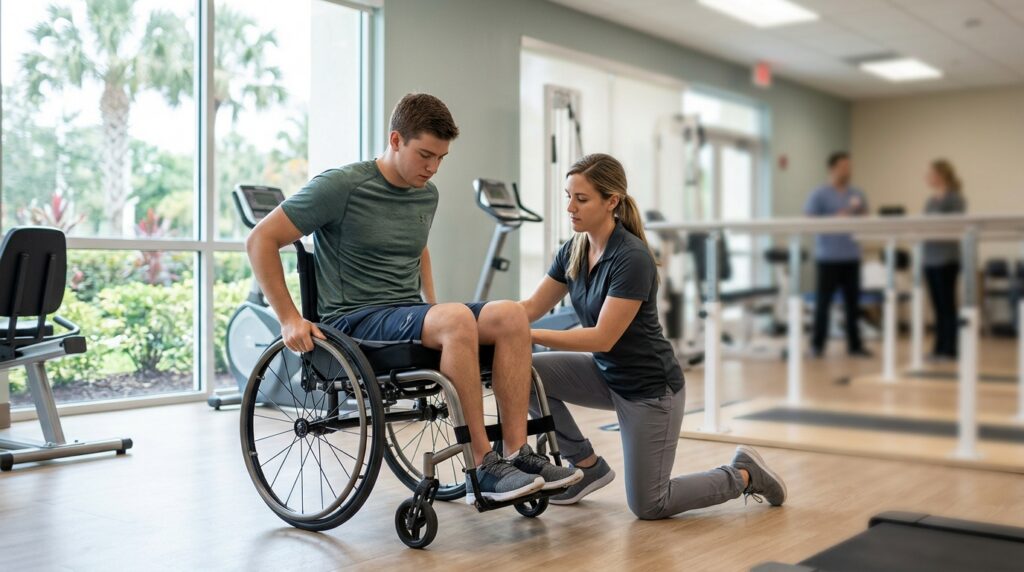
Next, most patients transfer to a specialized rehab facility. There, a team provides physical, occupational, and sometimes respiratory therapy. Patients relearn daily tasks and adapt to new equipment. Stays can last weeks or months.
3. Transition Home and Outpatient Therapy
After discharge, care continues at home and in outpatient clinics. This phase often requires home changes, new equipment, and regular therapy visits.
4. Lifelong Maintenance
The final phase never really ends. It includes follow-up appointments, equipment replacement, and treatment for secondary complications. In the catastrophic-injury cases our attorneys handle, this lifelong stage is what families often underestimate most.
Estimated Lifetime and Annual Costs of Spinal Cord Injury Care
Lifetime spinal cord injury costs vary widely, and the injury level is the single biggest factor.
Paraplegia (paralysis of the lower body) generally costs less than high tetraplegia (paralysis affecting the arms, trunk, and legs). Someone injured at a younger age usually faces higher lifetime costs, simply because they’ll need care for more years.
The National Spinal Cord Injury Statistical Center (NSCISC) is the U.S. authority that tracks spinal cord injury data. It publishes cost and outcome figures in its “Facts and Figures” resources. Its data shows that first-year costs and each following year’s costs both rise sharply with more severe injuries.
The Christopher & Dana Reeve Foundation also reports on paralysis in the U.S. It notes that a significant share of Americans live with some form of paralysis, and spinal cord injury is a leading cause.
Three factors shift the total the most:
- Neurological level. Higher, more complete injuries cost more.
- Age at injury. Younger patients face more years of care.
- Complications. Each pressure injury, infection, or hospital readmission adds cost.
Remember, these are national research figures. Your family’s actual costs will depend on your specific circumstances.
Rehabilitation Cost Categories to Budget For
A catastrophic spinal cord injury creates costs across many categories, not just doctor visits.
Here’s what families should plan for:
- Therapy services. Both inpatient and outpatient physical, occupational, and respiratory therapy.
- Durable medical equipment. Wheelchairs, lifts, and sometimes ventilators. These wear out and need replacement over time.
- Home and vehicle modifications. Ramps, widened doorways, roll-in showers, and adapted vans.
- In-home care. Attendant care, skilled nursing, and personal assistance, sometimes around the clock.
- Medications and complication management. Prescriptions and treatment for pressure injuries, infections, and other secondary conditions.
- Non-medical costs. Lost wages, reduced earning power, and the value of a family caregiver’s time.
That last group matters more than people expect. Many spouses or parents leave jobs to provide care. That lost income is a real cost of the injury.
Have questions about what happened?
Ask our team directly. The first conversation is free, confidential, and there is no obligation to continue.
Where Floridians Receive Spinal Cord Injury Rehabilitation
Florida families can find specialized spinal cord injury rehabilitation programs in major metro areas, including Miami, Orlando, Tampa, and Jacksonville.
Accredited SCI rehab programs typically offer a full care team. That means physicians, physical and occupational therapists, respiratory specialists, and case managers working together. These programs also help patients and families learn to manage care at home.
Florida also runs the Brain and Spinal Cord Injury Program (BSCIP), operated by the Florida Department of Health. It’s a short-term program that helps eligible residents who suffer a traumatic brain or spinal cord injury. We mention it as a state resource, not an endorsement.
When choosing a facility, families should confirm that the program is accredited and focuses on spinal cord injuries. We don’t recommend one provider over another. We simply encourage you to ask questions and verify credentials.
Who Pays for Spinal Cord Injury Rehabilitation in Florida?
Payment usually comes from private health insurance, Medicare, or Medicaid, but these sources rarely cover the full lifetime cost.
Private insurance often has coverage limits, high deductibles, and caps on certain therapies. Medicare and Medicaid help many patients, but they also have rules and limits on long-term care. Families frequently hit a gap between what insurance pays and what the injury actually costs over a lifetime.
Florida’s BSCIP may offer some support for eligible residents, but it’s short-term and not a lifetime solution.
That gap is why the cause of the injury matters. When another person’s negligence or a provider’s medical error caused the harm, a personal injury or medical negligence claim may help recover those costs. That includes both past bills and future care needs.
How These Costs Factor Into a Catastrophic Injury Claim
A catastrophic injury claim can seek compensation for past and future medical costs, rehabilitation, lost earnings, and other damages when negligence caused the injury.
Future costs are the heart of these cases. To document them, attorneys often work with a life-care planner. This expert prepares a detailed plan projecting the care, equipment, and services a person will need over a lifetime. Economic experts then calculate the dollar value of those future needs.
Good records are essential. Save every medical bill, therapy note, and receipt for equipment and home changes. These documents help prove the true cost of the injury.
Florida law also sets a deadline. Under Fla. Stat. §95.11, most negligence claims that accrue on or after March 24, 2023, must generally be filed within two years. Missing that window can end a claim before it starts.
Florida also uses a shared-fault rule. Under Fla. Stat. §768.81, a person found more than 50% at fault generally can’t recover damages. This is called modified comparative negligence (shared fault).
We can’t promise any specific result. Every case is different, and each one turns on its own facts. But understanding these costs and rules helps families make informed decisions.
Talk to a Catastrophic Spinal Cord Injury Attorney
If a catastrophic spinal cord injury in your family came from an accident or medical negligence, we’re here to listen.
CHG Personal Injury Lawyers is a Florida-based firm. Our attorneys are licensed and admitted to The Florida Bar, and we handle catastrophic spinal cord and paralysis cases nationwide. We offer support in both English and Spanish.
You can request a free case evaluation to discuss your situation with no obligation. For more background on these injuries and claims, visit our main guide on spinal cord injuries and catastrophic injury claims.
Want to know where you stand?
Tell us what happened and our team will walk you through the options available to you, at no cost.
Frequently Asked Questions
How much does spinal cord injury rehabilitation cost in Florida?
Costs often reach hundreds of thousands of dollars in the first year, and lifetime costs for severe paralysis can total millions, depending on injury level and age, per NSCISC data.
Why is quadriplegia care more expensive than paraplegia care?
Quadriplegia affects more body functions, including breathing and use of the arms, so it usually requires more equipment, therapy, and daily care over a lifetime.
Who pays for spinal cord injury rehab when insurance runs out?
When insurance limits are reached, families may turn to Medicaid, the Florida BSCIP, or compensation from a personal injury claim if someone else caused the injury.
Can I recover future rehabilitation costs in a catastrophic injury claim?
Yes, a claim can seek both past and future costs when negligence caused the injury, often using a life-care planner to project lifetime needs.
How long do I have to file a spinal cord injury lawsuit in Florida?
Most negligence claims accruing on or after March 24, 2023, must be filed within two years under Fla. Stat. §95.11.
What is the Florida Brain and Spinal Cord Injury Program (BSCIP)?
BSCIP is a short-term state program run by the Florida Department of Health that helps eligible residents who suffer a traumatic brain or spinal cord injury.
Related practice areas
- Miami Spinal Cord Injury Lawyer | Catastrophic Cases
- Spinal Cord Injuries in Florida: Care, Rights & Help
- Jacksonville Spinal Cord Injury Lawyer | Free Case Review
- Orlando Spinal Cord Injury Lawyer | CHG Personal Injury Lawyers