

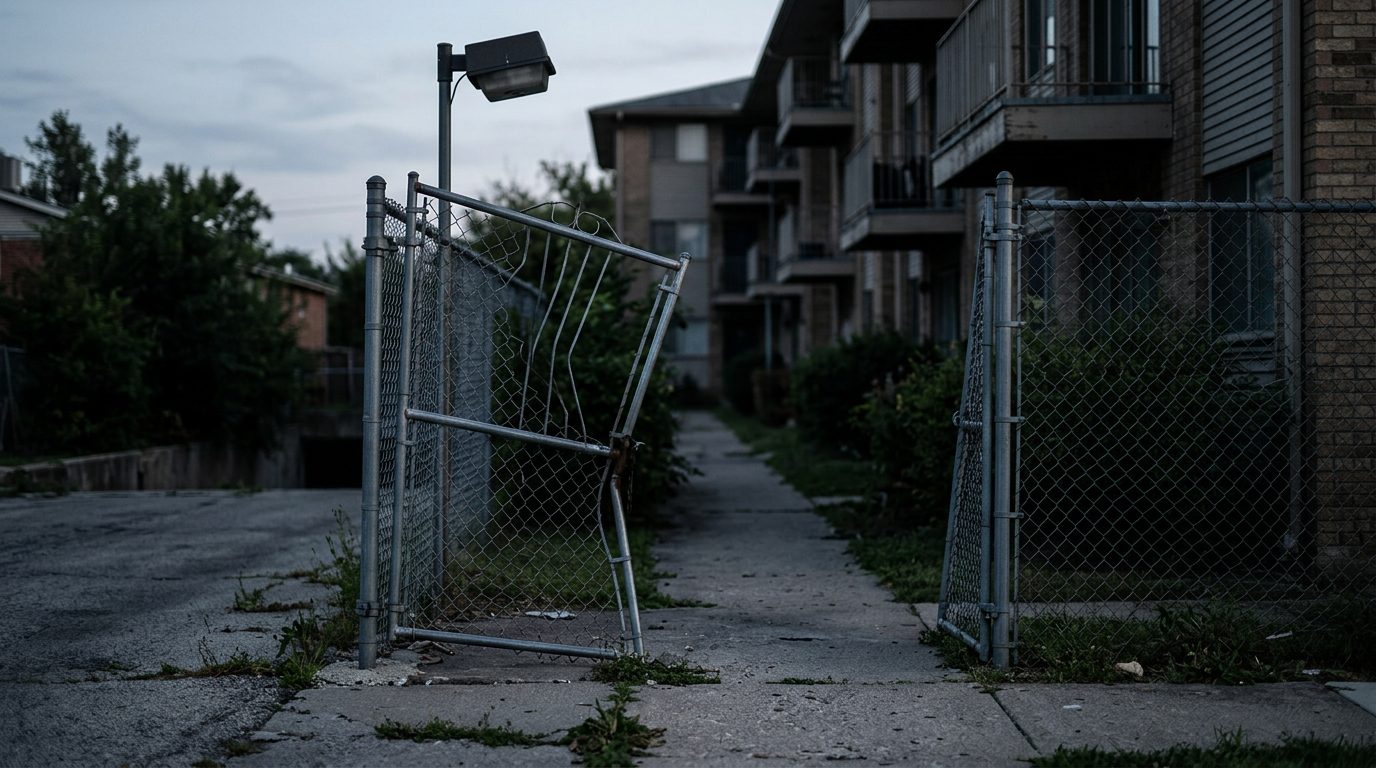
Spinal Cord Injury | Negligent Security
Attacked on Someone Else's Property? You May Have a Claim Against the Owner
When a property owner fails to provide reasonable security, they may be liable for injuries you suffered in an assault or violent attack. CHG Personal Injury Lawyers focuses exclusively on catastrophic spinal cord injuries and the negligence that causes them.
By CHG Lawyers · Published August 30, 2026
Spinal Cord Injury From Assault on Someone Else’s Property: Negligent Security Claims
You were attacked on someone else’s property. An apartment complex. A parking lot. A hotel. A bar. A business. The assault left you paralyzed or with catastrophic back or neck damage. Now you face a lifetime of medical care, lost income, and permanent life changes.
You may wonder: Can I hold the property owner responsible for my spinal cord injury from assault? The answer is often yes. If they failed to provide reasonable security, you may have a claim. This claim is separate from any criminal case against the attacker. The property owner’s negligence in failing to protect you creates your legal claim.

Not sure what your next step is?
Talk it through with our team — the first consultation is free, confidential, and carries no obligation.
What Is a Negligent Security Claim?
A negligent security claim holds a property owner accountable for failing to provide reasonable security. Property owners have a legal duty to keep their premises safe. That duty includes reasonable security measures: working locks, adequate lighting, security cameras, alarm systems, or trained security personnel.
The specific measures required depend on the property type, location, business nature, and what similar properties typically do.
When a property owner fails to provide these measures, and that failure allows an attacker to harm you, the owner may be liable for your injuries. The owner is not liable for the attacker’s crime. They are liable for their own negligence in failing to prevent it.
You Were Attacked and Suffered a Spinal Cord Injury From Assault: What Now?
When you’re assaulted on someone else’s property, the owner may be legally liable if they failed to provide reasonable security.
You had every right to expect the property would be reasonably safe. You didn’t choose to be harmed there. If the owner’s negligence—broken locks, poor lighting, no cameras, no guards—made the attack possible or more likely, they bear responsibility.
A spinal cord injury from assault on an inadequately secured property can support a substantial claim. Damages cover your medical care, lost income, pain and suffering, and lifetime needs.
Our attorneys handle catastrophic-injury cases, including negligent security claims from assaults at:
- Apartment complexes with broken entry locks
- Parking garages with no lighting or cameras
- Hotels with inadequate front-desk security
- Bars that failed to hire security staff
- Gas stations with poor lighting
- Retail stores in high-crime areas without cameras or trained personnel
Learn more about catastrophic injury claims and premises liability lawsuits.
Who This Claim Is For
This claim is for you if:
- You were attacked on someone else’s property: apartment complex, parking lot, garage, hotel, motel, bar, nightclub, gas station, retail store, ATM, office building, or business.
- The attack resulted in a spinal cord injury, paralysis (paraplegia or quadriplegia), or other catastrophic back or neck injury.
- You or your loved one now faces permanent impairment, loss of function, and life-altering changes.
- You believe the property owner’s failure to provide adequate security made the attack possible or more likely.
- You want to understand your legal options and hold responsible parties accountable.
What a Negligent Security Claim Covers
A negligent security claim recovers damages for the full scope of your injuries and losses:
Medical Expenses
- Emergency care, surgery, hospitalization, and intensive rehabilitation
- Ongoing medical treatment, medications, and specialist care
- Assistive devices: wheelchairs, braces, mobility aids, and other equipment
- Home modifications to make your living space accessible
Lost Income and Earning Capacity
- Wages you lost during recovery and hospitalization
- Future income you can no longer earn due to your permanent injury
- Reduced earning capacity if you can return to work in limited capacity
Pain, Suffering, and Loss of Life Quality
- Compensation for physical pain and emotional trauma from the attack and injury
- Loss of enjoyment of life: permanent loss of activities, relationships, hobbies, and independence
- Psychological impact, including post-traumatic stress and depression
Lifetime Care and Support
- Future medical care and rehabilitation
- Personal attendants, nursing care, and in-home support services
- Vehicle modifications for accessibility
- Ongoing therapy and mental-health treatment
Punitive Damages
In cases where the property owner’s conduct was particularly reckless or negligent—for example, they knew crime was common and deliberately failed to provide security—a court may award punitive damages. Punitive damages require clear and convincing proof of intentional misconduct or gross negligence (Fla. Stat. § 768.72). These damages punish the owner and deter similar conduct.
How Much Is a Spinal Cord Injury Claim Worth?
The value of a negligent security claim depends on multiple factors specific to your case.
Severity of injury is the primary driver. Spinal cord injuries resulting in complete paralysis (quadriplegia or paraplegia) typically result in larger claims than incomplete injuries. According to the Christopher & Dana Reeve Foundation, the average lifetime cost of care for paraplegia exceeds $1 million. Quadriplegia costs are substantially higher.
Your age at injury matters significantly. A younger person has longer life expectancy and will require decades of care, increasing total damages. A 25-year-old with quadriplegia needs 60+ years of care. A 65-year-old needs fewer years of future care.
Pre-injury income affects your lost-earning-capacity damages. Higher earners have larger claims for lost wages and future earning potential.
Strength of evidence against the property owner is critical. Clear evidence that the owner knew crime was foreseeable (prior assaults, tenant complaints, high-crime location) and deliberately failed to provide adequate security increases claim value.
Each case is unique. An attorney can review the facts of your attack, your medical records, the property owner’s security practices, and the evidence of negligence to estimate your claim’s potential value.
Have questions about what happened?
Ask our team directly. The first conversation is free, confidential, and there is no obligation to continue.
How a Negligent Security Claim Works: Step-by-Step
Step 1: Report the Attack and Seek Medical Attention
Report the assault to law enforcement immediately. Get a copy of the police report—this is critical evidence. Seek emergency medical care for your injuries. Keep all medical records, test results, imaging, and treatment documentation. These records prove the severity of your spinal cord injury.
Step 2: Preserve Evidence
Evidence can disappear quickly. Work with an attorney to preserve:
- Security camera footage from the property (request it in writing immediately; footage is often deleted after 30 days)
- Photographs of broken locks, poor lighting, or other security failures
- Witness statements from people who saw the attack or security conditions
- The property owner’s prior incident reports or crime complaints
- Records of prior assaults, robberies, or violent crimes at the property
- Industry standards for security at similar properties
Step 3: Consult an Attorney
Contact an attorney who focuses exclusively on catastrophic injury claims. They will investigate the property owner’s security practices, review police reports and medical records, and determine whether you have a viable negligent security claim. This consultation is typically free and confidential.
Step 4: Investigation and Evidence Gathering
Your attorney will conduct a thorough investigation:
- Interview witnesses to the attack and security conditions
- Obtain security records from the property owner
- Review prior incident reports and crime data at the location
- Consult with a security expert to establish industry standards and the owner’s failure to meet them
- Gather medical evidence of your spinal cord injury, prognosis, and lifetime care needs
- Obtain economic analysis of your lost wages and future care costs
Step 5: Demand and Negotiation
Your attorney will send a demand letter to the property owner’s insurance company. The letter outlines the facts, the owner’s negligence, your injuries, your damages, and the amount you are seeking. The insurance company may respond with a settlement offer. Negotiations may follow.
Step 6: File a Lawsuit (if necessary)
If a fair settlement cannot be reached, your attorney will file a lawsuit in court. This begins formal litigation, including discovery (exchanging evidence), expert witness testimony, and court proceedings.
Step 7: Settlement or Trial
Most cases settle before trial. However, if your case proceeds to trial, a jury will hear evidence from you, medical experts, security experts, and the property owner’s representatives. The jury will decide whether the owner is liable and what damages you should receive.
Building a Strong Negligent Security Claim
A strong negligent security claim rests on four key elements:
Establish a Direct Connection
You must show that the property owner’s failure to provide reasonable security directly enabled or made the attack more likely. Examples include:
- Broken or missing locks that allowed the attacker to enter the building or parking area
- Poor lighting that allowed the attacker to hide or approach you unseen
- Lack of security cameras that would have deterred the attacker or captured their identity
- No security personnel or alarm system at a property where crime was foreseeable
- Failure to respond to prior security complaints
Prove Negligent Action
You must demonstrate that the property owner knew or should have known crime was foreseeable. Evidence includes:
- Prior crimes at the location (prior assaults, robberies, shootings, or other violent incidents)
- Complaints from tenants or visitors about inadequate security
- The property’s location in a high-crime area
- Industry standards for security at similar properties
- The owner’s own security policies or prior acknowledgment of crime risk
Document Your Damages
Collect comprehensive documentation:
- All medical records, bills, and receipts for treatment, medications, and equipment
- Proof of lost wages and employment records showing your pre-injury income
- Documentation of your ongoing care needs and future medical expenses
- Expert medical testimony about the permanence of your spinal cord injury and lifetime care requirements
- Testimony from loved ones about your loss of independence and quality of life
Consult Expert Witnesses
Your case may benefit from testimony by:
- A security expert: testifies about industry standards for security at similar properties and the owner’s failure to meet those standards
- A medical specialist: testifies about your spinal cord injury, prognosis, and lifetime care needs (often a physiatrist or neurologist specializing in spinal cord injury care)
- An economist: calculates your lifetime care costs, lost earning capacity, and economic damages
Why Choose This Firm
We focus exclusively on catastrophic injury claims, including spinal cord injuries and paralysis caused by negligent security. We understand the medical, financial, and emotional complexity of these cases because we handle them every day.
Our attorneys are licensed to practice in Florida and are members of the Florida Bar. We handle cases nationwide, so geography is not a barrier to representation.
We have extensive experience investigating negligent security claims: obtaining security records from property owners, consulting with security experts to establish industry standards, and holding property owners accountable for their failure to protect visitors and tenants.
We work with leading medical specialists, rehabilitation experts, and economists to build comprehensive cases that fully account for your lifetime needs and damages. We are prepared to take your case to trial if necessary to secure fair compensation.
We understand the trauma of violent crime and the life-altering impact of spinal cord injury. We approach every case with empathy and determination.
Learn more about spinal cord injury claims, assault and battery claims, and negligent security cases.
Frequently Asked Questions
Q: Can I sue the property owner if I was attacked by someone else?
Yes. The property owner is not liable for the attacker’s crime. They may be liable for their own negligence in failing to provide reasonable security. If that negligence made the attack possible or more likely, you have a claim.
Q: What if the attacker was never caught or prosecuted?
You do not need to prosecute or sue the attacker to hold the property owner liable. Your claim is against the property owner for their negligence, not against the attacker.
Q: How long do I have to file a claim?
However, do not wait. Evidence can be lost, memories fade, and witnesses become unavailable. Contact an attorney as soon as possible.
Q: Will my case go to trial?
Most cases settle before trial. However, if a fair settlement cannot be reached, we are prepared to take your case to court and present your evidence to a jury.
Q: How much will it cost to hire an attorney?
We work on a contingency fee basis. You pay nothing upfront, and we are paid only if we recover compensation for you. There is no financial risk to you.
Q: What is comparative negligence?
Under Florida Statute § 768.81, if you are found to be more than 50% at fault for your injury, you cannot recover damages. If you are 50% or less at fault, you can recover damages reduced by your percentage of fault. In negligent security cases, the property owner’s negligence is typically the primary cause of the injury, not the victim’s conduct.

Want to know where you stand?
Tell us what happened and our team will walk you through the options available to you, at no cost.
What to Do Now
If you or a loved one was paralyzed or suffered a spinal cord injury during an assault on someone else’s property, time is critical. Evidence must be preserved, and the statute of limitations is running.
Contact us for a free, confidential case evaluation. We will review the facts of your attack, your injuries, and the property owner’s security practices. We will determine whether you have a viable negligent security claim. During your evaluation, we will answer your questions, explain your legal options, and discuss the next steps. There is no obligation, and no cost to you unless we recover compensation.
Why Property Owner Negligence Matters in Your Case
You Don't Sue the Attacker—You Sue the Property Owner
The person who attacked you is responsible for their own crime. But the property owner is responsible for their own negligence. If they failed to provide reasonable security—working locks, adequate lighting, cameras, or guards—and that failure made the attack possible or more likely, they may be liable for your injuries.
Reasonable Security Varies by Property Type
An apartment complex should have secure entry gates and working locks. A parking garage should have lighting and cameras. A hotel should have security measures appropriate to its location and history. A business or retail property should have locks, lighting, and visible security. What's 'reasonable' depends on the specific property and known risks.
Prior Incidents Strengthen Your Claim
If the property owner knew about previous assaults, robberies, or violent crimes on the property and did nothing, that knowledge makes negligence easier to prove. Even if the attacker was never caught, a pattern of security failures is powerful evidence.
Spinal Cord Injuries Demand Maximum Compensation
A spinal cord injury from assault is catastrophic and permanent. You face lifetime medical care, loss of income, loss of independence, and profound pain. The property owner's negligence that allowed the attack to happen should be fully accounted for in your claim.
Important: The Attacker's Criminal Status Doesn't Affect Your Civil Claim
Many injured people believe they cannot sue the property owner if the attacker was never caught, prosecuted, or convicted. This is false. Your civil claim against the property owner for negligent security is completely separate from any criminal case. You do not need a criminal conviction to prove the owner's negligence.
What Happens Next: Your Path Forward
Document Everything
Gather medical records, police reports, incident reports from the property, photos of security failures (broken locks, missing lights, no cameras), and any prior complaints or incidents at the location. Write down everything you remember about the attack and the property's condition.
Report to the Property Owner
If you haven't already, notify the property owner or manager in writing about the attack and your injuries. Keep copies of all communications. This creates a record that they were aware of the incident.
Preserve Evidence
Security footage, maintenance records, prior incident reports, and security contracts are critical evidence. These materials can disappear if not preserved quickly. Our team can send a preservation notice to prevent the property owner from destroying or deleting evidence.
Consult an Attorney Immediately
Negligent security claims have strict time limits and procedural rules. The sooner you contact us, the sooner we can investigate, preserve evidence, and build your case. There are no attorney’s fees unless there is a recovery.