

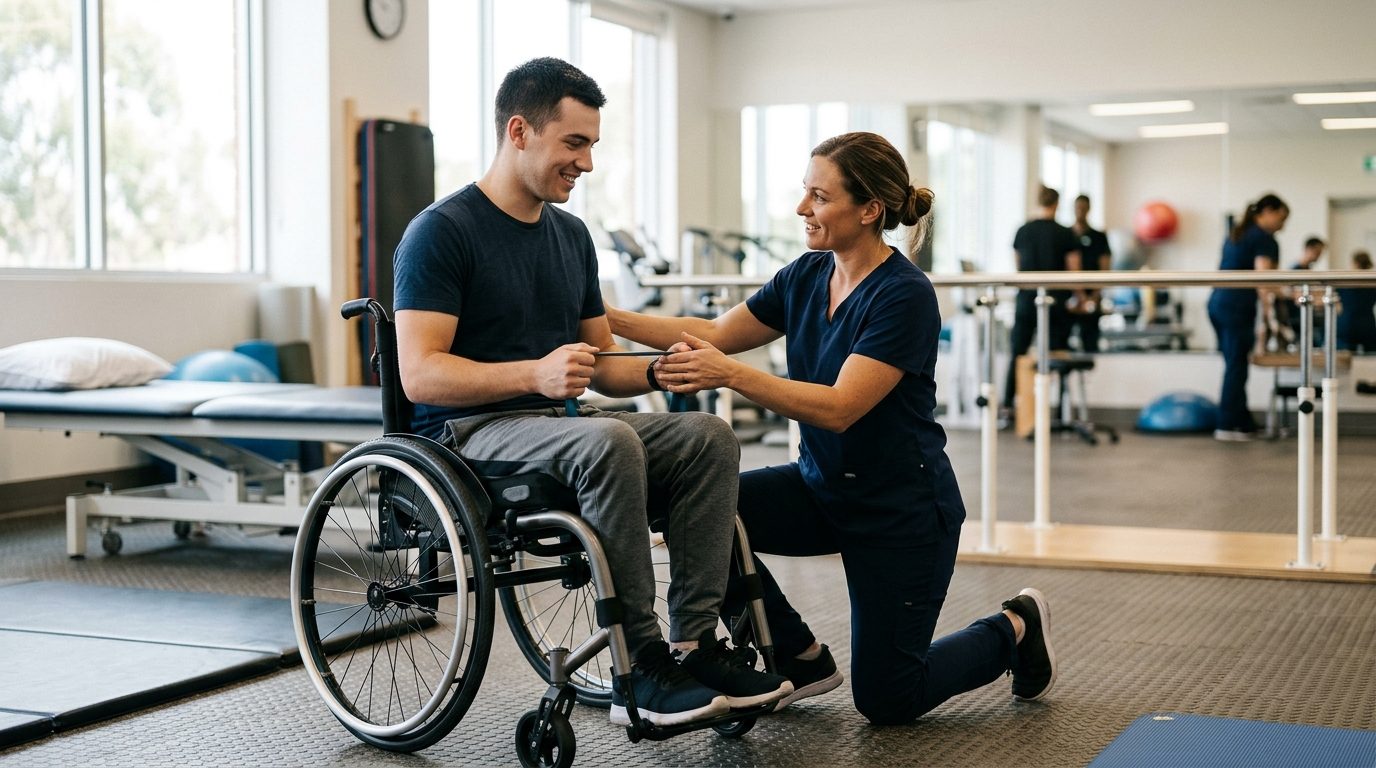
Spinal Cord Injury Support
Caring for a Loved One With Spinal Cord Injury
Practical guidance for daily care, medical management, and understanding your legal rights after a catastrophic injury.
By CHG Lawyers · Published August 27, 2026
Caring for a Loved One With a Spinal Cord Injury: A Family Guide
When someone you love has a spinal cord injury, your world changes overnight. You suddenly face physical demands, emotional stress, and long-term planning—often with little warning. This guide walks you through what to expect, how to prepare, and where to find support.

Not sure what your next step is?
Talk it through with our team — the first consultation is free, confidential, and carries no obligation.
Understanding What Your Loved One Is Going Through
A spinal cord injury breaks the pathway between the brain and the rest of the body. It affects movement, sensation, and bodily functions below the injury site. The location and severity of the injury determine what changes your loved one will experience.
Paraplegia is a lower spine injury that typically affects the legs and lower body. Quadriplegia, also called tetraplegia, is an upper spine or neck injury that affects all four limbs. Quadriplegia may also affect breathing and other vital functions, depending on injury level.
Recovery is not linear. Some people regain function in weeks or months. Others experience permanent changes. Every spinal cord injury is unique. Your loved one may grieve the life they had before. That grief is real and important. It deserves acknowledgment and support alongside physical recovery.
What Does a Spinal Cord Injury Feel Like?
People with spinal cord injuries often describe a sudden loss of sensation or movement below the injury site. Some experience burning, tingling, or pain. Others feel numbness or nothing at all.
The experience varies widely. Some retain partial sensation or movement. Others lose it completely. Phantom pain—pain felt in areas where sensation is lost—is common and can be distressing. Fatigue is frequent too. A spinal cord injury affects the body’s ability to regulate temperature and manage energy. Your loved one may tire more easily than before.
Emotional responses—shock, anger, grief, depression—are normal. These feelings often emerge weeks or months after the injury, not just immediately. They are not signs of weakness. They are signs that your loved one is processing a profound life change.
The Physical Realities of Caregiving
Depending on injury severity, your loved one may need help with mobility, personal hygiene, toileting, dressing, and eating. This is intensive, hands-on work.
Transfers and mobility. Moving someone from bed to wheelchair, wheelchair to car, or car to home requires proper technique. Improper transfers injure both your loved one and your own back and joints. Physical therapists and occupational therapists teach safe transfer techniques. Get this training early.
Skin care and pressure prevention. People with spinal cord injuries cannot feel pressure developing. Pressure sores (pressure ulcers) can form without warning. Reposition your loved one every 2–3 hours. Inspect skin regularly. This prevents life-threatening infections. This is critical.
Bowel and bladder management. Your loved one may need catheterization, medications, or scheduled routines. These are medical tasks you may need to learn and perform. Nurses and medical professionals can train you.
Home modifications. Ramps, accessible bathrooms, grab bars, and roll-in showers make caregiving safer and more dignified. These adaptations can be costly but are often necessary for independence and safety.
Emotional and Psychological Support
Your loved one may experience depression, anxiety, or post-traumatic stress. These are medical conditions, not character flaws. They respond to treatment. Encourage professional mental health support.
Relationships and roles shift. A spouse becomes a caregiver. A parent becomes dependent. These transitions are hard and deserve acknowledgment.
Isolation is a real risk. Accessibility barriers, fatigue, and caregiving demands can cut your loved one off from friends, work, and community. Make intentional effort to maintain connections—virtual or in-person. Many people with spinal cord injuries work, pursue education, travel, and build meaningful lives. Celebrate small victories and milestones.
What Not to Say to Someone With a Spinal Cord Injury
Avoid platitudes like “Everything happens for a reason” or “God needed another angel.” These minimize real suffering.
Don’t assume your loved one will “get better” or “walk again” unless medical professionals have said so. False hope is painful.
Avoid pity or inspiration narratives. Your loved one is not “brave” for living their life. They are simply living it. Treat them as a whole person, not a symbol of overcoming adversity.
Don’t speak about them to others as if they are not in the room. Include them in conversations and decisions that affect them.
Avoid asking “Why were you there?” or “What were you doing?” in a way that implies blame. Focus on support, not judgment.
Have questions about what happened?
Ask our team directly. The first conversation is free, confidential, and there is no obligation to continue.
Choosing the Right Care Setup: Family, Professional Caregivers, or Both
There is no one-size-fits-all answer. Some families provide all care themselves. Others hire personal care attendants (PCAs). Many use a combination.
Family caregiving is emotionally rewarding but physically and emotionally exhausting. Burnout is real and can harm both caregiver and care recipient.
Professional personal care attendants bring training, consistency, and a boundary between care and family relationship. They assist with bathing, grooming, dressing, feeding, and bladder and bowel management. They also help with mobility and transfers. They can be expensive, but many insurance plans, Medicaid, or disability benefits cover part or all of the cost.
If you hire PCAs, you become an employer. You manage scheduling, training, payroll, and turnover. This is a significant responsibility on top of caregiving.
Respite care—temporary relief from caregiving duties—is essential for family caregivers. Build it into your plan from the start.
Caregiver Self-Care Is Not Selfish
You cannot pour from an empty cup. Taking care of yourself is not a luxury. It is a necessity. Your health and well-being directly affect your ability to support your loved one.
Set boundaries. You are a caregiver, but you are also a person with your own needs, limits, and life.
Seek support. Join a caregiver support group—in person or online. Talk to a therapist. Connect with other people who understand what you are going through.
Maintain your own interests and relationships. Isolation compounds caregiver stress and depression.
Watch for signs of burnout: chronic fatigue, irritability, hopelessness, physical symptoms. If you notice them, reach out for help immediately.
Building Your Support Network
You do not have to do this alone. Identify people who can help with specific tasks: meal prep, transportation, medical appointments, household chores.
Connect with spinal cord injury organizations and support groups. They offer education, peer support, and practical resources.
Work with a care coordinator or social worker, especially in the first months after injury. They can help you navigate insurance, benefits, equipment, and services.
Consider hiring a life coach or counselor who specializes in spinal cord injury. They can help your loved one and your family adjust and plan for the future.
Keep communication open with your loved one’s medical team. Ask questions. Share concerns. Advocate for their needs.
Can You Ever Fully Recover From a Spinal Cord Injury?
The spinal cord does not regenerate the way other tissues do. Most people with spinal cord injuries experience permanent changes in sensation and movement below the injury site.
That said, recovery is not a single endpoint. Neuroplasticity—the brain’s ability to form new neural connections—means some functional recovery is possible even years after injury. Rehabilitation, therapy, exercise, and adaptive equipment help maximize function and independence.
Many people with spinal cord injuries live full, productive lives. They work, pursue education, travel, build relationships, and contribute to their communities. “Recovery” means different things to different people. Research into spinal cord injury treatment is ongoing. New therapies and technologies emerge regularly. Hope is warranted, but it should be grounded in realistic expectations and current medical evidence.
Want to know where you stand?
Tell us what happened and our team will walk you through the options available to you, at no cost.
Practical Steps to Take Now
- Learn proper transfer and mobility techniques from a physical therapist.
- Work with an occupational therapist to assess your home and plan modifications.
- Understand your loved one’s medical needs: medications, catheterization, skin care, bowel and bladder management. Get trained by a nurse or medical professional.
- Document your loved one’s preferences, medical history, and emergency contacts. Keep this information accessible.
- Explore financial resources: insurance coverage, Medicaid, disability benefits, vocational rehabilitation, grants from spinal cord injury organizations.
- Connect with a social worker or care coordinator early. They can help you plan and access resources.
- Take care of yourself. Identify your own support system and use it.
When the Injury Was Caused by Someone Else’s Negligence
If your loved one’s spinal cord injury resulted from a truck crash, a fall caused by unsafe conditions on someone else’s property, an assault at a location with inadequate security, or another accident caused by negligence or wrongdoing, your family may have legal rights.
A legal claim can help cover the enormous costs of lifelong care, medical treatment, adaptive equipment, home modifications, and lost income. These expenses are real and often overwhelming.
You do not have to navigate this alone. An attorney who focuses exclusively on catastrophic injury cases can help you understand your options, gather evidence, and pursue the compensation your loved one deserves.

Frequently Asked Questions
What is the difference between paraplegia and quadriplegia?
Paraplegia affects the lower spine and typically impacts the legs and lower body. Quadriplegia (tetraplegia) affects the upper spine or neck and impacts all four limbs and may affect breathing.
How do I prevent pressure sores in someone with a spinal cord injury?
Reposition your loved one every 2–3 hours. Inspect skin regularly for signs of pressure. Use pressure-relieving cushions and mattresses. Skin care is critical because people with spinal cord injuries cannot feel pressure developing.
What home modifications are needed for someone with a spinal cord injury?
Common modifications include ramps, accessible bathrooms, grab bars, roll-in showers, lowered cabinets and counters, and accessible parking. An occupational therapist can assess your home and recommend specific changes.
How do I find a personal care attendant?
Work with your loved one’s medical team, social worker, or a home care agency. Many insurance plans and Medicaid programs can help cover the cost.
What support resources are available for spinal cord injury caregivers?
Organizations like the Christopher & Dana Reeve Foundation, the National Spinal Cord Injury Association, and local support groups offer education, peer support, and practical resources for caregivers.
Can someone with a spinal cord injury work or go to school?
Yes. Many people with spinal cord injuries work, pursue higher education, and build careers. Vocational rehabilitation, adaptive technology, and workplace accommodations make this possible.
If you’re learning how to care for someone with a spinal cord injury, you’re facing decisions about medical care, home safety, finances, and your own well-being—all at once. If that injury happened because of a truck crash, unsafe property conditions, inadequate security, or someone else’s negligence, there’s another layer: understanding whether your family has a legal claim that could help pay for the care your loved one needs. Families in your situation reach out regularly to talk through what happened and what their options are. We’re here to listen.
Essential Care Priorities
Medical Management
Work closely with your loved one's medical team to manage pain, prevent complications like pressure sores and blood clots, and pursue rehabilitation therapies that maximize independence and quality of life.
Daily Living Support
Help with mobility, personal hygiene, bowel and bladder management, and adaptive equipment. Reposition your loved one every 2–3 hours to prevent pressure injuries, and maintain a clean, accessible home environment.
Emotional & Mental Health
Spinal cord injury is life-altering. Encourage counseling, support groups, and open communication. Your loved one may experience depression, anxiety, or grief—professional mental health support is an essential part of recovery.
Financial & Legal Planning
Catastrophic injury brings lifelong medical costs, lost income, and home modifications. If negligence or wrongdoing caused the injury, a legal claim may recover compensation to support long-term care and quality of life.
What You Need to Know
Paraplegia vs. Quadriplegia
Paraplegia affects the lower spine and typically impacts the legs and lower body. Quadriplegia (tetraplegia) affects the upper spine or neck and impacts all four limbs and may affect breathing and other functions.
Preventing Pressure Sores
Pressure sores can develop quickly and become life-threatening. Reposition your loved one every 2–3 hours, keep skin clean and dry, use pressure-relief cushions and mattresses, and monitor for redness or breakdown.
Rehabilitation & Adaptation
Modern rehabilitation, assistive technology, and adaptive equipment can help your loved one regain independence in mobility, communication, and self-care. Work with occupational and physical therapists to set realistic goals.
Caregiver Support
Caring for someone with a spinal cord injury is demanding. Seek respite care, join caregiver support groups, and don't neglect your own physical and mental health. You cannot pour from an empty cup.
If Negligence or Wrongdoing Caused the Injury
Spinal cord injuries often result from serious accidents—truck crashes, falls at unsafe properties, assaults at inadequately secured locations, or other preventable events. If someone else's negligence or failure to act caused your loved one's injury, you may have a legal claim for compensation to cover medical care, lost income, home modifications, and other lifetime needs.
Common Questions
How long does recovery take?
Recovery from spinal cord injury is highly individual. Some improvement may occur in the first 6–12 months, but most people continue to adapt and regain function over years. Rehabilitation, therapy, and assistive technology play a crucial role.
What are the long-term costs?
Lifetime care for spinal cord injury can exceed $1 million to $5 million or more, depending on severity. Costs include medical care, therapy, home modifications, assistive devices, attendant care, and lost earning potential.
Can my loved one return to work or school?
Many people with spinal cord injuries return to work or school with accommodations and adaptive technology. Vocational rehabilitation specialists can help identify realistic opportunities and necessary supports.
What if the injury was caused by someone else?
If negligence, a dangerous condition, inadequate security, or wrongful conduct caused the injury, the responsible party or property owner may be liable. An attorney can evaluate whether you have a claim and what compensation may be available.