

Slip and Fall Attorney
Slip and Fall Claims in Tampa, Florida
You were injured on someone else's property because they failed to maintain it safely. Learn what steps to take next—and how an attorney can help you recover.
By CHG Lawyers · Published September 23, 2026
What to Do After a Slip and Fall Accident: Steps to Protect Your Claim
If you’ve slipped and fallen on someone else’s property in Tampa or anywhere in Florida, the first hours and days matter most. They determine whether you can build a strong claim for compensation. Here’s what you need to do right now to protect your rights and preserve the evidence that proves the property owner’s negligence.

Not sure what your next step is?
Talk it through with our team — the first consultation is free, confidential, and carries no obligation.
Immediate Steps After a Slip and Fall Accident
Seek medical attention first, even if your injuries feel minor.
A doctor’s visit creates an official record. It links your injury directly to the fall. Pain, swelling, or bruising that seems small today can worsen over time. You’ll need medical documentation to prove the connection to the accident.
Report the incident to the property owner or manager immediately.
Tell them exactly what happened. Describe where you fell, what caused it (wet floor, broken step, poor lighting, debris), and how you were injured. Ask for a written incident report. Request a copy for yourself. If they refuse, note the date, time, and names of the people you spoke with.
Collect witness information before people leave.
Ask anyone who saw the fall for their name, phone number, and email. Get at least two witnesses if possible. Their account of what happened—especially if they saw the hazard—is powerful evidence.
Take photos and video of the scene immediately.
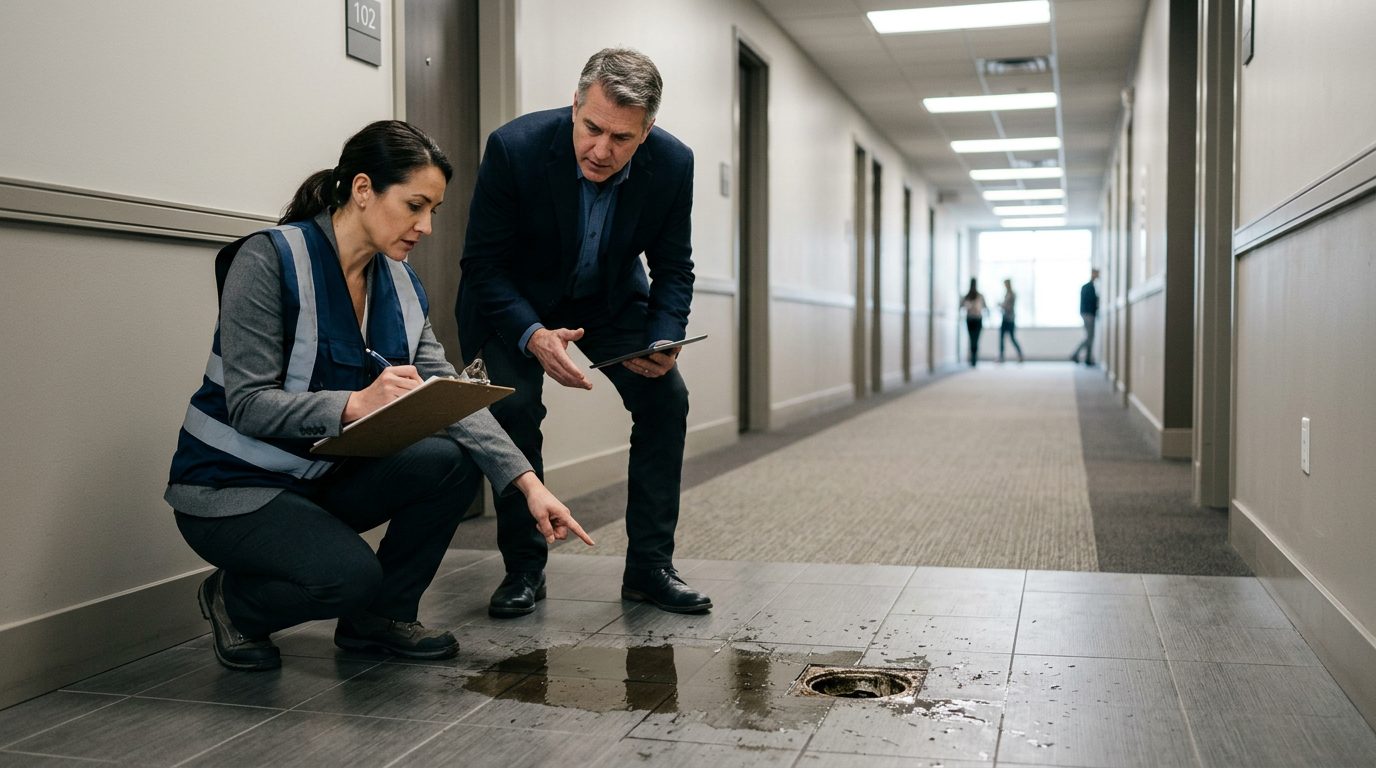
Capture the exact spot where you fell. Photograph the hazard itself (wet floor, broken tile, debris). Photograph the lighting conditions and any warning signs (or lack of them). Photograph your injuries, your clothing, and your shoes. Take wide shots and close-ups. If security cameras are visible, note their location. Ask the property owner to preserve the footage.
Document what you were wearing and the exact location.
Write down the date, time, and weather conditions. Note what floor or area of the building you were in. Write whether you were wearing appropriate footwear. Note whether the hazard was visible or hidden.
Do not sign anything except the incident report without legal advice.
Property owners and their insurance companies may ask you to sign waivers or settlement agreements. Don’t. Anything you sign can limit your right to recover later.
Documenting Your Slip and Fall Injury
Keep all medical records, bills, and receipts.
Save every document from every doctor visit, hospital stay, physical therapy session, or prescription. These form the foundation of your injury claim. They prove the cost of your care.
Photograph your injuries as they evolve.
Take pictures of visible bruises, cuts, swelling, or other marks on the day of the fall. Take more photos over the following days and weeks. If your injury worsens or healing takes longer than expected, those photos are evidence.
Write a detailed account of the accident while it’s fresh.
Within 24 hours, write down exactly what happened. Include where you were, what you were doing, what caused the fall, how you fell, and what you felt. Add the weather, the lighting, the time of day, and who was present. This account written soon after is far more credible than a memory recalled months later.
Save all communications with the property owner or their insurance company.
Keep emails, text messages, letters, and voicemails. Don’t delete anything. These communications can show what the property owner knew about the hazard and when they knew it.
Keep a journal of your pain, limitations, and daily impact.
Write down how your injury affects your ability to work, exercise, sleep, or perform household tasks. Note pain levels, medication side effects, and emotional effects like frustration or anxiety. This journal shows the real cost of the injury beyond medical bills.
Gathering Evidence That Strengthens Your Claim
Obtain the property’s maintenance and inspection records if possible.
Property owners are required to maintain safe premises. They must inspect for hazards regularly. Records showing they failed to inspect or repair a known problem are powerful evidence of negligence.
Request security camera footage from the location.
Most businesses, apartment complexes, parking garages, and hotels have cameras. Ask the property owner or manager to preserve the footage immediately. Many systems overwrite recordings after 30 days. If they refuse, an attorney can issue a preservation notice.
Check for prior complaints or incidents at the same location.
If other people have fallen in the same spot or complained about the same hazard, that proves the property owner knew or should have known about the danger. Public records, online reviews, and local news reports can reveal patterns.
Preserve your clothing and shoes as physical evidence.
Don’t wash or discard the clothes and shoes you wore during the fall. They may show wear patterns, damage, or other details that explain how the fall happened.
Document the exact hazardous condition.
Was the floor wet? Was there a broken or uneven step? Was lighting inadequate? Was there debris, a hole, or a missing handrail? Be specific. The hazard itself is the key to proving the property owner’s negligence.
What Not to Do After a Slip and Fall
Do not post about the accident on social media.
Insurance companies and defense attorneys monitor social media. A photo, comment, or casual post can be taken out of context. It can be used to argue your injury isn’t serious or that you were partly at fault.
Do not give a recorded statement to the property owner’s insurance company without legal counsel.
The adjuster may seem friendly. But anything you say can be used against you. An attorney can handle these conversations and protect your interests.
Do not accept a quick settlement offer without understanding the full extent of your injuries.
Early settlement offers are often far below what your claim is actually worth. You may not know yet whether your injury will cause long-term problems or require ongoing treatment.
Do not delay seeking medical care.
Even minor pain or discomfort warrants a doctor’s visit. Gaps in medical treatment give insurance companies an excuse to argue your injury wasn’t serious.
Do not assume your injuries will resolve on their own.
Slip and fall injuries—especially to the back, neck, head, or joints—can have lasting effects. Early diagnosis and treatment prevent complications. They document the injury’s severity.
Have questions about what happened?
Ask our team directly. The first conversation is free, confidential, and there is no obligation to continue.
Understanding Slip and Fall Liability in Florida
Property owners have a legal duty to maintain safe premises and warn of known hazards.
Under Florida law, if you’re injured on someone else’s property due to their negligence, they may be liable for your medical bills, lost wages, pain and suffering, and other damages.
The property owner’s negligence must have directly caused your fall and injury.
You must prove three things:
- The hazard existed.
- The owner knew or should have known about it.
- The owner failed to fix it or warn you about it.
Your evidence—photos, witness statements, maintenance records, and medical documentation—proves each element.
Florida’s modified comparative fault rule affects your recovery.
Under Fla. Stat. §768.81(6), if you’re found more than 50% at fault for your own fall, you recover nothing. If you’re 50% or less at fault, your damages are reduced by your percentage of fault. This is why evidence proving the property owner’s negligence—not your carelessness—is so important.
How Much Is a Slip and Fall Case Worth in Florida?
The value of your slip and fall claim depends on the severity of your injury, your medical costs, lost wages, and the injury’s long-term impact on your life.
Minor injuries with quick recovery typically result in lower settlements.
A simple bruise or minor sprain that heals within weeks may be worth a few thousand dollars.
Serious injuries causing permanent disability or ongoing treatment are worth significantly more.
A back injury requiring surgery, a head injury causing cognitive problems, or a leg injury requiring amputation can be worth hundreds of thousands of dollars or more.
Each case is unique.
Settlement value depends on the specific facts, the strength of your evidence, the property owner’s liability, and the extent of your damages. An attorney can evaluate your case, review comparable settlements, and explain what your claim may be worth.
The Slip and Fall Claim Timeline in Florida
Florida law gives you two years from the date of the accident to file a lawsuit if the accident occurred on or after March 24, 2023 (under Fla. Stat. §95.11(4)(a)). Claims arising before that date generally had four years. Don’t wait until the deadline—act now.
Early action preserves critical evidence.
Witness memories fade within weeks. Security camera footage may be overwritten within 30 days. Physical evidence can be lost or destroyed. The sooner you document everything, the stronger your claim.
Insurance companies often move quickly to investigate and settle.
They may contact you within days of the accident. Don’t respond without legal advice. An attorney handles these conversations and negotiates on your behalf.
Settlement negotiations can take weeks to months.
If a settlement can’t be reached, litigation may take one to three years or longer. The timeline depends on the complexity of the case and the court’s schedule.
When to Contact a Slip and Fall Attorney
Contact an attorney as soon as possible after the accident—ideally within days.
An attorney can guide you on what evidence to preserve, how to document your claim, and what to say (and not say) to insurance companies.
Legal representation protects you from making statements that could harm your case.
An attorney handles all communication with the property owner and their insurance company. This ensures nothing you say is used against you.
Many slip and fall cases are handled on a contingency fee basis.
You pay nothing unless you recover compensation. The attorney’s fee comes from your settlement or judgment. This removes the financial barrier to getting professional help.
A free case evaluation can help you understand your rights and next steps.
An attorney can review your evidence, explain Florida’s slip and fall laws, and tell you whether you have a viable claim.

Want to know where you stand?
Tell us what happened and our team will walk you through the options available to you, at no cost.
Frequently Asked Questions
What should I do if I slip and fall at a business or apartment complex?
Report the incident immediately. Get a written incident report. Collect witness information. Photograph the scene and your injuries. Contact an attorney within days to preserve evidence.
How long do I have to file a slip and fall lawsuit in Florida?
You have two years from the date of the accident to file a lawsuit if it occurred on or after March 24, 2023—so act quickly to protect your claim.
Can I take photos at the scene of a slip and fall?
Yes. Photograph the hazard, the scene, lighting conditions, your injuries, and your clothing. These photos are critical evidence.
What if the property owner won’t give me an incident report?
Note the date, time, and names of the people you spoke with. An attorney can request the report later through the legal discovery process.
Do I need a lawyer for a slip and fall claim in Florida?
You don’t have to hire one. But an attorney protects your rights, handles insurance company communications, and typically recovers more than you would on your own.
What is comparative fault in Florida slip and fall cases?
If you’re found more than 50% at fault for your own fall, you can’t recover anything. If you’re 50% or less at fault, your damages are reduced by your percentage of fault. Proving the property owner’s negligence is critical.
If you’ve slipped and fallen on someone else’s property in Tampa, Fort Lauderdale, Miami, or anywhere in Florida and been injured, you may have a claim against the property owner. People in your situation reach out to us regularly to understand their rights and next steps. The first days after your accident are the most important for preserving evidence and protecting your claim. Contact us today for a free case evaluation to discuss what happened and learn how we can help you recover the compensation you deserve.
What to Do After a Slip and Fall
Report It Immediately
Tell the property owner, manager, or staff about your fall right away. Ask for a written incident report and keep a copy. This creates an official record of what happened.
Document Everything
Take photos of the hazard that caused your fall—wet floors, broken stairs, poor lighting, debris, or uneven surfaces. Photograph your injuries too. Write down the date, time, and what you were doing.
Gather Witness Information
If anyone saw your fall, get their names, phone numbers, and email addresses. Witnesses can confirm what happened and strengthen your claim.
Seek Medical Attention
See a doctor even if you feel okay. Some injuries appear hours or days later. Medical records prove the injury is real and connect it to the fall.
Act Quickly—Evidence Fades
The longer you wait, the harder it is to gather evidence. Surveillance footage may be deleted, witnesses may move away, and the hazard may be fixed. Contact an attorney within days of your fall to preserve what matters.
Why Property Owners Are Responsible
Duty to Maintain Safe Premises
Property owners and managers must keep their premises in a reasonably safe condition. That includes fixing hazards, cleaning up spills, repairing broken steps, and providing adequate lighting.
Duty to Warn
If a hazard exists, the owner must warn visitors—with signs, barriers, or other notice—so people can avoid it or take precautions.
Negligence and Liability
When an owner fails to maintain the property or warn of a known hazard, and you are injured as a result, they may be liable for your medical bills, lost wages, pain and suffering, and other damages.
Common Slip and Fall Scenarios
Retail Stores and Businesses
Spilled merchandise, wet floors without warning signs, broken shelving, or cluttered aisles can cause falls. The store is responsible for regular inspections and prompt cleanup.
Apartment Complexes and Rental Properties
Broken stairs, missing handrails, poor lighting in hallways or parking areas, and uneven walkways are common hazards. Landlords must maintain common areas safely.
Restaurants and Bars
Spilled drinks, grease on kitchen floors, and wet entryways create slip hazards. Staff should clean immediately and place warning signs.
Parking Lots and Garages
Potholes, cracked pavement, ice, snow, and poor lighting increase fall risk. Owners must repair damage and maintain safe conditions year-round.
How CHG Personal Injury Lawyers Can Help
Investigate Your Claim
We gather evidence, review surveillance footage, interview witnesses, and inspect the property to build a strong case showing the owner's negligence.
Handle Insurance and Negotiations
We communicate with the property owner's insurance company, handle all paperwork, and negotiate on your behalf so you can focus on recovery.
Explain Your Rights in Plain Language
We answer your questions, explain the claim process, and keep you informed every step of the way—no legal jargon, just straight talk.
Fight for Fair Compensation
We pursue damages for your medical expenses, lost income, pain and suffering, and other losses caused by the fall and your recovery.
You Don't Pay Unless There Is a Recovery
Related practice areas
- Car Accident Settlement Value in Florida | What