

Slip and Fall | Florida
Slip and Fall on Ice: What Your Settlement Could Be Worth
Florida property owners have a legal duty to keep visitors safe. If you were injured on ice due to negligence, you may have a claim. Learn what settlements typically cover and what your case might be worth.
By CHG Lawyers · Published September 20, 2026
Slip and Fall on Ice Settlement Amounts in Florida: What You Need to Know Now
If you’ve slipped on ice on someone else’s property in Florida, the settlement amount you may recover depends on three critical factors: how badly you were injured, how strong the evidence of the property owner’s negligence is, and—under Florida law—whether you bear any share of responsibility for the fall.
Settlement amounts range widely. A minor ankle sprain might resolve for $3,000–$8,000. A fractured hip with surgery and months of rehabilitation could settle for $40,000–$150,000 or more. A catastrophic injury—a spinal cord injury, traumatic brain injury, or permanent disability from a fall—can warrant six or seven figures. But there is no “typical” payout. Your case is unique, and settlement value depends entirely on your specific facts.
What matters most right now: Florida gives you only two years from the date of your fall to file a lawsuit. That deadline—Florida Statute § 95.11—is absolute. Missing it means losing your legal claim forever, no matter how strong your case. The sooner you act, the sooner you preserve evidence, protect witness memories, and secure your rights.

If you were injured on ice due to negligence, you may have a claim. Talk it through with our team — the first consultation is free, confidential, and carries no obligation.
What to Do in the First Hours and Days After Your Fall
Immediate documentation is your foundation. If you are safe and able, do this before you leave the property:
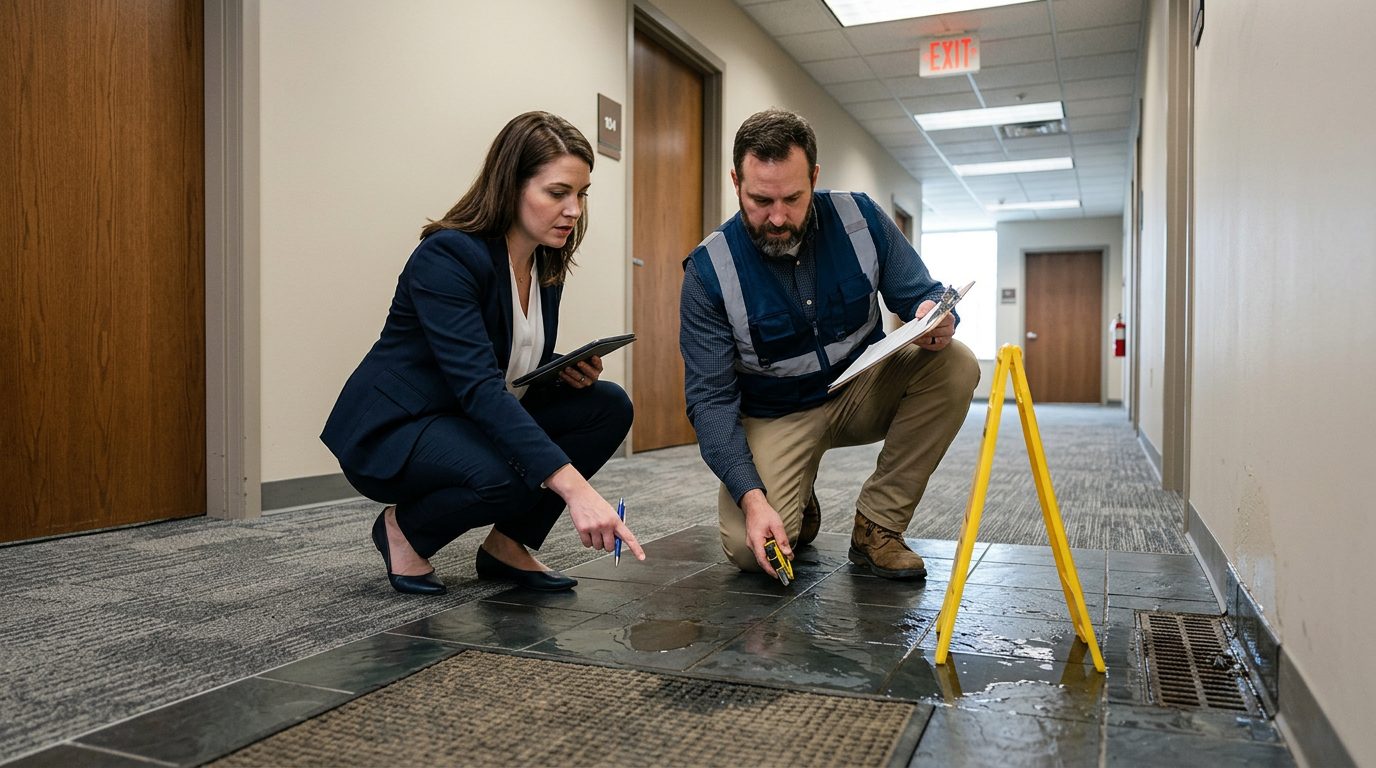
- Photograph the ice, wet surface, broken step, poor lighting, or missing handrail that caused your fall. Take wide shots of the surrounding area too—show the overall condition of the walkway, parking lot, or entrance.
- Photograph the weather. If it snowed or rained, capture that. If the ground is frozen solid, document it.
- Get witness contact information. Ask anyone who saw you fall for their name, phone number, and address. Write it down immediately; don’t rely on memory.
- Report the incident in writing to the property owner, manager, or business. An email to the property manager or a written note to the front desk creates a timestamped record. Keep a copy for yourself. Do not rely on a verbal report alone.
- Seek medical attention immediately—even if you feel fine. Some injuries, including head injuries and internal bleeding, develop over hours or days. Medical records create the critical link between the fall and your harm. They also establish the date and severity of your injury in an official document.
- Do not sign anything the property owner or their insurance company puts in front of you. Do not give a recorded statement. These can be used against you later. Politely decline and say, “I’ll have an attorney contact you.”
Preserve all records: – Medical bills, test results, imaging (X-rays, MRI), surgical reports, and discharge summaries – Prescription receipts and medication records – Physical therapy or rehabilitation invoices – Pay stubs showing lost wages or a letter from your employer confirming time off – Receipts for any equipment you had to buy (crutches, walker, mobility aids) – Photos of any visible injuries (bruising, scarring, swelling)
How Florida’s Comparative Negligence Rule Works—and Why It Matters
This is a rule many people don’t understand, and it directly affects whether—and how much—you can recover.
Here’s how it works in plain language:
If you are 50% or less at fault, you can still recover. Your settlement is reduced by your percentage of fault.
Example: You slip on ice in a parking lot. The property owner failed to salt the lot or post warning signs—clear negligence. But you were wearing shoes with worn-out soles that reduced traction. A jury might find you 20% at fault and the owner 80% at fault. If your total damages are $100,000, you recover $80,000 (your $100,000 minus your 20% share).
If you are more than 50% at fault, you recover nothing.
Example: You ignore a large, clearly visible “Wet Floor” sign, rush across a freshly mopped lobby in socks, and fall. A jury might find you 60% at fault. You cannot recover anything, even if the property owner bears some responsibility.
This rule protects property owners from liability when the injured person’s own carelessness is the primary cause. But it also protects injured people: partial fault does not bar recovery. Understanding this rule helps you evaluate your case realistically.
What Determines Settlement Value: The Real Drivers
Injury severity is the single largest factor. A minor sprain that heals in weeks is worth far less than a fractured femur requiring surgery, months of physical therapy, and permanent mobility loss. Catastrophic injuries—spinal cord injuries, traumatic brain injuries, amputations, severe burns—warrant substantially higher settlements because they cause permanent, life-altering harm.
Medical expenses matter enormously. Documented treatment costs—emergency room visits, imaging, surgery, hospitalization, rehabilitation, ongoing therapy—directly increase your claim’s value. Insurance companies use medical bills as a baseline for damages. More treatment = higher value.
Lost income counts. Time away from work, reduced earning capacity, or permanent job loss adds real economic harm. Provide pay stubs, tax returns, or a letter from your employer confirming lost wages.
Long-term effects raise value significantly. Chronic pain, scarring, permanent loss of mobility, need for assistive devices, or ongoing medical care all demonstrate lasting harm. These factors convince insurers that your injury is serious and warrants a larger settlement.
Strength of evidence of negligence. Clear photographic evidence of the hazard, credible witness statements, an incident report, and documentation of the property owner’s failure to maintain or warn the premises all increase your negotiating power. Weak evidence of negligence means a lower settlement, even if your injury is severe.
The property owner’s conduct. Did they ignore a known hazard for days? Fail to inspect the property after a storm? Refuse to fix a broken step? Deliberate indifference strengthens your case.
Realistic Settlement Ranges—and Why They’re Not Promises
These ranges reflect common outcomes but are not promises of any particular result:
- Minor injuries (ankle sprain, small laceration, minor bruising, minimal medical care): $2,000–$10,000
- Moderate injuries (fractured wrist or ankle, significant bruising, several weeks of treatment, short-term lost wages): $10,000–$50,000
- Severe injuries (fractured hip or femur, multiple fractures, traumatic brain injury, long-term disability, permanent scarring, months or years of treatment): $50,000–$250,000+
- Catastrophic injuries (spinal cord injury causing paralysis, severe traumatic brain injury, amputation, permanent loss of function): $250,000 and above
Your case may fall outside these ranges. Settlement depends entirely on your facts: the owner’s conduct, evidence strength, medical care extent, injury severity, and clarity of negligence.
Comparing your situation to someone else’s settlement is unreliable. Each case is unique. What matters is your injury, your evidence, and your negligence claim.
Not sure what your next step is?
Talk it through with our team — the first consultation is free, confidential, and carries no obligation.
Why This Firm Handles Catastrophic Slip and Fall Injuries
Most slip and fall cases involve minor injuries. But some don’t. A fall down a flight of stairs can cause a spinal cord injury and paralysis. A fall on a hard surface can cause a traumatic brain injury. An elderly person’s fall can result in a hip fracture that ends their independence. A fall from a height can result in amputation or severe burns.
If your slip and fall caused a catastrophic, permanent injury, you need immediate legal guidance. These cases are complex, involve substantial damages, and require experienced representation to pursue your recovery.
This firm focuses exclusively on catastrophic personal injury cases—including catastrophic slip and fall injuries—and handles cases nationwide, not just in Florida. If you’ve suffered a life-altering injury from a fall on someone else’s property, regardless of where you live, reach out to discuss what happened and what your options are.
Why Documentation Strengthens Your Claim
Photos of the hazard, weather, and scene show exactly what caused your fall and whether the property owner had a duty to fix or warn you. They are powerful evidence.
Medical records establish the direct, documented link between the fall and your injuries. They show the date, severity, and treatment—all critical to proving harm.
Witness statements corroborate your account of what happened and support your claim of negligence. Credible, independent witnesses are valuable.
An incident report filed with the property owner creates a written, timestamped record. It shows you reported the hazard promptly and demonstrates the owner’s awareness.
Proof of lost income—pay stubs, employer letters, tax returns—demonstrates economic harm and increases claim value.
Photos of visible injuries—bruising, scarring, swelling—provide visual evidence of harm.
All documentation strengthens your claim’s value and makes settlement more likely. Insurance companies take documented claims more seriously than claims lacking evidence.
The Two-Year Deadline: Why Acting Now Matters
You have two years from the date of your slip and fall to file a lawsuit in Florida. This deadline is absolute and cannot be extended except in rare circumstances.
Why does this matter? Because waiting erodes your case:
- Evidence disappears. Photos fade, security camera footage is deleted, and the scene changes.
- Witnesses forget. Memory fades over months and years. Witness statements become less reliable.
- Medical records become stale. The longer you wait to seek treatment, the weaker the link between the fall and your injury.
- Liability becomes harder to prove. The property owner may repair the hazard, destroying evidence of negligence.
Early action—documenting the scene, seeking medical care, gathering witness information, and consulting an attorney—protects your rights and strengthens your negotiating position. Insurance companies take early action seriously. Waiting signals weakness.
When to Reach Out for Legal Guidance
If you’ve slipped and fallen on someone else’s property, an attorney can review the facts and assess whether the property owner was negligent. Many people in your situation find it helpful to get a professional perspective early—especially if your injury is moderate to severe, if you’ve incurred significant medical bills, or if you’re unsure about your rights.
There is no cost to discuss what happened and what your options are. Reach out to get answers and protect your claim.
Have questions about what happened?
Ask our team directly. The first conversation is free, confidential, and there is no obligation to continue.
Frequently Asked Questions
What counts as negligence in a slip and fall case?
A property owner is negligent when they knew or should have known about a dangerous condition (ice, wet floor, broken step, poor lighting) and failed to fix it, inspect it, or warn visitors.
How long do I have to file a slip and fall lawsuit in Florida?
You have two years from the date of the fall to file a lawsuit under Florida law.
Can I recover damages if I was partially at fault?
Yes, if you are 50% or less at fault. Your recovery is reduced by your percentage of fault. If you are more than 50% at fault, you cannot recover.
What evidence
Time Matters
In Florida, you have a limited window to pursue a slip and fall claim. The sooner you act, the sooner we can investigate your injury, preserve evidence, and begin building your case.
What Determines Your Settlement Amount
Medical Costs
Emergency care, hospital stays, surgery, physical therapy, ongoing treatment, medications, and any assistive devices or home modifications needed due to your injury.
Lost Wages and Income
Wages you lost while recovering, and reduced earning capacity if your injury affects your ability to work in the future.
Pain and Suffering
Compensation for physical pain, emotional distress, loss of enjoyment of life, and the impact of your injury on daily activities and relationships.
Liability and Negligence
Whether the property owner knew or should have known about the icy condition, failed to warn visitors, and did not take reasonable steps to prevent the hazard.
How We Help You Build Your Case
Investigate the Scene
We gather photos, weather records, maintenance logs, and witness statements to establish that the property owner knew or should have known about the ice and failed to address it.
Document Your Injuries
We work with your medical providers to build a complete record of your treatment, recovery, and any lasting effects—critical to valuing your claim fairly.
Negotiate with Insurance
We handle all communication with the property owner's insurance company, pushing for fair compensation based on the full scope of your damages.
Move Quickly
Evidence fades and memories blur. We act fast to preserve what matters and keep your claim on track within Florida's legal deadlines.
Common Questions About Slip and Fall Settlements
What counts as negligence in a slip and fall case?
A property owner is negligent when they knew or should have known about a dangerous condition—such as ice, wet floors, broken steps, or poor lighting—and failed to fix it, inspect it, or warn visitors.
Does Florida's weather excuse property owners from liability?
No. While natural accumulation of ice may limit liability in some cases, property owners still must warn visitors of known hazards and take reasonable steps to clear walkways and common areas.
What if I was partially at fault?
Florida allows recovery even if you share some fault, as long as you are not more than 50% responsible. Your settlement would be reduced by your percentage of fault.
How long does a settlement take?
Some cases settle within months; others take longer depending on the severity of your injury, the clarity of liability, and whether the insurance company cooperates. We work to resolve your case as efficiently as possible.
Ready to Discuss Your Slip and Fall Claim?
Related practice areas
- Slip and Fall Statute of Limitations in Florida: How Long Do You Have to Sue?
- Spinal Cord Injuries: A Guide for Victims and Families Facing Paralysis
- Slip and Fall vs. Trip and Fall: NJ Settlement Amounts