

Slip and Fall Claims
What Are the Chances of Winning a Slip and Fall?
Your outcome depends on whether the property owner failed to maintain safe conditions or warn you of hazards. Learn what it takes to build a strong claim.
By CHG Lawyers · Published October 01, 2026
What Are the Chances of Winning a Slip and Fall Lawsuit in Florida?
There is no universal “win rate” for slip and fall lawsuits. Your chances depend entirely on the specific facts of your incident and what you can prove under Florida law. The real question isn’t “what are the odds?” but rather “what must I prove?”—and understanding the legal elements that determine liability will give you a clearer picture of your own situation than any generic statistic ever could.

If you're researching this because you or a family member recently fell and are trying to understand whether you have a viable claim, reach out. Talk it through with our team — the first consultation is free, confidential, and carries no obligation.
The Short Answer: It Depends on What You Can Prove
Most slip and fall lawsuits settle before trial. Settlement value depends on how strong your claim is. You must prove four specific things:
- The property owner had a duty to keep the premises safe.
- They breached (broke) that duty.
- The breach caused your fall and injury.
- You suffered measurable damages.
Without all four elements, you don’t have a winning slip and fall lawsuit—no matter how badly you were hurt.
The property owner is not automatically liable simply because you were injured on their property. You must show they knew (or reasonably should have known) about a dangerous condition and failed to fix it or warn you.
Is It Hard to Win a Slip and Fall Lawsuit in Florida?
Slip and fall lawsuits are often harder to win than other personal injury claims. You must prove the property owner was negligent. The burden is on you to demonstrate they failed in their legal responsibility to maintain a reasonably safe premises.
Many slip and fall lawsuits fail because the injured person cannot establish that the owner knew or should have known about the hazard. If you slipped on water that spilled moments before you fell, proving the owner should have discovered and cleaned it up is more difficult. If the water had been there for hours, your argument strengthens significantly.
The longer a dangerous condition existed, the stronger your case that a reasonable property manager should have found it during routine inspections.
What You Must Prove to Win a Slip and Fall Lawsuit
To win a slip and fall lawsuit, you must establish four legal elements:
Duty of Care: The property owner had a legal responsibility to keep the premises reasonably safe for visitors like you. This duty exists whether you were a customer, tenant, guest, or invitee.
Breach of Duty: The owner failed to maintain the property or warn of a known hazard. Examples include:
- A wet floor with no warning sign
- A broken step
- Inadequate lighting
- Debris in a walkway
Causation: The dangerous condition directly caused your fall and injury. You must show a clear connection between the hazard and your harm—not just that you fell on the property.
Damages: You suffered measurable harm. This includes:
- Medical bills
- Lost wages
- Pain and suffering
- In serious cases, permanent disability or reduced earning capacity
Factors That Influence Your Slip and Fall Lawsuit Outcome
Several specific circumstances determine whether a property owner is held liable:
How the hazard was created. If the owner created the dangerous condition through negligence (failing to maintain the property, poor lighting, or broken fixtures), liability is clearer. If a customer spilled something moments before you fell, establishing that the owner should have known is harder.
How long the hazard existed. A wet floor that’s been there for minutes differs from one there for hours. The longer a hazard persists, the more likely a court will find the owner should have corrected it.
Whether the owner knew about it. Direct evidence—a maintenance log, a prior complaint, or a witness statement—strengthens your case significantly. This is often the deciding factor.
Whether the owner should have known. Even without direct knowledge, an owner may be liable if a reasonable property manager would have discovered the hazard during routine inspections.
Warning signs or barriers. If the owner posted clear warning signs or blocked off the dangerous area, liability may be reduced or eliminated.
Your own conduct. If you were distracted, not paying attention, or ignored obvious warnings, your recovery may be reduced under Florida’s comparative negligence rule.
Florida’s Comparative Negligence Rule: How It Affects Your Recovery
Under Florida Statute § 768.81, comparative negligence applies to slip and fall cases. If you are found partially at fault for your fall, your recovery is reduced by your percentage of fault.
Example: You were awarded $100,000 but found 20% at fault. You would recover $80,000. If you are found more than 50% at fault, you recover nothing.
This rule is critical in Florida slip and fall cases. The property owner’s insurance company will argue that you should have been more careful, that the hazard was obvious, or that you weren’t paying attention. Strong evidence of the owner’s negligence—and documentation that you were acting reasonably—improves your chances of a full or substantial recovery.
Not sure what your next step is?
Talk it through with our team — the first consultation is free, confidential, and carries no obligation.
The Role of Evidence and Documentation
Evidence is everything in a slip and fall lawsuit. Gaps in documentation make your case much harder to prove.
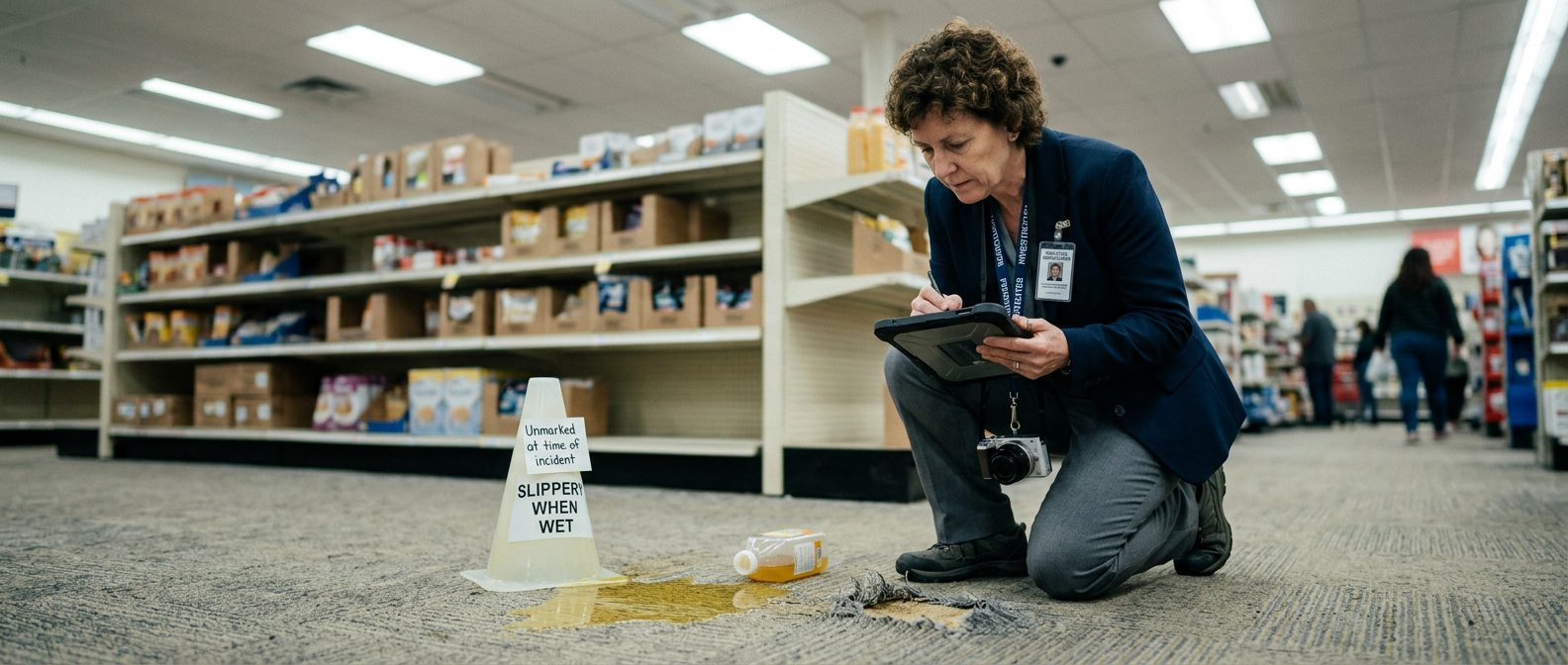
Photos or video of the hazard taken immediately after the fall are powerful evidence. Photograph the wet floor, broken step, debris, or poor lighting right away. If possible, capture the condition before it changes or is cleaned up.
Witness statements from people who saw the condition or the fall are crucial. Get their names, phone numbers, and email addresses before they leave the scene. A witness who can testify that the hazard was obvious and had been there for a long time strengthens your case significantly.
Medical records documenting your injuries and treatment establish the severity of your harm. They create a clear timeline of your recovery and link your injuries directly to the fall.
Maintenance records, incident reports, or prior complaints about the same hazard can prove the owner knew or should have known about the danger. If others complained about the same wet floor or broken step, that’s powerful evidence of negligence.
Gaps in documentation—no photos, no witnesses, no incident report filed—weaken your claim significantly. If you don’t report the fall to the property owner immediately, the owner can argue they never knew about the hazard.
For guidance on what to collect, see our slip-and-fall evidence checklist.
Severity of Your Injuries Matters
A minor bruise is harder to justify pursuing than a serious fracture, head injury, or permanent damage. More severe injuries generate higher medical bills and stronger evidence of damages, which increases settlement value.
Catastrophic injuries—spinal cord damage, traumatic brain injury, or permanent disability—significantly increase the value of a settlement or verdict. If your slip and fall has resulted in paralysis, a permanent neurological injury, or long-term disability, your case has substantially greater value than a minor injury case. The difference in recovery between a minor fracture and a catastrophic injury can be hundreds of thousands of dollars.
When Do Most Slip and Fall Lawsuits Settle?
The vast majority of slip and fall lawsuits settle before trial. Settlement typically occurs during pre-trial negotiations or mediation once both sides have exchanged evidence.
A strong claim with clear liability and documented injuries settles faster and for more money. Weak claims—where liability is unclear or injuries are minor—may take longer to settle or may not settle at all.
Settlement typically occurs once both sides have a realistic sense of the case’s strength. If the evidence strongly supports your version of events and your injuries are well-documented, the property owner’s insurance company will be motivated to settle rather than risk a jury verdict.
Is It Worth Suing for a Slip and Fall?
Whether a lawsuit makes sense depends on the severity of your injuries, the clarity of the owner’s liability, and the costs of pursuing the claim. Medical expenses, lost wages, and pain and suffering are all recoverable if you win. An attorney working on contingency (paid only if you recover) can evaluate whether your case is worth pursuing without upfront cost to you.
Even if your injuries seem minor now, some slip and fall injuries worsen over time. Early legal advice can protect your rights and ensure you don’t miss the deadline to file a lawsuit in Florida.
Florida’s Two-Year Statute of Limitations
Under Florida Statute § 95.11, you generally have two years from the date of your injury to file a slip and fall lawsuit. Missing this deadline means you lose your right to sue, regardless of how strong your case is. If you were injured on someone else’s property, don’t delay in seeking legal advice.
Have questions about what happened?
Ask our team directly. The first conversation is free, confidential, and there is no obligation to continue.
What Is the Typical Payout for a Slip and Fall?
There is no “typical” payout because every case is different. Settlements range from a few thousand dollars for minor injuries to hundreds of thousands for serious, permanent injuries. Factors affecting settlement value include:
- Medical costs
- Lost income
- The severity and permanence of injury
- The strength of liability evidence
- The property owner’s insurance limits
A catastrophic injury—paralysis, traumatic brain injury, or amputation—can result in a much larger settlement or verdict than a minor fracture. The more severe and permanent your injury, the higher the potential recovery.
Frequently Asked Questions
What if I was partially at fault for my slip and fall?
You can still recover in Florida under comparative negligence rules, but your award is reduced by your percentage of fault. If you’re found more than 50% at fault, you recover nothing.
How long do I have to file a slip and fall lawsuit in Florida?
You generally have two years from the date of your injury to file a lawsuit under Florida Statute § 95.11. Missing this deadline means you lose your right to sue.
Do I need a witness to win a slip and fall lawsuit?
A witness helps, but you can win without one if you have strong evidence of the property owner’s negligence—photos, maintenance records, prior complaints, or medical documentation of your injuries.
Should I report the fall to the property owner immediately?
Yes. Report it to the manager or owner right away and ask them to file an incident report. This creates a record that they knew about the incident and can help establish when the hazard existed.

Next Steps: Understanding Your Own Situation
If you’ve slipped and fallen on someone else’s property in Florida and are injured, the strength of your slip and fall lawsuit depends on facts unique to your incident. Gathering evidence immediately—photos, witness contact information, medical records, and an incident report—is critical to protecting your claim.
If you’re researching this because you or a family member recently fell and are trying to understand whether you have a viable claim, reach out. An attorney can review your specific circumstances, explain how Florida’s comparative negligence rule and two-year statute of limitations apply to your case, and discuss realistically whether you have a claim and what it might be worth.
Contact CHG Personal Injury Lawyers for a free case evaluation to discuss what happened and learn whether you may have a claim against the property owner.
Florida's Comparative Negligence Rule
In Florida, you can recover even if you were partially at fault—but your award is reduced by your percentage of fault. If you're found more than 50% at fault, you cannot recover. This means the strength of your claim depends on how clearly the property owner's negligence caused your fall.
What Determines Your Chances of Success
Did the Owner Know (or Should They Have Known)?
Property owners are responsible for hazards they knew about or should have discovered through reasonable inspection. A wet floor left unattended for hours, a broken step, or poor lighting are all red flags that the owner failed in their duty.
Was There a Warning or Barrier?
If the owner knew of a hazard but posted a clear warning sign or blocked off the area, your claim is weaker. However, if the hazard was hidden, poorly marked, or in a place where you reasonably wouldn't expect it, the owner's liability is stronger.
Was the Hazard Unreasonably Dangerous?
Minor uneven pavement or a small spill you could have easily avoided may not support a claim. But a gaping hole, a spill in a high-traffic area, or a maintenance failure that creates a genuine trap strengthens your case significantly.
Were You Acting Reasonably?
Courts consider whether you were paying attention, wearing appropriate footwear, and moving at a safe pace. Being distracted or ignoring an obvious warning can reduce your recovery—but it doesn't eliminate your claim if the owner's negligence was the primary cause.
How CHG Personal Injury Lawyers Evaluate Your Claim
We Gather Evidence
Incident reports, maintenance records, security footage, witness statements, and photos of the hazard all matter. We work to obtain this evidence before it disappears.
We Investigate the Owner's Duty
We determine what the property owner knew, when they knew it, and whether they took reasonable steps to fix the problem or warn visitors. Negligence is about failure—and we document it.
We Build Your Story
We connect your injuries to the fall, your fall to the hazard, and the hazard to the owner's negligence. A clear chain of causation is essential to winning.
We Know Florida Law
Slip and fall law varies by state. We focus exclusively on personal injury cases and understand how Florida courts apply comparative negligence and property-owner liability rules.
Common Questions About Slip and Fall Claims
What if the fall happened because I wasn't paying attention?
Inattention can reduce your recovery under comparative negligence, but it doesn't bar your claim. If the hazard was genuinely hidden or unreasonably dangerous, the owner's failure to maintain safe conditions may still outweigh your own carelessness.
How long do I have to file a lawsuit?
In Florida, the deadline is generally two years from the date of your injury. Waiting longer risks losing your right to sue entirely. Contact us promptly to protect your claim.
What if I signed a waiver or the property had a 'no liability' sign?
Waivers and signs do not shield property owners from liability for their own negligence in most cases. Florida law limits how much an owner can disclaim responsibility for maintaining safe premises.
What is my claim worth?
Value depends on your medical bills, lost wages, pain and suffering, and the strength of liability evidence. We evaluate each case individually and explain what factors affect your potential recovery.
Time Matters
Evidence fades, memories blur, and witnesses move on. The sooner you act, the stronger your claim. A free case evaluation costs nothing and protects your rights.