

Slip and Fall in Weston
Injured on Someone Else's Property? You May Have a Claim
Property owners have a legal duty to keep their premises safe. If you were hurt because they failed to do so, CHG Personal Injury Lawyers can help you understand your rights and pursue fair compensation.
By CHG Lawyers · Published September 25, 2026
Slip and Fall in Weston: When Property Owners Are Liable Under Florida Law
You fell on someone else’s property in Weston. Now you’re dealing with medical bills, pain, and maybe time off work. The question is: does the property owner owe you compensation?
The answer depends on one thing: negligence. Not every fall is the owner’s fault. But if they failed to keep the property reasonably safe—or failed to warn you of a hazard they knew about or should have discovered—they may be liable. This guide explains how Florida law works, what you need to prove, and what happens next.
If you don't win, you owe the attorney nothing —though you may owe case costs depending on your fee agreement. Talk it through with our team — the first consultation is free, confidential, and carries no obligation.
When Is a Property Owner Liable?
Under Florida Statute § 768.01, a property owner is responsible for injuries caused by their negligence. That means they had a duty to keep the property safe, they breached that duty, and that breach caused your injury.
You must prove four legal elements:
- Duty of care: The owner owed you a duty to maintain safe conditions. All property owners have this duty to visitors, customers, employees, and guests.
- Breach of duty: The owner failed to keep the property reasonably safe or failed to warn of a known hazard.
- Causation: That failure directly caused your fall and injury.
- Damages: You suffered real, measurable harm—medical bills, lost wages, pain, or permanent disability.
This applies everywhere: grocery stores, shopping centers, restaurants, apartment complexes, parking lots, offices, hotels, and retail businesses in Weston.
The “Should Have Known” Standard—A Powerful Tool
Here’s what makes Florida law favorable to injured people: a property owner may be liable even if they did not actually see the hazard. They’re liable if they should have known about it through reasonable inspection and maintenance.
This is the key difference. You don’t have to prove the owner saw the wet floor, the broken step, or the pothole. You only have to show that a reasonable property owner, conducting ordinary maintenance, would have discovered it.
Real examples:
- A spill sits on a grocery store floor for two hours during a busy shift. The store should have discovered it during routine floor checks.
- A parking lot has visible potholes for three weeks. The owner should have inspected the lot and found them.
- A stairwell light burned out five days ago. During routine maintenance, the owner should have noticed it.
- An apartment complex entrance gate has been broken for ten days. The owner should have discovered this during property inspections.
This standard shifts the burden: the owner cannot simply claim ignorance. Reasonable care requires regular inspection.
Breach of Duty: Common Hazards
A breach occurs when the owner fails to meet the standard of reasonable care. Common examples include:
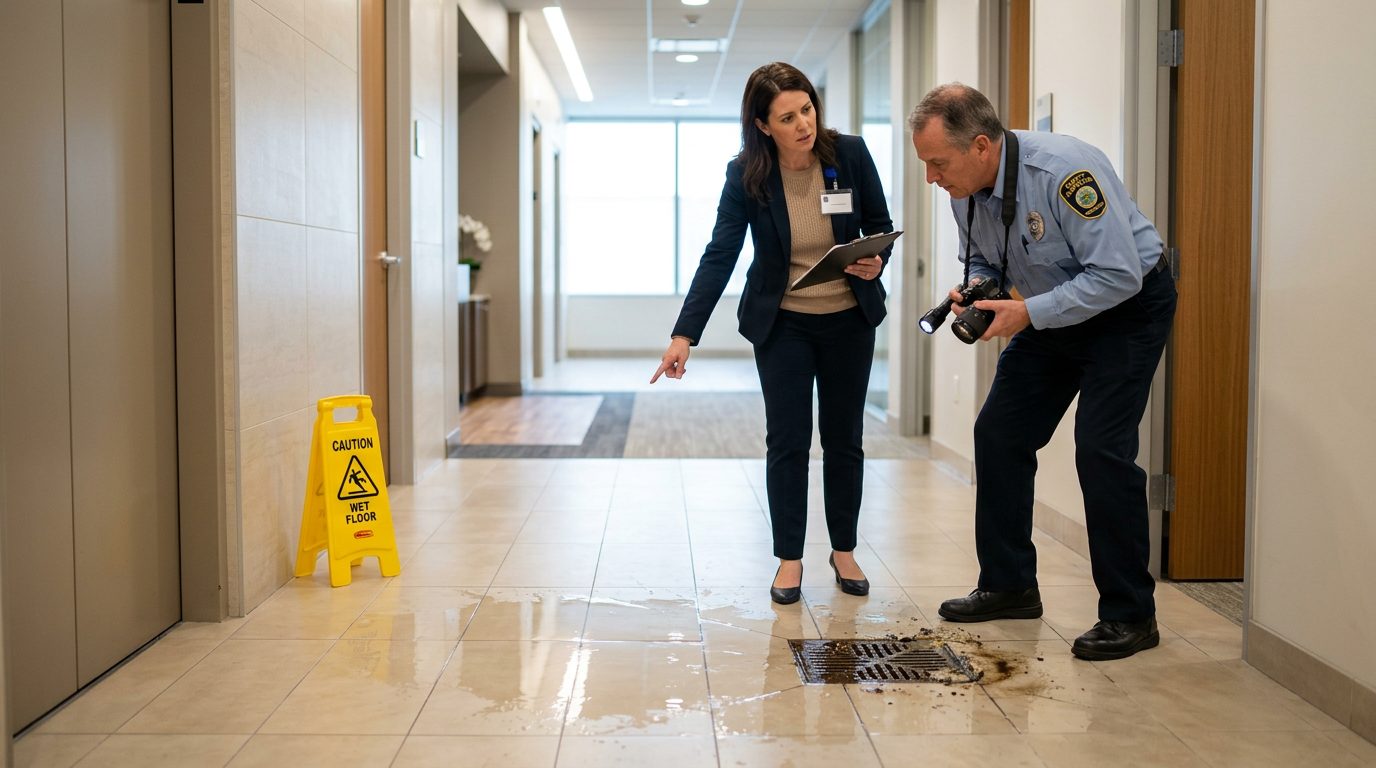
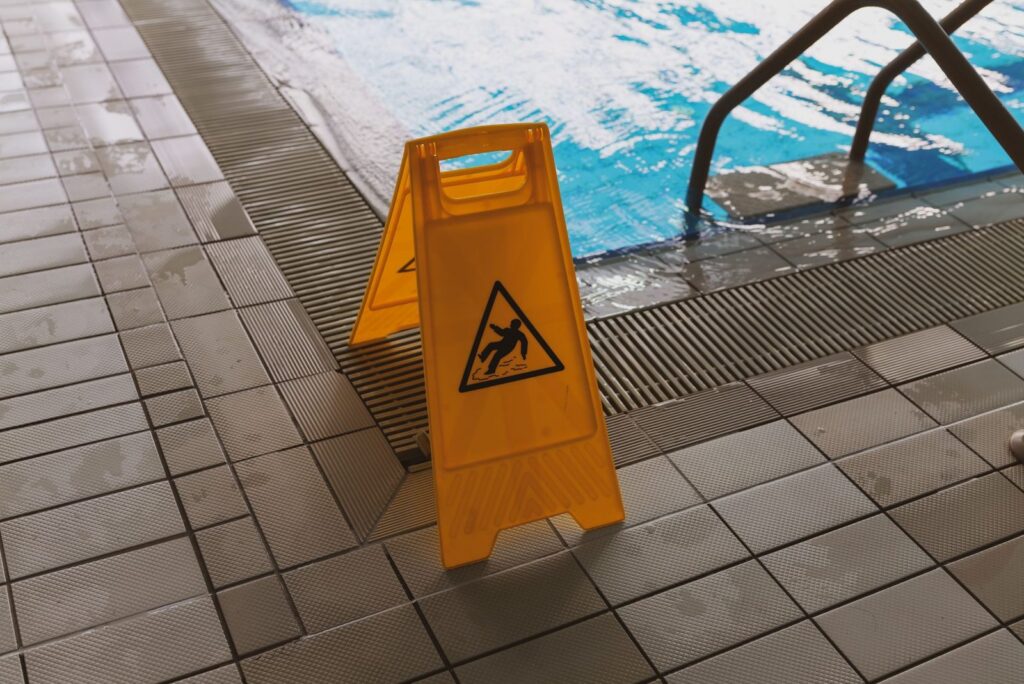
- Wet floors or spills: Failure to clean up promptly or post warning signs
- Debris and obstacles: Boxes, merchandise, or clutter blocking walkways
- Broken or deteriorating surfaces: Cracked pavement, broken stairs, uneven flooring, loose tiles
- Poor lighting: Inadequate or burned-out lights in parking lots, stairwells, entryways, or hallways
- Missing or broken safety equipment: Handrails on stairs or ramps, grab bars in bathrooms
- Worn or damaged flooring: Loose or torn carpeting, frayed edges
- Weather hazards: Accumulated ice or snow on walkways without treatment or warning
- Parking lot conditions: Potholes, deteriorating asphalt, unmarked hazards
Slip and Fall: From Minor Injury to Catastrophic Harm
Not all slip-and-fall injuries are the same. Some are minor. Others are life-altering.
Minor Slip-and-Fall Injuries
A scraped knee, small bruise, or minor sprain typically requires first aid or a quick doctor visit. You recover within days. These claims usually settle for $1,000 to $5,000, depending on medical costs and any lost wages.
Moderate Injuries
A broken bone, significant soft-tissue damage, or injury requiring weeks of physical therapy is more serious. A broken ankle requiring surgery means weeks in a cast, physical therapy, and time away from work. These claims typically settle for $10,000 to $50,000.
Catastrophic Injuries—When a Fall Changes Everything
A slip and fall can cause catastrophic, permanent injury. This is where the distinction matters most.
A fall from a height, a fall on a hard surface, or a fall by an older person can result in:
- Spinal cord injury and paralysis (paraplegia or quadriplegia)
- Traumatic brain injury (TBI)
- Severe fractures requiring multiple surgeries
- Permanent disability or loss of function
- Wrongful death
When a slip and fall causes spinal cord injury, the victim may face:
- Emergency surgery and hospitalization
- Months or years of rehabilitation
- Lifelong medical care, medications, and equipment
- Loss of independence and earning capacity
- Permanent pain and psychological trauma
These claims involve settlements and verdicts exceeding $100,000—often much more. A 45-year-old who suffered spinal cord injury and partial paralysis from a fall on a negligently maintained apartment complex staircase faces decades of medical care, home modifications, and lost income. The damages reflect that reality.
This is where CHG Personal Injury Lawyers’ experience matters. We focus exclusively on catastrophic injury claims. A slip-and-fall case that results in paralysis or brain damage is not routine. It demands attorneys who understand spinal cord injury, traumatic brain injury, lifetime medical costs, and the legal strategies required to hold property owners accountable for permanent harm.
Factors That Affect Settlement Value
Insurance companies evaluate your claim based on:
- Medical expenses: Higher documented costs increase settlement value.
- Lost wages and lost earning capacity: Documented time off work and reduced future earning power matter significantly.
- Age and occupation: A younger person or high-income worker has greater lost earning capacity over a lifetime.
- Severity and permanence: Permanent disability, scarring, or chronic pain increase damages substantially.
- Quality of evidence: Photographs of the hazard, witness statements, security footage, and incident reports strengthen your position.
- Insurance coverage limits: The property owner’s liability insurance cap affects the maximum recovery.
- Comparative fault: If you were partially at fault, your recovery is reduced proportionally—but under Florida law, you can still recover if you are 50% or less at fault.
Proving Your Case: Evidence You Must Gather
The sooner you gather evidence, the stronger your claim. Evidence often disappears quickly.
Immediate Steps (At the Scene or Within Hours)
Photograph everything. Take multiple photos of the hazard from different angles—the wet floor, broken step, debris, poor lighting, or uneven pavement. Include the surrounding area for context. Photograph your injuries immediately and document them daily as they heal or worsen.
Get witness names and contact information. Anyone who saw your fall or the hazard is valuable. Write down their full names, phone numbers, and what they witnessed. Witness statements are powerful evidence.
Report the incident formally. Tell the property manager, store manager, or building supervisor about your fall. Ask for a written incident report and request a copy. This creates an official record.
Preserve physical evidence. Keep the clothing and shoes you wore. They may show evidence of the hazard (wet stains, debris, wear patterns).
Document your account in writing. Write down your detailed account while it’s fresh: date, time, exact location, what you were doing, what caused the fall, how you landed, and your immediate injuries. This contemporaneous account is credible evidence.
Within Days
Seek medical attention immediately. Do not delay. Prompt medical care establishes that the fall caused your injury. Insurance companies argue that delays suggest the injury was minor or caused by something else. Get examined, keep all records, and follow your doctor’s treatment plan.
Collect all medical records and bills. Keep copies of emergency room reports, imaging (X-rays, MRI), surgical records, prescriptions, physical therapy notes, and all medical bills. These document the injury’s severity and cost.
Document lost wages. If you missed work, obtain written confirmation from your employer showing dates and hours missed. This quantifies economic damages.
Within 30 Days (Critical)
Request security camera footage. Contact the property owner or manager and request security footage from the time of your fall. Security footage is typically deleted within 30 to 90 days. If you wait, it’s gone forever. Request it in writing and keep a copy of your request.
Obtain the incident report. Follow up on the formal incident report you requested. Get a certified copy.
Photograph the scene again. If the hazard still exists, photograph it again. If it’s been repaired, that’s evidence the owner knew it was dangerous.
If you slipped and fell on someone else's property in Weston and are dealing with injuries, medical bills, or lost income, reach out. Talk it through with our team — the first consultation is free, confidential, and carries no obligation.
The Two-Year Deadline: Act Now
In Florida, the statute of limitations for slip-and-fall claims is two years from the date of the accident.
You have two years to file a lawsuit. After that, you lose the right to sue forever.
But don’t wait until year two. Evidence disappears fast:
- Security footage is deleted within 30 to 90 days.
- Witnesses move, change phone numbers, or forget details.
- Property conditions change (hazards are repaired, making them harder to prove).
- Medical records become harder to obtain.
If your accident occurred on government property (a city park, county building, or state facility), different rules apply. You may have as little as 30 days to file a notice of claim. Contact an attorney immediately if this applies to you.
Comparative Negligence: You Can Still Recover if Partially at Fault
Florida recognizes that accidents often involve shared fault. If you were partially responsible for your fall, you can still recover damages—but your award is reduced by your percentage of fault.
Example: You slipped on a wet floor you didn’t see. But you were also walking quickly without watching where you were going. A jury might find the store 70% at fault and you 30% at fault. If damages are $50,000, you recover $35,000 (70% of $50,000).
However, if you are found to be more than 50% at fault, you cannot recover any damages. The bar is 50/50. If the jury finds you 51% at fault, you recover nothing.
How Attorney Fees Work
Most personal injury attorneys, including CHG Personal Injury Lawyers, work on a contingency-fee basis. You pay nothing upfront. The attorney takes a percentage of your settlement or jury award.
Typical contingency fees range from 25% to 40%, depending on case complexity:
- Early settlement (resolved before a lawsuit is filed): typically 25%
- Litigation case (requires a lawsuit and court proceedings): typically 33% to 40%
The attorney covers investigation costs, expert witness fees, court filing fees, and other case expenses. These costs are recovered from your settlement. If you don’t win, you owe the attorney nothing—though you may owe case costs depending on your fee agreement.
Always ask your attorney to explain the fee structure in writing before you hire them.
Frequently Asked Questions
Do I have to prove the property owner actually knew about the hazard?
No. Under Florida law, a property owner is liable if they should have known about the hazard through reasonable inspection and maintenance. If a spill has been on the floor for several hours during business hours, the owner should have discovered it during routine cleaning. The question is not whether they actually saw it, but whether a reasonable property owner conducting ordinary care would have found it.
What if I was partially at fault for my fall?
You can still recover under Florida’s comparative negligence rule. Your damages are reduced by your percentage of fault. But if you’re found more than 50% at fault, you recover nothing.
How long does a slip-and-fall case take?
Simple cases that settle quickly may resolve in a few months. Complex cases or cases requiring trial can take 1 to 3 years or longer. Catastrophic injury cases often take longer because they involve substantial damages and require detailed medical and economic evidence.
Can I file a claim if I didn’t seek medical attention right away?
Yes, but seek medical attention immediately. Delaying treatment gives insurance companies ammunition—they’ll argue the injury wasn’t serious or wasn’t caused by the fall. Prompt medical care strengthens your claim. Keep all medical records.
What if the property owner says I signed a waiver?
Waivers are generally not enforceable in slip-and-fall cases. They attempt to waive liability for the owner’s negligence, which violates Florida public policy. A property owner cannot ask you to waive your right to hold them accountable for failing to maintain safe premises.
What if my fall caused a spinal cord injury or brain damage?
This is a catastrophic injury claim. It requires attorneys experienced in catastrophic harm. Medical costs, rehabilitation, lifetime care, lost earning capacity, and pain and suffering are substantial. Contact us immediately. These cases demand focused attention to maximize your recovery.
Not sure what your next step is?
Talk it through with our team — the first consultation is free, confidential, and carries no obligation.
Next Steps
If you slipped and fell on someone else’s property in Weston and are dealing with injuries, medical bills, or lost income, reach out. We focus exclusively on personal injury claims, from routine accidents to catastrophic, life-altering injuries.
Contact CHG Personal Injury Lawyers for a free case evaluation. We’ll review what happened, explain your rights under Florida law, and discuss your options—with no obligation and no upfront cost.
Important: Act Quickly
Florida law sets strict time limits for filing a slip-and-fall claim. The sooner you contact an attorney, the sooner we can preserve evidence, gather witness statements, and protect your rights.
What You Need to Know About Slip-and-Fall Liability in Weston
What Makes a Property Owner Liable?
A property owner is responsible if they knew—or reasonably should have known—about a hazard (a wet floor, broken step, debris, poor lighting) and failed to fix it or warn you. You don't have to prove they actually saw the danger; you only need to show they should have discovered it through normal inspection and maintenance.
How Do I Prove Negligence?
You'll need to show that the owner owed you a duty of care, breached that duty, and your injury resulted from that breach. Evidence includes photos of the hazard, witness statements, maintenance records, incident reports, and medical documentation of your injuries.
What If I Was Partially at Fault?
Florida follows comparative negligence rules. Even if you were partly responsible for the fall, you may still recover damages—though your award will be reduced by your percentage of fault. If you were more than 50% at fault, you cannot recover.
What Damages Can I Recover?
You may be entitled to compensation for medical bills, ongoing treatment, lost wages, pain and suffering, and permanent disability if your injuries are long-term. An attorney can evaluate your specific situation and help you understand what your claim may be worth.
Why Choose CHG Personal Injury Lawyers
Focused on Catastrophic Injury
We focus exclusively on serious personal injury cases, including slip-and-fall incidents that cause lasting harm. We understand the medical, financial, and emotional toll of life-altering injuries.
Thorough Evidence Gathering
We work quickly to collect photos, video, maintenance logs, witness statements, and medical records before evidence disappears or memories fade. Early action protects your claim.
Experienced Legal Team
Our attorneys have years of experience handling slip-and-fall and premises-liability cases. We know how to negotiate with insurers and take cases to trial when necessary.
Clear, Honest Communication
We explain your rights and options in plain language, not legal jargon. You'll always know where your case stands and what to expect next.