

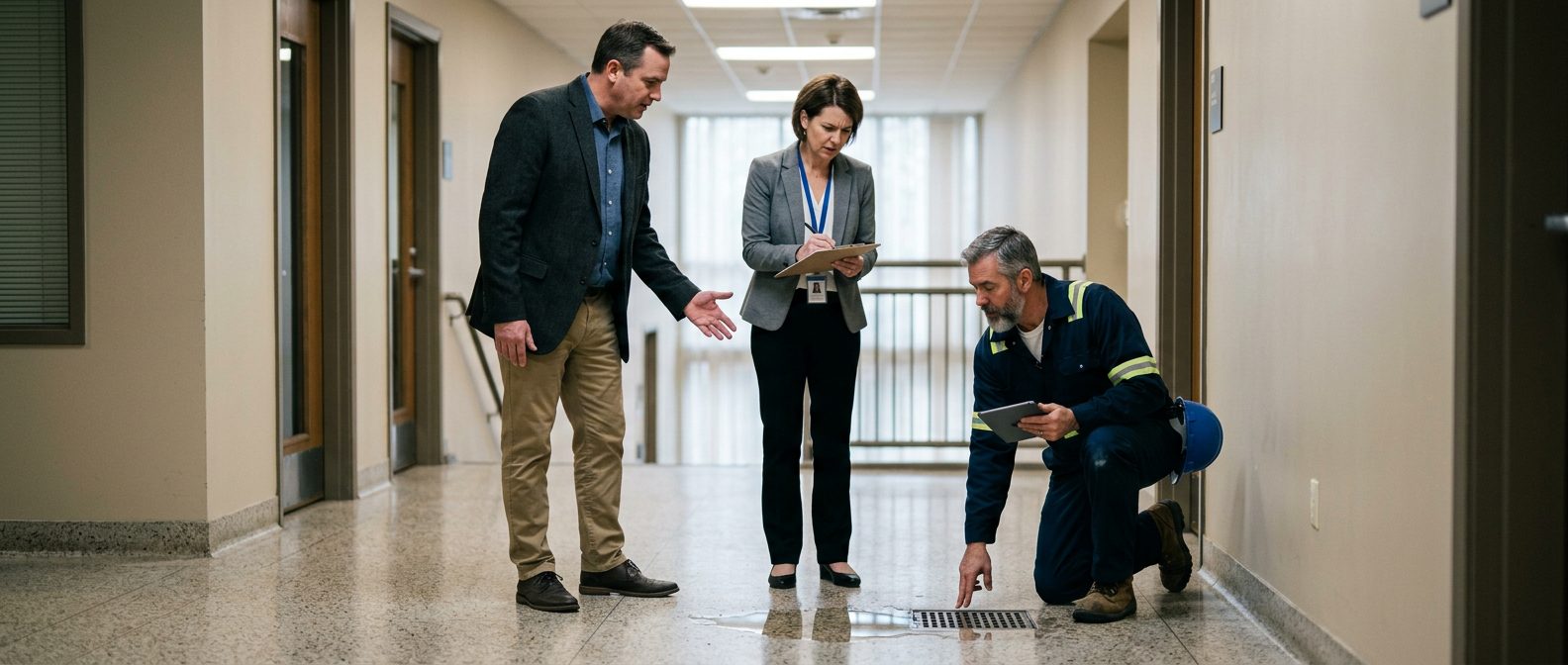
Slip and Fall | Broken Wrist
Slip and Fall Broken Wrist Settlement: When a Landlord's Negligence Causes Your Injury
You slipped on a wet floor, cracked pavement, or unmaintained stairway at an apartment complex—and broke your wrist. The landlord should have fixed the hazard or warned you. Learn what your claim may be worth and what steps to take next.
By CHG Lawyers · Published September 09, 2026
Slip and Fall Broken Wrist Settlement in Florida: What Landlords Owe You and How Insurance Limits Affect Recovery
A broken wrist from a slip and fall at an apartment complex, parking garage, or rental property can mean the landlord owes you money. But only if the owner knew (or should have known) about the hazard and didn’t fix it or warn you.
What you can recover depends on several things: – How bad your injury is – What medical care you needed – Lost income – How much fault a court might assign to you – The landlord’s insurance policy limit (a hard ceiling on recovery, no matter how strong your case is)

Not sure what your next step is?
Talk it through with our team — the first consultation is free, confidential, and carries no obligation.
When a Landlord or Property Owner Is Legally Responsible
Under Florida law, a landlord must keep common areas safe. This includes hallways, stairs, walkways, parking areas, and entryways. That means fixing broken steps, clearing debris, maintaining good lighting, and addressing wet floors or ice quickly.
But not every fall creates landlord liability. You must prove three things:
1. The hazard existed. A cracked stair, pooled water, ice, loose carpet, or debris was on the property.
2. The landlord knew or should have known about it. This is the key question. If the hazard had been there for weeks, or was so obvious that a reasonable property owner would have found it during routine inspection, the landlord should have known. If it appeared moments before your fall and the landlord had no reasonable way to discover it, liability is weaker.
3. The landlord failed to repair it or warn you. No repair attempt, no warning sign, no area closure—just neglect.
Example: A stair cracked three months ago. The landlord got a maintenance request but never fixed it. You slip and break your wrist. That’s clear negligence.
By contrast: A guest spilled water in a hallway five minutes before you walked through, and the landlord had no chance to discover or clean it. Liability is much harder to prove.
How Insurance Policy Limits Create a Hard Cap on Recovery
Here’s what many people don’t realize until too late: the property owner’s liability insurance has a limit. It’s often $25,000, $50,000, $100,000, or $250,000 per occurrence. That limit is a ceiling. You cannot recover more than that from the insurance company, period.
Example: Your broken wrist claim is worth $80,000 in medical costs, lost wages, and pain and suffering. You have solid evidence of negligence. But the landlord’s liability policy covers only $50,000. You can recover a maximum of $50,000 from that policy.
You could pursue the landlord’s personal assets for the remaining $30,000, but most individual landlords have limited assets. That pursuit is often impractical.
This is why early case review matters. An experienced attorney can discover the policy limit during initial investigation. They can tell you upfront what the realistic maximum recovery is. If the policy limit is low and your damages are high, you’ll know to adjust expectations or explore whether other insurance (umbrella policies, commercial coverage) might apply.
Comparative Fault in Plain Language: How Your Own Actions Reduce Recovery
Florida recognizes that accidents often involve shared responsibility. Under Fla. Stat. §768.81, you can still recover damages even if you were partially at fault. As long as you were less than 50% responsible, you can recover.
But here’s what that means in practice: if a court or jury finds you 30% at fault, your recovery is reduced by 30%.
Example: Your damages total $60,000. The hazard was clear negligence by the landlord, but you were distracted by your phone and didn’t notice the wet floor sign that was posted. A court assigns you 20% comparative fault. You recover $48,000 (80% of $60,000). The landlord’s insurance company pays that reduced amount.
Courts evaluate comparative fault by asking: – Were you distracted or inattentive? – Did you ignore an obvious hazard or warning sign? – Were you in an area you shouldn’t have been? – Were you rushing or moving carelessly? – Did you have a reasonable opportunity to avoid the hazard?
Insurance companies use comparative fault arguments to lower settlement offers. Understanding how a court might view your conduct helps you evaluate whether their offer is realistic. If they claim you were 40% at fault and you believe you were 5% at fault, that’s a major negotiation point.
How Broken Wrist Injuries Are Valued: Medical Costs and Beyond
A broken wrist disrupts your life. You lose use of your hand during healing. That means pain, medical bills, time away from work, and sometimes permanent changes to hand function.
Medical costs in a broken wrist claim typically include: – Emergency room evaluation and X-rays – Orthopedic specialist consultation – Casting, splinting, or bracing – Physical therapy and rehabilitation (often 6–12 weeks) – Surgical repair if the fracture is complex (pins, plates, or screws) – Follow-up imaging and specialist visits
Non-medical damages cover: – Lost wages during recovery (typically 4–12 weeks for a simple fracture; longer if surgery was needed) – Reduced earning capacity if permanent damage leaves you unable to do your job – Pain and suffering—compensation for the physical and emotional toll
The treatment path matters enormously. A simple fracture treated with a cast and physical therapy costs less and heals faster than a complex fracture requiring surgery. Surgical cases often settle for higher amounts because they involve greater medical expense, longer recovery, higher risk of permanent complications like arthritis or chronic pain, and more lost wages.
Have questions about what happened?
Ask our team directly. The first conversation is free, confidential, and there is no obligation to continue.
What Settlement Ranges Actually Mean (And Why “Average” Payouts Mislead)
You’ll see settlement ranges online—typically $10,000 to $92,000 for broken wrists. These ranges reflect a wide mix of cases with vastly different injury severity, liability strength, insurance limits, and comparative fault findings. They’re not predictive of your case.
What matters is understanding the specific factors that influence your case:
- A minor non-surgical fracture with clear landlord negligence, no comparative fault, and good insurance coverage might settle for $30,000 to $50,000.
- A surgical fracture with complications, significant lost wages, strong negligence evidence, and no comparative fault could be worth considerably more.
- But if the landlord’s insurance policy has a $25,000 limit, that’s your ceiling—regardless of how strong your case is.
Early settlement offers from the insurance company are almost always low. They’re testing whether you’ll accept a quick payout without understanding your claim’s full value. That’s why early legal review matters: it helps you know whether an offer is fair or whether your case is worth pursuing further.
Building Your Claim: Evidence That Matters
Report the incident in writing to the landlord or property manager immediately. Send a certified letter or email describing the date, time, location, the hazard, and your injury. Keep copies. This creates a formal record that the property owner knew about the incident.
Photograph the hazard and area as soon as possible. Take photos of the exact spot where you fell, surrounding conditions, lighting, and any warning signs (or absence of them). If the hazard is temporary (like a wet floor), photograph it immediately. If it’s permanent (like a cracked step), photograph it later to show it’s still there.
Collect witness information. Get names, phone numbers, and email addresses from anyone who saw the fall or the hazard. Witness statements are powerful evidence of what actually happened.
Preserve all medical records. Obtain copies of every emergency room visit, specialist consultation, imaging report (X-rays, CT scans), treatment note, and physical therapy session. Your doctor’s detailed documentation of your injury, treatment, and prognosis is crucial to proving damages.
Request maintenance records from the landlord. Ask in writing for records of repairs, inspections, or prior complaints about that specific area. If the landlord has no maintenance records, or records show the hazard was known and ignored, that strengthens your claim significantly.
Document your own experience. Keep a journal of pain levels, activities you can’t perform, missed work days, and out-of-pocket expenses. This supports your pain-and-suffering and lost-wage claims.
Timeline: How Long Does a Slip and Fall Claim Take?
Most slip-and-fall cases settle without trial, taking anywhere from 6 months to 2 years depending on complexity and insurance company responsiveness.
Investigation phase (2–4 months): Gathering evidence—your medical records, the property’s maintenance history, photos, witness statements, prior complaints about the same area.
Negotiation phase (3–9 months): A demand letter goes to the insurance company. They respond with an initial offer (usually low). Settlement discussions follow. Many cases settle here.
Litigation phase (if needed, 1–2+ years): Discovery (exchanging evidence), depositions (recorded interviews), expert reports, trial preparation. Trial itself may last days or weeks.
Your medical recovery timeline also matters. Insurance companies often prefer to wait until you’ve completed treatment before settling. That way they know the full extent of your injury. Settling too early can leave you without compensation for ongoing complications or permanent disability.
Statute of limitations: Under Fla. Stat. §95.11, you have 2 years from the date of your injury to file a lawsuit. Don’t wait until the deadline approaches.
What Happens Next: Your Path Forward
Step 1: Report formally to the landlord or property manager in writing. Describe the incident, the hazard, and your injury. Keep all copies.
Step 2: Seek medical treatment and preserve all records. Detailed documentation strengthens your claim and establishes the full scope of your damages.
Step 3: Consult an attorney before accepting any settlement offer or signing anything. An experienced attorney can evaluate your case, research the insurance policy limit, assess comparative fault risk, advise you on fair value, and handle negotiations.
Step 4: Understand your realistic recovery. Your attorney will tell you upfront what the policy limit is, how strong liability is, whether comparative fault might apply, and what a realistic settlement range looks like.
Step 5: Make an informed decision. You’ll know whether to negotiate, pursue litigation, or accept an offer—based on facts, not guesswork.
Most personal injury attorneys work on contingency. They take a percentage of your settlement (typically 25–40%) and you pay nothing upfront. Court costs and expert witness fees are usually advanced by the firm and deducted from any recovery. So the financial barrier to pursuing a claim is low.
Want to know where you stand?
Tell us what happened and our team will walk you through the options available to you, at no cost.
FAQ
What should I do immediately after a slip and fall at an apartment complex?
Report the incident to the landlord or property manager in writing. Take photos of the hazard and surrounding area. Collect witness contact information. Seek medical attention. Document everything.
Can I recover if I was partially at fault for my slip and fall?
Yes. Under Florida law, you can recover as long as you were less than 50% responsible for the accident. However, any fault assigned to you reduces your recovery proportionally. If you’re found 25% at fault, you recover 75% of your damages.
What does an insurance policy limit mean for my case?
It’s a ceiling. If the landlord’s liability policy covers $50,000 and your damages are $80,000, you can recover a maximum of $50,000 from that policy. You could pursue the landlord’s personal assets for the remainder, but this is often impractical.
How long do I have to file a slip-and-fall lawsuit in Florida?
You have 2 years from the date of your injury to file a negligence lawsuit under Florida’s statute of limitations.
What if the landlord’s insurance company offers me a settlement right away?
Early offers are typically low. Get legal advice before accepting anything. An attorney can evaluate whether the offer reflects the true value of your claim given the policy limit, liability strength, and comparative fault risk.
Does my renter’s or homeowner’s insurance cover a slip and fall at an apartment?
No. Your claim goes against the property owner’s liability insurance, not your own. Your insurance typically doesn’t cover injuries on someone else’s property.
If you’ve broken your wrist in a slip and fall at an apartment, rental property, or other commercial space and you’re wondering whether the property owner bears responsibility, contact us for a free case evaluation. We help people understand their rights, evaluate their realistic recovery given insurance limits and comparative fault, and navigate the claims process from the beginning. Many people in your exact situation have reached out to learn what their case might be worth and what steps come next.
Act Quickly—Evidence Fades
Photograph the hazard, the scene, and your injury as soon as possible. Get the names and phone numbers of anyone who saw what happened. Request the landlord's maintenance records and incident reports in writing. The sooner you document everything, the stronger your claim.
What Happens After Your Slip and Fall
Report the Incident
Tell the landlord or property manager in writing about your slip and fall. Describe exactly what caused it—water, debris, broken steps, poor lighting, or another hazard. Keep a copy of your report.
Seek Medical Care
Get your wrist examined and treated by a doctor. Keep all medical records, bills, and imaging (X-rays, MRIs). These documents prove the injury and its cost.
Gather Evidence
Take photos of the hazard and the area where you fell. Collect witness names and contact information. Note the date, time, weather, and lighting conditions.
Know Your Rights
Landlords have a legal duty to keep common areas safe and to fix known hazards. If they failed to do so and you were injured, you may have a claim for your medical bills, lost wages, and pain and suffering.
Why Your Broken Wrist Claim Matters
Landlords Have a Duty to Maintain Safe Premises
Florida law requires landlords to keep common areas—hallways, stairs, parking lots, walkways—free of hazards. If they neglect that duty and you're injured, they may be liable for your damages.
Your Medical Bills and Lost Income Count
A broken wrist can mean surgery, physical therapy, time off work, and lasting pain. Your settlement should cover medical expenses, wages you lost while recovering, and compensation for your suffering.
Time Matters in These Cases
The sooner you report the incident, photograph the scene, and preserve evidence, the stronger your claim. Hazards get fixed, witnesses move away, and memories fade—act now.
You Don't Pay Unless There Is a Recovery
We handle slip and fall cases on a contingency basis: no fees unless there is a recovery. You focus on healing while we handle the legal work.
Common Questions About Slip and Fall Settlements
Can I recover if I was partly at fault?
Yes. Florida law allows you to recover even if you were partially responsible, as long as you were not more than 50% at fault. Your recovery is reduced by your percentage of fault.
What is a typical settlement for a broken wrist?
Settlements vary based on the severity of your injury, your medical costs, lost wages, and whether surgery or long-term therapy was needed. We evaluate each case individually to determine fair value.
How long does a slip and fall case take?
Most cases settle within months to a year or two. Some require litigation. We work to resolve your claim efficiently while ensuring you receive fair compensation.
What if the landlord says I was careless?
Landlords often blame tenants or visitors for slip and falls. But if the hazard existed because of the landlord's neglect—a spill left unattended, broken steps not repaired, poor lighting—the landlord bears responsibility.