


Slip and Fall Claims
How Much Can You Sue for a Slip and Fall?
Understanding the damages you may recover when you're injured on someone else's property due to negligence.
By CHG Lawyers · Published October 01, 2026
What Determines the Value of Your Slip-and-Fall Claim
You’ve been injured on someone else’s property—a grocery store, parking lot, hotel lobby, or apartment complex. Your first question is probably: “How much is my claim worth?”
The honest answer: there is no fixed payout. But that doesn’t mean the value is unknowable. What does determine it is a concrete set of factors—your injury, your actual losses, the strength of the property owner’s negligence, and what insurance is available to pay. Understanding these factors tells you whether pursuing a claim makes sense and what to realistically expect.
This article walks you through what actually drives value, so you can make an informed decision about your next step.
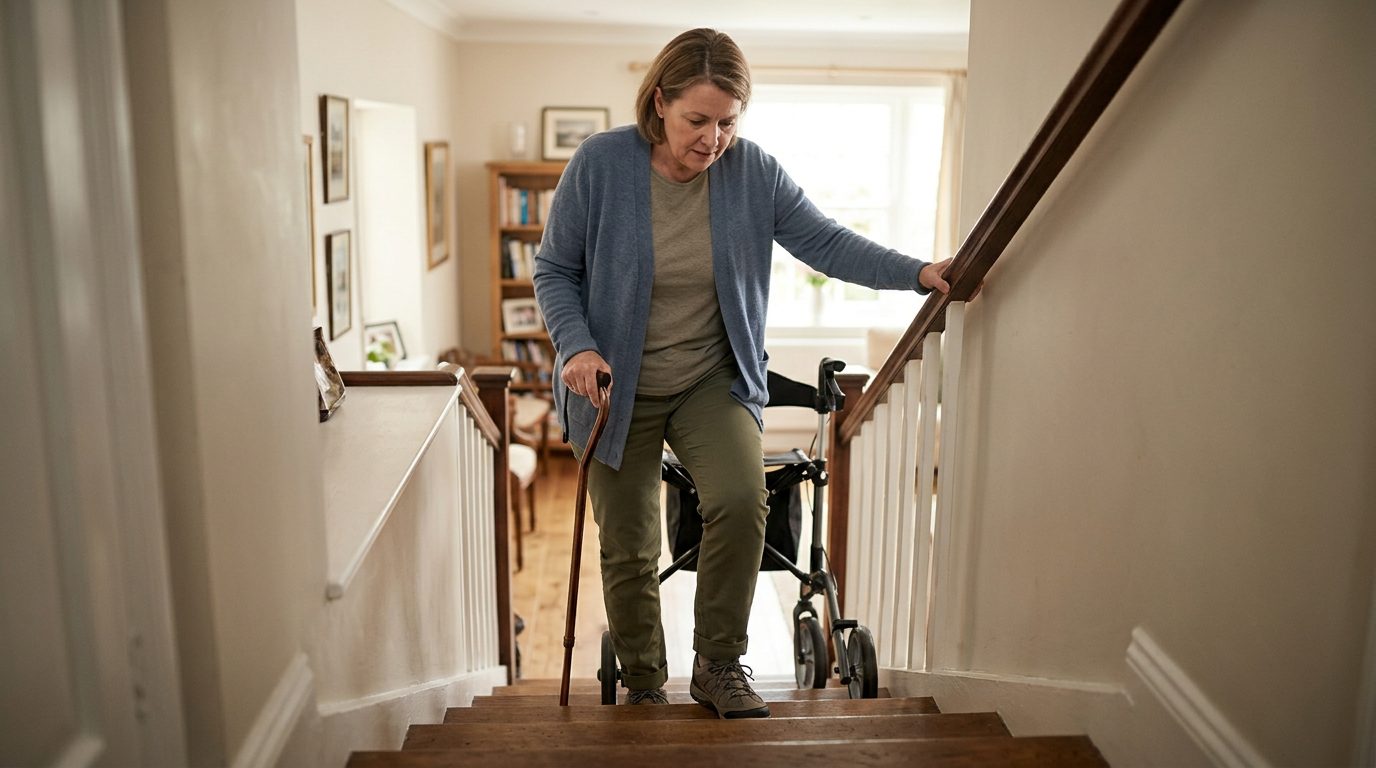
If your slip and fall caused lasting impairment, you may recover damages for permanent loss of function or mobility. Talk it through with our team — the first consultation is free, confidential, and carries no obligation.
Why “average settlement” numbers are misleading—and what matters instead
You may have seen claims online that the “average” slip-and-fall settlement is $10,000, $50,000, or some other figure. These numbers are rarely accurate and often dangerously misleading.
Here’s why: two people injured in the same store can have vastly different claim values. One person suffers a minor ankle sprain that heals in four weeks; another fractures their spine and faces permanent nerve damage. Both are “slip and fall,” but the second claim is worth orders of magnitude more.
The real question isn’t “what’s the average?” It’s “what factors determine my claim’s value?” That’s actionable and honest.
The foundation: your actual medical costs and treatment
Your medical expenses form the starting point of any claim value. This includes:
- Emergency-room or urgent-care visits
- Diagnostic imaging (X-rays, MRI, CT scans)
- Surgery or other procedures
- Hospital stays
- Physical therapy or rehabilitation
- Ongoing specialist care
- Prescription medications
- Assistive devices (crutches, braces, mobility aids)
- Home modifications (grab bars, ramps, accessible bathrooms)
A simple ankle sprain treated with rest, ice, and outpatient physical therapy might total $2,000–$5,000.
A fractured leg requiring surgery and weeks of inpatient and outpatient therapy often runs $15,000–$50,000 or more, depending on the fracture’s severity and whether complications arise.
Head or spinal injuries from falls can result in six-figure medical bills. A traumatic brain injury requiring emergency neurosurgery, ICU care, and months of cognitive rehabilitation easily exceeds $100,000. A spinal cord injury causing paralysis involves emergency surgery, acute hospitalization, and lifelong medical management—often totaling $500,000 to over $1 million in the first year alone, and millions more over a lifetime.
Future medical care counts too. If your fall caused a permanent injury requiring ongoing physical therapy, pain management, specialist visits, or assistive equipment, those future costs are recoverable. A lawyer will work with medical professionals to estimate lifetime care costs and include them in your claim.
Lost wages and lost earning capacity
If you missed work while recovering, those lost paychecks are part of your claim. You recover the actual wages you lost during treatment and healing.
But there’s a second, often larger component: lost future earning capacity.
If your injury prevents you from returning to your previous job or permanently reduces what you can earn, you recover the difference between what you would have earned and what you can now earn—calculated over your remaining working years.
Example: You were a construction worker earning $65,000 per year. A spinal injury from a fall leaves you with chronic pain and limited mobility, making construction work impossible. You retrain and find office work paying $40,000 per year. You can recover the $25,000 annual difference, multiplied by your remaining working years (adjusted for inflation and the time value of money). If you’re 35 and would have worked until 67, that’s 32 years of lost earning capacity—a substantial component of your claim.
Self-employed people and those with irregular income can still recover lost earnings. You’ll need documentation—tax returns, profit-and-loss statements, invoices, or business records—to show what you would have earned without the injury. A lawyer can help organize this evidence.
Pain, suffering, and loss of quality of life
Beyond medical bills and lost wages, you recover for non-economic damages: physical pain, emotional distress, and lifestyle changes.
This includes:
- Chronic pain or ongoing discomfort
- Sleep disruption or insomnia
- Anxiety, depression, or post-traumatic stress
- Loss of enjoyment of activities you can no longer do
- Reduced social life or isolation
- Diminished sexual function or intimacy
- Psychological impact of permanent scarring or disfigurement
Example: Before your fall, you hiked every weekend and played recreational soccer. A leg fracture heals, but chronic pain and reduced mobility mean you can no longer do either. That loss of quality of life—the activities and social connections you’ve lost—has monetary value in your claim.
Permanent or catastrophic injuries result in significantly higher pain-and-suffering damages because the impact is longer-lasting and more severe. A fall causing permanent paralysis, chronic pain, or traumatic brain injury with cognitive changes affects every aspect of your life for decades. The damages reflect that reality.
The critical factor: how strong is the property owner’s liability?
Here’s the hard truth: a serious injury alone does not create a valuable claim if liability is weak.
A slip-and-fall claim only has value if the property owner was negligent. Under Florida law, negligence means the owner:
- Created the hazard, or
- Knew about the hazard and failed to fix or warn about it, or
- Should have known about the hazard (through reasonable inspection) and failed to act
Strong liability examples: – A wet floor in a grocery store with no warning sign, where staff knew about the spill for 20 minutes – A broken stair in an apartment complex that the landlord had been asked to repair multiple times – A dark, unlit parking garage where the owner had disabled security lighting to save money – A known pothole in a parking lot that the owner ignored for months
Weak liability examples: – You slipped on a freshly mopped floor that was clearly wet and marked with a visible caution sign – You tripped on an obvious, minor uneven sidewalk that any person would notice – You were in a restricted area where you shouldn’t have been – You were distracted and didn’t see a hazard that was plainly visible
Florida’s comparative-fault rule matters. Under Florida Statute § 768.81, if you’re found to be more than 50% at fault for your own injury, you cannot recover at all. If you’re 50% or less at fault, your damages are reduced by your percentage of fault.
Example: You slip on a wet floor in a store. The store had no warning sign (strong negligence). But you were also texting and not paying attention to where you were walking (some fault on your part). A jury might find you 20% at fault and the store 80% at fault. If damages are $50,000, you’d recover $40,000 ($50,000 minus your 20% share).
A lawyer investigates liability early. If liability is genuinely weak—even with a serious injury—an honest lawyer will tell you so. This builds trust and helps you avoid wasting time and money pursuing a claim that won’t succeed. Conversely, strong liability with documented negligence significantly increases claim value and settlement likelihood.
Not sure what your next step is?
Talk it through with our team — the first consultation is free, confidential, and carries no obligation.
Permanent disability or disfigurement
Injuries that cause lasting, permanent damage substantially increase claim value.
Permanent scarring or disfigurement (especially on the face, hands, or other visible areas) has independent value beyond medical costs. Scarring can affect employment prospects, social confidence, and quality of life.
Chronic pain or reduced mobility that persists long after the initial injury increases pain-and-suffering damages. A fall causing permanent nerve damage or chronic back pain is worth more than one from which you fully recover in weeks.
Catastrophic injuries—spinal cord damage causing paralysis, traumatic brain injury with cognitive changes, amputation, or severe burns—result in dramatically higher claims because they affect your ability to work, care for yourself, and enjoy life for decades.
A spinal cord injury causing paraplegia (paralysis of the lower body) or quadriplegia (paralysis of all four limbs) requires: – Lifetime medical care and specialist visits – Mobility equipment (wheelchairs, lifts, accessible vehicles) – Home modifications (ramps, accessible bathrooms, widened doorways) – Attendant care or personal assistance for daily living – Psychological counseling – Vocational retraining
Claim value reflects all of these costs and the permanent impact on your life.
Insurance coverage and what’s actually collectible
Most slip-and-fall claims are paid by the property owner’s premises-liability insurance, not out of the owner’s pocket. Grocery stores, hotels, apartment complexes, shopping centers, and other businesses routinely carry this coverage.
Available insurance affects settlement value. A strong claim against a defendant with $1 million in coverage may settle for significantly more than the same claim against a defendant with only $100,000 in coverage. Insurance limits create a ceiling on what you can recover—even if liability is clear and damages are higher.
If the property owner is uninsured or underinsured, collecting on a judgment becomes difficult. You may win at trial but struggle to actually collect the money, especially if the owner has limited assets.
A lawyer investigates insurance early. Before investing time and resources, you should know what insurance is available and what’s realistically collectible. This informs whether settlement negotiations are worthwhile or whether litigation is necessary.
Florida law and your deadline
Florida law sets a two-year statute of limitations for slip-and-fall and other personal-injury claims. Under Florida Statute § 95.11, you have two years from the date of your injury to file a lawsuit. Miss this deadline, and you lose your right to sue entirely—no exceptions.
This deadline is absolute. It doesn’t matter if you were still recovering, didn’t realize you had a claim, or were waiting to see if you’d heal. The clock starts on the date of your fall.
Early legal advice is critical. Even if you’re not ready to pursue a claim immediately, consulting with a lawyer early ensures you understand your deadline and don’t accidentally forfeit your rights.
When to talk to a lawyer about your slip-and-fall claim
If you were injured on someone else’s property due to a hazard they failed to fix, maintain, or warn about, a consultation can clarify whether you have a claim and what factors affect its value.
Even if your injuries seem minor now, some slip-and-fall injuries worsen over time. A fall causing a headache might later reveal a concussion. Soreness that seems minor might develop into chronic pain. Early legal advice protects your rights and ensures you don’t miss important deadlines or overlook evidence.
A lawyer can: – Investigate liability and gather evidence (security footage, maintenance records, witness statements, photographs) – Obtain your medical records and consult with medical professionals about your prognosis – Calculate your actual and future medical costs, lost wages, and earning capacity – Assess insurance coverage and what’s realistically collectible – Advise whether your claim is worth pursuing or whether liability is too weak to justify the effort – Handle negotiations with the property owner’s insurance company – Represent you in court if settlement negotiations fail
The consultation is free and low-pressure. Its purpose is to help you understand your situation—not to pressure you into hiring a lawyer or pursuing a claim that doesn’t make sense.
If you’ve slipped and fallen on someone else’s property and are dealing with an injury affecting your recovery, work, or daily life, contact us for a free case evaluation. We’ll discuss your fall, your injuries, and what your specific situation might be worth—with no obligation.
Have questions about what happened?
Ask our team directly. The first conversation is free, confidential, and there is no obligation to continue.
Frequently Asked Questions
What if I was partially at fault for my slip and fall?
Under Florida law, you can still recover damages if you’re 50% or less at fault. Your recovery is reduced by your percentage of fault, so if you’re 30% at fault and your damages are $10,000, you’d recover $7,000.
How long does it take to settle a slip-and-fall claim?
It depends. Simple claims with clear liability and minor injuries might settle in a few months. Complex cases with serious injuries, disputed liability, or multiple parties can take a year or longer.
Can I recover damages if I signed a waiver before entering the property?
Waivers are often unenforceable in slip-and-fall cases, especially if the property owner was grossly negligent. A lawyer can review your specific situation.
What if the property owner says it was my fault?
That’s common. Liability is often disputed. Evidence like security footage, witness statements, maintenance records, and expert testimony can prove the owner’s negligence.
Do I need a lawyer for a slip-and-fall claim?
You don’t have to hire one, but a lawyer can investigate, negotiate with insurance companies, and help you recover fair compensation. Many people find it worthwhile, especially for serious injuries
Types of Damages in Slip and Fall Cases
Medical Expenses
Hospital bills, emergency room visits, surgery, physical therapy, medications, and ongoing medical care directly caused by your injury.
Lost Wages
Income you lost while recovering, plus reduced earning capacity if your injury prevents you from returning to your previous job or earning level.
Pain and Suffering
Compensation for physical pain, emotional distress, and reduced quality of life resulting from your injury.
Permanent Disability
If your slip and fall caused lasting impairment, you may recover damages for permanent loss of function or mobility.
Florida's Comparative Fault Rule
Under Florida law, you can still pursue a claim even if you share some responsibility for the fall. Your recovery is reduced by your percentage of fault—so if you're found 20% at fault and your damages total $10,000, you'd recover $8,000. However, you cannot recover if you're found more than 50% at fault.
Factors That Affect Your Claim's Value
Severity of Your Injury
Minor injuries (sprains, bruises) typically result in lower settlements than serious injuries like fractures, head trauma, or permanent mobility loss.
Proof of Negligence
The stronger the evidence that the property owner knew—or should have known—about the hazard and failed to fix it or warn you, the stronger your claim.
Documentation and Evidence
Medical records, incident reports, witness statements, photos of the hazard, and maintenance records all support the value of your case.
Your Age and Work History
Younger people with longer working lives ahead may have higher lost-wage claims. Pre-existing conditions may also affect the calculation.
What You Need to Know About Slip and Fall Claims
Property Owner Liability
Property owners have a legal duty to maintain safe conditions and warn visitors of known hazards. If they fail to do so and you're injured, they may be liable for your damages.
The Importance of Notice
To win your claim, you generally must show the owner knew about the hazard, or that it existed long enough that they should have discovered it through reasonable inspection.
Time Matters
Florida law sets strict deadlines for filing slip and fall claims. Acting quickly helps preserve evidence, locate witnesses, and protect your rights.
Settlement vs. Trial
Many slip and fall cases settle before trial, but the value depends on the strength of your evidence, the severity of your injury, and the defendant's insurance coverage.
Don't Delay—Preserve Your Claim
The sooner you report the incident, document the scene, and seek legal guidance, the better your chances of a successful outcome. Evidence fades, memories blur, and witnesses become harder to locate over time.