

Slip and Fall Claims
Slip and Fall Settlements Without Surgery: What You Need to Know
You don't need surgery for your claim to have real value. Medical bills, lost wages, pain, and suffering all count—and they add up fast.
By CHG Lawyers · Published September 28, 2026
Slip and Fall Evidence Without Surgery: Florida’s 2-Year Deadline and What You Must Prove
You can build a strong slip and fall claim without surgery. You need solid evidence of negligence, causation, and injury. Insurance companies and courts evaluate non-surgical slip and fall settlements the same way they evaluate any personal injury claim: by looking at proof that the property owner was negligent, that you were injured as a result, and that you suffered measurable losses.
Here is what matters: Florida law gives you two years from the date of your fall to file a lawsuit (Fla. Stat. §95.11(4)(a)). That deadline applies to slip and fall claims that arose on or after March 24, 2023. Evidence gathered early—photographs, witness statements, incident reports—is strongest when it is fresh. Waiting erodes your case.
This guide walks you through the evidence that matters, what to document on the day of the fall, Florida’s comparative fault rule, and how insurers value non-surgical slip and fall cases.

If you have slipped and fallen on someone else's property and are working through what evidence you have or what your claim might be worth, reach out. Talk it through with our team — the first consultation is free, confidential, and carries no obligation.
Why Evidence Matters—and Why the 2-Year Deadline Is Critical
Strong evidence transforms a dispute into a settlement. Insurance companies need proof of three things:
- The property owner was negligent.
- You were injured.
- The negligence caused your injury.
The clearer your evidence, the more likely the insurance company will settle without prolonged negotiation.
Non-surgical slip and fall cases are not weaker cases. They simply require the same rigorous documentation as any other injury claim. Medical records, incident reports, witness statements, and photographs of the hazard all carry the same weight in a non-surgical case as they do in a surgical one.
But time is working against you. Under Florida law, you have exactly two years to file a lawsuit (Fla. Stat. §95.11(4)(a)). Evidence gathered within days of the fall is far more powerful than evidence gathered months later:
- Security camera footage is often kept only 30 days.
- Witness statements are sharp while memories are fresh.
- Photographs capture the hazard before it is cleaned or repaired.
- Witnesses move away or forget details.
- Video is deleted.
- The property is repaired.
Do not wait.
The Four Legal Elements You Must Prove
Every slip and fall negligence claim rests on four legal elements. You must prove all four to succeed.
Duty. The property owner had a legal duty to keep the premises reasonably safe. This duty exists whether you were a customer, a tenant, or a visitor. The owner must inspect the property regularly, address known hazards, and warn visitors of dangers they cannot see.
Breach. The owner failed to meet that duty. This might mean:
- Leaving a spill on the floor for hours.
- Failing to repair a broken step.
- Not installing a handrail where one is required.
- Neglecting to inspect the property for hazards.
Causation. Your fall was directly caused by that breach. You slipped on the wet floor the owner failed to clean, or you tripped on the broken step the owner knew about but did not fix. There must be a clear line between the hazard and your fall.
Damages. You suffered measurable harm:
- Medical bills.
- Lost wages.
- Pain and suffering.
- Reduced quality of life.
- Ongoing functional limitations.
Without damages, there is no claim.
Florida’s Modified Comparative Fault Rule: The 50% Threshold
Florida law imposes a critical limit on slip and fall claims. Under Fla. Stat. §768.81(6), if you are found to be more than 50% at fault for the fall, you cannot recover anything. If you are 50% or less at fault, your recovery is reduced by your percentage of fault.
This means the strength of evidence that the property owner was negligent—and that you were not careless—is critical. If the property owner argues you were distracted, not watching where you were going, or ignoring warning signs, that argument can reduce or eliminate your recovery.
Your evidence must show:
- The hazard was not obvious.
- The owner should have warned you or fixed it.
- A reasonable person in your position would have fallen too.
Immediate Action Checklist: What to Do on the Day of the Fall
The first hours and days after a slip and fall are critical. What you do now directly affects your claim later. Execute these steps while details are fresh and evidence is still available.
1. Report the incident in writing to the property owner or manager.
Send an email or letter describing what happened, where, when, and what caused you to fall. Ask for a copy of any incident report they file. Keep the email you send and any response you receive. This creates an official record and shows the owner knew about the incident immediately.
2. Photograph the hazard and the scene before it is cleaned or repaired.
Take pictures of the wet floor, the broken step, the poor lighting, the missing handrail—whatever caused the fall. Include:
- Wide shots that show the location within the property (near the entrance, in a back hallway, in the parking lot).
- Close-ups of the hazard itself.
- Video if possible, because it captures the condition in motion and context.
Do this on the day of the fall if possible; the hazard may be cleaned up or repaired within hours.
3. Get contact information and statements from witnesses.
If anyone saw the fall or the hazard, get their name, phone number, email, and address. Ask them to write down what they saw, or write it down yourself and have them sign it. Witness statements corroborate your version of events and make it harder for the insurance company to dispute liability. Do this before witnesses leave the property.
4. Request security camera footage immediately.
Write to the property manager or owner and ask them to preserve security footage. Many properties record footage, but it is often kept for only 30 days or less. A written request to preserve footage creates a record. If footage exists, it is often the strongest evidence of what actually happened.
5. Seek medical attention promptly.
Even if your injury seems minor, go to urgent care or the emergency room. Medical records from the day of the fall are critical evidence. The provider’s notes on how the injury occurred and your symptoms are made at the time and highly credible. This visit establishes the baseline for your injury claim.
6. Keep all receipts and records related to treatment and recovery.
Save medical bills, prescription receipts, physical therapy invoices, transportation costs, and any other expenses related to the fall. These are direct proof of your damages.
7. Do not post about the incident on social media.
Insurance companies monitor social media. A post that minimizes your injury or shows you doing activities that contradict your injury claim can be used against you. Keep details of the fall private until your claim is resolved.
Evidence of the Hazard and the Fall
The hazard itself is the foundation of your case. You need evidence that shows exactly what caused you to fall.
Photographs and video. Take pictures of the hazard immediately after the fall, before it is cleaned up or repaired. Photograph the wet floor, the broken step, the missing handrail, the poor lighting—whatever caused the fall. Include wide shots that show the location and close-ups of the hazard itself. Video is even better because it captures the condition in motion and context.
Witness statements. Anyone who saw the fall or the hazard beforehand is valuable evidence. Get their names, phone numbers, and email addresses. Ask them to write down what they saw, or offer to write it down for them and have them sign it. Witness accounts corroborate your version of events and make it harder for the insurance company to dispute liability.
Security camera footage. Request this immediately. Many properties record security footage, but it is often kept for only 30 days or less. Write to the property manager or owner and ask them to preserve the footage. If they refuse or delete it, that itself can be evidence of negligence. If footage exists, it is often the strongest evidence of what actually happened.
Incident report. Report the fall to the property owner or manager in writing as soon as possible. Ask for a copy of any incident report they file. This creates an official record and shows the owner knew about the incident. Keep the email or written report you send.
Your own account. Write down what happened while it is fresh in your memory. Include:
- The date, time, and location.
- What you were doing.
- What caused you to fall.
- How you fell.
- What you felt immediately after.
This detailed account, written soon after the fall, is more credible than a vague recollection months later.
Not sure what your next step is?
Talk it through with our team — the first consultation is free, confidential, and carries no obligation.
Medical Records and Documentation of Your Injury
Medical records are the backbone of your damages claim. They prove you were injured and establish the nature and extent of that injury.
Emergency room or urgent care records. The first medical visit after a fall is critical. The provider’s notes will document how the injury occurred, your symptoms, and the initial diagnosis. These records are made at the time and therefore highly credible. Keep the original records and bills.
Follow-up medical visits. Ongoing treatment shows the injury was serious enough to require care beyond the initial visit. Each follow-up note documents your symptoms, limitations, and progress. These records build a timeline of your recovery.
Imaging studies. X-rays, MRI scans, ultrasounds, and CT scans provide objective evidence of injury. Even if imaging shows a minor fracture or soft-tissue damage, it proves the injury is real and not imaginary. Insurance companies weight imaging heavily because it is objective.
Physical therapy records. If you received physical therapy, occupational therapy, or other rehabilitation, keep all records. These show the duration of your recovery and the functional limitations you experienced. Therapy notes often document specific exercises, progress, and setbacks.
Your doctor’s notes. Medical providers document your symptoms, pain level, functional limitations, and expected recovery timeline in their notes. Notes that say “patient reports inability to lift more than 10 pounds” or “limited range of motion in right shoulder” are direct evidence of how the injury affected your daily life.
Medications and prescriptions. Keep records of all medications prescribed for pain, inflammation, or other symptoms related to the fall. Prescription records show the injury was serious enough to warrant medical treatment.
Medical bills and receipts. These are direct proof of your economic damages. They show what you paid for treatment and establish the baseline value of your claim. Insurance companies use medical bills to anchor settlement discussions.
Proof of the Property Owner’s Negligence
Negligence is not just about the hazard—it is about whether the owner knew or should have known about it and failed to fix it.
How long the hazard existed. If a spill had been on the floor for hours, or a broken step had been broken for weeks, the owner should have discovered it. Evidence that the hazard existed long enough for the owner to find it proves negligence:
- Witness statements that the spill was there for a long time.
- Maintenance records showing the step was reported weeks earlier.
Maintenance records or lack thereof. Request the property’s maintenance and inspection records. If the owner has no records of regular inspections, that suggests negligence. If records show inspections were supposed to happen but did not, that is evidence of breach. If the records show the hazard was reported but never fixed, that is powerful evidence.
Prior complaints or incidents. If other people have fallen or reported the same hazard before, that is strong evidence the owner knew about it. Request incident reports from the property and ask if anyone else has complained about the same location or condition.
Violations of building codes or safety regulations. If the hazard violated a building code (a missing handrail where one is required by law, inadequate lighting, a broken step that does not meet safety standards), that is evidence of negligence. You can research the applicable codes online or work with an attorney to identify them.
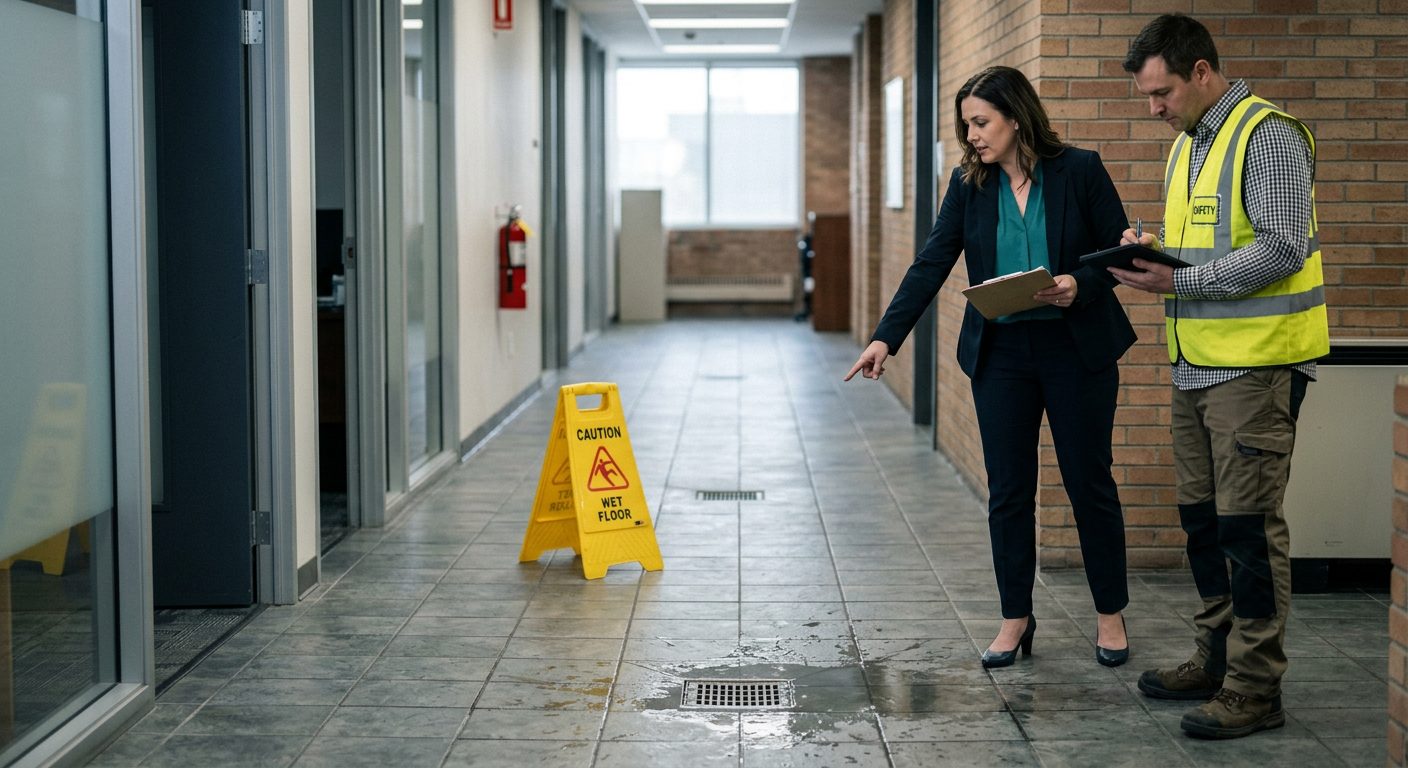
Failure to post warnings. If a hazard existed but the owner did not post a warning sign or cordon off the area, that is negligence. A wet floor sign or “caution” tape shows the owner knew about the hazard and took steps to protect visitors.
Documentation of Your Losses and Impact
Damages include not just medical bills but also lost wages, pain and suffering, and the impact on your daily life.
Lost wages. Ask your employer for verification of the time you missed from work due to the injury. Pay stubs showing reduced hours or a letter from your employer confirming the dates you were absent are direct proof of lost income.
Out-of-pocket expenses. Keep receipts for:
- Medical costs not covered by insurance.
- Transportation to medical appointments.
- Over-the-counter medications.
- Adaptive equipment (crutches, braces, ice packs).
A journal of your recovery. Document your pain, limitations, and how the injury affected your daily life. Write down:
- Days you could not work.
- Activities you could not do.
- How your sleep was affected.
- How the injury impacted your relationships or mental health.
A detailed journal is powerful evidence of non-economic damages (pain and suffering).
Photographs of visible injury. If you have bruising, swelling, lacerations, or scars, photograph them over time. Visual evidence of injury is compelling.
Statements from others. Family members, friends, coworkers, or neighbors who observed changes in your mobility, mood, or ability to function can provide statements. These accounts show how the injury affected your life beyond what medical records capture.
How Insurance Companies Evaluate Non-Surgical Slip and Fall Claims
Understanding how insurers think about your claim helps you build the strongest case.
Liability comes first. Insurance companies assess the strength of negligence evidence before they even think about damages. If liability is clear—the hazard was obvious, the owner was clearly negligent, and your fall was clearly caused by that negligence—settlement is more likely. If liability is murky or disputed, the insurance company will offer less or deny the claim.
Medical bills anchor the value. Once liability is established, the insurance company uses your medical bills as the baseline for settlement value. More treatment and higher bills generally mean a higher settlement. Non-surgical cases typically settle for less than surgical cases, but only because the medical treatment is less extensive—not because the case is inherently weaker.
Treatment duration matters. How long you received treatment is a proxy for how serious the injury was. If you had one urgent care visit and recovered in a week, your claim is worth less than if you had months of physical therapy. Insurance companies look at the timeline: when did treatment start, when did it end, and did you have setbacks or ongoing limitations?
Your credibility is everything. Consistent medical records, witness statements, and incident reports make you credible. Gaps in treatment, contradictions in your account, or social media posts that contradict your injury claims undermine your credibility and lower settlement value.
Age, occupation, and pre-injury health matter. Insurance companies consider whether you are young or old, whether your job is physical or sedentary, and whether you had pre-existing health conditions. A younger person with a physical job may have a higher claim value because the injury affects their earning potential longer. Pre-existing conditions can reduce settlement value if the injury aggravated them, but they do not eliminate your claim.
Common Non-Surgical Slip and Fall Injuries and Their Evidence
Different injuries require different evidence. Here are the most common non-surgical slip and fall injuries and what supports each one.
Sprains and strains. These soft-tissue injuries are supported by:
- Imaging (X-ray or MRI to rule out fracture).
- Physical therapy records showing weeks or months of treatment.
- Your doctor’s notes on pain and functional limitations.
Sprains of the ankle or knee are common; a severe sprain may require months of therapy.
Fractures treated without surgery. An X-ray confirms the fracture. Orthopedic follow-up notes document the treatment plan (immobilization, weight-bearing restrictions, physical therapy). Records of the cast or brace, and notes on when weight-bearing was allowed, show the duration of recovery.
Soft-tissue injuries (contusions and lacerations). Emergency room documentation, wound care records, and photographs of the injury and healing process are the main evidence. Lacerations that required stitches are documented in the ER record.
Concussion or mild traumatic brain injury. Neurological exam notes from the emergency room or urgent care, any cognitive testing, and your doctor’s documentation of symptoms (headache, dizziness, memory problems, sensitivity to light) support this injury. Ongoing symptoms documented in follow-up visits strengthen the claim.
Chronic pain or post-fall syndrome. If your pain persists long after the initial injury, ongoing medical visits, pain management records (injections, medications), and functional limitations noted by providers are the evidence. This is harder to prove than acute injury, but consistent medical documentation over time builds credibility.
Have questions about what happened?
Ask our team directly. The first conversation is free, confidential, and there is no obligation to continue.
Settlement Value in Non-Surgical Cases
Non-surgical slip and fall settlements depend on several factors, and there is no single formula. However, the pattern is clear: strong evidence of negligence and thorough documentation of injury and losses drive settlement value up.
Medical bills, lost wages, and documented pain and suffering form the foundation of your claim value. If your medical bills total $15,000, your lost wages are $5,000, and you have clear evidence of ongoing pain and functional limitations, your claim has a baseline value. Insurance companies typically offer a multiple of medical bills (often 1.5 to 3 times) as a starting point, then adjust based on liability strength and the impact on your life.
Strong evidence of the property owner’s negligence increases settlement offers significantly. If you have security camera footage showing the hazard, witness statements, maintenance records showing the owner knew about the problem, and prior complaints from other people, the insurance company knows liability is strong and will offer more.
Insurance companies often make lower initial offers; your evidence is what supports a higher counteroffer. If the initial offer seems low, a detailed response showing the strength of your liability evidence and the full extent of your damages (medical records, lost wages, functional limitations, impact on daily life) can move the needle.
The timeline of your recovery matters. Faster recovery generally means lower settlement value, but ongoing limitations increase value. If you recovered in four weeks with minimal treatment, your claim is worth less than if you had three months of physical therapy and ongoing pain.
When to Reach Out for Help
You do not have to navigate a slip and fall claim alone. There are clear moments when professional guidance makes a difference.
If the property owner or their insurance company denies liability—claiming the hazard was not their responsibility or that you were careless—you need someone to advocate for you and present the evidence that proves negligence. Remember: under Florida’s modified comparative fault rule (Fla. Stat. §768.81(6)), if you are found more than 50% at fault, you recover nothing. Strong evidence that the owner was negligent—and that you were not—is essential.
If your medical treatment is ongoing or your recovery is slower than expected, professional guidance helps protect your claim. Insurance companies sometimes pressure injured people to settle quickly, before the full extent of the injury is clear. An attorney can help you understand when you have reached maximum recovery and when it is the right time to settle.
If you are unsure whether your evidence is strong enough, or if you are being pressured to accept an offer that feels too low, talking to someone who handles these cases regularly can clarify your position and show you what evidence might strengthen your claim.
Remember: you have two years from the date of your fall to file a lawsuit (Fla. Stat. §95.11(4)(a)). Do not wait. Evidence gathered early is strongest. If you have slipped and fallen on someone else’s property and are working through what evidence you have or what your claim might be worth, reach out. People in your situation—trying to understand whether they have a case and what to do next—contact us regularly. We can review what happened, discuss the evidence you have, and help you understand your options. Get a free case evaluation.

Frequently Asked Questions
Can I get a settlement for a slip and fall if I didn’t need surgery?
Yes. Many slip and fall claims settle without surgery, because your case can still include costs like emergency care, physical therapy, medication, lost wages, and pain and suffering.
How is a slip and fall settlement value figured out when there’s no surgery?
Value depends on things like your medical bills, how long you needed treatment, missed work, and how the injury affected your daily life. Every case is different, so no one can promise a specific dollar amount in advance.
What kinds of injuries lead to slip and fall claims without surgery?
Common examples include sprains, strains, soft-tissue injuries, fractures treated without an operation, concussions, and back or neck pain. These injuries can still be serious and disrupt your work and daily activities.
What should I do to protect a slip and fall claim if I didn’t have surgery?
Get medical care right away, keep all bills and records, take photos of the hazard, and report the fall to the property owner or manager. You can also contact CHG Personal Injury Lawyers for a free case evaluation to discuss your options.
What is Florida’s statute of limitations for slip and fall claims?
Under Florida law, you have two years from the date of your fall to file a lawsuit if the claim arose on or after March 24, 2023. Do not wait—evidence is strongest when gathered early.
What is Florida’s comparative fault rule, and how does it affect my slip and fall claim?
Under Florida’s modified comparative fault rule, if you are found more than 50% at fault for the fall, you cannot recover anything. If you are 50% or less at fault, your recovery is reduced by your percentage of fault. This is why strong evidence that the property owner was negligent—and that you were not careless—is critical.
What Slip and Fall Settlements Can Include
Emergency and Ongoing Medical Care
Hospital visits, urgent care, X-rays, MRIs, doctor visits, and follow-up appointments—all are recoverable costs, whether or not surgery happens.
Physical Therapy and Rehabilitation
PT sessions, occupational therapy, and other recovery treatments are real expenses that belong in your settlement calculation.
Medication and Medical Supplies
Prescription painkillers, anti-inflammatory drugs, braces, crutches, compression sleeves, and other medical supplies add to your claim's value.
Lost Wages and Earning Capacity
Time off work while you heal, reduced hours, or lost income from your job—all recoverable. If an injury limits your ability to earn long-term, that matters too.
Pain and Suffering
The physical pain, emotional distress, and reduced quality of life from your injury are compensable—even without surgery.
Other Damages
Transportation to medical appointments, home care assistance, and other reasonable costs tied to your injury can be included.
How Settlement Value Is Calculated
Medical Records and Bills
Your doctor's notes, test results, and itemized medical bills form the foundation. They prove what happened, what you needed, and what it cost.
Severity and Duration of Injury
How bad was the injury? How long did recovery take? A minor sprain settles differently than a fractured leg or torn ligament that requires months of PT.
Time Away from Work
Pay stubs and employer statements show lost income. We calculate what you would have earned if the injury hadn't kept you out.
Liability and Fault
How clear is it that the property owner was negligent? Poor maintenance, lack of warning signs, or failure to clean up a hazard strengthens your claim.
Insurance Coverage Available
The property owner's liability insurance limits affect what can be recovered. We investigate what coverage exists and how to access it.
Your Account of What Happened
Your detailed description of the fall, the conditions that caused it, and your injuries help establish what the property owner knew or should have known.
Don't Delay—Act Quickly
Evidence disappears fast. Surveillance footage is often recorded over after 30 days. Witnesses move away or forget details. Medical records and bills need to be gathered while fresh. The sooner you report your injury and document what happened, the stronger your claim.
Common Questions About Non-Surgical Slip and Fall Claims
Can I settle if I didn't go to the hospital?
Yes. Even if you went to urgent care, saw your doctor, or treated the injury at home with rest and physical therapy, you can have a valid claim. The key is that you sought medical care and have documentation of your injury and treatment.
What if I'm partly at fault for the fall?
Florida law allows you to recover even if you share some responsibility, as long as the property owner was more at fault. Your settlement may be reduced by your percentage of fault, but you can still recover.
How long does a settlement take?
It depends. Simple cases with clear liability and full recovery may settle in weeks or months. More complex cases can take longer. We work to resolve your claim efficiently while making sure you receive fair compensation.
What if I can't afford a lawyer?
We work on contingency: no fees unless there is a recovery. You don't pay out of pocket. We advance the costs of your case and are paid only if you receive a settlement or judgment.