


Premises Liability | Davie, Florida
Slip and Fall in Davie? Know Your Rights After a Premises Injury
Property owners have a legal duty to keep their premises safe. When they fail and you're injured, you may have a claim. Learn what you need to know.
By CHG Lawyers · Published September 12, 2026
Slip and Fall in Davie: What You Need to Know About Your Claim
If you slipped or fell on someone else’s property in Davie and were injured, you may have a legal claim against the property owner or manager. Florida law requires property owners to keep their properties safe and to warn visitors about hazards they don’t fix. This guide explains how slip-and-fall liability works, what you must prove, and what to do next.
If you slipped or fell on someone else's property in Davie and were injured, you may have a legal claim against the property owner or manager. Talk it through with our team — the first consultation is free, confidential, and carries no obligation.
Slip and Fall Accidents in Davie: What Happens Next
Slip-and-fall accidents happen regularly at Davie’s retail stores, restaurants, apartment complexes, hotels, and parking facilities. They occur on wet floors, uneven pavement, poorly lit parking areas, and neglected common spaces. If you fell on someone else’s property and were injured, you may have a legal claim.
Davie’s warm, humid climate creates frequent slip hazards. Afternoon thunderstorms leave parking lots and walkways wet. Air conditioning condensation makes indoor surfaces slippery in stores, restaurants, and residential buildings. These conditions, combined with poor maintenance and inadequate lighting, create dangerous situations.
How Slip and Fall Liability Works in Florida
In Florida, a property owner or manager can be held responsible for your injuries if they knew—or should have known—about a dangerous condition and failed to fix it or warn you.
The law recognizes three types of visitors: invitees (customers, tenants, guests), licensees (social visitors), and trespassers. The duty of care owed to you depends on which category you fall into.
For most slip-and-fall cases in Davie—retail stores, restaurants, apartment complexes, hotels—you are likely an invitee. The property owner owes you the highest duty of care. They must maintain the property in a reasonably safe condition and inspect it regularly for hazards.
Florida’s “reasonable time” standard applies here. If a hazard existed long enough that a reasonable property manager should have discovered and corrected it, the owner may be liable. For example, if a spill on a grocery store floor went unnoticed for hours, the store may be liable for your fall even if no employee caused the spill.
What You Must Prove in a Slip and Fall Claim
To succeed in a slip-and-fall claim, you must prove four things:
- Duty of care: The property owner owed you a duty to maintain safe conditions.
- Breach: The owner breached that duty by allowing a dangerous condition to exist.
- Causation: You were injured as a result of that condition.
- Damages: You suffered measurable harm—medical bills, lost wages, pain and suffering.
The hardest part is often proving that the owner knew or should have known about the hazard. Evidence matters here: security camera footage, maintenance records, witness statements, and photographs of the scene.
Your own conduct matters too. If you were distracted, not paying attention, or ignored obvious warnings, the property owner may argue you were partially at fault. Under Florida’s comparative negligence rule, this can reduce your recovery. Understanding this rule is critical.
Common Locations for Slip and Fall Accidents in Davie
Slip-and-fall accidents happen in predictable places:
- Retail stores and shopping centers: wet floors from cleaning, spilled merchandise, inadequate warning signs.
- Restaurants and cafes: slippery kitchen or dining areas, spilled food or beverages, poor drainage.
- Apartment complexes and condominiums: poorly maintained common areas, broken stairs, inadequate lighting in hallways and parking garages.
- Parking lots and garages: uneven pavement, potholes, water pooling, inadequate lighting.
- Hotels and motels: wet bathroom floors, slippery pool decks, poorly maintained hallways.
- Office buildings: inadequate maintenance, broken flooring, poor lighting.
Davie’s subtropical climate amplifies these risks. Heavy afternoon rains are common, and property managers sometimes struggle to keep up with drainage and maintenance.
Common Injuries from Slip and Fall Accidents
Slip-and-fall injuries range from minor to life-altering:
- Fractures: broken wrists, ankles, hips, and legs are among the most common injuries.
- Head and spinal injuries: falls can cause traumatic brain injuries, concussions, and injuries to the neck and back. Some result in long-term disability.
- Soft tissue injuries: sprains, strains, and tears to muscles and ligaments.
- Chronic pain: many victims experience ongoing pain and reduced mobility long after the initial fall.
- Psychological effects: anxiety, depression, and fear of falling again can follow a serious slip-and-fall injury.
For older adults and people with pre-existing conditions, slip-and-fall injuries can be especially severe and life-altering.
If you fell on someone else's property and were injured, you may have a legal claim. Talk it through with our team — the first consultation is free, confidential, and carries no obligation.
What Is the Typical Payout for a Slip and Fall?
There is no fixed or “typical” payout for slip-and-fall cases. Each claim is unique and depends on the severity of your injury, the clarity of liability, your medical expenses, lost income, and the impact on your quality of life.
Compensation in slip-and-fall cases generally includes:
- Past and future medical expenses
- Lost wages and lost earning capacity
- Pain and suffering
- Permanent disability or disfigurement
- In rare cases, punitive damages if the property owner’s conduct was especially reckless
Minor injuries (sprains, small cuts) may result in settlements of a few thousand dollars. Serious injuries (fractures, head injuries, permanent disability) can result in settlements or judgments in the tens or hundreds of thousands of dollars.
The strength of your evidence—photographs, video, witness statements, medical records, and expert testimony—directly affects the value of your claim.
Is It Worth Suing for a Slip and Fall?
Whether a slip-and-fall claim is worth pursuing depends on several factors:
- The severity of your injury
- The clarity of the property owner’s liability
- The availability of insurance coverage
- Your own medical and financial situation
If you have significant medical bills, ongoing treatment, lost wages, or permanent injury, a claim may be well worth pursuing. If your injury is minor and you’ve recovered fully with minimal expenses, the cost and time of litigation may not justify the effort.
Many slip-and-fall claims are resolved through settlement negotiations without going to trial. This can save time and expense. An attorney can evaluate your specific circumstances and advise you on whether your claim has merit and what it might be worth.
What Is the 51% Rule in Florida?
Florida follows a “comparative negligence” rule, sometimes called the 51% rule. Under Fla. Stat. §768.81, you can recover damages even if you were partially at fault for your fall. You must be 50% or less at fault.
If you were 50% or less at fault, you can recover damages. Your award is reduced by your percentage of fault. For example, if your total damages are $100,000 and you were 25% at fault, you would recover $75,000.
If you were 51% or more at fault, you cannot recover anything.
The property owner will often argue that you were careless. They may say you weren’t paying attention, ignored warning signs, or wore inappropriate footwear. This is why evidence and witness testimony are critical to your case.
How to File a Slip and Fall Claim in Davie, Florida
Acting quickly after a slip-and-fall accident preserves critical evidence and strengthens your claim:
- Report the fall to the property owner or manager. Ask that an incident report be filed. Get a copy if possible.
- Take photographs of the scene, the hazard that caused your fall, your injuries, and any warning signs (or lack thereof).
- Collect contact information from any witnesses who saw your fall.
- Seek medical attention promptly. Keep detailed records of all treatment, medications, and expenses.
- Avoid social media. Do not discuss details with anyone other than your doctor and attorney.
- Contact an attorney as soon as possible. You generally have two years from the date of your fall to file a lawsuit in Florida. But acting sooner preserves evidence and strengthens your claim.
How We Investigate a Slip and Fall Case
In the slip-and-fall cases we handle, investigation is everything. Here’s what we do:
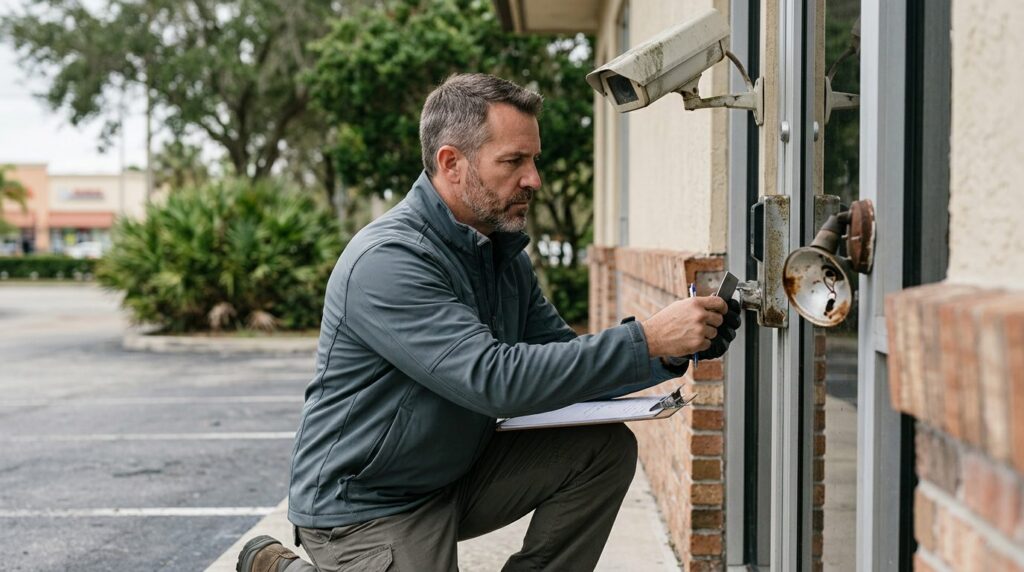
- Obtain security camera footage from the property. This often shows exactly how the fall occurred and whether the property owner had prior notice of the hazard.
- Request maintenance records to determine whether the owner was negligent in inspecting or maintaining the area where you fell.
- Interview witnesses and obtain written statements.
- Photograph and document the scene, the hazard, and current conditions.
- Work with medical experts to establish the link between your fall and your injuries. We also project future medical needs and costs.
- Review insurance coverage to identify available compensation.
- Negotiate with the insurance company to reach a fair settlement, or prepare your case for trial if necessary.
Frequently Asked Questions About Slip and Fall Accidents in Davie
Do I have to prove the property owner caused my fall?
No. You must prove the owner knew or should have known about the dangerous condition and failed to fix it or warn you. You don’t have to prove intentional wrongdoing.
What if I was partially at fault?
Florida’s comparative negligence rule allows you to recover even if you were partially at fault, as long as you were 50% or less at fault. Your award is reduced by your percentage of fault.
How long do I have to file a claim?
You generally have two years from the date of your fall to file a lawsuit in Florida. However, acting quickly preserves evidence and strengthens your case.
Will my case go to trial?
Most slip-and-fall cases are resolved through settlement. If a fair settlement cannot be reached, your case may proceed to trial.
What if I was injured at a business that is now closed?
You may still have a claim. We can help you identify the property owner and any applicable insurance coverage.
How much does it cost to hire a slip and fall lawyer?
We work on a contingency basis. You pay no attorney fees unless we recover compensation for you. You also pay no upfront costs.
If you have significant medical bills, ongoing treatment, lost wages, or permanent injury, a claim may be well worth pursuing. Talk it through with our team — the first consultation is free, confidential, and carries no obligation.
Why Choose CHG Personal Injury Lawyers for Your Davie Slip and Fall Claim
We focus exclusively on personal injury cases, including slip-and-fall accidents. We understand Florida premises liability law and how to build a strong case.
We are licensed to practice in Florida. We have experience handling slip-and-fall claims throughout Davie and South Florida. We investigate thoroughly: we obtain video evidence, maintenance records, and expert testimony to establish liability and maximize your recovery.
We handle all communication with insurance companies and property owners. You can focus on your recovery. We work on a contingency basis, which means you pay no attorney fees unless we recover compensation for you.
We offer a free case evaluation to discuss your fall, answer your questions, and explain your options. There’s no obligation—just honest advice about whether you have a claim and what it might be worth.
Take the Next Step
If you slipped and fell on someone else’s property in Davie and were injured, you may be entitled to compensation. Many people in your situation—hurt in a fall they didn’t cause, facing medical bills and lost time—reach out to us to understand their rights and explore their options.
Contact CHG Personal Injury Lawyers today for a free case evaluation. We’ll listen to what happened, review the facts, and advise you on whether you have a claim and what it might be worth. Call us or fill out our online form to get started.
What Makes a Premises Liability Claim
Duty of Care
Property owners must maintain safe conditions and warn visitors of known hazards. This duty applies to stores, apartments, offices, parking lots, and other commercial or residential spaces.
Knowledge of the Hazard
You don't have to prove the owner intentionally created the danger. You must show they knew—or reasonably should have known—about the unsafe condition and failed to fix or warn about it.
Causation and Injury
Your fall must have been caused by the unsafe condition, and you must have suffered actual injury—medical bills, lost wages, pain, or other documented harm.
Comparative Negligence
Florida law allows recovery even if you were partially at fault for the fall, as long as you were not more than 50% responsible for what happened.
Act Quickly After Your Fall
Preserve evidence: take photos of the hazard, get witness names and contact information, and report the incident to the property owner or manager in writing. Medical records documenting your injuries are critical. The sooner you gather this information, the stronger your claim.
Common Slip and Fall Scenarios in Davie
Wet or Slippery Floors
Spills, leaks, or inadequate drainage create hazards. If the owner didn't clean up, place warning signs, or fix the underlying problem, you may have a claim.
Broken or Uneven Surfaces
Cracked pavement, broken steps, torn carpeting, or potholes are common trip hazards. Owners must repair these or warn visitors.
Poor Lighting
Dim or burned-out lighting in hallways, stairwells, parking lots, or entryways can hide hazards. Owners must maintain adequate lighting.
Debris or Obstacles
Items left in walkways, cluttered aisles, or unsecured merchandise can cause falls. Regular maintenance and cleanup are the owner's responsibility.
Steps to Protect Your Claim
Seek Medical Attention
Even if your injury seems minor, get evaluated by a doctor. Medical records create a clear link between the fall and your injuries.
Document the Scene
Photograph the hazard, the surrounding area, and any visible injuries. Note the date, time, and weather conditions.
Report the Incident
Tell the property manager or owner immediately. Request a written incident report and keep a copy for your records.
Gather Witness Information
Ask anyone who saw the fall for their name, phone number, and account of what happened. Witness statements strengthen your case.
What About 'Assumption of Risk'?
Property owners sometimes claim you assumed the risk of injury by being on their premises. This defense rarely succeeds. Owners cannot escape their duty to maintain safe conditions or warn of known hazards, even if you entered voluntarily.
Frequently Asked Questions
Do I have to prove the property owner caused my fall?
No. You must prove the owner knew or should have known about the dangerous condition and failed to fix it or warn you. You don't have to prove intentional wrongdoing.
What if I was partially at fault?
Florida's comparative negligence rule allows you to recover even if you were partially at fault, as long as you were not more than 50% responsible for the accident.
What damages can I recover?
Medical expenses, lost wages, pain and suffering, and other costs related to your injury. An attorney can evaluate the full value of your claim.
How long do I have to file a claim?
Time limits apply. Contact an attorney as soon as possible to understand your options and protect your rights.
Why Choose CHG Personal Injury Lawyers
Focused on Premises Liability
Our practice focuses exclusively on personal injury claims, including slip and fall cases. We understand Florida premises liability law and how to build strong cases.
Licensed Florida Attorneys
Our attorneys are admitted to the Florida Bar and bring years of experience handling injury claims for Davie residents and clients across Florida.
Empathetic Representation
We listen to your story, understand your injuries, and fight for fair compensation. Your recovery is our priority.
No Fees Unless There Is a Recovery
We work on contingency. You pay no fees unless there is a recovery in your case, so you can pursue justice without financial risk.