

Slip and Fall | Dania Beach
Slip and Fall in Dania Beach? Know Your Rights and Next Steps
If you were injured on someone else's property due to negligence, you may have a claim for your medical bills, lost wages, and pain and suffering.
By CHG Lawyers · Published September 12, 2026
Slip and Fall in Dania Beach: Proving Negligence and Your Right to Compensation
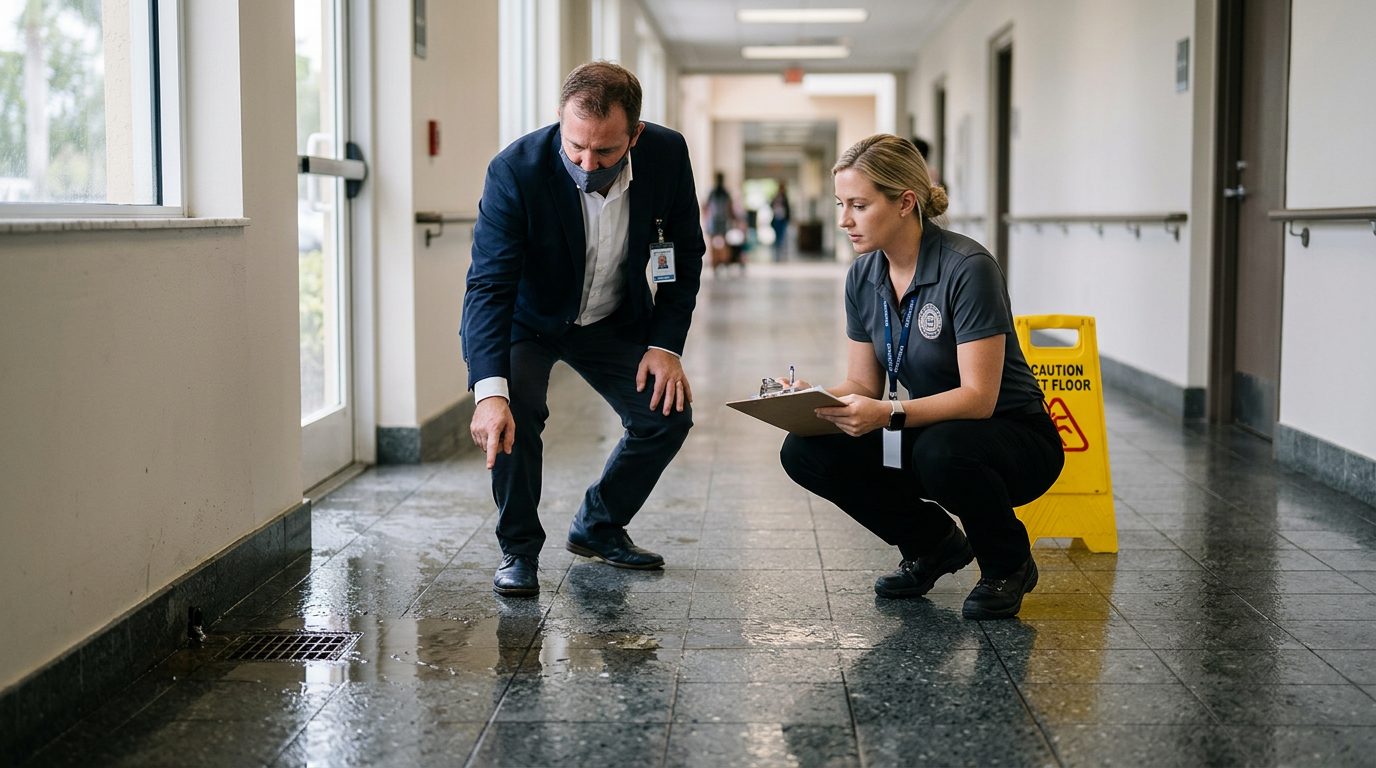
You slipped on a wet floor at a grocery store. Or on a cracked sidewalk outside a restaurant. Or in a poorly lit parking garage. Now you’re dealing with medical bills, lost wages, and pain.
If the property owner failed to fix or warn you about that hazard, you may have a legal claim for negligence. But “negligence” isn’t vague—it’s a four-part legal test. Understanding what you must prove, and acting quickly to preserve evidence, is the difference between recovering fair compensation and losing your claim to time limits or faded evidence.
This guide walks you through the negligence test in plain language. We explain Florida’s comparative fault rules (why being partly at fault doesn’t automatically bar your claim) and show you why the two-year statute of limitations creates real urgency.
If you were injured on someone else's property due to negligence, you may have a claim for your medical bills, lost wages, and pain and suffering. Talk it through with our team — the first consultation is free, confidential, and carries no obligation.
The Four Elements of Negligence: What You Must Prove
Florida law requires you to prove four distinct elements to hold a property owner liable. Each one matters. You must prove all four.
Element 1: Duty
The property owner owed you a legal duty to maintain the premises in a reasonably safe condition. Or to warn you of known hazards. This duty applies to customers, guests, residents, and other lawful visitors on the property.
What this means in practice:
- A grocery store must keep aisles clear of spilled merchandise and liquid.
- A landlord must repair broken steps or warn tenants of uneven concrete.
- A hotel must ensure adequate lighting in hallways and parking areas.
- A restaurant must clean up grease or spilled food promptly or post a caution sign.
The duty is not absolute perfection—it’s reasonable care. A property owner is not liable for a hazard that appears and disappears in seconds (a customer drops a can of soup; you slip on it before anyone notices). But a hazard that persists for hours or days, or that the owner knew about and ignored, breaches that duty.
Element 2: Breach
The owner failed to fulfill that duty. They allowed a hazard to exist, failed to repair it, or failed to warn you about it.
What this means in practice:
- A maintenance log shows the owner knew the sidewalk was cracked for three months but did nothing.
- A store manager saw water on the floor but didn’t mop it or post a sign.
- A parking garage light had been burned out for weeks, leaving the area dark.
- An apartment complex didn’t fix loose handrails on stairs despite tenant complaints.
The breach must be the owner’s failure—not an act of nature or a third party (unless the owner should have anticipated and guarded against it). For example, a single raindrop on a tile floor is not a breach. A rain-soaked entryway with no mats or warning signs after a storm may be.
Element 3: Causation
The owner’s breach directly caused your fall and injury. You must show a clear link between the unsafe condition and your harm.
What this means in practice:
- You slipped on the wet floor the owner failed to clean, fell, and broke your wrist.
- You tripped on the cracked concrete the owner failed to repair, hit your head, and suffered a concussion.
- The dark parking garage the owner failed to light made it impossible to see the pothole. You stepped into it, twisted your ankle, and fell.
Causation fails if you fell for an unrelated reason—you were looking at your phone, you have a balance disorder, you were wearing inappropriate footwear—even if a hazard existed. But if the hazard contributed to or caused the fall, causation is established.
Element 4: Damages
You suffered actual, measurable harm. You must document your losses.
What this means in practice:
- Medical bills for emergency care, X-rays, surgery, or ongoing therapy.
- Lost wages from time off work.
- Pain and suffering.
- Permanent scarring, disfigurement, or disability.
- Assistive devices (a cane, a brace, a wheelchair).
- Home modifications.
- Ongoing medical treatment or lost earning capacity.
Without documented damages, you have no case—even if the owner was negligent. Damages are what make your claim worth pursuing.
Why Acting Quickly Matters: Florida’s Two-Year Statute of Limitations
Florida Statute § 95.11 gives you two years from the date of your injury to file a lawsuit. Two years sounds like a long time—until evidence disappears.
Why early action is critical:
- Photographs fade. The hazard may be repaired, cleaned up, or altered. Your photos taken within days of the fall are far more credible than a reconstruction months later.
- Witness memories blur. A person who saw the hazard or your fall will recall details vividly in weeks. By year two or three, their memory is unreliable or they’ve moved away.
- Medical records establish causation. An emergency room visit or urgent-care report dated the day of your fall proves the injury happened then. Waiting months to seek treatment weakens the link between the fall and your injury.
- Property maintenance records may be destroyed. Businesses often discard incident reports, maintenance logs, and inspection records after one or two years. Early investigation captures them.
- Insurance adjusters are more cooperative early. A claim filed within months is treated more seriously than one filed years later.
The practical deadline: While you have two years, contact an attorney within weeks or months of your injury. By then, evidence is fresh. Your attorney can immediately preserve it—photographing the scene, collecting witness statements, and requesting the property owner’s maintenance and incident records before they’re discarded.
Common Causes of Slip and Fall Accidents in Dania Beach
Slip and fall accidents in Dania Beach occur for predictable, preventable reasons. Knowing what causes them helps you recognize negligence.
Wet or slippery floors without warning signs. A spilled drink at a restaurant, water tracked in from rain, grease on a kitchen floor, or a recently mopped surface becomes a hazard when the business doesn’t mop it up, dry it, or post a caution sign. In Dania Beach’s humid climate, condensation on tile floors in air-conditioned spaces can create sudden slip hazards.
Broken, cracked, or uneven flooring and sidewalks. Cracked concrete, loose tiles, uneven steps, potholes in parking lots, and buckled sidewalks create tripping hazards. Dania Beach’s older commercial and residential properties often have deteriorated concrete and pavement that owners neglect to repair.
Poor lighting in parking lots, garages, stairwells, and entryways. A dimly lit stairwell, dark parking garage, or unlit walkway makes hazards invisible and increases fall risk. Broward County properties near Fort Lauderdale often have aging lighting systems with burned-out bulbs that aren’t replaced promptly.
Inadequate maintenance of walkways, ramps, and common areas. Cluttered aisles, worn or bunched carpeting, missing handrails on stairs, and debris in entryways all contribute to falls. Apartment complexes and shopping centers in Dania Beach sometimes defer maintenance to cut costs.
Ice, snow, or debris on outdoor surfaces. While South Florida rarely sees snow, morning dew on metal stairs, wet leaves after storms, and debris from hurricanes or heavy rain create seasonal hazards. Property owners who don’t clear these promptly breach their duty.
Injuries from Slip and Fall Accidents: Minor to Catastrophic
Slip and fall injuries range from minor sprains to life-altering permanent disability.
Fractures are among the most common outcomes. Broken wrists, ankles, hips, and arms occur frequently, especially in older adults. A hip fracture often requires surgery and months of rehabilitation. Some victims never fully recover mobility.
Head and brain injuries, including concussions and traumatic brain injury (TBI), can result from striking your head during a fall. Even a fall from standing height can cause significant brain trauma—cognitive changes, memory loss, balance problems, or personality changes that persist for months or years.
Spinal cord injuries and back injuries may result from falls from height or direct impact to the spine. In severe cases, these injuries cause permanent paralysis (paraplegia or quadriplegia), loss of bowel and bladder control, and complete life disruption. A fall down a flight of stairs or from a height in a parking garage can cause catastrophic spinal damage.
Soft-tissue injuries—sprains, strains, and torn ligaments—are common but often underestimated. A torn ACL or rotator cuff can require surgery, months of physical therapy, and permanent lifestyle changes. A torn meniscus in the knee may lead to chronic pain and early-onset arthritis.
Knee injuries and joint damage can lead to chronic pain, reduced mobility, and arthritis. Lacerations and contusions are visible but may mask deeper internal injuries like organ damage or internal bleeding.
In the catastrophic-injury cases our firm handles, slip and fall accidents have caused permanent spinal cord damage, traumatic brain injury requiring ongoing cognitive rehabilitation, and amputations (when a fall causes crush injuries or requires surgical removal of a limb). These injuries demand thorough investigation, expert medical testimony, and aggressive advocacy to secure fair compensation for lifetime care and lost function.
What Is the Typical Payout for a Slip and Fall?
Settlements vary widely based on injury severity, medical costs, lost income, and evidence strength.
Minor injuries (sprains, minor fractures with full recovery) may settle for $3,000 to $15,000. This covers emergency care, imaging, and brief physical therapy.
Moderate injuries (significant fractures requiring surgery, soft-tissue damage requiring ongoing therapy, brief hospitalization) often settle between $15,000 and $75,000. A broken ankle requiring surgery and three months of rehabilitation, or a concussion with lingering symptoms, falls in this range.
Severe or permanent injuries (spinal cord damage, traumatic brain injury with permanent cognitive or physical changes, amputation, chronic disability requiring ongoing care) frequently command six or seven figures. A fall causing permanent paralysis or a brain injury requiring lifetime care can result in settlements or jury awards of $500,000 to $2 million or more, depending on age, earning capacity, and life expectancy.
Factors affecting settlement value:
- Past and future medical expenses (surgery, hospitalization, therapy, assistive devices, home modifications, lifetime care)
- Lost wages and lost earning capacity
- Pain and suffering
- Permanent scarring, disfigurement, or disability
- Clarity and strength of evidence of the owner’s negligence
- Witness testimony
- Jury tendencies in your county
In Broward County, where Dania Beach is located, settlements reflect the region’s cost of living, medical care costs, and jury experience. Serious injury claims frequently exceed $100,000, particularly when permanent impairment or ongoing medical care is involved.
Not sure what your next step is?
Talk it through with our team — the first consultation is free, confidential, and carries no obligation.
Comparative Negligence: What If You Were Partly at Fault?
Many injured people hesitate to pursue a claim because they worry they were partly responsible for the fall. This concern is understandable—but it may not bar your claim.
Florida Statute § 768.81 establishes comparative negligence: you can recover damages even if you were partly at fault. Your award is reduced by your percentage of fault.
Example: You were walking through a grocery store wearing flip-flops (arguably not ideal footwear) when you slipped on a wet floor the store failed to clean or mark with a caution sign. A jury might find you 20% at fault for your footwear choice and the store 80% at fault for the hazard. If your damages are $50,000, you recover $40,000 (80% of $50,000).
What counts as comparative negligence:
- You were wearing inappropriate footwear (flip-flops, high heels on a slippery surface)
- You were distracted (looking at your phone) and didn’t notice an obvious hazard
- You ignored a visible warning sign or barrier
- You were in an area you shouldn’t have been (a restricted zone)
What does NOT bar your claim:
- The hazard was partially your fault (you didn’t cause the wet floor; the store did)
- You have a pre-existing condition that made you more vulnerable to injury
- You were older or had balance issues
- You didn’t immediately report the fall
If the property owner’s negligence was the primary cause of your fall, comparative negligence rarely eliminates your claim—it may reduce your recovery, but you still have a right to compensation.
Steps to Take After a Slip and Fall in Dania Beach
1. Seek medical attention immediately, even if you feel fine. Some injuries appear hours or days later. A medical record dated the day of the fall documents the injury’s connection to the accident and is powerful evidence of causation.
2. Report the incident to the property owner, manager, or business. Request a written incident report and keep a copy. If they refuse to file one, document that refusal in writing.
3. Take photographs of the hazard, the scene, your injuries, and any warning signs (or lack thereof). Photos taken within hours or days are far more credible than those taken weeks later. Photograph the exact spot where you fell, the hazard itself, lighting conditions, and any visible damage to your clothing or body.
4. Collect contact information from witnesses who saw the fall or the hazardous condition. Get their names, phone numbers, and email addresses. Witness statements are powerful evidence.
5. Keep all documentation: medical records, receipts for medical expenses, pay stubs showing lost wages, records of ongoing treatment or symptoms, and any correspondence with the property owner or their insurance company.
6. Do not sign anything or give a recorded statement to the property owner’s insurance without legal advice. Insurance adjusters may try to minimize your claim or get you to admit fault.
7. Preserve evidence: keep the clothing and shoes you wore during the fall (they may show damage or wear patterns relevant to the accident), save all medical imaging and test results, and document your recovery and ongoing symptoms in writing or photos.
8. Contact an attorney as soon as possible. Early action preserves evidence, strengthens your claim, and ensures you don’t miss the two-year statute of limitations. Most slip and fall cases are handled on contingency—you pay nothing upfront.
Timeline and Steps of a Slip and Fall Case
Understanding the process helps you know what to expect and plan accordingly.
Initial consultation (Week 1–2): You meet with an attorney, describe the accident in detail, and provide evidence (photos, medical records, incident reports, witness contact information). The attorney evaluates liability (do you have a strong negligence case?) and damages (what are your losses?).
Investigation (Weeks 2–8): The firm gathers medical records from your healthcare providers, incident reports and maintenance logs from the property owner, photographs of the scene and hazard, written statements from witnesses, and any surveillance video. Your attorney may hire a professional investigator to inspect the property, document conditions, and photograph the hazard. This phase is critical—evidence collected now is far stronger than evidence gathered months later.
Demand letter (Weeks 8–12): Your attorney sends a detailed written claim to the property owner’s insurance company. It outlines the four elements of negligence, your damages, and the amount demanded to settle. The demand letter includes copies of medical records, photos, witness statements, and other evidence.
Negotiation (Weeks 12–26): Insurance adjusters review the claim and may request additional information. Settlement discussions may take weeks to months. Most slip and fall cases settle during this phase without going to trial.
Settlement or litigation decision (Month 6–9): If the insurer offers fair value, you settle and recover. If not, your attorney files a lawsuit in the appropriate Florida court.
Discovery (Months 9–18): Both sides exchange documents, medical records, and witness statements. Depositions (recorded interviews under oath) may be taken of you, witnesses, and the property owner’s representatives. Your attorney may hire medical experts to review your injuries and testify about causation and damages.
Trial (if necessary) (Months 18–36): A judge or jury hears evidence from both sides, including testimony from you, witnesses, medical experts, and the property owner’s representatives. The judge or jury decides whether the owner was negligent and, if so, what damages you’re owed.
Timeline: Simple settlements may resolve in 3–6 months. Complex cases or trials can take 1–3 years or longer, depending on court schedules and case complexity.
Compensation for Slip and Fall Injuries
Economic damages cover your financial losses:
- Emergency care, hospitalization, surgery, imaging, and laboratory tests
- Ongoing medical treatment, physical therapy, and rehabilitation
- Assistive devices (crutches, canes, braces, wheelchairs, prosthetics)
- Home modifications (ramps, grab bars, accessible bathrooms)
- Lost wages from time off work
- Lost earning capacity (if your injury prevents you from working or earning at your prior level)
- Cost of in-home care or attendant services
Non-economic damages compensate for pain and suffering, emotional distress, loss of enjoyment of life, permanent scarring or disfigurement, and loss of consortium (impact on your relationship with a spouse or family member).
In cases of severe or permanent injury, damages may include lifetime medical care, ongoing therapy, and compensation for permanent disability or loss of function.
Punitive damages are rare in slip and fall cases but may apply if the property owner’s conduct was grossly negligent (reckless disregard for your safety) or intentional.
Insurance coverage limits may cap recovery. Your attorney will identify all available sources of compensation, including the property owner’s liability policy, umbrella policies, and other coverage.
Have questions about what happened?
Ask our team directly. The first conversation is free, confidential, and there is no obligation to continue.
Why Work with a Slip and Fall Attorney in Dania Beach
Local knowledge matters. An attorney familiar with Dania Beach and Broward County understands local property owners, typical business practices, and how local judges and juries approach slip and fall cases. You benefit from knowledge of what juries in your area typically award and how judges rule on evidence and liability.
Investigation and evidence preservation. An experienced firm knows how to investigate slip and fall claims thoroughly—photographing the scene, collecting maintenance records, identifying and interviewing witnesses, and preserving evidence before it’s lost or destroyed. Insurance companies are far more likely to settle fairly when they know you have legal representation and a strong case.
Negotiation and advocacy. Your attorney handles all communication with the property owner’s insurance company, negotiates on your behalf, and advocates for fair compensation. You focus on recovery; we handle the legal work.
No upfront cost. Most slip and fall cases are handled on contingency—your attorney is paid only if you recover. You pay nothing upfront.
Full spectrum of injuries. CHG Personal Injury Lawyers focuses exclusively on personal injury cases, including slip and fall accidents. We handle cases throughout Florida and nationwide, from routine fractures to catastrophic spinal cord and brain injuries. We understand how to value and pursue each case and know what catastrophic injuries demand in terms of compensation and lifetime care.

Frequently Asked Questions About Slip and Fall in Dania Beach
Q: Do I have a case if I was partially at fault for the fall?
A: Yes, in most cases. Florida’s comparative negligence law allows you to recover even if you were partly responsible. Your award is reduced by your percentage of fault. If you were 20% at fault and the property owner 80%, you recover 80% of your damages. The key is whether the owner’s negligence was a substantial factor in causing your fall.
Q: How long do I have to file a slip and fall claim?
A: Florida’s statute of limitations is two years from the date of injury. However, evidence degrades, witnesses move or forget details, and property owners destroy maintenance records. Acting quickly—within weeks or months—preserves evidence and strengthens your claim. Don’t wait until year three or four.
Q: What if the property owner says I was trespassing?
A: Property owners owe a duty of reasonable care to lawful visitors (customers, guests, residents). Trespassers have fewer legal protections. However, the analysis depends on specific circumstances. If you were invited onto the property or had permission to be there, you’re a lawful visitor. Consult an attorney to evaluate your specific situation.
Q: Can I sue if I signed a waiver or release?
A: Waivers are enforceable in some contexts (e.g., recreational activities with known risks). However, a waiver cannot shield a property owner from liability for gross negligence or intentional misconduct. If the owner’s conduct was reckless—knowingly allowing a dangerous condition to persist—a waiver may not protect them. An attorney can review your waiver and advise whether it bars your claim.
Q: What if I slipped on a public sidewalk in Dania Beach?
A: Municipal liability claims have special rules and shorter notice periods. Florida law limits liability for municipalities on public property in certain circumstances. If you were injured on a public sidewalk, street, or park, you must provide written notice to the city within a specific timeframe (often 30 days or less). Consult an attorney immediately if you were injured on public property; the rules are different and time-sensitive.
Q: What if I didn’t seek medical attention right away?
A: Seeking medical attention immediately after a fall is ideal, but a delay doesn’t automatically bar your claim. However, the longer you wait, the weaker the link between the fall and your injury becomes. Insurance adjusters may argue that your injury occurred later or from a different cause. Seek medical attention as soon as possible and explain to your doctor that you were injured in a fall on a specific date.
Q: How much does it cost to hire a slip and fall attorney?
A: Most slip and fall cases are handled on contingency. You pay nothing upfront. Your attorney is paid a percentage of your settlement or jury award (typically 25–40%, depending on the firm and case complexity). If you don’t recover, you don’t pay attorney fees. Initial consultations are free.
If you’ve slipped and fallen on someone else’s property in Dania Beach and suffered injury—whether a broken bone, head injury, spinal damage, or ongoing pain—you may have a claim against the property owner for negligence. The four-element test is straightforward, but proving each element requires evidence, investigation, and legal skill. The two-year statute of limitations creates urgency; evidence is freshest in the first weeks and months after your fall.
People in your situation reach out to us regularly. We understand the full spectrum of slip and fall injuries and know how to build a strong case. Contact us for a free case evaluation. Let our team help you understand your options, preserve evidence, and move forward toward fair compensation.
Why Property Owners Are Responsible
Duty of Care
Property owners in Dania Beach have a legal duty to maintain safe premises and warn visitors of known hazards—wet floors, broken stairs, poor lighting, or debris.
Negligence Matters
If an owner knew (or should have known) about a dangerous condition and failed to fix it or warn you, their negligence may be the reason you fell and were hurt.
Your Recovery
You may recover compensation for medical treatment, ongoing care, lost income, and the physical and emotional impact of your injury.
Steps to Protect Your Claim
Report the Incident
Tell the property owner, manager, or staff immediately. Ask them to file an incident report and request a copy for your records.
Document Everything
Take photos of the hazard, your injuries, and the scene. Write down names and contact information of any witnesses and note the date, time, and weather.
Seek Medical Care
Get evaluated by a doctor as soon as possible, even if you feel okay. Some injuries appear later. Keep all medical records and bills.
Preserve Evidence
Keep the clothes and shoes you wore. Do not clean or alter them. Request security camera footage from the property if available.
Time Matters
The sooner you act, the better. Evidence can disappear, memories fade, and there are legal deadlines that apply to slip-and-fall claims. Contact a lawyer promptly to protect your rights.
Common Questions About Slip and Fall Claims
What if I was partly at fault?
Florida law allows you to recover even if you were partially responsible for the fall. Your compensation is reduced by your percentage of fault. If the owner was 80% at fault and you 20%, you may recover 80% of your damages.
How much is my claim worth?
Your claim's value depends on the severity of your injury, medical costs, lost wages, and how the fall has affected your daily life. An attorney can evaluate the specific facts of your case.
Do I need a lawyer?
Property owners and their insurers often minimize claims or deny responsibility. An experienced attorney protects your interests, handles negotiations, and ensures you understand your options.
What does it cost to hire a lawyer?
Many personal-injury attorneys work on contingency: no fees unless there is a recovery. You pay nothing upfront, and the firm's fee comes from your settlement or award.