

Slip and Fall Lawyer
Slip and Fall Claims in Aventura, FL
If you were injured on someone else's property due to negligence, you may have a right to recover damages. CHG Personal Injury Lawyers focuses exclusively on catastrophic and serious injuries—including slip and fall accidents—and handles cases throughout Florida and nationwide.
By CHG Lawyers · Published September 12, 2026
Slip and Fall in Aventura: Your Legal Rights & How to Protect Your Claim
You fell on a wet floor at Aventura Mall. You tripped over broken pavement in a parking lot. You slipped on an unlit stairwell at a hotel. Now you’re facing medical bills, pain, and lost time at work—and you’re wondering if the property owner should pay for it.
The answer depends on one central question: Did the property owner know (or should they have known) about the unsafe condition, and did they fail to fix it or warn you? If yes, you may have a legal claim. This guide explains how premises liability works in plain language, what evidence matters, what your claim might be worth, and what steps protect your rights.
If you were injured on someone else's property due to negligence, you may have a right to recover damages. Talk it through with our team — the first consultation is free, confidential, and carries no obligation.
What Is Premises Liability? (Plain Language First)
When you’re injured on someone else’s property because of an unsafe condition, the property owner may be legally responsible. This happens when:
- The owner knew about a hazard (a wet floor, broken step, poor lighting) and did nothing to fix it or warn visitors
- The owner should have known about it because a reasonable property manager would have inspected and found it
- That hazard directly caused your fall and injury
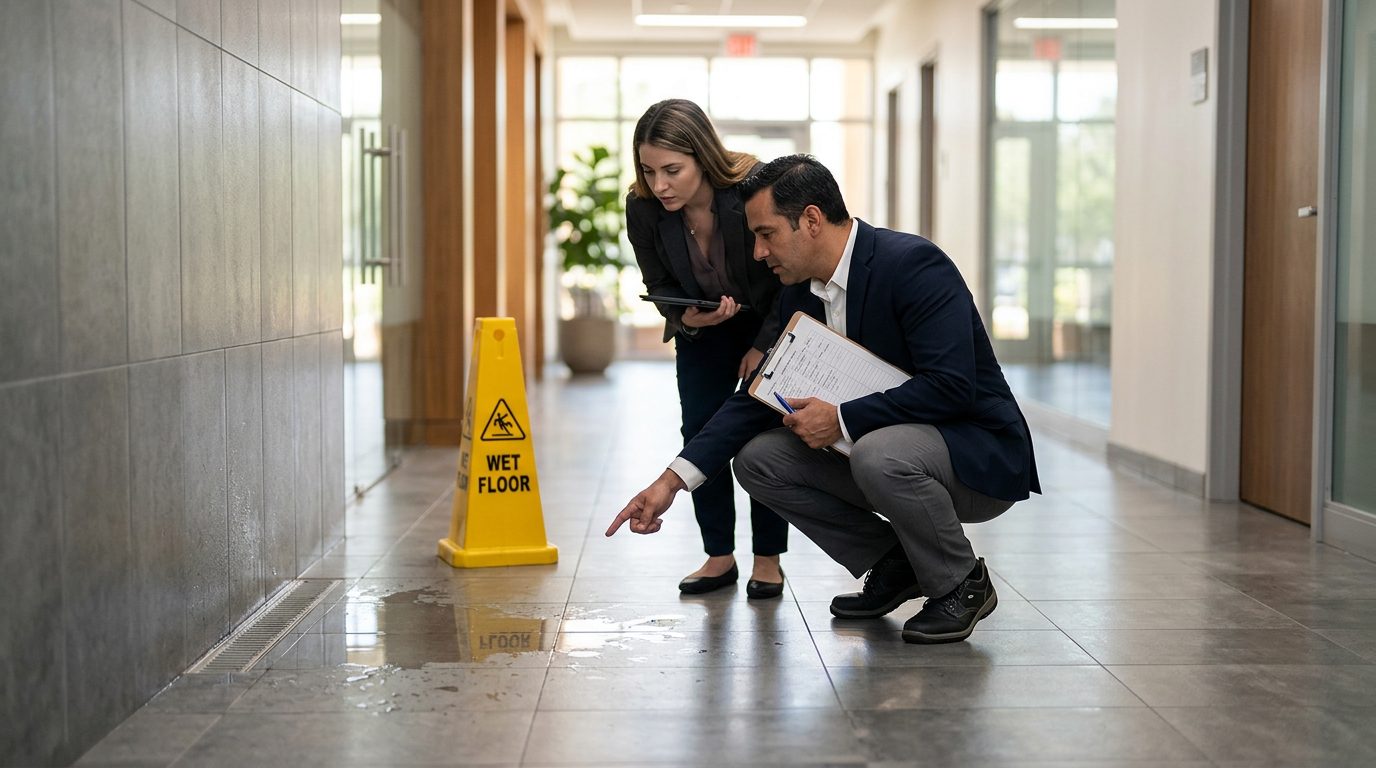
Example: A grocery store manager sees a spill in aisle 3 at 10 a.m., doesn’t clean it up or put up a warning sign, and you slip on it at 11 a.m. The store is liable.
Another example: A parking lot has had a large pothole for six months. The owner’s maintenance records show they knew about it but never repaired it. You trip in it. The owner is liable.
This legal responsibility is called premises liability—the owner’s duty to keep their property reasonably safe. It applies to retail stores, restaurants, hotels, apartment complexes, parking lots, office buildings, and any commercial or residential property open to visitors in Aventura and nationwide.
Common Slip and Fall Hazards in Aventura
Aventura’s busy commercial landscape—Aventura Mall, shopping centers, restaurants, parking garages, and hotels—creates daily opportunities for falls:
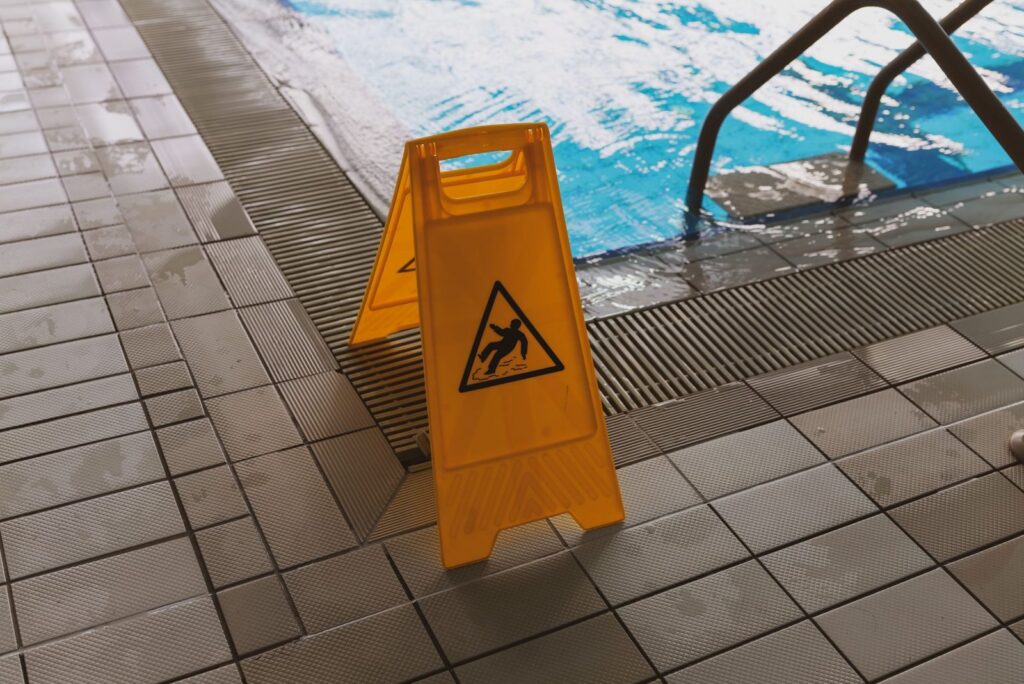
- Wet or slippery floors in retail stores, restaurants, and malls (especially after cleaning or rain)
- Cracked, uneven, or broken pavement in parking lots and walkways
- Poor or missing lighting in parking garages, stairwells, and outdoor areas
- Unsecured rugs, mats, or carpeting that shift underfoot
- Debris, spills, or objects left unattended in walkways
- Missing or broken handrails on stairs or ramps
- Inadequate drainage leading to standing water or ice
- Worn or damaged flooring in commercial spaces
Is Your Slip and Fall Claim Worth Pursuing?
Three factors determine whether your claim has real value:
1. Was the property owner negligent?
Did they know about the hazard (or should they have known through reasonable inspection) and fail to fix it or warn you? The stronger your evidence—photos, witness statements, maintenance records, security footage—the clearer the negligence.
2. How serious is your injury and how much has it cost?
Medical bills, ongoing treatment, lost wages, and lasting pain or disability all add value to your claim. Even a “small” injury (sprained ankle, minor fracture) can be worth pursuing if the negligence is clear and documented. A serious injury (broken bones requiring surgery, permanent disability, head trauma, spinal cord damage) typically has much higher value.
3. Can you prove the owner knew (or should have known)?
This is often the deciding factor. Maintenance records, prior complaints, inspection logs, or testimony from employees all help prove the owner knew about the problem. If you can show the hazard existed for days or weeks before your fall, liability becomes much stronger.
How Much Are Slip and Fall Settlements Worth?
There is no “typical” settlement amount, and no lawyer can promise a specific outcome. Settlement values depend on injury severity, medical costs, lost income, and the strength of evidence.
General ranges (based on cases our firm has handled):
- Minor injuries (sprains, minor fractures, brief treatment): $2,000–$10,000
- Moderate injuries (broken bones requiring surgery, weeks or months off work, ongoing physical therapy): $10,000–$50,000+
- Serious injuries (permanent disability, head trauma, spinal cord damage, chronic pain): $50,000–$250,000+
What strengthens settlement value:
- Clear photos of the hazard and the scene
- Witness statements from people who saw the condition
- Security camera footage showing the hazard and your fall
- Maintenance or inspection records proving the owner knew about the problem
- Medical records documenting your injury and treatment
- Proof of lost wages and ongoing medical expenses
What weakens settlement value:
- No evidence of how long the hazard existed
- Unclear causation (did the hazard really cause your fall, or did you just trip?)
- Your own carelessness (not paying attention, ignoring obvious warning signs)
Florida law allows you to recover damages even if you were partly at fault—as long as you were not more than 50% responsible for the fall. This is called comparative negligence, and it’s governed by Fla. Stat. §768.81.
If you were trespassing, your claim may be weaker or barred, but a lawyer can advise you. Talk it through with our team — the first consultation is free, confidential, and carries no obligation.
How Hard Is It to Win a Slip and Fall Case?
Difficulty depends on evidence. You must prove:
- The property owner owed you a duty to keep the property safe
- The owner breached that duty (knew or should have known about the hazard and failed to fix or warn)
- That breach directly caused your fall
- You suffered injury and damages
Cases are easier to win when:
- You have photos of the hazard
- Witnesses can testify they saw the condition
- Security footage shows the hazard and your fall
- Maintenance records prove the owner knew about the problem
- The hazard was obvious and long-standing
Cases are harder to win when:
- No one witnessed your fall
- You can’t prove how long the hazard existed
- You were clearly careless or ignoring warning signs
- The hazard was so obvious you should have avoided it
Good news: Most slip-and-fall claims settle before trial, especially when liability is clear and evidence is strong. Insurers often prefer to settle rather than litigate.
What to Do After a Slip and Fall in Aventura
Immediate steps:
-
Seek medical attention right away—even if you feel okay. Some injuries (internal bleeding, head trauma, spinal damage) show up hours or days later. Get a medical record documenting your injury and the fall.
-
Report the fall to the property owner or manager. Ask them to create a written incident report. Get a copy. Ask for the names of any employees who witnessed it.
-
Take photos and video:
- The hazard (wet floor, broken pavement, poor lighting, missing handrail)
- The surrounding area and any warning signs (or lack thereof)
- Your injuries
-
The overall condition of the property
-
Get witness information. Ask anyone who saw you fall or saw the hazard for their name, phone number, and email. Write down what they saw.
-
Preserve evidence. Keep all medical bills, receipts, records of lost wages, and photos. Don’t throw anything away.
-
Do NOT sign anything or give a recorded statement to the property owner’s insurance company without talking to a lawyer first. Insurers often try to get you to minimize your injury or accept blame.
-
Contact a personal injury lawyer as soon as possible. The sooner you do, the sooner they can preserve evidence, interview witnesses (while memories are fresh), and obtain security footage before it’s deleted.
How Much Time Do You Have to File a Claim?
In Florida, you generally have two years from the date of your fall to file a personal injury lawsuit, according to Fla. Stat. §95.11.
However, waiting is risky:
- Memories fade and witnesses disappear
- Security footage is often deleted after 30–90 days
- Evidence deteriorates
- Your injury may worsen, and the property owner may claim you were already hurt
If the property is government-owned (a public park, municipal building, or public facility), the deadline may be two years or shorter, and you may need to file a notice of claim first. The rules are stricter for government properties.
Bottom line: Don’t wait. Contact a lawyer within days or weeks of your fall, not months or years later.
How Contingency Fees Work (What You Actually Pay)
Most personal injury lawyers, including ours, work on contingency. Here’s what that means:
- You pay nothing upfront—no retainer, no hourly fees, no costs
- The lawyer only gets paid if you win or settle
- The lawyer’s fee is a percentage of your settlement or award (typically 25–40%, depending on the agreement and whether the case goes to trial)
- You only pay costs (medical records, court filings, expert witnesses) if you win
Example: You settle for $30,000. Your lawyer takes 33% ($10,000) and you receive $20,000. If you lose, you pay nothing.
This aligns the lawyer’s interests with yours: they only make money if you do. It also means you can afford a lawyer even if you can’t pay upfront—the lawyer takes the financial risk.
Important: No lawyer can guarantee a specific outcome or settlement amount. Anyone who promises you will win or get a certain amount is breaking the law. A lawyer can tell you their experience with similar cases and what factors strengthen your claim, but the actual result depends on evidence, the other side’s position, and sometimes a judge or jury.
Not sure what your next step is?
Talk it through with our team — the first consultation is free, confidential, and carries no obligation.
Frequently Asked Questions About Slip and Fall Claims in Aventura
Can I sue if I was partially at fault for the fall?
Yes. Florida law allows you to recover damages even if you were partly negligent, as long as you were not more than 50% responsible for the fall. This is comparative negligence under Fla. Stat. §768.81.
What if I signed a waiver before entering the property?
Waivers do not always protect property owners from liability for negligence. Florida courts scrutinize waivers carefully. A lawyer can review whether it applies to your situation and whether it’s enforceable.
Do I need a lawyer for a small injury?
Even small injuries can be worth pursuing if the property owner was clearly negligent and you have good evidence. A lawyer can advise you on whether your claim has value and whether it’s worth their time and yours to pursue.
How long does a slip and fall case take?
Most settle within 6 to 12 months. Some take longer if they go to trial. Your lawyer will keep you informed of progress and any settlement offers.
What if the property owner claims I was trespassing?
If you were lawfully on the property (invited, paying customer, resident, or someone with permission), you were not trespassing. Property owners owe a duty to lawful visitors. If you were trespassing, your claim may be weaker or barred, but a lawyer can advise you.
Get Help With Your Slip and Fall Claim in Aventura
If you slipped, tripped, or fell on someone else’s property in Aventura and were injured because of an unsafe condition, you don’t have to navigate this alone. Our firm focuses exclusively on personal injury claims, including slip and fall accidents. We’ve helped injured people throughout Florida and nationwide understand their rights and recover fair compensation.
Contact us today for a free case evaluation. We’ll discuss what happened, answer your questions, explain your options, and let you know what your claim may be worth—with no obligation and no upfront cost.
Contact CHG Personal Injury Lawyers for your free case evaluation
What Makes a Slip and Fall Claim Valid?
Property Owner Negligence
The property owner or manager knew—or should have known—about a hazardous condition (wet floors, broken stairs, poor lighting, debris) and failed to fix it or warn you.
You Were Injured
You suffered a genuine injury as a result of the fall. This includes broken bones, head injuries, spinal injuries, and other serious harm.
Causation
The dangerous condition directly caused your fall and injury. There must be a clear link between the hazard and your harm.
Damages
You have measurable losses: medical bills, lost wages, pain and suffering, rehabilitation costs, or permanent disability.
Why Choose CHG Personal Injury Lawyers
Focus on Serious Injury
We focus exclusively on personal injury cases, from routine accidents to catastrophic, life-altering injuries. Your case gets the full attention it deserves.
Thorough Investigation
We gather evidence, interview witnesses, obtain surveillance footage, and work with medical professionals to build a strong claim on your behalf.
Direct Attorney Access
You work with experienced attorneys who understand Florida negligence law and know how to negotiate with insurance companies or take your case to trial.
No Fees Unless There Is a Recovery
We handle slip and fall cases on a contingency basis. You pay nothing upfront, and we only collect a fee if we recover compensation for you.
Important: Comparative Negligence in Florida
Florida law allows you to recover damages even if you were partly at fault for the fall, as long as you were not more than 50% responsible. This is called comparative negligence under Fla. Stat. §768.81. Do not assume your case is worthless because you may have contributed to the accident—contact us for a free evaluation.
Common Questions About Slip and Fall Claims
What if I signed a waiver before entering the property?
Waivers do not always protect property owners from liability. Florida courts scrutinize waivers carefully, especially when they attempt to shield owners from negligence. We can review your waiver and advise whether it affects your claim.
How long do I have to file a claim?
Time limits apply to injury claims. An attorney can explain the deadline that applies to your specific situation and ensure your claim is filed properly and on time.
What damages can I recover?
Recoverable damages may include medical expenses, lost wages, pain and suffering, permanent scarring or disfigurement, reduced quality of life, and ongoing rehabilitation or care costs.
Do I need an attorney?
Insurance companies often minimize or deny slip and fall claims. An attorney levels the playing field, handles negotiations, and protects your rights throughout the process.