

Catastrophic Burn Injuries
Truck Accident Fire Burn Injuries: What Happens Next
Severe burns from truck crashes demand immediate medical care and legal answers. Learn what you need to know and how to protect your family's future.
By CHG Lawyers · Published August 29, 2026
Severe Burn Injuries from Truck Accidents: Medical Crisis, Long-Term Disability, and Legal Recovery
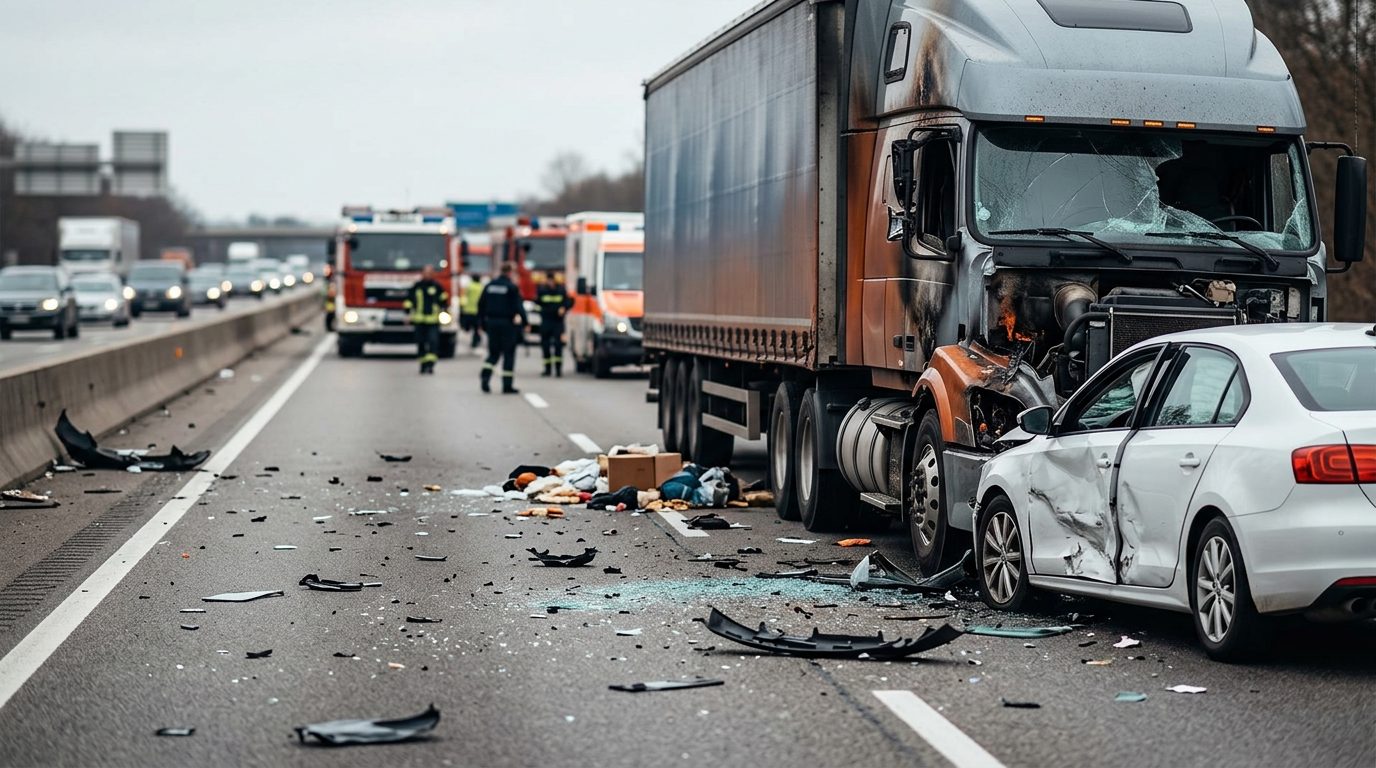
A commercial truck carrying 100 to 300 gallons of diesel fuel collides at highway speed. The impact breaches the fuel tank. Diesel sprays into the engine compartment where friction and heat ignite it instantly—a flash fire reaching 1,000+ degrees Fahrenheit. In seconds, a crash becomes a catastrophic fire.
Unlike a passenger vehicle fire, a commercial truck carries vastly more fuel and often transports flammable or chemically reactive materials. The resulting burns are deeper, more widespread, and frequently involve inhalation injury—damage to the airways and lungs that is often more immediately life-threatening than visible burns themselves.
If you or a loved one suffered severe burns in a truck accident, understanding how these injuries occur, what they mean for the body and mind, and what legal recourse may be available is the first step toward recovery and justice.
Not sure what your next step is?
Talk it through with our team — the first consultation is free, confidential, and carries no obligation.
How Truck Accidents Cause Severe Burn Injuries
Severe burns in truck accidents occur through three primary mechanisms: fuel tank rupture and ignition, high-pressure fuel system failure, and hazardous cargo exposure.
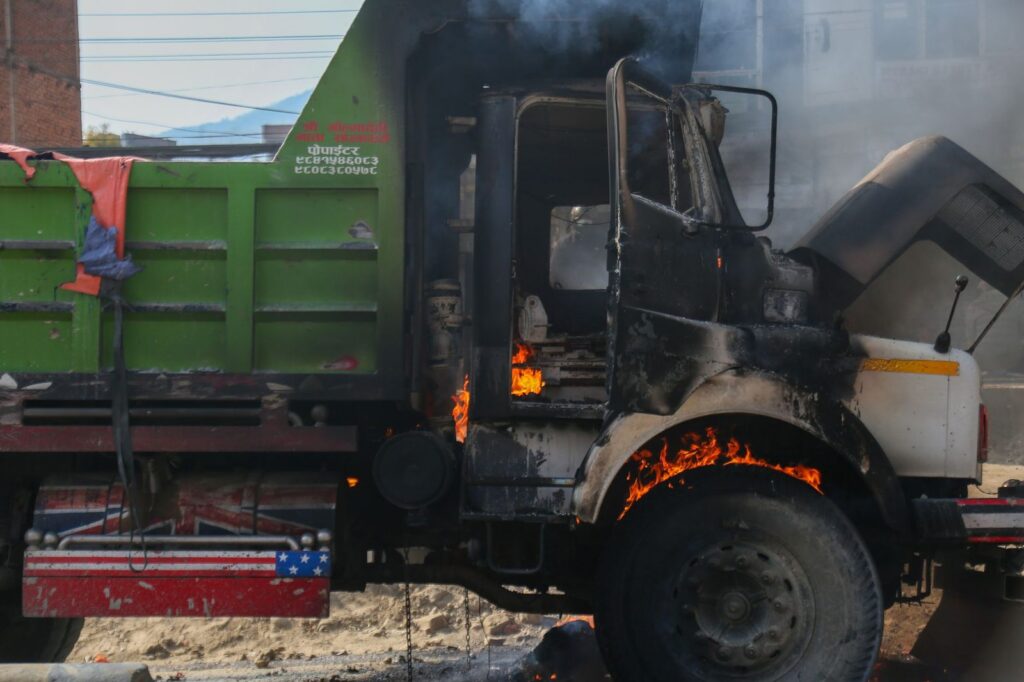
Fuel tank rupture. Modern commercial trucks operate under federal design standards (49 CFR Part 393) that govern fuel tank placement and construction. Despite these standards, high-speed collisions can breach tanks. Once ruptured, fuel sprays into the engine compartment or cabin where heat, sparks, or friction ignite it instantly. The resulting flash fire can reach temperatures exceeding 1,000 degrees Fahrenheit within fractions of a second.
Hazardous cargo. Tanker trucks carrying gasoline, propane, or other flammable liquids create an explosion risk, not just a fire. Trucks transporting corrosive chemicals (sulfuric acid, chlorine) or reactive materials can ignite spontaneously when containers rupture and contents mix. The scale of these fires is fundamentally different from passenger vehicle fires because of fuel volume and cargo type.
Root causes of the crash. Driver fatigue, speeding, distracted driving, and mechanical failure all create the collision conditions that lead to fuel tank rupture. A truck driver operating under hours-of-service violations may lose control. A trucking company that fails to maintain brakes or tires sets the stage for a catastrophic collision. A manufacturer that designs a fuel system vulnerable to rupture bears responsibility for the fires that follow.
Types of Burn Injuries in Truck Accidents
Truck accident burns fall into several overlapping categories, and survivors often experience multiple types simultaneously.
Flash burns occur from the initial fuel ignition. A person near the truck at the moment of fire is exposed to extreme radiant heat and flames, often causing burns across large areas of the body in fractions of a second.
Contact burns result from touching hot surfaces—burning metal, melted plastic, or flames themselves. In a truck cab, a driver or passenger may be trapped and burned by the interior as it heats.
Inhalation injuries are often more life-threatening than visible burns. When fuel and materials burn, they produce smoke, carbon monoxide, and toxic fumes. A person who breathes in hot gases, smoke, or chemical vapors suffers thermal damage to the airways, throat, and lungs. Inhalation injuries can cause airway swelling, respiratory failure, and death even if the person’s skin burns are survivable. The American Burn Association reports that inhalation injury increases mortality risk by approximately 40–60% in hospitalized burn patients.
Chemical burns occur when hazardous cargo contacts skin. Sulfuric acid, alkalis, and other corrosive materials can destroy skin and underlying tissue more deeply than thermal burns.
Combination injuries are common. A person may suffer severe burns, crush injuries from vehicle wreckage, fractures, spinal cord injury, and traumatic brain injury all in the same accident. These compounding injuries dramatically increase medical complexity and long-term disability.
How Severe Burns Are Classified and Why Depth Matters
Burn severity is classified by depth—how far the burn extends into the skin and tissue layers.
First-degree burns affect only the outer skin layer (epidermis). They cause redness and pain but heal without scarring. First-degree burns are not catastrophic.
Second-degree burns penetrate the outer layer and reach the layer beneath (dermis). They cause blistering, severe pain, and scarring. Second-degree burns can be serious but often heal with medical care.
Third-degree burns destroy the full thickness of skin and extend into the tissue beneath. The burned area appears charred or white and is often painless because nerves are destroyed. Third-degree burns always leave permanent scarring and require skin grafting. They are catastrophic.
Fourth-degree burns extend through skin and tissue into muscle and bone. They are uniformly fatal or result in permanent, severe disability.
Burn severity is also measured by the percentage of the body affected. Doctors use the “Rule of Nines” to estimate body-surface-area coverage: each arm is 9%, each leg is 18%, the torso is 18% front and 18% back, and the head is 9%. Burns covering more than 20% of the body in adults (or 10% in children or the elderly) are considered major and require hospitalization in a specialized burn center. Burns covering more than 40% of the body have a significantly higher mortality rate.
The combination of depth and body-surface-area percentage determines whether a burn is life-threatening, how long recovery takes, and what permanent disabilities will result.
The Immediate Medical Crisis
Severe burns create a medical emergency that unfolds over hours and days.
Shock and fluid loss begin immediately. Severe burns cause massive fluid loss through the damaged skin, leading to shock (a life-threatening drop in blood pressure and organ perfusion). Burn centers use intravenous fluids calculated by the Parkland Formula to restore circulation and prevent organ failure.
Airway management is critical. If a person has inhalation injury or burns around the face and neck, the airway can swell and close. Doctors may need to place a breathing tube (intubate) to keep the airway open.
Infection and sepsis are the leading causes of death in severe burn cases. Burned skin cannot defend against bacteria. Within days, infection can spread into the bloodstream, causing sepsis (a life-threatening whole-body inflammatory response). Burn centers use antibiotics, sterile dressings, and specialized isolation protocols to prevent infection.
Initial surgeries begin within hours or days. An escharotomy is a surgical cut through burned tissue to relieve pressure and restore blood flow. Debridement removes dead tissue. Skin grafting—transplanting healthy skin from unburned areas to cover the wound—is performed as soon as the patient is stable. Large burns may require multiple grafting surgeries.
Pain management is intense. Severe burn pain is among the worst pain a human can experience. Burn centers use high-dose opioids, sedatives, and regional anesthesia to manage it.
Survival depends on rapid transport to a specialized burn center, expert medical care, and aggressive infection prevention. Even with the best care, severe burns carry a high risk of death and permanent disability.
Long-Term Impact: How Burn Injuries Change Lives
For those who survive, the journey extends far beyond the hospital.
Permanent scarring and contractures are nearly universal after third- or fourth-degree burns. Scar tissue is inelastic. As it heals, it tightens and contracts, limiting movement. A person with severe burns on the hands may lose the ability to open and close their fingers. Burns on the legs can prevent normal walking. Contractures worsen over time without aggressive physical therapy and may require repeated surgeries to release them.
Psychological trauma is profound. Many burn survivors develop post-traumatic stress disorder (PTSD), depression, and anxiety. The memory of the fire, the pain, the appearance of scars, and the loss of function create lasting emotional wounds. Research indicates elevated suicide risk among severe burn survivors.
Disfigurement affects identity and social reintegration. Facial and neck burns are visible to everyone. Many survivors report social isolation, discrimination, and difficulty returning to work or relationships.
Chronic pain persists for years or decades. Nerve damage can cause phantom sensations—burning, tingling, or pain in areas that no longer have normal sensation. Some survivors never fully adapt to chronic pain.
Functional limitations pervade daily life. Self-care becomes difficult. Dressing, bathing, and grooming may require assistance. Work capacity drops dramatically. A person who worked with their hands may never return to their trade.
Repeated surgeries are often necessary. Reconstructive procedures, scar revision, and contracture release surgeries may continue for years. Each surgery carries risks and requires recovery time.
Loss of earning capacity is substantial. Many burn survivors cannot return to their pre-injury jobs. Vocational rehabilitation may be possible, but retraining takes time and money.
The cumulative effect is permanent disability and a fundamentally altered life.
Have questions about what happened?
Ask our team directly. The first conversation is free, confidential, and there is no obligation to continue.
Do Burn Victims Qualify for Disability?
Yes. Severe burns from truck accidents frequently qualify survivors for disability benefits.
Social Security Disability Insurance (SSDI) and Supplemental Security Income (SSI) provide monthly income and health coverage to people who cannot work due to a severe, long-term medical condition. The Social Security Administration recognizes severe burns as a condition that can meet the threshold for disability.
To qualify, a person must demonstrate that their burn injury prevents them from working for at least 12 months or results in death. Third-degree and fourth-degree burns almost always meet this standard. Second-degree burns may qualify if they cover a large body-surface area or involve the face, hands, or genitals.
Additionally, many states offer permanent partial disability ratings and impairment awards through workers’ compensation (if the accident occurred at work) or through civil claims. An attorney can help identify all available sources of disability income and benefits.
Is a Burn Considered a Traumatic Injury?
Yes. A traumatic injury is one caused by sudden, violent external force. Severe burns from a truck accident meet this definition—the fire and heat are the violent external force.
This classification matters because it determines how medical professionals treat the injury and how the legal system categorizes the claim. Traumatic burns require emergency medical intervention and specialized burn center care. They also establish liability in a personal-injury or wrongful-death claim.
Many truck accident survivors suffer combination injuries: severe burns plus traumatic brain injury, spinal cord injury, or amputation from the same crash. Each injury requires its own medical and legal response, but they arise from a single incident and may be pursued together in a single claim.
Who Is Responsible for a Truck Accident Burn Injury?
Liability in a truck accident burn injury depends on what caused the crash and whether the truck’s design or maintenance contributed to the fire.
Truck driver negligence is common: speeding, driving while fatigued, distracted driving, or improper cargo loading can cause a crash that leads to fuel tank rupture and fire.
Trucking company liability may arise from inadequate vehicle maintenance, failure to train drivers on safety, violation of hours-of-service regulations, or pressure on drivers to meet unrealistic schedules (which leads to fatigue and speeding).
Manufacturer defects in the truck’s fuel system, tank design, or overall crashworthiness may make the vehicle more prone to fire after a collision. A fuel tank that ruptures too easily, fuel lines that lack protective shielding, or a cab design that traps occupants in flames may all be design defects subject to product liability claims.
Third-party negligence by other drivers, road hazards, or unsafe conditions may have caused the initial collision.
Cargo shipper liability may apply if hazardous materials were improperly packaged, labeled, or loaded, increasing the risk of ignition or explosion.
Determining fault is essential to identifying all responsible parties and maximizing compensation. In catastrophic burn cases, multiple parties are often liable.
What Compensation Might Be Available?
Compensation in a truck accident burn injury claim covers both economic and non-economic damages.
Medical expenses include emergency care, hospitalization, surgeries, skin grafts, rehabilitation, and ongoing wound care. For severe burns, these costs often exceed $1 million.
Future medical care accounts for reconstructive surgeries, physical therapy, pain management, and mental health treatment over the person’s lifetime.
Lost wages and lost earning capacity compensate for income lost during recovery and the permanent reduction in earning ability due to disability.
Pain and suffering damages recognize the physical pain, emotional trauma, and loss of quality of life.
Permanent scarring and disfigurement damages compensate for visible, permanent changes to appearance.
Disability and loss of function damages account for the inability to perform work, hobbies, and daily activities.
Wrongful death damages may be available if the burn injury was fatal. Family members can recover funeral expenses, lost financial support, and damages for the loss of companionship and guidance.
Under Florida Statutes §768.81 (comparative negligence), if the injured person is found to be more than 50% at fault for the accident, they cannot recover damages. Accurate fault determination is critical.
Working with an attorney experienced in catastrophic truck accident cases is essential to identifying all liable parties, gathering evidence, and negotiating or litigating for full compensation.
Want to know where you stand?
Tell us what happened and our team will walk you through the options available to you, at no cost.
What to Do If You or a Loved One Suffered a Burn Injury in a Truck Accident
If you’re in the immediate aftermath of a truck accident burn injury, take these steps:
Seek immediate medical attention. Call 911 if you haven’t already. Severe burns require emergency care and transport to a burn center. Do not delay.
Preserve evidence. Once you’re safe, take photos of the accident scene, vehicle damage, and your injuries (if you’re able). Get contact information from witnesses. Note the date, time, location, weather, and road conditions.
Report the accident to law enforcement. Request a copy of the police report once it’s filed. The report is crucial evidence.
Do not discuss the accident with insurance adjusters without legal representation. Adjusters may try to minimize your claim or get you to admit fault. Consult an attorney first.
Keep detailed records of all medical treatment, medications, surgeries, therapy, expenses, and recovery progress. These records document the severity and cost of your injury.
Consult with an attorney as soon as possible. Under Florida Statutes §95.11, you generally have two years from the date of the accident to file a personal-injury claim. Don’t wait. An attorney can begin investigating immediately, preserve evidence, and identify all liable parties.
Frequently Asked Questions
Do burn victims qualify for disability?
Yes. Severe burns—particularly third- and fourth-degree burns covering significant body-surface area—often qualify survivors for Social Security Disability Insurance (SSDI) and Supplemental Security Income (SSI), as well as state disability programs and workers’ compensation if applicable.
Is a burn considered a traumatic injury?
Yes. Traumatic injuries result from sudden, violent external force, and severe burns from a truck accident fire meet this definition, which affects medical treatment and legal classification.
How much compensation can I receive for a severe burn injury from a truck accident?
Compensation varies widely based on the severity of burns, body-surface-area coverage, age, earning capacity, and the number of liable parties. Cases involving third- or fourth-degree burns often result in substantial settlements or awards, but no outcome is guaranteed.
What causes fires and explosions in truck accidents?
Fuel tank rupture and ignition, high-pressure fuel system failure, and hazardous cargo exposure are the primary causes. The large fuel volume and flammable or reactive materials in commercial trucks make fires far more severe than in passenger vehicles.
What should I do immediately after a truck accident burn injury?
Seek emergency medical care, preserve evidence (photos, witness information), report to law enforcement, avoid discussing the accident with insurance adjusters, keep detailed medical records, and consult an attorney within weeks—not months—of the accident.
If you or someone you care for suffered severe burns in a truck crash, you’re facing enormous medical decisions and questions about what comes next. Many people in your situation reach out to discuss what happened, what the injury means for recovery, and whether someone may be responsible. You don’t have to navigate this alone. Contact us for a free case evaluation to discuss your situation and learn what legal options may be available.
The Immediate Aftermath: What to Do
Seek Emergency Medical Care
Severe burns require immediate hospitalization and specialized burn-center treatment. Do not delay—call 911 or get to the nearest hospital. Document all medical records, photographs of injuries, and treatment details.
Preserve Evidence at the Scene
If safe to do so, photograph the accident scene, vehicle damage, road conditions, and any hazards. Collect names and contact information from witnesses, police, and emergency responders. Request a copy of the accident report.
Report the Incident
File a report with local law enforcement and, if applicable, the trucking company or property owner. Notify your insurance carrier, but do not sign anything or give a recorded statement without legal guidance.
Consult a Lawyer Early
Contact an attorney who focuses exclusively on catastrophic burn injuries and truck accidents. Early legal guidance protects your rights and ensures evidence is preserved for your claim.
Why Truck Accident Burn Cases Are Complex
Multiple Liable Parties
Truck accidents involving fire or explosions may involve the truck driver, trucking company, vehicle manufacturer, cargo shipper, or maintenance contractor. Identifying all responsible parties is critical to recovery.
Extensive Medical & Rehabilitation Needs
Third- and fourth-degree burns often require multiple surgeries, skin grafts, long-term hospitalization, and years of rehabilitation. Costs mount quickly—and your claim must account for lifetime care.
Permanent Scarring & Disability
Severe burns cause permanent disfigurement, loss of function, chronic pain, and psychological trauma. These life-altering changes affect your ability to work, relationships, and quality of life—all recoverable damages.
Regulatory & Safety Records
Trucking companies are subject to federal safety regulations. Violations—faulty brakes, improper cargo loading, driver fatigue, or inadequate maintenance—can establish negligence and strengthen your claim.
Time Matters
Burn injuries from truck accidents involve strict deadlines for filing claims and preserving evidence. The sooner you contact an attorney, the sooner we can investigate, secure witness statements, and protect your legal rights.
Your Path Forward
Medical Documentation & Expert Review
We work with burn specialists and medical experts to document the full extent of your injuries, treatment, and long-term prognosis. This evidence is essential to establishing the value of your claim.
Investigation & Liability Analysis
Our team investigates the accident, reviews truck maintenance records, driver logs, and cargo manifests to identify negligence and hold all responsible parties accountable.
Damages Calculation
We calculate all past and future damages: medical bills, lost wages, rehabilitation costs, pain and suffering, scarring and disfigurement, loss of earning capacity, and emotional distress.
Negotiation & Litigation
We pursue fair compensation through settlement or trial. You pay no attorney’s fees unless there is a recovery—we handle the legal work while you focus on healing.