


Motorcycle Injuries
Motorcycle Burn Injuries: Types, Severity & Long-Term Impact
Thermal burns, friction burns, and chemical exposure from motorcycle crashes cause catastrophic, permanent scarring and disability. Learn what you need to know—and what comes next.
By CHG Lawyers · Published August 29, 2026
Motorcycle Burn Injuries: Types, Severity & Legal Liability
Motorcycle burn injuries happen three ways: friction burns when skin slides across pavement at high speed, thermal burns from contact with hot engine parts like exhaust pipes, and chemical burns from leaking fuel or fluids. Each type heals differently, leaves different scars, and can have lasting effects. Some result from negligence or defective equipment—meaning someone else may be legally responsible.
If you or a family member sustained a severe burn in a motorcycle crash, understanding what happened to your body and what comes next is the first step toward recovery and accountability.

Not sure what your next step is?
Talk it through with our team — the first consultation is free, confidential, and carries no obligation.
How Motorcycle Burn Injuries Happen
Friction burns (road rash) occur when skin contacts pavement during a crash. The faster the motorcycle travels and the longer the rider slides, the deeper the burn goes into tissue layers. Road surface texture, protective clothing, and skin thickness all affect how severe the burn is. A slide of just a few feet at highway speed can strip away the outer skin layers and expose deeper tissue.
Thermal burns result from contact with hot engine components. Motorcycle exhaust pipes reach temperatures exceeding 300°F. The muffler, engine block, and fuel tank stay intensely hot during operation or after a crash. According to peer-reviewed research published in the Journal of Burn Care & Research, approximately 70.5% of exhaust pipe burn injuries involve motorcycle passengers, most often during mounting or dismounting, with peak incidence during summer months. A brief touch to a hot exhaust pipe can cause a full-thickness (third-degree) burn in seconds.
Chemical burns occur when gasoline, oil, coolant, or battery acid contacts skin during or immediately after a crash. These burns are deceptive. They may worsen over hours as the chemical continues to damage tissue. They also carry high infection risk because acid or alkali penetrates deeper than thermal injury that looks similar.
Types of Motorcycle Burn Injuries
Road rash is an abrasion burn caused by friction. Severity ranges from surface redness to deep tissue damage depending on speed and slide distance. Road rash typically occurs on arms, legs, shoulders, and hands—areas riders instinctively use to brace themselves.
Exhaust pipe burns are thermal injuries, typically on the lower leg, foot, or arm. Because exhaust pipes are positioned where riders’ legs naturally rest or where passengers’ legs dangle, contact is common. These burns are often deep and match the pipe’s shape and diameter.
Fuel-related burns can be thermal (from ignition) or chemical (from direct fluid contact). A motorcycle fuel tank rupture during a crash can ignite, causing severe thermal injury. Chemical contact from spilled gasoline creates a different injury pattern and healing process.
Airbag-related burns occur in multi-vehicle crashes where a motorcycle is struck by a car or truck with deployed airbags. The friction and heat from airbag deployment can cause thermal injury to the face, neck, and upper body.
Degrees of Burn Severity
Burn injuries are classified by depth and how much tissue is involved. This classification determines healing time, scarring risk, and whether surgery is necessary.
First-degree burns affect only the outer skin layer (epidermis). The area is red and painful but has no blistering. These burns typically heal in 7–10 days with minimal or no scarring.
Second-degree burns damage the layer beneath the outer skin (dermis). Blistering, severe pain, and swelling are typical. Healing takes 2–3 weeks to several months depending on depth. Second-degree burns carry significant risk of scarring, contractures (permanent tightening of skin that limits movement), and infection. People with darker skin are at higher risk for keloid and hypertrophic (raised, thick) scarring.
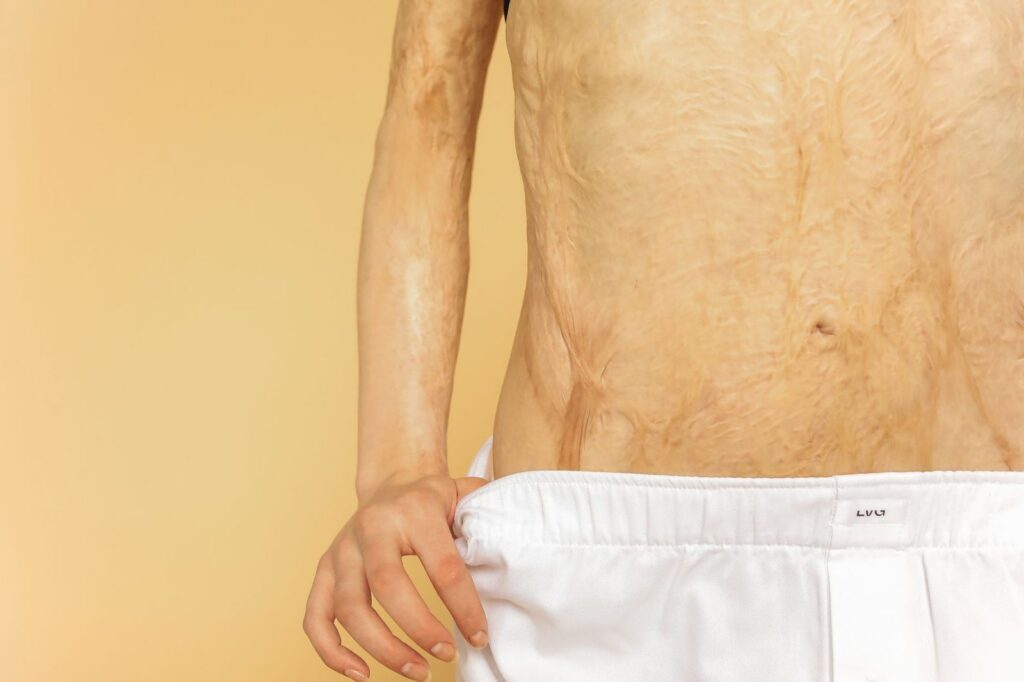
Third-degree burns destroy the full thickness of skin. The burned area appears charred, white, or leathery. Paradoxically, deep third-degree burns often cause less acute pain because nerves are destroyed. These burns require surgery: dead tissue must be removed and skin grafts applied. Healing takes months to years and leaves permanent scarring and functional loss.
Fourth-degree and deeper burns extend into muscle, bone, fat, or organ tissue. These catastrophic injuries require extensive reconstructive surgery, prolonged hospitalization, and often result in permanent loss of function, amputation, or death.
Have questions about what happened?
Ask our team directly. The first conversation is free, confidential, and there is no obligation to continue.
Healing Timelines and Medical Intervention
First-degree burns typically resolve in 7–10 days without intervention.
Second-degree burns require 2–3 weeks to several months. Blistered areas must be kept clean to prevent infection. As the burn heals, the skin contracts and scars form. Deeper second-degree burns take longer and leave more visible scarring.
Third-degree and deeper burns require months to years of treatment, including:
- Removal of dead tissue
- Skin grafting, often requiring multiple procedures
- Wound care and dressing changes
- Physical therapy to prevent contractures and restore movement
- Scar management (compression garments, silicone treatments, laser therapy)
- Possible reconstructive or cosmetic surgery
Infection is a major complication that extends the healing timeline. Burn wounds are vulnerable to bacterial infection. Even minor infections can worsen scarring or delay healing.
Psychological recovery—dealing with pain, appearance changes, and functional loss—often extends far beyond the physical healing phase and may require mental health treatment.
Long-Term Effects of Severe Motorcycle Burn Injuries
Catastrophic motorcycle burn injuries leave lasting physical and emotional effects.
Permanent scarring and disfigurement are nearly universal with third-degree and deeper burns. Visible scars on the face, neck, hands, or arms often trigger anxiety, depression, and social withdrawal.
Loss of skin elasticity and contractures limit joint movement. A burn across a knee, elbow, or hand can permanently reduce range of motion, making work, sports, or self-care difficult or impossible.
Chronic neuropathic pain (nerve pain) is common after severe burns. Damaged nerves send abnormal pain signals for months or years. The burned area may be hypersensitive to temperature, touch, or pressure.
Infection and complications include keloid formation (overgrowth of scar tissue), hypertrophic scarring, and wound breakdown. These complications may require additional surgery or prolonged wound care.
Psychological effects are profound. Depression, anxiety, body image distress, and post-traumatic stress are common after severe burns. Mental health treatment is often as critical as medical care.
Functional impairment depends on burn location and depth. A severe burn on the hand may end a career requiring fine motor control. A burn on the leg may limit mobility or require assistive devices. Loss of work capacity and independence can persist for life.
When a Motorcycle Burn Injury May Be Someone Else’s Fault
Not all motorcycle burn injuries are accidents. Some result from negligence or defective equipment, which may create legal liability.
Defective motorcycle design or manufacturing can make burn injuries more likely or more severe:
- Exhaust pipes positioned where riders’ legs naturally rest
- Fuel tanks prone to rupture in low-speed crashes
- Inadequate shielding around hot engine components
- Fuel system designs that leak during or after a crash
Negligent maintenance by a repair shop or dealer may create burn hazards:
- Improper exhaust pipe installation leaving gaps or exposed hot surfaces
- Failure to repair or replace a leaking fuel line
- Failure to warn the rider of a known hazard
Another driver’s negligence caused the crash that resulted in your burn injury. If another vehicle struck your motorcycle due to reckless driving, failure to yield, or unsafe lane changes, that driver’s liability may extend to the burn injuries you sustained.
Road hazards or defective roadway conditions that caused you to lose control—debris, poor maintenance, or unsafe design—may create liability for a government agency or property owner.
Defective safety gear (helmet, jacket, gloves) that failed to protect as designed or marketed may be the subject of a product liability claim.
Want to know where you stand?
Tell us what happened and our team will walk you through the options available to you, at no cost.
What to Do After a Motorcycle Burn Injury
Immediate and careful action protects both your health and your legal rights.
Seek immediate medical attention. Even burns that seem minor can worsen or become infected. Specialized burn centers have expertise in wound care, infection prevention, and scar management that general emergency rooms may lack.
Document the scene and circumstances. Take photographs of the motorcycle (damage, exhaust pipe position, fuel leaks), the road surface, other vehicles involved, and your injuries. Collect contact information from witnesses.
Report the crash to police if another vehicle or negligence was involved. A police report creates an official record.
Preserve evidence. Keep the damaged motorcycle, your clothing, medical records, and photographs of your injuries as they heal. Do not discard or repair the motorcycle until an attorney has reviewed it.
Keep detailed records of all medical treatment, medications, physical therapy, lost income, and expenses. These records document the injury’s impact and support damage calculations.
Consult with an attorney experienced in catastrophic burn injuries before accepting any settlement offer. Insurance companies often underestimate the long-term cost of severe burns, including future surgeries, scar management, and mental health treatment.
Understanding Your Legal Options
If negligence or defective equipment caused your motorcycle burn injury, you may have legal claims.
Personal injury claims allow you to recover damages if another party’s negligence caused the crash or burn injury. Recoverable damages include medical costs, lost wages, pain and suffering, and compensation for permanent impairment. Under Florida’s modified comparative-negligence rule (Fla. Stat. § 768.81), you can recover damages even if you share some fault—but only if you are 50% or less at fault.
Product liability claims apply if a defective motorcycle part or safety gear caused or worsened the burn injury. Manufacturers and sellers can be held liable for design defects, manufacturing defects, or failure to warn.
Insurance claims may be available through your own motorcycle insurance (uninsured/underinsured motorist coverage) or the at-fault driver’s liability coverage.
Wrongful death claims can be brought by family members if a loved one died from burn injuries sustained in a motorcycle crash.
Damages in catastrophic burn cases often include lifetime medical care, reconstructive and cosmetic surgery, mental health treatment, lost earning capacity, and compensation for permanent scarring or functional loss.
Under Florida law, the statute of limitations for filing a personal injury action is two years from the date the cause of action accrues (Fla. Stat. § 95.11). This deadline is strict—missing it bars your claim entirely.
Frequently Asked Questions
How long does it take for a motorcycle burn to heal?
First-degree burns heal in 7–10 days. Second-degree burns take 2–3 weeks to several months. Third-degree and deeper burns require months to years of treatment, surgery, and rehabilitation.
What is the difference between friction burns and thermal burns?
Friction burns (road rash) result from skin sliding across pavement. Thermal burns result from contact with hot engine parts or fire.
Can a motorcycle exhaust pipe really cause a severe burn?
Yes. Exhaust pipes exceed 300°F and can cause full-thickness burns in seconds of contact.
Who is liable if a defective motorcycle part caused my burn injury?
The motorcycle manufacturer, dealer, or repair shop may be liable if a design defect, manufacturing defect, or negligent maintenance made the burn injury more likely or more severe.
What damages can I recover for a catastrophic motorcycle burn injury?
Recoverable damages include medical costs, lost wages, pain and suffering, permanent impairment, future medical care, reconstructive surgery, mental health treatment, and lost earning capacity.
What is the deadline to file a lawsuit for a motorcycle burn injury in Florida?
You have two years from the date of the crash to file a personal injury lawsuit in Florida (Fla. Stat. § 95.11(5)(a)). Missing this deadline bars your claim.
If you sustained severe burn injuries in a motorcycle crash and believe negligence or a defective part played a role, the decisions you make now—about documentation, medical care, and legal representation—will shape your recovery and your ability to hold the responsible party accountable. Contact us for a free case evaluation to discuss what happened and what your situation may mean for your future.
Types of Motorcycle Burn Injuries
Thermal Burns
Direct contact with hot engine parts, exhaust pipes, or fuel fires during a crash. Severity ranges from first-degree (skin redness) to third-degree (full-thickness tissue destruction) depending on temperature and contact time.
Friction Burns (Road Rash)
Skin abraded by pavement at high speed, removing layers of skin and embedding debris. Often causes permanent scarring, nerve damage, and infection if not properly treated immediately.
Chemical Burns
Exposure to gasoline, battery acid, or other fluids released during impact. Chemical burns penetrate deeper than thermal burns and require urgent medical intervention to stop the reaction.
Flash Burns
Rapid heat exposure from fuel ignition or electrical arcing. Can cause severe burns across large body areas in seconds, often affecting the face, hands, and upper body.
Burn Severity & Healing Timeline
First-Degree Burns
Superficial skin damage (redness, mild swelling). Healing typically occurs in 7–10 days with minimal scarring. Pain is present but manageable.
Second-Degree Burns
Damage to epidermis and dermis (blistering, severe pain, oozing). Healing takes 2–3 weeks to several months. Scarring and pigmentation changes are common.
Third-Degree & Deeper Burns
Full-thickness destruction (charred, white, or leathery appearance). Requires months to years of treatment, including skin grafts, reconstructive surgery, and intensive rehabilitation. Permanent scarring and loss of function are typical.
Severe, Widespread Burns
Large surface area involvement (>20% of body) or burns on critical areas (face, hands, joints). Life-threatening complications include infection, shock, and organ failure. Recovery demands prolonged hospitalization and ongoing medical care.
Seek Emergency Care Immediately
Motorcycle burn injuries require urgent medical attention. Even burns that appear minor can worsen rapidly. Call 911 or go to the nearest emergency room. Do not attempt home treatment for anything beyond a small first-degree burn. Proper wound care in the first hours is critical to prevent infection, minimize scarring, and preserve function.
Long-Term Consequences of Motorcycle Burn Injuries
Permanent Scarring & Disfigurement
Third-degree and severe second-degree burns leave visible, permanent scars. Multiple reconstructive surgeries may improve appearance but cannot fully restore pre-injury skin. Psychological impact and social challenges are significant.
Chronic Pain & Nerve Damage
Burn injuries damage nerve endings, causing chronic pain, numbness, tingling, and hypersensitivity. Pain management often requires long-term medication and specialized treatment.
Loss of Mobility & Function
Burns on joints, hands, or limbs restrict movement and grip strength. Contractures (tightening of scar tissue) can prevent normal range of motion. Physical therapy and occupational therapy may be lifelong needs.
Infection & Complications
Burn wounds are highly vulnerable to bacterial and fungal infection, which can lead to sepsis, prolonged hospitalization, and additional surgeries. Infection risk remains elevated during the entire healing process.
Extensive Medical & Surgical Needs
Severe burns require skin grafts, reconstructive surgery, wound care, pain management, and rehabilitation. Treatment costs accumulate rapidly and may extend for years.
Emotional & Psychological Impact
Visible scarring, chronic pain, and loss of function often lead to depression, anxiety, post-traumatic stress, and social isolation. Mental health support is a critical part of recovery.
You May Have a Claim
If your motorcycle burn injury resulted from another person's negligence—a defective motorcycle, an unsafe road condition, a reckless driver, or a manufacturer's failure to warn—you may be entitled to pursue a claim for your medical costs, ongoing care, lost income, pain and suffering, and other damages. The at-fault party's insurance or the responsible party may be liable for your catastrophic injury.