

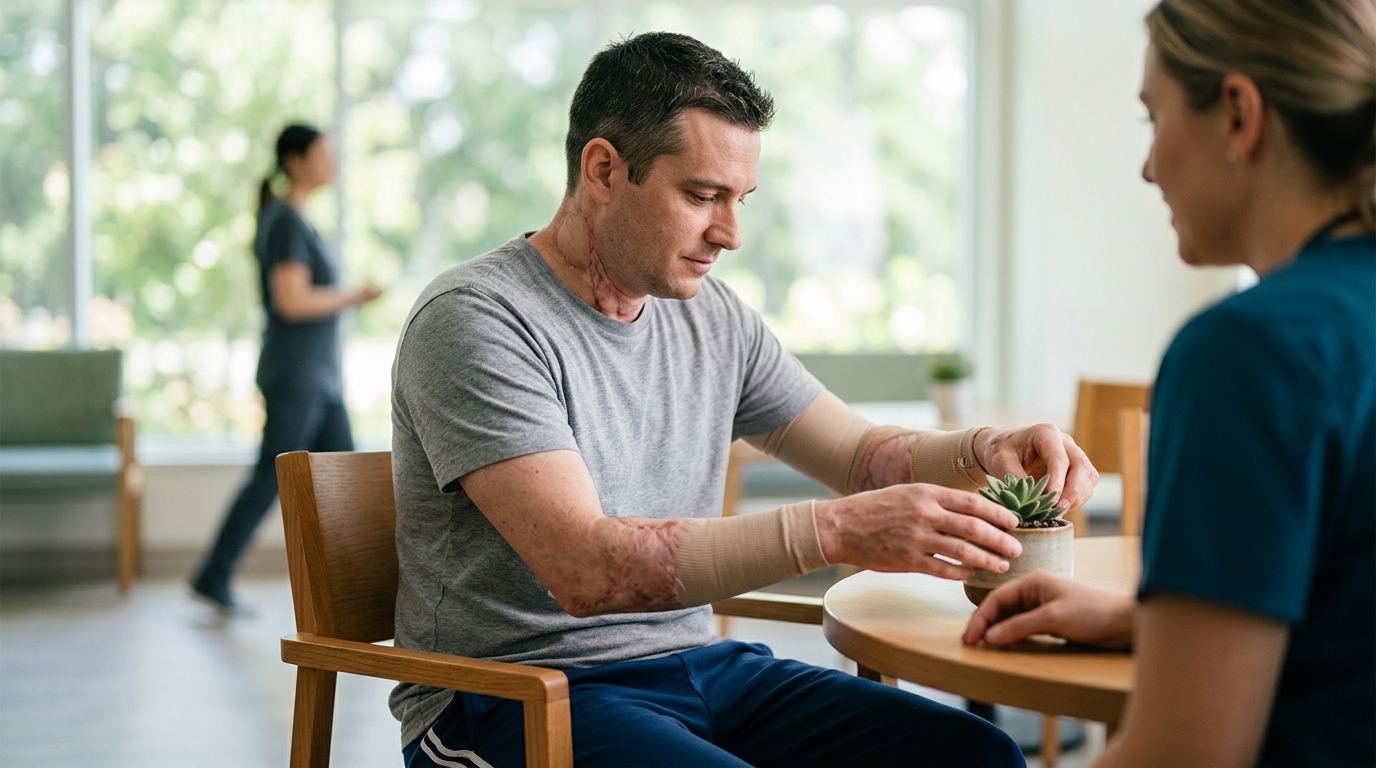
Severe Burn Injuries
How to Prove Fault After a Catastrophic Burn Injury
Severe burns cause permanent scarring, nerve damage, and years of surgery. Proving who is responsible starts with understanding four things the law requires — and preserving the evidence that shows them.
Why Families Turn to CHG
Licensed
Florida Bar–admitted attorneys
Nationwide
We take catastrophic-injury cases across the U.S.
Bilingual
Guidance in English and Spanish
No Fee
Free, no-obligation case evaluation
By CHG Lawyers · Published August 01, 2026
How to Prove Fault in a Severe Burn Injury Case: Evidence That Matters
To prove fault in a burn injury case, you must show four things. Someone owed you a duty of care. They broke that duty. That breach caused your burns. And you suffered real harm.
You prove these with evidence. That includes medical records, scene photos, the defective product kept intact, fire and inspection reports, and expert testimony.
Below, we explain each part in plain language. We also give you a step-by-step evidence checklist. We explain what happens when the burn occurred on someone else’s property. And we cover the mistakes that quietly weaken a claim.

Not sure what your next step is?
Talk it through with our team — the first consultation is free, confidential, and carries no obligation.
Why proving fault matters after a severe burn injury
Proving fault is the first step to getting compensation after a catastrophic burn. Severe burns are among the most painful and costly injuries a person can survive.
Doctors grade deep burns by depth — first-, second-, third-, and even fourth-degree (reaching muscle or bone). They also grade them by the percentage of total body surface area (TBSA) affected. According to the American Burn Association’s burn care standards, patients with large full-thickness burns usually go to a specialized burn center. Treatment there can involve repeated skin grafts, months in the hospital, and lifelong rehabilitation.
Before you or your family can recover money for those losses, you usually must show that someone else’s carelessness caused the burns. That is what “fault” means.
In the catastrophic-injury cases our attorneys handle, the strength of a claim often comes down to one thing. That is the quality of the evidence gathered in the first days and weeks.
This guide explains what fault means legally and how you prove it. For the full picture of these claims, see our main resource on severe burn injuries.
The four things you must prove to establish negligence
You must prove four legal elements: duty, breach, causation, and damages.
People often ask what three things prove negligence. Duty, breach, and causation are the classic three. But every real case also needs a fourth — damages. Without it, there is nothing to recover. Each element needs its own proof.
Duty of care
First, you show that someone owed you a reasonable standard of care. A landlord must keep a building reasonably safe. A product maker must sell an appliance that won’t catch fire in normal use. A trucking company hauling fuel or hazardous cargo must follow federal safety rules. An employer or property owner must fix known dangers.
Breach of duty
Next, you show they failed to meet that standard. A landlord ignored exposed wiring. A maker shipped a space heater with no tip-over cutoff. A trucking company skipped inspection on a tanker’s valves. A breach is the careless act — or the failure to act.
Causation
Then you connect the breach to your burns. You must show the carelessness actually caused the injury. You must also rule out unrelated causes.
This is often the hardest part in fire and explosion cases. A fire can start from more than one source, and the evidence often burns up with it.
Damages
Finally, you show real, documented harm. That means medical bills, lost income, disfigurement, disability, and pain. Without proof of damages, there is nothing to recover — even if someone was clearly careless.
Common causes of catastrophic burns and who may be at fault
Fault depends on how the burn happened. Often, more than one party shares blame.
- Apartment or building fires and explosions. Landlords or property managers may be at fault. This happens when they ignore fire-code violations, missing or dead smoke detectors, or faulty wiring.
- Defective products. Makers of appliances, lithium-ion batteries, and industrial equipment can be liable. This includes e-cigarettes and power tools that can enter “thermal runaway” (when a battery overheats and catches fire). They may be liable when a product overheats or ignites.
- Truck accidents involving fuel or hazmat fires. Trucking companies, drivers, and maintenance providers may share fault when a crash leads to a fire or explosion. Learn more on our truck accidents page.
- Workplace and industrial burns. Chemical, electrical, and thermal burns often tie back to unsafe conditions. They can also tie back to a careless third party, like a contractor or equipment supplier.
- Scalding and chemical exposure. Careless maintenance can cause these burns. Examples include a water heater set dangerously high or an unlabeled chemical.
When several parties may be responsible, you need more evidence. That is why a careful, early investigation matters.
A prioritized evidence checklist (some of it is perishable)
Not all evidence lasts. Some of it disappears within days. Below is the order our attorneys work in — highest priority first. In burn cases, sequence matters.
1. Preserve the product intact — do not repair, take apart, or throw it away. If a heater, battery, e-cigarette, wiring, or appliance caused the burn, this is your most important piece of physical evidence. Do not let anyone “fix” it. Do not throw away the packaging, charger, or manual. Engineers run a failure analysis on the item in its original condition. This means they study exactly how it broke. A cleaned-up or altered product can destroy the case. Bag it, photograph it where it sits, and store it safely. Courts can punish a party who destroys key evidence under the rule of spoliation. So preservation cuts both ways.
2. Photograph and video the scene before it changes. Capture the fire’s starting point, burn patterns, and the unsafe condition. Also capture missing or dead smoke detectors, blocked exits, and any warning labels. Do this before anything is repaired, cleaned, or discarded. Time-stamped phone photos are fine.
3. Get official reports on paper. These include fire department origin-and-cause reports. Also get any State Fire Marshal or arson findings, OSHA inspection records for workplace burns, and police or incident reports. Request them in writing and note the report number.
4. Lock down medical records. These prove both causation and damages. They show burn depth, TBSA, surgeries, grafts, infection risk, and long-term outlook. Ask the burn center for the complete chart, not a summary.
5. Identify witnesses and secure video fast. Get names and phone numbers the same day. Building and business cameras often get erased in 24 to 72 hours. So send a written request right away, or have a lawyer send a preservation letter.
6. Collect inspection, maintenance, and complaint records. For property cases, these can show the owner knew about a hazard and did nothing. Prior tenant complaints and code-compliance history are powerful.
Act quickly. Fire scenes get cleaned up. Products get thrown out. Video loops erase. For a step-by-step guide, read what to do after a severe burn injury.
Which experts actually move a burn case
- Origin-and-cause fire investigators trace where and how a fire started.
- Forensic and materials engineers examine how a defective product failed.
- Burn-care physicians connect the injury to the incident and testify to the outlook.
- Life-care planners project the lifetime cost of future surgeries, care, and equipment.
In complex burn cases, these professionals often make the difference between a disputed claim and a documented one.
Have questions about what happened?
Ask our team directly. The first conversation is free, confidential, and there is no obligation to continue.
How fault is proven when the burn happened on someone else’s property
Were you burned because a property owner failed to fix a hazard or provide working safety equipment? Then you may have a claim against that owner.
Picture a fire in an apartment with dead smoke detectors. Or a hotel that ignored exposed wiring. Or a business that let a known gas leak go unrepaired. When the owner’s neglect caused your burns, the law may hold them responsible.
Lawyers call this premises liability. It means a property owner can be at fault for dangerous conditions. This applies to conditions they knew about — or should have known about — and failed to fix.
Evidence in these cases often includes:
- Proof the owner knew or should have known about the danger
- Prior complaints from tenants or guests
- Fire-code violations
- Missing or broken smoke detectors, sprinklers, or fire extinguishers
One important note. Were you hurt because a violent crime — an assault, shooting, or attack — happened on unsafe property? Then a different area of law applies. That situation is covered on our negligent security page.
What if you were partly at fault?
Being partly at fault does not automatically end your claim. Many people wrongly assume any share of blame ends recovery. In most states, that isn’t true.
Florida follows a rule called modified comparative negligence. This rule reduces or blocks recovery based on your share of the blame. Under Fla. Stat. §768.81, as amended in 2023, a person found more than 50% at fault generally recovers nothing. If your share is 50% or less, you may still recover. But your award is reduced by your percentage of fault. So being 20% at fault reduces a recovery by 20%.
Laws vary by state. Our attorneys handle catastrophic cases nationwide, so the exact rule depends on where your injury happened. If you think you may have been partly responsible, don’t assume the case is over. It’s worth reviewing with an attorney who can explain how your state’s rule applies.
Why severe burn cases can be hard to prove
Severe burns are among the hardest injuries to prove. The evidence is often destroyed, and the cause is technical. When people ask what injury is hardest to prove, catastrophic burns come up for three reasons.
First, fire and explosion scenes get cleaned up or torn down within days. Once a scene is cleared, finding a fire’s origin becomes far harder.
Second, product-defect and industrial cases need engineering analysis. An expert must study exactly how a device failed. That work depends on the preserved product and takes time.
Third, long-term damages are hard to document. Future surgeries, permanent disfigurement, and emotional trauma all need careful proof. A quick discharge summary rarely captures the true lifetime cost.
This is exactly why early evidence preservation and experienced legal help matter so much.
Common mistakes that weaken a burn injury claim
- Waiting too long. Evidence vanishes and deadlines pass. In Florida, most negligence claims must be filed within two years under Fla. Stat. §95.11 (shortened from four years by the 2023 tort reform). Miss the window and the claim can be barred forever.
- Throwing away the product. If a defective item caused the burn, keeping it intact can make or break the case.
- Skipping medical treatment. Gaps in care weaken your damages record and give insurers an argument.
- Giving recorded statements too soon. Insurers may use your words against you. Be careful before you talk on the record.
- Accepting a fast settlement. Early offers rarely reflect the lifetime cost of a catastrophic burn. Once you sign a release, you usually can’t reopen the claim.
- Not gathering scene or witness evidence early. Memories fade and camera loops erase.
How compensation is generally evaluated in burn cases
Compensation depends on the severity of the burn and your documented losses. People often ask how much a burn injury is worth. There is no single number, and no honest lawyer can promise a specific amount.
Value drivers usually include:
- The depth and TBSA of the burn
- Past and future medical treatment, including surgeries and grafts
- Lost wages and reduced earning ability
- Permanent scarring and disfigurement
- Long-term disability and daily care needs
- Physical pain and emotional suffering
What drives a claim’s strength is not a formula. It’s proving fault clearly and documenting your damages fully.
We keep you at the center — in English or Spanish
A catastrophic burn changes a family’s life. The last thing you should worry about is whether you understand your lawyer. We handle these cases with dignity and plain language. We provide support in English and Spanish so nothing gets lost in translation. The survivor and the family stay at the center of the work — not the paperwork.
Want to know where you stand?
Tell us what happened and our team will walk you through the options available to you, at no cost.
Get a free case evaluation
Proving fault after a catastrophic burn is complex, and you don’t have to figure it out alone. Evidence disappears quickly, deadlines apply, and insurers move fast. Getting guidance early can protect your rights.
CHG Personal Injury Lawyers are licensed attorneys admitted to The Florida Bar. We handle catastrophic injury cases nationwide, with bilingual support in English and Spanish. To talk through what happened and your options, request a free, no-obligation case evaluation.
You can also learn more on our main severe burn injuries resource and our overview of catastrophic injury claims.

Frequently asked questions
What three things must be proven to find fault in a negligence case?
The classic three are duty, breach, and causation. But every real claim also needs a fourth — damages. Together, these four elements show that someone’s carelessness caused your harm.
What evidence proves fault in a burn injury case?
The defective product kept intact, scene photos and video, and fire origin-and-cause reports. Also OSHA or police records, medical records showing burn depth and TBSA, witness statements, surveillance video, and expert testimony from engineers, fire investigators, and burn physicians.
How long do I have to file a burn injury lawsuit in Florida?
Most Florida negligence claims must be filed within two years under Fla. Stat. §95.11 (shortened from four years in 2023). Deadlines vary by state and situation, so confirm yours with an attorney.
Can I still recover if I was partly at fault?
Often yes. Under Florida’s modified comparative-negligence rule, you may recover if you were 50% or less at fault (Fla. Stat. § 768.81(6)). But your award is reduced by your share. Laws vary by state.
Why are burn injury cases hard to prove?
Fire scenes get cleaned up fast. The cause can be technically complex. And long-term damages need careful documentation. Preserving the product and the scene early is key.
The Four Elements of a Fault Claim
Duty
The other party owed you a legal responsibility to act with reasonable care — a manufacturer to make a safe product, a property owner to fix a known hazard, a driver to operate safely.
Breach
That responsibility was violated. A defective heater shipped anyway, a landlord ignored faulty wiring, a company skipped a required safety step.
Causation
The breach — not something unrelated — is what actually caused the fire, explosion, or chemical exposure that burned you.
Damages
You suffered real, provable harm: medical bills, lost income, disfigurement, and the lasting physical and emotional toll of a catastrophic burn.
Do Not Discard the Evidence
If a defective product, appliance, or equipment caused your burns, keep it exactly as it is — don't repair, alter, or throw it away. That item is often the single most important piece of proof, and once it's gone it usually can't be recovered.
Evidence That Helps Prove Fault
Physical Evidence
The defective product, faulty wiring, or equipment involved — kept intact and preserved. Fire and burn cases often rely on expert inspection of the original object.
Scene Documentation
Photos and video of where the injury happened, the source of the fire or chemical, and the surrounding conditions, captured as soon as possible.
Records & Reports
Fire-department and incident reports, maintenance and inspection logs, product recalls, and medical records documenting the severity of your burns.
Witness Accounts
Statements from people who saw what happened or knew about prior hazards, along with expert opinions on how the injury could have been prevented.
Let us help you prove what happened and protect your family's future.
Related practice areas
- Severe Burn Injuries in Miami
- Compensation for Burn Scarring & Disfigurement