


Understanding the Rule of Nines: How Burn Severity Is Measured
The Rule of Nines (TBSA) is a critical tool used by burn specialists to assess the extent of injury and guide emergency treatment. Learn what this assessment means and how it may relate to a personal injury matter, depending on the facts of each case.
By Igor Hernandez, CHG Lawyers, Coral Gables, Florida · Published September 02, 2026
Rule of Nines Burn Assessment: Understanding TBSA and Severity
When someone suffers a severe burn, emergency doctors use a quick method called the Rule of Nines. This method measures the burned area as a percentage of total body surface area (TBSA). It helps doctors make fast decisions and plan treatment. Understanding this assessment helps you read medical records and know what to expect during recovery.

Not sure what your next step is?
Talk it through with our team, and note that CHG charges no attorney’s fees and no case costs unless there is a recovery.
What Is the Rule of Nines?
The Rule of Nines is a quick method doctors use to estimate how much of the body is burned. It divides the adult body into sections. Each section represents 9% or a multiple of 9%. Doctors add them together to estimate the total percentage of body surface area burned.
What Does the Rule of Nines Measure?
The Rule of Nines measures only the extent of the body affected by heat injury. It tells doctors what percentage of skin has been burned.
This percentage guides critical decisions:
- Whether the patient should transfer to a burn center
- What level of care and monitoring is needed
- How much intravenous fluid the patient will require
However, the Rule of Nines does not predict survival or individual outcome. It doesn’t account for burn depth, smoke inhalation, age, pre-existing health conditions, or other injuries. Those factors are assessed separately and combined with the TBSA percentage to form a complete picture of severity.
How the Rule of Nines Divides the Adult Body
Doctors memorize this breakdown to assess patients quickly:
- Head and neck: 9%
- Each arm (front and back): 9% each (18% total)
- Chest: 9%
- Abdomen: 9%
- Upper back: 9%
- Lower back: 9%
- Each leg (front and back): 18% each (36% total)
- Genitals and perineum: 1%
- Total: 100%
The sections are designed to be easy to remember and apply in an emergency.
How to Calculate Burned Area Using the Rule of Nines
The calculation is straightforward in concept, though clinical skill is required. Here’s how it works:
- The medical team visually examines which body regions show burn injury.
- Each affected region is assigned its percentage value (9%, 18%, or 1%).
- The percentages are added together to reach total TBSA.
Example: If both legs and the abdomen are burned, that’s 36% (both legs) + 9% (abdomen) = 45% TBSA.
The final TBSA calculation is documented in the patient’s medical record.
Have questions about what happened?
Ask our team directly. The first conversation is free, confidential, and there is no obligation to continue.
What Burns Does the Rule of Nines Apply To?
The Rule of Nines is used for thermal burns (fire, hot liquids, steam, contact with hot surfaces), chemical burns, and electrical burns.
The Rule of Nines does not measure inhalation injury (damage from breathing smoke or toxic gases). Inhalation injury is assessed separately through clinical examination and sometimes imaging. It may be a factor in overall severity, which depends on the individual patient’s medical evaluation.
Burn Severity Categories Based on TBSA
Doctors classify burns into severity categories based on TBSA percentage. Age, burn depth, and location can modify these classifications:
- Minor burns: Less than 10% TBSA (may be treated on an outpatient basis)
- Moderate burns: 10–20% TBSA
A burn covering 20% of the body is fundamentally different from one covering 5%. The size of a burn is one factor in assessing its severity, along with burn depth, location, and the patient’s overall condition.
Limitations of the Rule of Nines
While the Rule of Nines is reliable and widely used, it has important limitations. The method is less accurate in children because their body proportions differ significantly from adults. A child’s head represents a larger percentage of total body surface area than an adult’s.
The Rule of Nines also does not account for burn depth—whether the injury is first-degree (superficial), second-degree (partial-thickness), third-degree (full-thickness), or fourth-degree (extends into muscle and bone). A 20% TBSA burn that is all first-degree is very different from a 20% TBSA burn that is all third-degree. Depth is assessed separately and is crucial to treatment decisions.
Additionally, the Rule of Nines measures only the extent of burned area. It doesn’t measure inhalation injury, other trauma, or individual patient factors like age or medical history. The TBSA percentage must always be combined with clinical judgment and other assessments.
Why Burn Severity Assessment Matters for Your Situation
If you or a loved one has suffered a severe burn, the TBSA percentage and burn severity classification determine nearly everything that follows:
- Hospital level and length of stay: A critical burn (40% TBSA or more) requires admission to a specialized burn center and weeks or months of hospitalization.
- Surgery and skin grafting: Severe burns almost always require surgical intervention, including skin grafting to close wounds and prevent infection.
- Rehabilitation and long-term care: The higher the TBSA, the longer and more intensive the recovery process. Many patients with severe burns require months or years of rehabilitation, including physical therapy, occupational therapy, and psychological support.
- Cost of care: A catastrophic burn injury can cost hundreds of thousands or millions of dollars in medical treatment alone. The TBSA percentage is documented in medical records and becomes part of your injury history.
- Legal implications: If the burn resulted from someone else’s negligence, unsafe property conditions, or failure to maintain safe equipment, the severity assessment is central to understanding the full scope of harm and the resources needed for recovery.
Want to know where you stand?
Tell us what happened and our team will walk you through the options available to you, at no cost.
Frequently Asked Questions
Does the Rule of Nines predict how well someone will recover?
No. The Rule of Nines measures only the extent of burned area, not depth, inhalation injury, age, or other factors that affect survival and recovery. A complete prognosis requires clinical assessment by a burn specialist.
Can the Rule of Nines assessment change after the initial evaluation?
Yes. The initial assessment is done quickly in the emergency room. As swelling decreases and wounds are cleaned, the assessment may be refined. The TBSA percentage usually remains close to the initial estimate.
Why is the Rule of Nines different for children?
Children’s body proportions differ from adults. Their heads are proportionally larger. Doctors use a modified version of the Rule of Nines for pediatric patients.
What happens if someone has burns on multiple body parts?
The percentages for each affected region are added together. For example, if the face (part of the 9% head/neck region), both arms (18%), and the chest (9%) are burned, the total TBSA is approximately 36%.
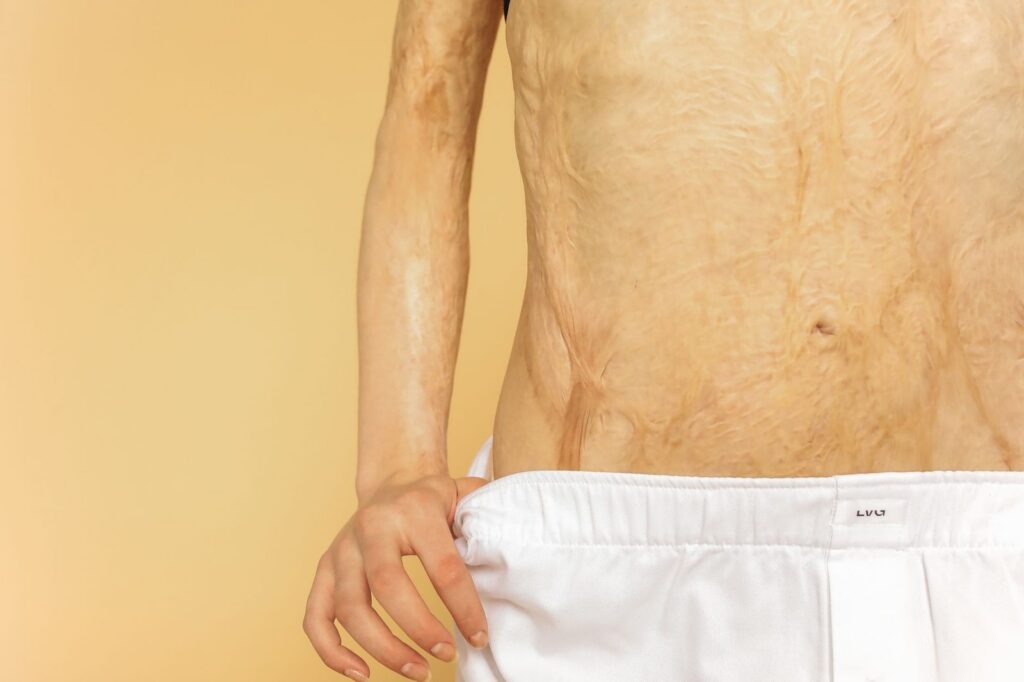
Next Steps If You or a Loved One Has Suffered a Severe Burn
If you’re facing a severe burn injury, your immediate priority is emergency medical care at a hospital or burn center. Once the patient is stable, focus on:
- Medical documentation: Keep all burn assessment records, TBSA calculations, imaging, and treatment notes. These documents are essential for medical care, insurance claims, and any legal action.
- Recovery planning: Work closely with your burn-center team on wound care, surgery, rehabilitation, and long-term follow-up. Recovery from a catastrophic burn is a long process.
- Understanding the injury: Ask your medical team to explain the TBSA percentage, burn depth, and what to expect during treatment and recovery. Understanding the injury helps you make informed decisions.
If the burn resulted from an accident, unsafe property conditions, negligent security, defective equipment, or someone else’s failure to act, you may have grounds for a legal claim. Many people facing the financial and emotional burden of catastrophic burn injury find that pursuing compensation helps cover medical costs, lost income, rehabilitation, and ongoing care.
If you’re navigating a severe burn injury and wondering whether someone may be responsible for what happened, or whether a legal claim could help cover the costs of recovery, reach out. People in your situation can contact us to understand their options and what comes next.
Critical Point
The Rule of Nines measures only the percentage of burned body surface area (TBSA). It does not predict recovery, account for burn depth, inhalation injury, age, or other medical factors that affect survival and long-term outcomes. A complete medical prognosis requires evaluation by a burn specialist.
How the Rule of Nines Works
The Body Divided Into Sections
The Rule of Nines divides the adult body into sections, each representing 9% (or multiples of 9%) of total body surface area. The head and neck account for 9%; each arm 9%; the front and back of the torso 18% each; each leg 18%; and the genitals 1%.
TBSA Percentage Calculated
Burn specialists add up the percentages of burned sections to determine Total Body Surface Area (TBSA) affected. A burn affecting 20% TBSA is classified differently—and treated differently—than one affecting 5% or 50%.
Severity Classification
Burns are generally classified as minor (less than 15% TBSA in adults), moderate (15–25% TBSA), or major/catastrophic (greater than 25% TBSA, or any burn involving the face, hands, feet, genitals, or joints).
Treatment Decisions
TBSA percentage helps determine whether a patient can be treated at a local hospital or requires transfer to a specialized burn center. Larger burns require intensive care, fluid resuscitation, and specialized wound management.
What the Rule of Nines Does NOT Tell You
Burn Depth
The Rule of Nines measures area only, not depth. A superficial (first-degree) burn covering 30% of the body is very different from a deep (third-degree) burn covering 10%. Depth determines whether grafting, scarring, and permanent disability will result.
Inhalation Injury
Smoke inhalation and thermal injury to the airways are life-threatening but not reflected in the TBSA calculation. Inhalation injury significantly worsens prognosis and survival rates.
Age and Medical History
A 25-year-old and a 75-year-old with the same TBSA burn face very different outcomes. Age, pre-existing conditions, and overall health status are critical factors the Rule of Nines does not capture.
Location of Burns
Burns on the face, hands, feet, joints, or genitals carry greater risk of permanent disability and functional loss, even if TBSA is relatively low. These areas require specialized treatment and often multiple surgeries.
Why TBSA Assessment Matters in Your Case
Establishes Injury Severity
TBSA percentage is a medical benchmark used to classify burns as catastrophic. It forms part of the clinical record and helps establish the seriousness of your injury.
Supports Damages Claims
Medical records documenting TBSA, burn depth, and treatment are essential evidence in a personal-injury claim. They demonstrate the scope of injury and justify claims for medical costs, pain and suffering, and permanent disability.
Guides Treatment Planning
TBSA informs decisions about hospitalization, surgery, skin grafting, and rehabilitation. Understanding your burn's classification helps you and your medical team plan realistic recovery goals.
Reflects Long-Term Impact
Severe burns (>25% TBSA) often result in permanent scarring, contractures, loss of function, and psychological trauma. These lasting effects are central to your claim for compensation.
If You or a Loved One Suffered a Severe Burn
Catastrophic burn injuries—whether from a workplace accident, vehicle fire, negligent security failure, or another incident—can change your life forever. You deserve to understand your injury, your treatment options, and your legal rights.