


Severe Burn Injuries
Burn Injury Skin Graft Recovery: Timeline & What to Expect
Understanding the healing process after a catastrophic burn and graft surgery—and your right to compensation if negligence caused your injury.
By CHG Lawyers · Published September 03, 2026
Burn Skin Graft Recovery: Timeline, Surgery, Complications, and What to Watch For
Severe third-degree and fourth-degree burns destroy the skin’s deepest layers—the epidermis and dermis—leaving a wound that cannot heal on its own. Skin grafts are not optional; they are essential surgery to cover the wound, prevent life-threatening infection, stop massive fluid loss, and preserve function and movement. Recovery from a burn skin graft is a months-long journey that includes surgery, immobilization, intensive aftercare, rehabilitation, and scar management. Understanding what happens at each stage—and what warning signs demand immediate medical attention—helps you prepare mentally and physically for the path ahead.
Not sure what your next step is?
Talk it through with our team — the first consultation is free, confidential, and carries no obligation.
Why Severe Burns Require Skin Grafts: The Biology Behind the Surgery
When a burn destroys the dermis (the layer beneath the skin’s surface), the body loses its ability to regenerate new skin. Unlike partial-thickness burns, which heal from the edges inward, full-thickness burns leave a wound the body cannot close on its own.
Without a graft, three catastrophic outcomes follow: infection (bacteria colonize the exposed wound bed, entering the bloodstream); hypovolemic shock (massive fluid loss through the open wound causes organ failure and death); and severe contractures (scar tissue permanently tightens, freezing joints and destroying function).
Skin grafts work by providing a protective barrier—healthy skin harvested from an unburned area of the patient’s body is placed over the wound. The graft adheres to the wound bed, new blood vessels form beneath it, and the graft integrates into the body. This restores the skin’s barrier function, stops fluid loss, prevents infection, and preserves movement and sensation far better than allowing the wound to scar over on its own.
Grafts are typically performed after initial wound cleaning—called debridement—and stabilization, often within days to weeks of the injury. The timing depends on burn size, depth, location, the patient’s overall health, and readiness for surgery.
Types of Skin Grafts: Choosing the Right Approach for Your Burn
Your burn team selects the graft type based on burn size, depth, location, and available donor skin.
Split-thickness skin grafts (STSG) harvest thin layers of epidermis and partial dermis from an unburned area—typically the thigh, abdomen, or buttocks. These grafts take faster (higher “take” rate, meaning the graft is more likely to survive), are easier to harvest, and require smaller donor sites. The trade-off: split-thickness grafts may not provide full functional or cosmetic restoration because they lack the deeper dermis. The donor site heals like a partial-thickness burn and requires careful aftercare.
Full-thickness skin grafts (FTSG) include the epidermis and entire dermis. Because they contain more of the skin’s natural structure, they provide superior long-term appearance, sensation, and function—scars are flatter, skin texture is closer to normal, and movement is less restricted. The drawbacks are significant: they require larger donor sites (which must be closed with stitches), have lower take rates, and are reserved for smaller burns or specific areas like the face or hands where appearance and function matter most.
Cultured epithelial autografts (CEA) are laboratory-grown skin made from the patient’s own cells. For burns covering more than 50% of the body—where donor skin is critically limited—CEA can be lifesaving. The process takes 2–3 weeks to grow enough cells, making it unsuitable for immediate coverage, but it allows treatment of massive burns. Cost is high (tens of thousands of dollars per application), and the grafts are fragile.
Temporary grafts—cadaver skin (allograft) or synthetic substitutes (like Integra)—cover wounds while awaiting autograft availability or healing. They do not permanently integrate but provide immediate protection, reduce pain, and prevent fluid loss. Temporary grafts are replaced with permanent autografts once the patient is stable enough for surgery or donor sites have healed.
The Surgical Process: What Happens During Skin Graft Surgery
Skin graft surgery follows a precise sequence.
Step 1: Debridement and wound assessment. The surgical team cleans the wound, removing all dead tissue (eschar). The wound bed must be free of infection and have adequate blood supply—a healthy, pink wound bed signals readiness for grafting. If the wound is infected or poorly perfused, grafting is delayed.
Step 2: Skin harvest. Healthy skin is harvested from an unburned donor site, typically the thigh, abdomen, or buttocks. The surgeon uses a dermatome (a precision surgical tool) to harvest skin at a precise depth—thinner for split-thickness, full-thickness for FTSG. The donor site itself becomes a wound requiring care.
Step 3: Graft preparation. The harvested skin is often meshed—perforated with tiny holes in a pattern—so it can stretch and conform to irregular wound contours. Meshing also allows fluid beneath the graft to escape, reducing the risk of fluid buildup that can cause graft failure. Smaller grafts may be left unmeshed.
Step 4: Graft placement and fixation. The graft is carefully positioned over the prepared wound bed and secured with sutures, staples, or fibrin glue. The surgical team ensures complete contact between graft and wound bed—any gaps or air pockets will cause graft failure.
Step 5: Dressing and immobilization. The graft is covered with specialized dressings that keep it moist, protected, and immobilized. Movement causes the graft to shear (slide on the wound bed), disrupting the delicate new blood vessels forming beneath it.
Most severe burns require multiple surgeries—often 3–5 or more, spaced weeks apart—to graft all burned areas. Each surgery means anesthesia, pain, and recovery time.
Burn Skin Graft Healing Timeline: What to Expect Week by Week
Recovery follows a predictable but lengthy timeline. Understanding each stage helps you recognize normal healing and spot warning signs.
Days 1–7 (Immediate post-operative period): The graft is immobilized—movement is strictly limited. Pain is typically severe and managed with opioid and non-opioid medications. Infection prevention is critical; the wound is kept clean and covered with specialized dressings. The donor site begins its own healing process and is also painful. Swelling (edema) is common. You will be unable to move the grafted area.
Weeks 2–3 (Early healing stage): The graft begins to “take,” meaning it adheres to the wound bed and new blood vessels (neovascularization) form beneath it. The area remains extremely fragile—any movement, pressure, or trauma can disrupt these fragile new vessels and cause graft failure. Gentle range-of-motion exercises may begin under close medical supervision. Pain usually decreases but remains significant. Itching often begins as nerves start to regenerate.
Weeks 4–6 (Progressive healing): The graft continues to strengthen and thicken as more blood vessels form and integrate. Scar tissue begins to form visibly. Movement gradually increases under therapist guidance. Physical therapy intensifies to prevent contractures (permanent tightening of scar tissue that locks joints). The area may feel tight or stiff. Itching intensifies.
Weeks 7–12 (Final healing stage): The graft is largely healed but remains sensitive and prone to re-injury. Scar tissue continues to mature and remodel. Skin color may change—hyperpigmentation (darkening) or hypopigmentation (lightening) is common in grafted skin. Compression garments are introduced to flatten scars, reduce swelling, and improve appearance.
Months 3–24+ (Long-term remodeling): Scars fade and flatten. Skin gradually regains some elasticity and sensation. Final appearance and function stabilize, though changes continue for years. Some patients experience permanent changes in color, texture, or sensation.
How Long Does a Burn Skin Graft Take to Heal? The Research
The answer depends on burn depth, graft type, location, age, overall health, and adherence to aftercare. Here’s what the timeline typically looks like:
- Initial graft take: 7–14 days. This is when the graft adheres to the wound bed and begins integrating. During this window, the graft is at highest risk of failure.
- Functional healing: 3–6 weeks. The graft is strong enough for gentle movement and basic activities.
- Substantial healing: 3–6 months. Scar tissue matures, and the area becomes less fragile. Most patients can return to light work or school.
- Full maturation: 12–24 months or longer. Scars continue to fade and flatten. Some patients experience ongoing changes in appearance and sensation for years.
Factors that speed healing: younger age, smaller burn size, good overall health, excellent nutrition, no smoking, no infection, excellent adherence to aftercare, and split-thickness grafts (which take faster than full-thickness).
Factors that slow healing: older age, larger burns, poor health, malnutrition, smoking, infection, certain medications (like immunosuppressants), and full-thickness grafts.
Have questions about what happened?
Ask our team directly. The first conversation is free, confidential, and there is no obligation to continue.
Aftercare and Home Management: The Critical First Months
The weeks and months after surgery determine whether the graft succeeds and how well you regain function.
Wound care is meticulous and non-negotiable. The graft must be kept clean and dry (unless your doctor directs otherwise). Dressing changes follow a precise schedule—typically daily or every few days. You will be taught the exact technique. Watch for signs of infection: increased redness, warmth, swelling, drainage (especially pus), odor, or fever. Report these immediately to your burn team. Infection is the most common cause of graft failure.
Activity restrictions are strict early on. Avoid strenuous activity, heavy lifting, stretching, and any pressure on the grafted area during the first 2–3 weeks. Gradual activity increases as healing progresses, but your therapist will guide you. Moving too fast causes shearing (the graft sliding on the wound bed), which disrupts new blood vessels and causes failure.
Positioning and elevation prevent shearing. Keep the grafted area elevated and immobilized as directed. If the graft is on your leg, keep it elevated above heart level. If it’s on your arm, use a sling. Your burn team will provide specific positioning instructions.
Moisturizing and sun protection begin once the graft is healed enough (typically 2–3 weeks post-op). Use prescribed moisturizers to prevent drying and cracking—grafted skin is drier than normal skin. Avoid direct sunlight to prevent hyperpigmentation; grafted skin is more prone to darkening. Wear protective clothing or SPF 50+ sunscreen for at least one year.
Compression garments are custom-fitted clothing worn for months to years. They reduce swelling, flatten scars, and improve appearance and function. They’re uncomfortable, hot, and restrictive—but they work. Wear them as directed, typically 23 hours per day for the first months.
Donor site care is often overlooked but essential. The donor site heals like a partial-thickness burn and requires similar protection, moisturizing, and sun avoidance. Donor site pain and itching can be as bothersome as the graft site itself.
Rehabilitation: Regaining Function After Burn Surgery
Healing is not just about the wound closing. Regaining function requires intensive rehabilitation.
Physical therapy begins as soon as medically safe—often within days of surgery. Therapists work to maintain or restore range of motion, strength, and mobility. The primary goal is preventing contractures—permanent tightening of scar tissue that can freeze joints and destroy function. Contractures are devastating; prevention is far easier than treatment. Exercises are often painful but necessary. Therapy typically continues for months to years.
Occupational therapy helps you relearn daily activities and adapt techniques to work with grafted skin and scars. Dressing, bathing, eating, and grooming may require new approaches. Therapists also help you return to work and hobbies.
Scar management includes massage, stretching, and specialized treatments. Laser therapy, steroid injections, and silicone products can improve appearance and flexibility. Scar remodeling continues for 12–24 months; patience is essential.
Psychological support addresses the trauma, anxiety, depression, and body image concerns common after severe burns. Many survivors benefit from counseling, support groups, or psychiatric medication. The psychological impact of a catastrophic burn is real and deserves treatment.
Return to work and activities is gradual. Full return depends on healing, job demands, and medical clearance. Some survivors face permanent disability and cannot return to their previous work.
Potential Complications: What to Watch For and When to Seek Help
Not all grafts succeed, and complications are common. Knowing what to watch for helps you catch problems early and prevent permanent damage.
Graft failure (partial or complete loss of the graft) can result from infection, poor blood supply, movement, or fluid buildup beneath the graft. Early signs include separation of the graft from the wound bed, discoloration (darkening or blanching), drainage, or a foul odor. If you notice these signs, contact your burn team immediately. Graft failure may require re-grafting, which means another surgery.
Infection is a serious risk and the most common cause of graft failure. Bacterial colonization of the graft or donor site shows as increased pain, redness, warmth, pus, or fever. Infection slows healing, causes graft failure, and can progress to sepsis (life-threatening bloodstream infection). Report signs of infection immediately. Treatment typically includes antibiotics and, if severe, surgical removal of infected tissue.
Contractures—permanent shortening of scar tissue that limits movement— are more common with deep burns and burns over joints. Early signs include tightness, reduced range of motion, or difficulty moving the area. Aggressive physical therapy can prevent or minimize contractures, but established contractures may require surgery. The key is early, intensive therapy.
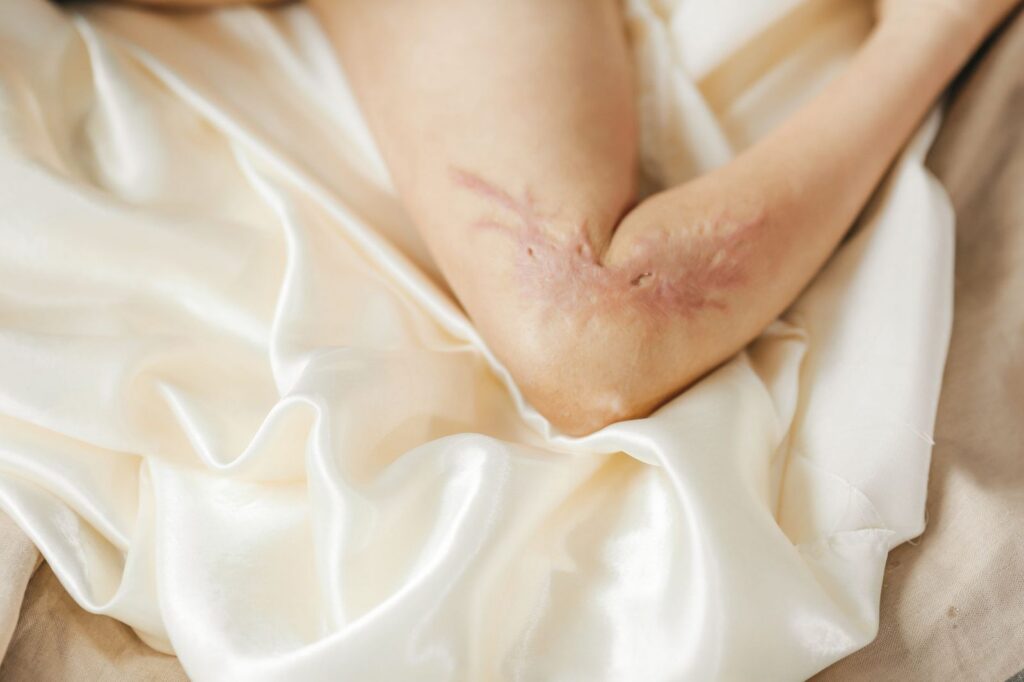
Hypertrophic scars are thick, raised, itchy scars that may develop weeks or months after injury. They’re more common in darker skin and in areas of high tension. Hypertrophic scars are treated with compression garments, massage, steroid injections, laser therapy, or surgical revision. They often improve over time but may persist.
Nerve damage causes numbness, tingling, chronic pain, or loss of sensation in the grafted area or donor site. Nerve injury can result from the burn itself or from surgery. Some nerve damage recovers over months to years; some is permanent. Chronic pain may require medication or specialized pain management.
Pigmentation changes—hyperpigmentation (darkening) or hypopigmentation (lightening)— are common in grafted skin. Most improve over time but may persist. Avoiding sun exposure helps prevent darkening.
Contact your medical team immediately if you notice: – Signs of infection (increased pain, redness, warmth, pus, odor, fever) – Graft breakdown or separation – Severe pain not controlled by medication – Inability to move the area or new tightness/stiffness – Psychological distress, depression, or suicidal thoughts
The Emotional and Financial Reality of Long-Term Burn Recovery
Severe burns and the months of surgery, grafting, and rehabilitation take a profound toll on patients and families—and the costs are staggering.
Most severe burns require multiple grafting procedures—often 3–5 surgeries or more, spaced weeks apart. Many require reconstructive surgery months or years later to improve function and appearance. Each surgery means hospitalization, anesthesia, pain, and recovery.
Medical costs accumulate rapidly. Burn center care costs $200,000–$500,000+ for a severe burn requiring multiple surgeries and months of hospitalization. Ongoing care—burn specialists, physical therapists, occupational therapists, wound care nurses, and mental health professionals—continues for months to years. Insurance may not cover all costs; out-of-pocket expenses can be substantial.
Lost income is real. Weeks or months away from work during acute recovery, plus ongoing therapy and medical appointments, mean lost wages. Some burn survivors face permanent disability and cannot return to their previous work, resulting in permanent income loss.
Lifestyle changes are permanent for many. Some survivors experience permanent scarring, loss of function, chronic pain, or psychological trauma that affects daily life indefinitely.
Want to know where you stand?
Tell us what happened and our team will walk you through the options available to you, at no cost.
When a Severe Burn Injury Involves Negligence or Liability
Many catastrophic burns result from accidents that could have been prevented: workplace fires due to safety violations, vehicle crashes caused by reckless driving, fires in buildings with inadequate fire safety systems, burns from defective products, or negligent security failures that allowed dangerous conditions.
If your severe burn injury was caused by someone else’s negligence, recklessness, or failure to follow safety rules, you may have a legal claim for compensation. Compensation can help cover the enormous costs of surgery, grafting, rehabilitation, ongoing medical care, lost wages, and the lasting impact on your quality of life.
Understanding your legal options is an important part of your recovery journey, especially when facing months of surgery and rehabilitation ahead.
If you or a loved one is recovering from a severe burn and the injury resulted from someone else’s negligence or failure to maintain safe conditions, you’re likely facing not just physical healing but also questions about who should pay for the enormous costs ahead. People in your situation—navigating surgery, rehabilitation, and the financial weight of catastrophic injury—can reach out to us to understand whether they have a claim. Contact us for a free case evaluation to discuss what happened and what your options may be.
Frequently Asked Questions
How long does a burn skin graft take to heal?
Initial graft take occurs within 7–14 days; functional healing takes 3–6 weeks; substantial healing continues for 3–6 months; full maturation can take 12–24 months or longer.
What’s the difference between split-thickness and full-thickness skin grafts?
Split-thickness grafts are thinner, take faster, and are easier to harvest but may not provide full function or appearance; full-thickness grafts include more skin structure, provide better long-term results, but have lower take rates and require larger donor sites.
What are signs of a skin graft infection or failure?
Watch for increased pain, redness, warmth, drainage, odor, fever, separation of the graft from the wound bed, or discoloration; contact your medical team immediately if you notice these.
Can burn scars be improved?
Yes, through compression garments, massage, stretching, laser therapy, steroid injections, and silicone products; scars continue to fade and improve for months to years after injury.
When can I return to normal activities?
Return is gradual and depends on healing, location of the burn, and job demands; most people begin light activity after 4–6 weeks and full return may take months to years.
If you or a loved one is recovering from a severe burn and the injury resulted from someone else’s failure to maintain safe conditions or follow safety rules, you’re likely facing not just physical healing but also questions about who should pay for the enormous costs ahead. People in your situation—navigating surgery, rehabilitation, and the financial weight of catastrophic injury—can reach out to us to understand whether they have a claim. Contact us for a free case evaluation to discuss what happened and what your options may be.
The Skin Graft Healing Timeline
Days 1–14: Initial Graft Take
The grafted skin begins to attach to the wound bed. During this critical phase, the graft must remain immobilized and protected to allow blood vessels to reconnect. Pain and swelling are common.
Weeks 3–6: Early Functional Healing
The graft strengthens and begins to regain some flexibility. Scar tissue forms and the area may itch or feel tight. Gentle movement may be introduced under medical guidance.
Months 2–6: Substantial Healing
The graft continues to mature and integrate with surrounding tissue. Strength and sensation gradually improve. Physical therapy becomes more intensive to restore range of motion and function.
Months 6–24+: Long-Term Maturation
Scars fade and soften over time. Full color match and texture may take 12–24 months or longer. Some grafts continue to improve for years as the skin remodels.
What Affects Your Recovery
Burn Depth & Size
Deeper burns and larger grafted areas typically require longer healing times and may result in more visible scarring.
Graft Type
Split-thickness grafts (thinner) heal faster but may have more color variation; full-thickness grafts (thicker) heal slower but often look and feel more natural.
Location on the Body
Grafts over joints or high-movement areas heal more slowly and require careful rehabilitation to prevent contractures (tightening).
Age & Overall Health
Younger patients and those in good health often heal faster. Diabetes, infection, or poor nutrition can slow recovery significantly.
Infection & Complications
Infection, graft rejection, or poor blood flow can delay healing and increase scarring. Strict wound care is essential.
Adherence to Rehabilitation
Following physical therapy, compression garment use, and medical instructions directly impacts long-term function and appearance.
Severe Burns Are Life-Altering
A catastrophic burn injury—especially one requiring skin grafting—can cause permanent scarring, loss of function, chronic pain, and emotional trauma. If your burn was caused by someone else's negligence, recklessness, or failure to maintain safe conditions, you may have a right to pursue a claim for compensation to help cover medical costs, ongoing care, lost income, and other damages.
Why You Need a Lawyer for a Burn Injury Claim
We Focus Exclusively on Catastrophic Injuries
Severe burns that require grafting are our focus. We understand the lifelong medical, financial, and personal impact of these injuries.
We Handle Complex Medical Evidence
Burn injury claims require detailed medical records, expert testimony, and proof of negligence. We work with burn specialists and other experts to build your case.
We Identify All Liable Parties
Whether the burn resulted from a workplace accident, a defective product, a property owner's negligence, or a truck crash, we investigate thoroughly to hold all responsible parties accountable.
We Understand Your Needs
We listen to your story and fight for fair compensation that reflects your pain, suffering, lost wages, and ongoing medical care—not just the immediate injury.